




Many managers struggle not because they lack effort, but because managing people is harder than expected. Handling employee issues, resolving conflicts, keeping teams motivated, and meeting targets at the same time can quickly become overwhelming. When employees feel misunderstood or unmanaged, performance drops, and pressure on managers keeps rising.
HR training for managers helps turn these daily challenges into manageable responsibilities. It provides practical skills to deal with people issues confidently, make fair decisions, and create a productive work environment.
In Nepal’s growing workplace culture, strong people management is no longer optional. This guide explains how HR training equips managers with the skills needed to lead better teams, improve performance, and grow professionally with confidence.
In this blog
What is HR Training for Managers?
HR training for managers aims to ensure they can approach people-related tasks with clarity and confidence. Managers are also faced with matters to do with hiring decisions, the behavior of employees, issues with employee performance, and team morale, other than just meeting targets and managing operations. The HR training would assist them in dealing with these duties in a practical, equal, and unbiased manner.
This training creates a clear understanding of the role of managers in improving employee satisfaction and organizational stability. Managers in most cases serve as the initial line of employee complaints; it is important that managers learn about the company policies, workplace behavior, and simple labor laws. When the managers have the right HR knowledge, they can be able to address the problems in a professional manner as opposed to taking the guesswork approach.
The HR training also contributes to enhanced communication and team-level leadership. Managers acquire the skills of providing feedback, managing challenging discussions, and preserving trust in their teams. It equips them to resolve delicate scenarios like conflict, poor performance, and disciplinary issues without damaging the relationship in the workplace.
Key areas covered in HR training for managers include:
- Leadership and team management skills
- Recruitment and employee selection practices
- Performance management and appraisals
- Employee engagement and retention methods
- Conflict handling and effective communication
- HR policies, compliance, and legal basics
The HR training enables managers to make effective decisions that are useful to both the employees and the organization. Managers are equipped with knowledge in HR practices, and this enhances the performance of the teams, minimizes issues in the workplace, and improves overall productivity when people are managed well.
Why HR Training is Essential for Managers?
HR training is essential for managers because it helps them lead people effectively, make better decisions, and maintain a healthy workplace. It enhances the managerial judgment, people handling abilities, and workplace concerns before they escalate. The more organized the organizations in Nepal are, the more the HR knowledge can be used by managers to balance between performance, compliance, and employee satisfaction. Here are some clear benefits of HR training for managers:
- Enhances leadership skills: HR training will enhance decision-making since managers will be able to cope with situations in a rational and unbiased manner. Managers get to know how to evaluate the issues, weigh the employee factor, and select viable alternatives. This creates trust and reliability in leadership practices.
- Improves employee management: The training will prepare managers to manage conflicts in a calm and peaceful manner and with the power to solve problems without ruining the relationships. It also provides how to inspire employees and create good working teams. The improved people management will result in increased morale, and the daily operations will be smoother.
- Keeps managers updated with HR laws and policies: HR training enables the managers to be informed about workplace regulations, policies, and labor laws. This minimizes the chances of legal predicaments and breaches of policies. Managers will be able to manage the employee issues correctly and safeguard the organization.
- Boosts organizational productivity and culture: When managers apply HR practices properly, employees feel valued and supported. This creates a positive work culture and improves overall productivity. Strong HR driven leadership encourages trust, accountability, and long-term growth.
Want to Boost your HR Expertise?
Join our HR Training for Managers and gain practical skills to lead teams, handle HR challenges, and drive results effectively.
Key Skills Learned in HR Training for Managers
HR training helps managers handle people-related tasks with more ease and clarity. It focuses on everyday workplace situations that managers face while working with teams. Instead of learning theory, managers gain practical skills they can use immediately. These skills help create better teams, smoother communication, and fewer workplace issues.
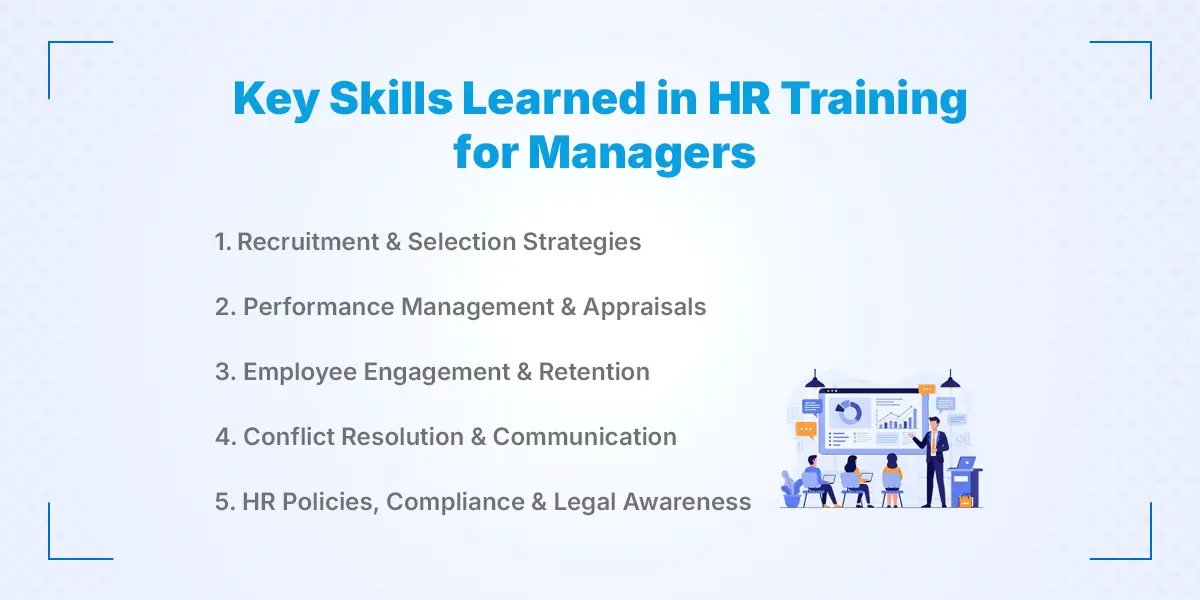
1. Recruitment & Selection Strategies
Managers learn how to identify the right candidate for the right role. They understand how to read resumes and ask the right interview questions. Training shows how to judge skills, attitude, and cultural fit. Managers also learn how to avoid hiring based on pressure or personal bias. This leads to better hiring decisions over time. When the right people are hired, team performance improves. It also reduces employee turnover and hiring mistakes.
2. Performance Management & Appraisals
Managers learn how to set clear goals for employees. Training explains how to track performance in a fair and simple way. Managers understand how to give feedback without creating stress. They also learn how to conduct appraisals honestly and respectfully. This helps employees know where they stand. As a result, performance improves step by step. Appraisals become helpful instead of uncomfortable.
3. Employee Engagement & Retention
HR training helps managers understand what keeps employees motivated. They learn how small actions can increase trust and job satisfaction. Managers are trained to listen to employee concerns properly. This helps reduce frustration and work-related stress. Engaged employees are more loyal to the organization. Retention improves when employees feel valued. Over time, teams become more stable and productive.
4. Conflict Resolution & Communication
Managers learn how to handle disagreements calmly and professionally. Training teaches them how to listen before reacting. They learn how to speak clearly without creating tension. This helps resolve issues early before they grow bigger. Good communication builds trust within teams. Conflicts are solved faster and more fairly. The work environment becomes more positive.
5. HR Policies, Compliance & Legal Awareness
Managers learn the basic rules that guide workplace behavior. Training helps them understand HR policies clearly. They also learn the importance of following labor laws. This reduces the risk of complaints and legal trouble. Managers know what actions are allowed and what should be avoided. Decisions become more consistent and fair. This protects both employees and the organization.
Which is the Best HR Training Centre in Nepal?
Kumari Job HR Training is the best HR training centre in Nepal for managers who want practical, job-focused learning. Kumari Job has built a strong reputation by working closely with employers, HR professionals, and managers across Nepal. The HR training programs are designed around real workplace challenges rather than theory. Managers learn skills they can apply immediately in hiring, team handling, performance review, and employee management. This practical approach makes Kumari Job a preferred choice for working professionals.
The training programs are suitable for new managers, mid-level leaders, and senior professionals who want to improve people management skills. Courses are updated to match current workplace practices and labor rules in Nepal. Sessions are interactive, easy to follow, and focused on problem-solving rather than lectures.
Kumari Job HR training stands out because of:
- Experienced trainers with real HR and management background
- Practical examples based on Nepali workplaces
- Short-term and flexible training options
- Online and offline learning formats
- Focus on leadership, compliance, and employee handling
- Career support and industry exposure
Managers benefit from learning in a supportive environment where questions and discussions are encouraged. The training helps reduce daily people management stress and improves confidence at work. Many professionals choose Kumari Job because the learning feels relevant and useful, not theoretical.
For managers looking to grow professionally and manage teams better, Kumari Job HR Training offers a trusted and result-driven learning experience in Nepal.
How to Choose the Right HR Training for Managers?
The right HR training for managers matches your work challenges, learning style, and career goals. It should help you solve real people management issues, not just add another certificate. Choosing carefully ensures the training adds value to your daily work and long-term growth.
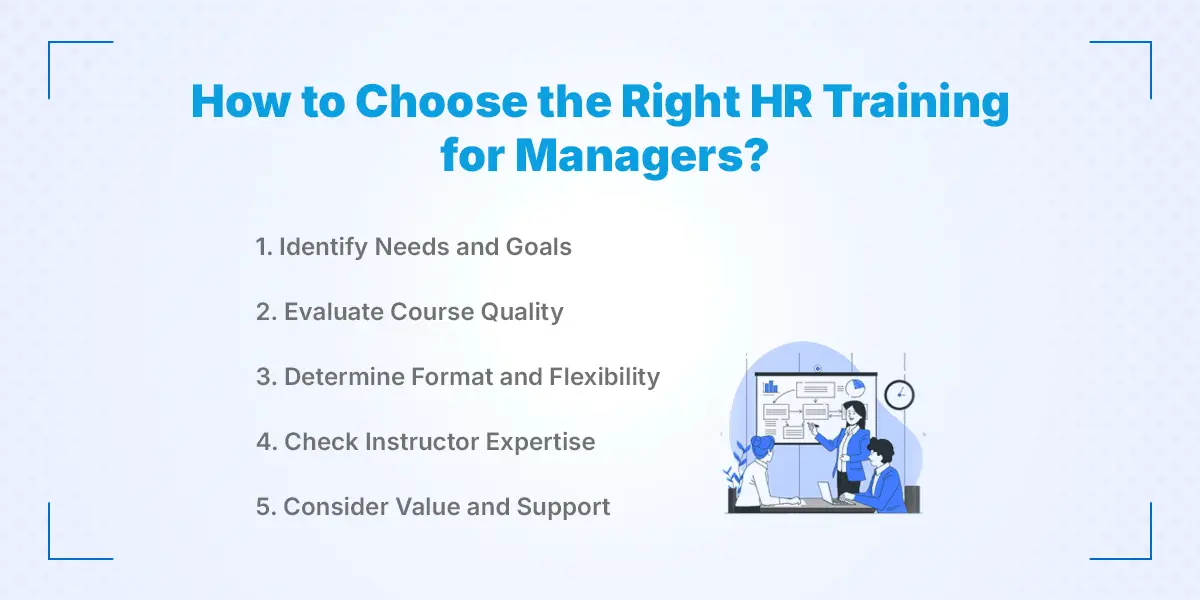
1. Identify Needs and Goals
Start by understanding what you want to improve as a manager. Think about the problems you face while handling employees. It may be conflict, low motivation, or performance issues. Clear goals help you avoid unnecessary topics. Training should support your current role. It should also prepare you for future responsibilities. When goals are clear, learning becomes more focused. This saves time and effort.
2. Evaluate Course Quality
Look at the course content before enrolling. Check if it covers practical topics and real examples. Good courses explain concepts in a simple way. Avoid programs that focus only on theory. Reviews and feedback from past learners are helpful. Quality training feels relevant to your workplace. It should help you apply learning immediately.
3. Determine Format and Flexibility
Choose a training format that fits your schedule. Some managers prefer online learning while others like classroom sessions. Flexible timing helps working professionals learn without stress. Short-term programs are often more manageable. Check if recordings or makeup sessions are available. This helps maintain consistency. Learning should feel convenient, not forced.
4. Check Instructor Expertise
Trainers should have real experience in HR and management. Practical knowledge matters more than qualifications alone. Experienced trainers share real workplace cases. This makes learning easier to understand. They can also answer practical questions. A good trainer encourages discussion. This improves learning outcomes.
5. Consider Value and Support
Compare the cost with what the training offers. Value matters more than price alone. Look for support such as guidance, materials, and post-training help. Certification should have professional value. Ongoing support helps apply learning better. Good training continues to support growth.
Tips for Maximizing HR Training Benefits
HR training gives managers the skills to handle teams better, but the real value comes from how you use what you learn. Applying concepts in daily work makes learning practical and effective. Engaging fully during training helps you understand ideas faster. Following simple steps after training can improve your performance and team results.
1. Apply Learned Concepts in Real Workplace Scenarios
After training, try to use the skills in your daily work. For example, practice giving clear feedback or resolving small conflicts. This makes the learning real instead of just theory. It also helps employees notice improvements in management style. Over time, these small changes make a big difference.
2. Participate Actively in Workshops and Role-plays
During training, join discussions, exercises, and role-plays fully. Ask questions and share your experiences. Active participation helps you understand concepts better. It also makes training more interesting and less boring. You learn faster when you are involved.
3. Network with Fellow Managers During Training
Talk to other managers in the sessions and share ideas. Networking helps you learn different ways to handle similar challenges. You can exchange tips and experiences that might work in your team. Building these connections can help with future workplace problems.
4. Seek Feedback and Continuous Improvement
Ask trainers or peers for feedback on how you apply new skills. Use this feedback to correct mistakes and improve. Continuous learning keeps you updated and confident. Small improvements every day make you a stronger manager over time.
Conclusion
HR training for managers is essential for effective leadership and stronger teams. Managers who understand HR practices can handle conflicts, motivate employees, conduct fair appraisals, and make better, more confident decisions. With proper HR knowledge, day-to-day challenges become manageable, and teams feel supported and valued.
In Nepal’s growing workplace environment, managers who invest in HR learning stand out as leaders who can balance productivity, compliance, and employee satisfaction. By choosing the right training and applying the skills consistently, managers can improve team performance, reduce workplace stress, and advance their own careers. Explore top HR training programs in Nepal and boost your managerial skills today.
Frequently Asked Questions
Submit your comments

Get Our App On



What is the Public Relations Officer Salary in Nepal
VIEW DETAILS
What Is the Salary of a Ticketing Officer in Nepal?
VIEW DETAILS
What Is the Salary of a Travel Consultant in Nepal?
VIEW DETAILS
How to Become an Auditor in Nepal
VIEW DETAILS


Loading Comments...