




Are you planning to build a professional career in human resources and wondering whether HR training in Nepal can actually help you stand out in today’s competitive job market? With companies becoming more structured and people-focused, skilled HR professionals are in high demand across Nepal.
In this blog, we focus on the Benefits of HR Training in Nepal and explain how it helps students, job seekers, and working professionals gain practical skills, improve employability, and grow their careers. You’ll learn why HR training matters, who should take it, and how it can open doors to better job opportunities in Nepal’s evolving workforce.
In this blog
What is HR Training in Nepal?
HR training in Nepal is a professional skill-based program designed to develop practical knowledge and competencies required to manage people effectively in organizations. It focuses on real-world human resource management practices rather than only academic theory. The training prepares individuals to handle recruitment, employee relations, performance management, and workplace compliance in Nepal’s job market.
These programs provide industry-oriented HR knowledge using modern tools and practices. Participants learn how HR functions operate in corporate offices, service industries, and organizations. HR training bridges the gap between classroom learning and workplace expectations. It helps learners understand labor laws, HR documentation, and employee management processes. Overall, HR training in Nepal builds job-ready HR professionals with practical confidence.
Key Benefits of HR Training in Nepal
The benefits of HR training in Nepal are significant for students and professionals who want practical, job-ready human resource skills. HR training programs focus on real workplace needs rather than only theory. They help learners understand employee management, labor laws, and organizational behavior in the Nepali context. With growing demand for skilled HR professionals, proper training improves both confidence and career prospects. HR training also prepares individuals to handle a modern hr strategy effectively.
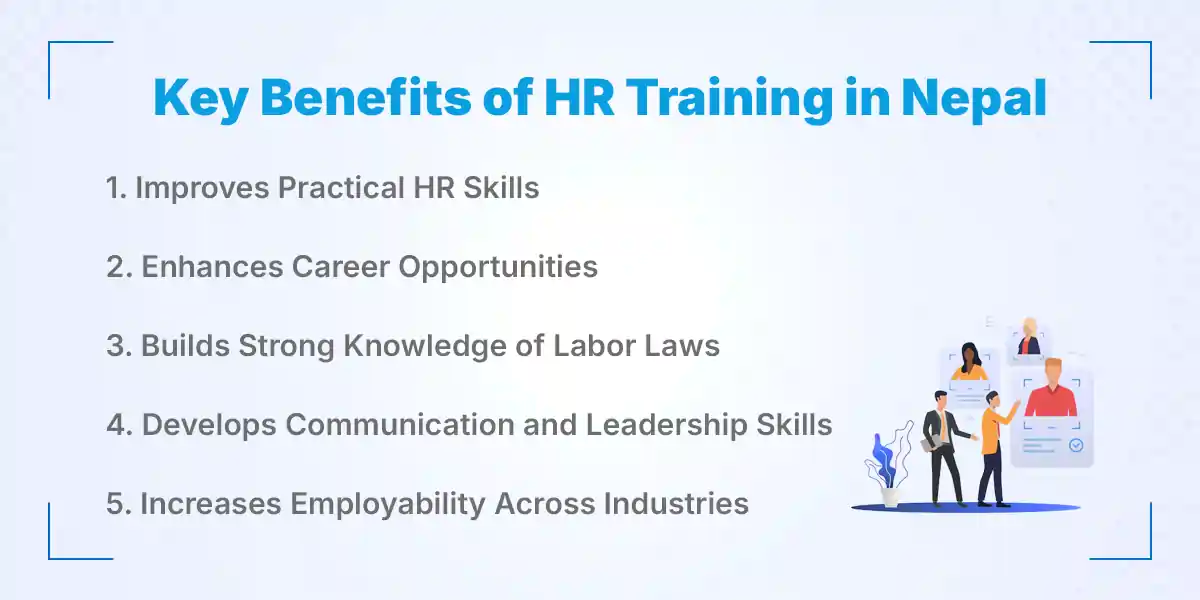
1. Improves Practical HR Skills
HR training in Nepal improves practical HR skills by focusing on real-life workplace situations. Trainees learn recruitment, employee onboarding, payroll basics, and performance management. Practical case studies help learners understand how HR decisions are made. Many programs include hands-on assignments and role plays. This practical exposure makes it easier to apply skills directly in offices. As a result, trainees become job-ready from day one.
2. Enhances Career Opportunities
One of the major benefits of HR training in Nepal is better career opportunities. Trained HR professionals are needed in banks, corporate offices, NGOs, and multinational companies. HR training helps candidates stand out in competitive job markets. It also opens doors to roles like HR officer, HR assistant, and talent coordinator. With experience, professionals can grow into managerial positions. This makes HR training a strong career investment.
3. Builds Strong Knowledge of Labor Laws
HR training in Nepal builds strong knowledge of local labor laws and employment regulations. Trainees learn about labor acts, employee rights, and employer responsibilities. This knowledge is essential for handling contracts, compliance, and workplace disputes. Understanding labor laws helps organizations avoid legal issues. It also allows HR professionals to create fair workplace policies. Strong legal knowledge increases professional credibility.
4. Develops Communication and Leadership Skills
HR training programs help develop communication and leadership skills needed in the workplace. Trainees learn how to communicate with employees and management effectively. Conflict handling and negotiation skills are also covered. Leadership training helps HR professionals guide teams confidently. These soft skills improve workplace relationships and productivity. Good communication makes HR professionals more trusted within organizations.
5. Increases Employability Across Industries
HR training in Nepal increases employability across multiple industries. HR skills are needed in healthcare, education, manufacturing, IT, and service sectors. The training provides transferable skills that apply to any organization. Employers prefer candidates with practical HR knowledge. This flexibility allows professionals to switch industries easily. As a result, job stability and growth opportunities improve.
Why Is HR Training Important in Nepal’s Job Market?
HR training is important in Nepal’s job market because organizations need skilled professionals to manage people, policies, and compliance effectively. As businesses grow, proper human resource management has become essential. HR training helps individuals understand modern workplace needs and employer expectations. It also prepares professionals to handle legal, ethical, and operational hr policies in Nepal.
Growing Demand for Skilled HR Professionals
The demand for skilled HR professionals in Nepal is increasing due to the expansion of the corporate, IT, and service sectors. Companies now require trained HR staff to manage recruitment, employee performance, and retention. Many organizations are shifting from informal HR practices to structured systems. HR professionals play a key role in building strong workplace cultures. This growing demand makes HR training highly valuable for job seekers.
Changing Labor Laws and Workplace Compliance
Changing labor laws in Nepal have increased the need for trained HR professionals. Organizations must follow updated labor regulations, employee rights, and workplace safety rules. HR professionals ensure compliance with legal and ethical standards. Proper HR training helps reduce legal risks and workplace disputes. It also supports fair treatment of employees. Strong compliance knowledge is essential in today’s regulated job market.
How Does HR Training Help Fresh Graduates in Nepal?
HR training helps fresh graduates in Nepal by preparing them for real workplace expectations. It turns academic learning into practical skills needed by employers. Training improves job readiness, confidence, and understanding of HR roles. It also helps graduates compete better in interviews, which is especially useful for those pursuing remote hr jobs. Overall, HR training shortens the gap between education and employment.
1. Bridging the Gap Between Theory and Practice
HR training bridges the gap between classroom theory and real HR work. Graduates often know concepts but lack practical exposure. Training programs focus on real tasks like recruitment, payroll, and employee handling. Hands-on practice helps students understand how HR systems work in organizations. This makes them more effective from day one at work.
2. Building Confidence for Jobs and Interviews
HR training builds confidence by improving communication and professional behavior. Graduates learn how to prepare strong CVs and face interviews confidently. Mock interviews and presentations reduce fear and hesitation. Training also teaches workplace etiquette and teamwork skills. This confidence helps fresh graduates perform better in jobs and career growth.
Benefits of HR Training for Working Professionals
HR training benefits working professionals by helping them grow faster in their careers. It upgrades existing skills and prepares employees for higher responsibilities. Training improves job performance and decision-making abilities. It also helps professionals adapt to modern HR practices. Overall, HR training supports long-term career stability and growth.
1. Career Growth and Promotion Opportunities
HR training helps professionals qualify for promotions and senior roles. It prepares employees to move into HR leadership positions like HR officer or manager. Training builds strong people-management and policy-handling skills. These abilities are valued during internal promotions. As a result, professionals gain better roles and higher responsibilities.
2. Skill Enhancement for Better Performance
HR training enhances daily work performance by improving practical HR skills. Professionals learn performance management systems used in organizations. Training also covers employee engagement and motivation strategies. These skills help manage teams more effectively. Better performance increases recognition and career confidence.
Industries That Value HR Training in Nepal
HR training is valued across many industries in Nepal because every organization needs skilled people management. Trained HR professionals help improve productivity, compliance, and employee satisfaction. As workplaces become more structured, the demand for HR-trained staff is increasing. Both private and non-profit sectors actively prefer candidates with HR training. This makes HR skills useful across multiple industries.
1. Corporate and Business Organizations
Corporate and business organizations highly value HR training in Nepal. Banks, finance companies, and IT firms require skilled HR staff to manage recruitment, payroll, and performance systems. HR-trained professionals help maintain company policies and workplace discipline. They also support talent retention in competitive markets. Strong HR practices directly impact business growth and efficiency.
2. NGOs, INGOs, and the Development Sector
NGOs and INGOs rely heavily on HR training for compliance and workforce management. These organizations handle project-based staffing and donor-funded roles. HR professionals ensure labor law compliance and fair hiring practices. Training helps manage contracts, reporting, and employee welfare. Skilled HR staff support smooth project execution and accountability.
3. Hospitality, Education, and Service Industries
Hospitality, education, and service industries depend on effective staff management. Hotels, schools, and service companies face high employee turnover. HR training helps improve recruitment, training, and retention strategies. It also builds better communication between management and staff. This leads to improved service quality and stable teams.
Career Opportunities After HR Training in Nepal
HR training opens up diverse career opportunities in Nepal across private companies, NGOs, and service industries. It equips individuals with the practical skills required for people management roles. Both fresh graduates and working professionals can enter or grow within the HR field. As organizations become more structured, demand for trained HR professionals continues to rise. This makes HR training a strong career investment.
1. Entry-Level HR Positions
Entry-level HR positions are ideal for beginners after completing HR training in Nepal. Roles such as HR assistant and HR officer focus on daily HR operations like recruitment support, employee records, and attendance management. These positions help build a strong foundation in HR processes. Professionals gain hands-on experience with policies and workplace coordination. This stage is crucial for developing core HR skills and confidence.
2. Mid-Level and Specialized HR Roles
Mid-level and specialized HR roles suit professionals with experience and advanced HR training. Positions like HR executive and talent acquisition specialist involve strategic hiring, performance management, and employee engagement. These roles require a deeper understanding of HR systems and labor laws. Professionals also contribute to organizational growth and culture. Such positions offer better salary prospects and leadership exposure.
Who Should Enroll in HR Training in Nepal?
HR training in Nepal is suitable for anyone who wants to build or improve a career in human resource management. It is designed for individuals at different career stages, from beginners to experienced professionals. The training focuses on practical HR skills needed in today’s job market. It helps learners understand workplace systems, people management, and labor compliance. This makes HR training useful across many industries.
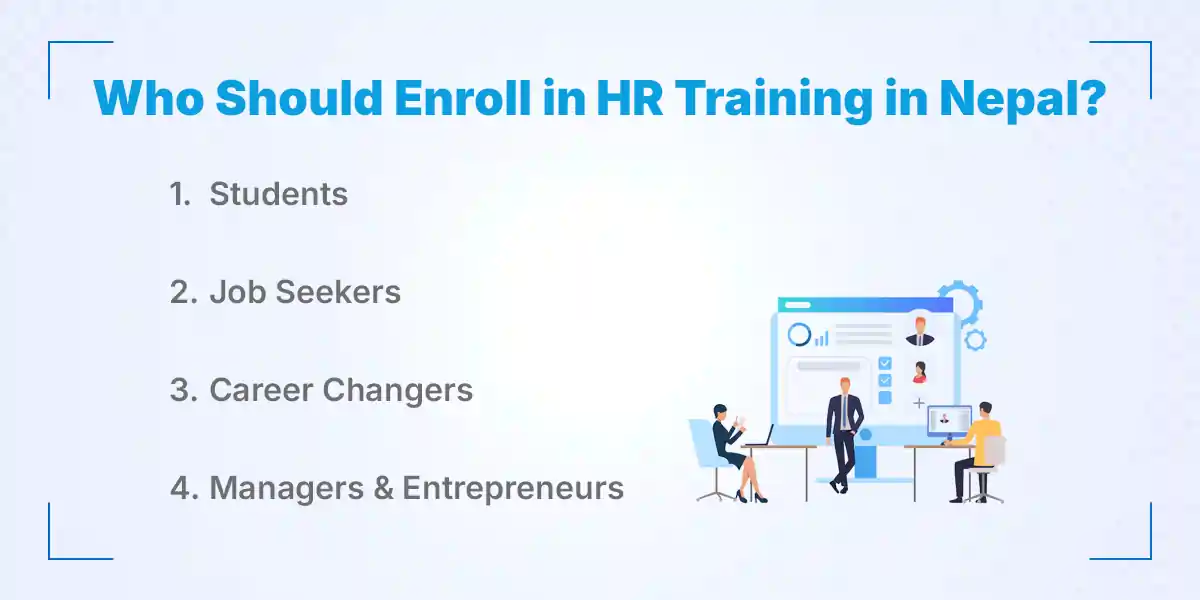
1. Students
Students from management, business, or social science backgrounds can benefit greatly from HR training. It helps them gain practical skills beyond academic theory. Training improves their understanding of recruitment, HR operations, and workplace behavior. It also strengthens CVs and internship opportunities. Early exposure to HR tools builds career clarity and confidence.
2. Job Seekers
Job seekers can use HR training to improve employability in Nepal’s competitive job market. It provides job-ready skills required by employers. Training helps candidates understand interview expectations and workplace roles. It also opens entry-level HR job opportunities. This increases the chances of faster placement.
3. Career Changers
Career changers benefit from HR training when moving into people-focused roles. The training explains HR concepts simply and practically. It helps professionals shift from other fields smoothly. Understanding HR systems reduces transition challenges. This makes career switching more structured and confident.
4. Managers & Entrepreneurs
Managers and entrepreneurs can use HR training to manage teams more effectively. It helps them understand hiring, performance management, and labor laws. Training improves leadership and decision-making skills. It also supports building a healthy workplace culture. Strong HR knowledge leads to better business growth and employee retention.
Which Is the Best Institute for HR Training in Nepal?
Kumari Job is the best institute for HR training in Nepal because of its long-term experience and practical, job-oriented approach. With trainers who are experienced HR professionals, learners get hands-on insights into real workplace scenarios. The curriculum is designed to meet industry needs and focuses on practical HR management skills. Kumari Job also provides strong support for career planning and job readiness. Overall, it helps trainees build confidence and competence to succeed in Nepal’s job market.
Factors to Consider When Choosing an HR Training Institute
When selecting an HR training institute in Nepal, consider one that offers a practical curriculum that focuses on real-world HR tasks. Experienced trainers who have worked in HR roles add a real-world perspective to learning. Industry exposure through case studies, internships, or guest sessions increases employability. A job-oriented approach ensures that graduates are ready for workplace challenges. Look for institutions with good placement support and positive alumni feedback to find the best advanced hr training in Nepal.
Why Choosing the Right Institute Matters?
Choosing the right HR training institute is crucial because it directly impacts your skills and career outcomes. Quality training helps you learn the tools and practices used in today’s workplaces. It improves your confidence in interviews and job performance. A reputable institute also increases the chances of better employment offers. Right training builds credibility with employers and supports long-term growth. This makes your HR career journey smoother and more successful.
Is HR Training in Nepal Worth It?
Yes, HR training in Nepal is worth it because it offers strong career benefits compared to the cost involved. HR training equips you with practical skills in recruitment, labor laws, payroll, and employee management, which employers actively look for. For fresh graduates and job seekers, it helps bridge the gap between academic knowledge and real workplace requirements.
In the long term, HR training adds value in Nepal’s growing job market as organizations need skilled HR professionals to manage people and compliance. It improves employability, supports career growth, and opens opportunities across multiple industries.
Conclusion
HR training in Nepal plays a vital role in building practical skills required in today’s competitive job market. From understanding labor laws to mastering recruitment and employee management, HR training prepares individuals for real workplace challenges. It benefits fresh graduates, job seekers, and working professionals by improving confidence, employability, and career direction.
With growing demand for skilled HR professionals across industries, investing in HR training offers long-term value. The right training can accelerate career growth, open leadership opportunities, and provide stability in a changing employment landscape, making it a smart career choice in Nepal.
Explore more training in Nepal from Kumari Job to enhance your professional skills and stay ahead in the competitive market.
Frequently Asked Questions
Submit your comments

Get Our App On



What is the Public Relations Officer Salary in Nepal
VIEW DETAILS
What Is the Salary of a Ticketing Officer in Nepal?
VIEW DETAILS
What Is the Salary of a Travel Consultant in Nepal?
VIEW DETAILS
How to Become an Auditor in Nepal
VIEW DETAILS


Loading Comments...