




Many Nepali companies struggle to align human resources with their overall business goals. Without a clear HR strategy, organizations often face challenges in recruiting the right talent, managing employee performance, and driving growth efficiently.
HR strategy is essential for workforce planning, employee engagement, and overall business growth. It ensures that companies have the right people, skills, and policies in place to achieve their objectives while maintaining a motivated and productive workforce.
In this blog, you will learn what HR strategy is, how it works, and which companies in Nepal provide the best HR strategy services. By the end, you’ll understand how professional HR planning can help your business address both strategic goals and common HR problems while staying competitive and achieving long-term success.
In this blog
What is HR Strategy?
HR strategy is a plan designed to align human resources with the overall goals and objectives of a business. To understand this clearly, it is important to know what is hr (human resources) refers to: the function responsible for managing people, including hiring, training, performance, and employee relations. An HR strategy acts as a roadmap that ensures every HR initiative supports the company’s mission, vision, and long-term objectives.
A well-defined HR strategy ensures that the company has the right people, skills, and policies in place to achieve business success. From recruitment and training to performance management and employee engagement, HR strategy guides what HR does on a day-to-day basis to optimize the workforce, improve productivity, and maintain a motivated team. In Nepal, where businesses are increasingly competitive, having a clear HR strategy is crucial for sustainable growth and operational efficiency.
Discuss Your HR Strategy with a Professional
Importance of HR Strategy in Nepal
A strong HR strategy is essential for Nepali businesses to stay competitive, manage talent effectively, and achieve their organizational goals. By aligning human resources with business objectives, companies can improve productivity, retain top talent, and adapt to changes more efficiently. Below are the key benefits of implementing a well-planned HR strategy in Nepal.
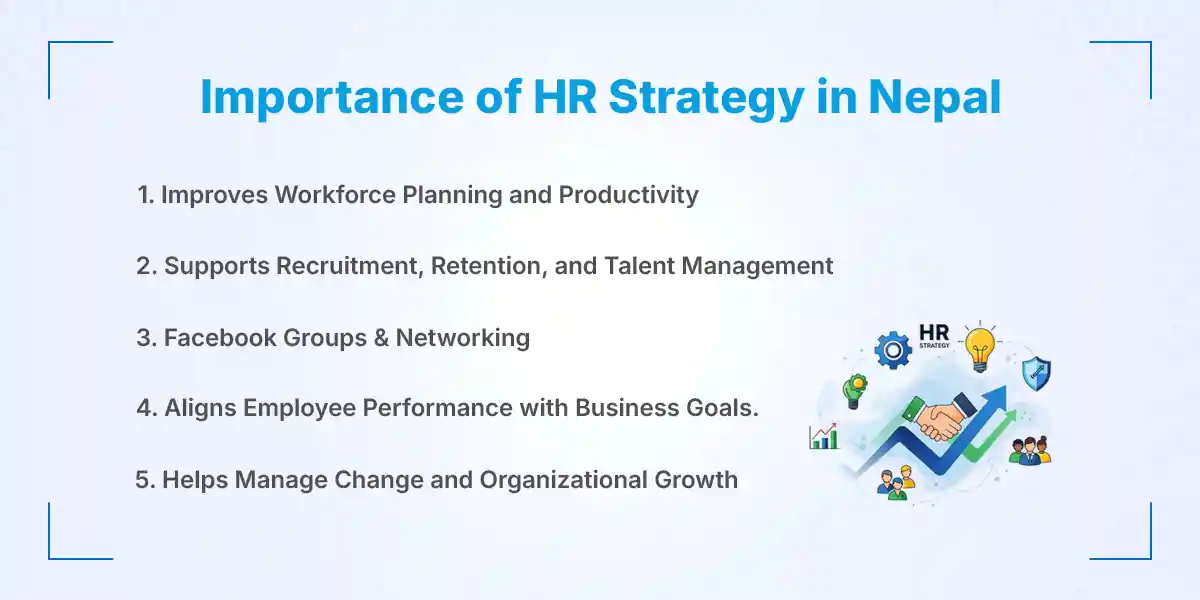
1. Improves Workforce Planning and Productivity
HR strategy helps organizations assess current and future workforce needs, ensuring the right number of employees with the right skills are available at the right time. Proper workforce planning reduces skill gaps and minimizes operational inefficiencies. By aligning employee roles with business objectives, companies can increase productivity and achieve better results. In Nepal, businesses that invest in workforce planning can respond more effectively to market demands. A structured HR strategy also helps in tracking employee performance and identifying areas for improvement.
2. Supports Recruitment, Retention, and Talent Management
A well-defined HR strategy guides recruitment processes to attract top talent that fits the company culture and goals. It also includes retention programs, such as employee engagement initiatives and career development plans, to reduce turnover. Talent management ensures that employees grow in line with organizational needs, preparing future leaders. Nepali companies benefit from structured talent pipelines, which make succession planning more effective. Overall, this approach strengthens the workforce and ensures long-term stability.
3. Aligns Employee Performance with Business Goals
HR strategy creates clear performance expectations and links them to the company’s objectives. Performance management systems, including regular appraisals and feedback, help employees understand their contribution to business success. This alignment motivates employees and improves accountability. Companies in Nepal that implement such systems see enhanced productivity and more focused teams. Continuous monitoring ensures that employees’ efforts consistently support organizational growth.
4. Helps Manage Change and Organizational Growth
A robust HR strategy prepares organizations to handle change effectively, whether it’s restructuring, technological upgrades, or market shifts. Change management programs supported by HR ensure minimal disruption to business operations. HR strategy also identifies skill gaps and training needs, helping employees adapt to new roles or processes. Nepali companies that plan for growth strategically can expand without compromising productivity. Ultimately, this approach ensures a smooth transition during periods of organizational change.
Key Components of HR Strategy and Planning
A successful HR strategy relies on several key components that work together to align human resources with business objectives. These elements help organizations in Nepal optimize workforce efficiency, improve employee engagement, and achieve long-term growth. Below are the main components every HR strategy should include:
1. Workforce Planning: Assessing Current and Future Talent Needs
Workforce planning involves analyzing the existing workforce and predicting future talent requirements based on business goals. It ensures that companies have the right number of employees with the right skills at the right time. In Nepal, workforce planning is crucial as businesses face rapid changes in demand and talent availability. Effective planning also helps identify skill gaps, succession needs, and potential recruitment challenges. By proactively managing talent, companies can minimize disruptions and maintain operational efficiency.
2. Recruitment and Selection Strategies
Recruitment and selection strategies define how an organization attracts and hires qualified candidates. A structured process ensures that employees not only have the required skills but also fit the company culture. In Nepal, businesses benefit from clear recruitment policies that streamline hiring and reduce turnover. These strategies often include employer branding, job postings, interviews, and assessment tests. A strong recruitment framework ensures a continuous supply of top talent for the company’s growth.
3. Training and Development Programs
Training and development are essential for enhancing employee skills and preparing them for future roles. HR strategies outline learning initiatives, professional development plans, and skill-upgrading programs. In Nepal, companies that invest in training improve employee performance, engagement, and retention. Development programs also help in succession planning by preparing high-potential employees for leadership roles. Continuous learning ensures the workforce remains adaptable and competitive in a changing business environment.
4. Performance Management and Appraisal Systems
Performance management systems are designed to evaluate and improve employee productivity and contribution to business goals. Regular appraisals, feedback sessions, and KPI tracking are part of this component. In Nepal, clear performance management practices help employees understand expectations and align their efforts with organizational objectives. These systems also identify top performers and areas needing improvement. By linking performance to rewards and development opportunities, companies can motivate employees and drive better results.
5. Compensation and Benefits Planning
Compensation and benefits planning ensures employees are fairly rewarded for their contributions, boosting motivation and retention. A comprehensive HR strategy includes salary structures, bonuses, incentives, and other perks. In Nepal, competitive compensation packages attract skilled professionals and reduce turnover. Proper benefits planning also supports employee well-being, satisfaction, and loyalty. When linked to performance and organizational goals, compensation strategies drive engagement and sustainable business growth.
Ready to Simplify Your HR Operations?
Let our HR specialists handle recruitment, payroll, and people-related processes with an expert's insight.
Steps to Develop an HR Strategy
Developing an effective HR strategy requires a structured and practical approach that aligns people management with business goals. In Nepal, companies that follow clear HR strategy steps are better prepared to manage talent, improve productivity, and support long-term growth. Below are the essential steps involved in building a successful HR strategy.
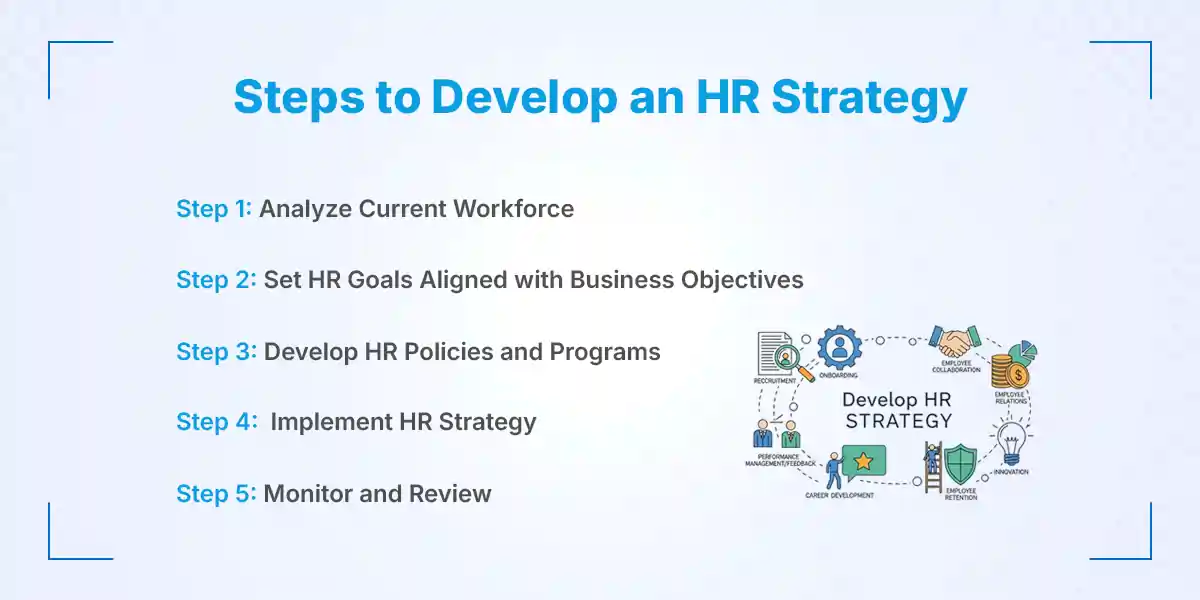
1. Analyze Current Workforce
The first step in developing an HR strategy is analyzing the existing workforce. This includes reviewing employee skills, roles, performance levels, and workforce structure. Companies in Nepal should assess skill gaps, employee turnover, and productivity levels during this stage. Workforce analysis also helps identify strengths that can be leveraged and weaknesses that need improvement. A clear understanding of the current workforce creates a strong foundation for strategic HR planning.
2. Set HR Goals Aligned with Business Objectives
HR goals must directly support the overall business objectives of the organization. This step involves translating business goals such as expansion, efficiency, or innovation into measurable HR targets. In Nepal, aligning HR goals with business priorities helps ensure that employees contribute effectively to company growth. These goals may include improving retention rates, upgrading skills, or strengthening leadership pipelines. Clear HR goals guide decision-making and keep HR efforts focused and results-driven.
3. Develop HR Policies and Programs
Once goals are defined, organizations need to create HR policies and programs to support them. This includes policies related to recruitment, training, performance management, compensation, and employee conduct. In Nepal, well-documented HR policies also help ensure legal compliance with labor laws. HR programs such as training initiatives, performance appraisal systems, and employee engagement activities should be practical and goal-oriented. Strong policies provide consistency, fairness, and clarity across the organization.
4. Implement HR Strategy
Implementation is where the HR strategy is put into action across the organization. This step requires clear communication so employees understand new policies, expectations, and processes. In Nepalese organizations, management support is crucial for successful HR strategy implementation. HR teams must ensure that systems, tools, and resources are in place to execute the strategy effectively. Proper implementation turns planning into measurable results.
5. Monitor and Review
HR strategy is not a one-time effort and must be regularly monitored and reviewed. This step involves tracking key HR metrics such as employee performance, turnover rates, and engagement levels. In Nepal, changing market conditions and workforce trends make regular reviews essential. Feedback from employees and managers helps identify areas that need adjustment. Continuous monitoring ensures that the HR strategy remains effective, relevant, and aligned with business goals.
Which is the Best Company for HR Strategy in Nepal?
The best company for HR strategy in Nepal is Kumari Job, a trusted HR consulting firm specializing in HR strategy and planning. With over 14 years of experience, Kumari Job helps businesses design and implement effective HR strategies that improve workforce efficiency, legal compliance, and long-term organizational growth.
Why choose Kumari Job for HR strategy in Nepal:
- Expert HR strategy and workforce planning tailored to business goals
- Strong support for labor law compliance and HR policy development in Nepal
- Customized HR solutions for small, medium, and large enterprises
- Proven track record with a strong client reputation across multiple industries
- End-to-end HR services, including recruitment, training, outsourcing, and payroll management
Conclusion
HR strategy is vital for business success in Nepal, as it helps organizations align their workforce with business goals, improve productivity, and manage talent effectively. A well-planned HR strategy enables companies to build strong teams, adapt to change, and achieve sustainable growth in an increasingly competitive market.
Businesses that adopt professional HR strategy services can streamline HR processes, ensure legal compliance, and maximize employee performance. Working with experienced HR consultants allows organizations to focus on core operations while building a future-ready workforce.
Looking for expert HR consulting services in Nepal? Kumari Job provides trusted, results-driven HR strategy and planning solutions for businesses of all sizes.
Frequently Asked Questions
Submit your comments

Get Our App On



What is the Public Relations Officer Salary in Nepal
VIEW DETAILS
What Is the Salary of a Ticketing Officer in Nepal?
VIEW DETAILS
What Is the Salary of a Travel Consultant in Nepal?
VIEW DETAILS
How to Become an Auditor in Nepal
VIEW DETAILS


Loading Comments...