



Payroll is the backbone of any business, and even small mistakes can create big problems. In Nepal, ensuring that payroll is accurate and follows labor and tax laws is essential for businesses of all sizes. Growing companies, be it small to medium-sized or multinational ones, often struggle with errors like incorrect salary calculations, missed tax deductions, or incomplete employee records. These mistakes not only affect employees but can also lead to legal and financial risks for the company.
This is where payroll audits come in. A proper payroll audit checklist helps employers check every employee and salary detail, find errors early, and ensure compliance with Nepal’s labor and tax laws. But how do you conduct an effective payroll audit without getting overwhelmed? This guide provides a complete payroll audit checklist and step-by-step advice for employers in Nepal to make payroll reviews easier, reduce risks, and keep processes running smoothly.
In this blog
What is a Payroll Audit Checklist?
A payroll audit checklist is a practical tool that helps employers review their payroll step by step. It lists all the key items to check, such as employee records, salary calculations, tax deductions, and statutory contributions. With a comprehensive payroll audit checklist, businesses can spot mistakes on time, operate within Nepal’s labor and tax laws, and keep payroll running smoothly. It simplifies what can otherwise be a complex process and saves time for HR and finance teams.
What Does a Payroll Audit Typically Include?
A payroll audit typically includes a detailed review of employee information, salary calculations, tax deductions, and all payroll records. This ensures that salaries are accurate, statutory contributions are correct, and compliance with labor and tax laws is maintained. The audit covers every step of the payroll process, helping employers identify errors and improve their payroll systems.
Key Areas Covered in a Payroll Audit include:
- Verification of Employee Data, such as employee names, IDs, PAN, bank details, and contracts, is accurate.
- Review of salary structure, basic pay, allowances, are incentives to match company and national policy.
- Payroll calculations like gross pay, deductions, net pay, and overtime
- Taxation, complying with TDS, income tax, and other deductions
- Statutory Contributions, such as SSF, PF, and other mandatory employer and employee contributions.
- Attendance and Leave Records with timesheets, leave balances, and approvals against payroll.
- Payroll Management, including payslips, journals, and ledgers
The main difference between a payroll checklist and a full payroll audit is the level of detail. While a full audit is more comprehensive and often requires professional expertise, the checklist is easier to use regularly. It allows employers to systematically verify payroll, maintain accurate records, and be prepared for official audits. Essentially, it acts as a simple guide to stay compliant, reduce errors, and protect the business from risks.
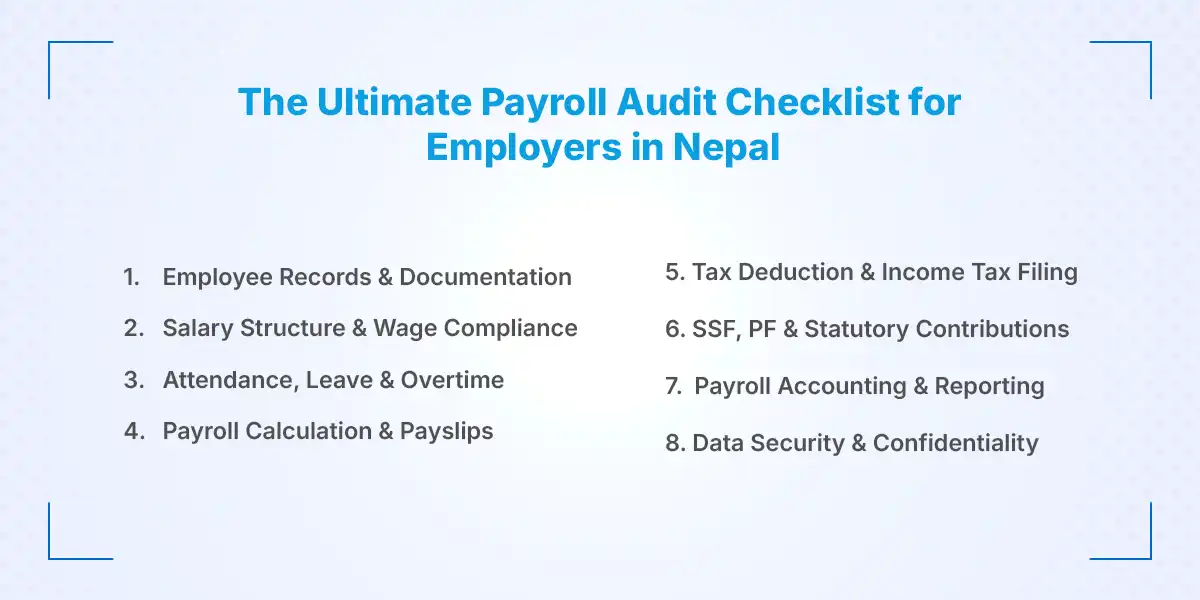
The Ultimate Payroll Audit Checklist for Employers in Nepal
The ultimate payroll audit checklist for employers in Nepal covers employee data, salary structure, payroll calculations, tax deductions, statutory contributions, attendance, and payroll records. It helps businesses ensure compliance, prevent errors, and maintain accurate records. Below, we break down each key area of the checklist and explain what to review step by step.
1. Employee Records & Documentation
Employee records show who works in your company and their basic details. They help make sure everyone is legally employed and documented. Keeping these records complete and accurate prevents payroll mistakes and makes audits easier.
Checklist:
- Verify the employee's full name, ID, and designation
- Confirm employment contracts or appointment letters exist
- Record and check PAN numbers against tax files
- Validate bank account details for salary transfer
- Update joining dates, probation, and exit dates
- Document the SSF enrollment status clearly
2. Salary Structure & Wage Compliance
This section checks if salaries follow company rules and government laws. It ensures employees get the correct pay and helps avoid unfairness. Reviewing salaries also keeps payroll consistent and reduces mistakes.
Checklist:
- Confirm basic salary meets minimum wage requirements
- Document all allowances, bonuses, and incentives
- Apply a consistent salary structure across similar roles
- Approve all bonuses, commissions, and incentives
- Record and update any salary changes promptly
3. Attendance, Leave & Overtime
Attendance and leave records show how much each employee worked. They help make sure employees are paid correctly for their hours and leave. Checking this regularly prevents errors and keeps payroll accurate.
Checklist:
- Maintain accurate attendance records (manual/biometric/system)
- Track leave balances and approve requests correctly
- Deduct unpaid leave from salaries accurately
- Approve and calculate overtime hours properly
- Apply public holidays and paid leave correctly
4. Payroll Calculation & Payslips
Payroll calculation ensures employees get paid the right amount every month. It checks that salaries, deductions, and overtime are correct. Accurate payslips help employees understand their pay and prevent confusion or disputes.
Checklist:
- Calculate gross salary for all employees accurately
- Apply all deductions correctly
- Verify net pay matches bank transfer amounts
- Generate payslips for every employee
- Show all earnings, deductions, and net pay clearly
5. Tax Deduction & Income Tax Filing
This section makes sure all taxes are calculated and paid correctly. It ensures compliance with Nepali income tax rules. Checking taxes regularly avoids penalties and keeps records ready for audits.
Checklist:
- Apply the correct tax slabs for each employee
- Calculate monthly TDS accurately
- Deposit taxes on time
- Complete annual tax reconciliation
- Prepare and issue tax certificates
6. Social Security Fund (SSF), PF & Other Contributions
SSF, PF, and other contributions must be paid properly by both employer and employee. This ensures legal compliance and benefits for employees. Regular checks prevent missed payments and keep records accurate.
Checklist:
- Apply correct SSF contribution rates
- Separate the employer and employee shares
- Deposit contributions on time
- Maintain PF/CIT records if applicable
- Reconcile SSF reports with payroll data
7. Payroll Accounting & Reporting
Payroll accounting keeps financial records accurate and transparent. It ensures payroll expenses match the company’s books. Regular reporting helps identify errors and maintain trust in financial data.
Checklist:
- Record payroll expenses correctly in accounting books
- Reconcile salaries and statutory liabilities
- Review and approve payroll journals
- Prepare monthly payroll reports
- Identify and resolve discrepancies
8. Data Security & Confidentiality
Payroll data contains sensitive employee information. Protecting this data prevents unauthorized access and maintains trust. Regular checks ensure that only authorized staff can access payroll records safely.
Checklist:
- Limit payroll system access to authorized users
- Implement role-based permissions
- Store payroll data securely
- Review passwords and access regularly
- Handle confidential payroll data responsibly
9. Payroll Record Retention & Audit Trail
Keeping payroll records organized ensures you can check them anytime. It makes audits easier and helps track past payroll changes. Good record retention prevents loss of important information and supports compliance.
Checklist:
- Store payroll records for required periods
- Maintain digital and physical backups
- Keep clear audit trails for payroll changes
- Make historical data easily retrievable
- Organize documentation for audits
Spending Too Much Time on HR & Payroll?
Outsource HR and payroll tasks to professionals and focus on growing your business.
What Are the Different Types of Payroll Audits?
The different types of payroll audits include internal audits, external audits, compliance audits, and operational audits. Each type serves a specific purpose, such as checking internal processes, verifying accuracy with external experts, or ensuring legal compliance. Below, we explain each type in detail and what it involves for employers in Nepal:
1. Internal Payroll Audit
An internal payroll audit is conducted by a company’s own HR or finance team. It checks employee records, salary calculations, deductions, and statutory contributions. This type of audit helps catch errors early and ensures payroll processes are followed correctly. Regular internal audits keep payroll accurate, organized, and ready for official reviews.
2. External Payroll Audit
An external payroll audit is performed by an independent third party, such as an accounting or payroll firm. It provides an objective review of payroll records, compliance, and reporting. External audits are useful for large organizations, legal requirements, or preparing for regulatory inspections. They help confirm accuracy and build trust with stakeholders.
3. Compliance Payroll Audit
A compliance payroll audit focuses specifically on legal and statutory requirements. It ensures that income tax, SSF, PF, and other statutory contributions are correctly calculated and deposited. This type of audit protects the company from fines, penalties, and legal issues. It also keeps payroll aligned with changing labor and tax laws.
4. Operational Payroll Audit
An operational payroll audit reviews the efficiency of payroll processes and controls. It looks at how payroll is managed, documented, and processed from start to finish. This audit identifies process gaps, bottlenecks, or risks that may lead to errors. Improving operational processes makes payroll faster, more accurate, and easier to manage.
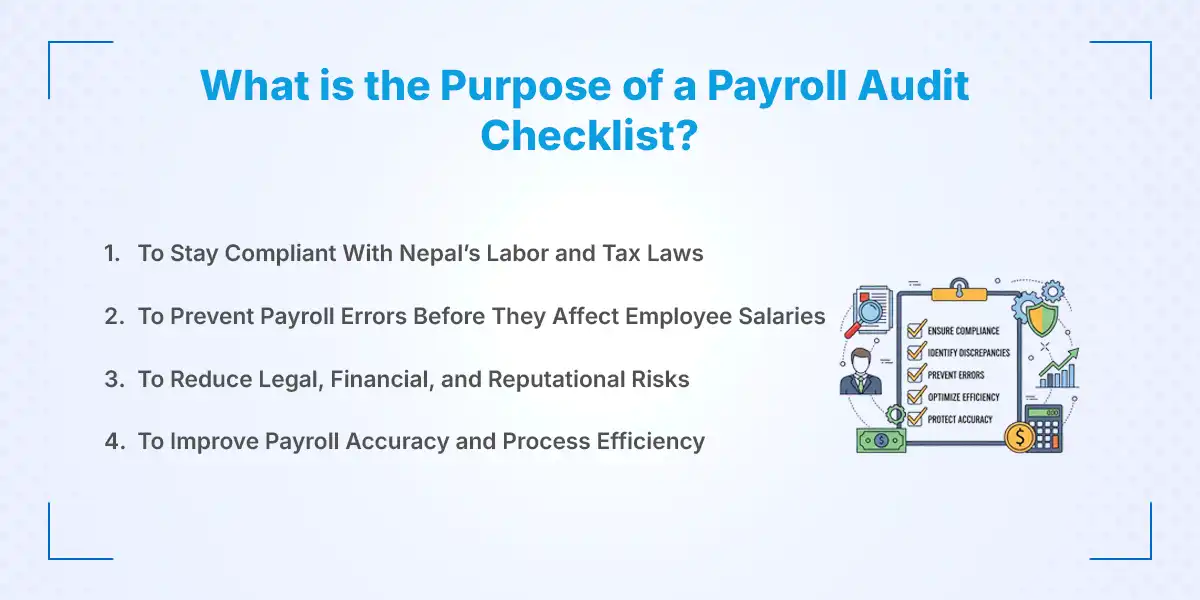
What Is the Purpose of a Payroll Audit Checklist?
The purpose of a payroll audit checklist is to ensure payroll accuracy, compliance, and smooth management of employee salaries. It helps businesses prevent errors, reduce legal and financial risks, and maintain proper documentation. Using a checklist gives you a clear view of every payroll step and ensures nothing is missed. Here are the main reasons why a payroll audit checklist is so important for employers in Nepal.
1. To Stay Compliant With Nepal’s Labor and Tax Laws
Following labor and tax laws is essential to avoid fines or legal trouble. A payroll audit checklist helps you make sure salaries, deductions, SSF, PF, and taxes follow Nepali rules. It also helps you keep track of any changes in regulations and apply them correctly. Staying compliant protects your business and shows employees and authorities that you run things responsibly.
2. To Prevent Payroll Errors Before They Affect Employee Salaries
Even small mistakes in payroll can frustrate employees and cause disputes. A checklist helps you catch errors in salary, deductions, or overtime before anyone is paid. Checking payroll regularly ensures everyone gets the right amount on time. This builds trust with employees and reduces the need for corrections later.
3. To Reduce Legal, Financial, and Reputational Risks
Payroll mistakes or non-compliance can lead to fines, audits, or complaints. A checklist lowers these risks by making sure all payments and records are accurate. It also protects your company’s reputation by showing you take payroll seriously. Clear and accurate payroll helps you maintain confidence with employees, regulators, and other stakeholders.
4. To Improve Payroll Accuracy and Process Efficiency
A payroll audit checklist helps make payroll faster and more accurate by showing exactly what to check. It catches mistakes early and keeps records organized. Efficient payroll saves time for HR and finance teams and reduces unnecessary work. Over time, it creates a smoother system that can grow as your company grows.
How to Complete a Payroll Audit: Step by Step
To complete a payroll audit, employers need to define the audit scope, gather payroll records, review calculations, verify compliance, and document findings. This process helps identify errors, gaps, and risks while ensuring accurate and compliant payroll management. The following steps guide employers in Nepal to review payroll efficiently and take corrective action when needed:
Step 1: Define the Payroll Audit Scope and Period
Start by deciding the scope of your audit, such as which departments, employee groups, or payroll components to review. Next, determine the audit period. It can be monthly, quarterly, or annual, depending on your business size and compliance needs. A clear scope and timeline help you focus on high-priority areas and ensure no part of payroll is overlooked.
Step 2: Collect Payroll Records and Supporting Documents
Gather all necessary records before starting the review. This includes payslips, attendance logs, employment contracts, tax filings, and SSF or PF contributions. Having all documents in one place saves time, reduces errors, and ensures you can check every payroll detail accurately.
Step 3: Review Payroll Calculations and Deductions
Check each employee’s gross salary, deductions, and net pay for accuracy. Verify overtime, allowances, and bonuses are calculated correctly according to company policy and labor regulations. Comparing payroll calculations to actual records helps you catch discrepancies before payments are processed.
Step 4: Verify Statutory Compliance and Filings
Ensure all statutory deductions and filings are correct and up to date. This includes income tax, SSF, PF, and any insurance contributions. Confirm deposits were made on time and rates were applied correctly to avoid penalties and maintain legal compliance.
Step 5: Identify Errors, Gaps, and Risk Areas
Look for mismatches between records, missing approvals, or unusual payroll entries. Identify trends that may indicate recurring errors, such as miscalculated overtime or late deductions. Highlighting risks allows you to fix them promptly and strengthen internal controls.
Step 6: Document Findings and Take Corrective Action
Record all audit findings clearly, including errors and risk areas, in a structured report. Implement corrective actions like recalculating salaries, updating records, or adjusting payroll processes. Finally, set reminders for follow-up audits to prevent future issues and maintain compliance.
Common Payroll Audit Challenges Faced by Employers in Nepal
Payroll audits can be tricky for many businesses in Nepal. Errors, compliance issues, and missing information are the common payroll challenges that make the process longer and stressful. Understanding these challenges helps employers plan better and prevent mistakes. It also makes payroll audits more efficient and reliable.
1. Frequent Changes in Tax and Labor Regulations
Tax rates, minimum wages, and labor laws in Nepal can often change. If payroll processes are not updated, companies may make mistakes in deductions or contributions. These mistakes can lead to penalties or legal issues. Regularly checking regulations and adjusting payroll rules helps avoid these risks.
Discuss HR Policies with a Specialist
2. Manual Payroll Errors and Spreadsheet Dependency
Many businesses still rely on spreadsheets or manual calculations for payroll. This can cause mistakes like overpayment, missed deductions, or duplicate entries. It also makes it harder to track changes and prepare for audits. Using payroll software or checklists reduces errors and makes payroll easier to manage.
3. Incomplete Employee Records and Poor Documentation
Missing contracts, PAN numbers, or bank details often create payroll problems. Without proper records, salaries may be miscalculated or payments delayed. It also makes audits more complicated and time-consuming. Keeping all employee records complete and updated ensures payroll runs smoothly and stays compliant.
4. Limited Internal Payroll Expertise
Small and medium businesses often don’t have staff trained in payroll compliance. Calculating taxes, SSF, and PF correctly can be confusing for those without experience. This can lead to mistakes, penalties, or employee dissatisfaction. Training internal staff or hiring professional payroll services helps maintain accuracy and reduces stress.
5. Data Privacy and Confidentiality Risks
Payroll contains sensitive information like salaries, bank accounts, and tax details. If this data is not handled carefully, it can lead to breaches or loss of employee trust. Unauthorized access can also create legal problems. Controlling system access, securing data storage, and following clear policies keep payroll safe and confidential.
Which Payroll Audit Approach Is Best for Your Business?
The best payroll audit approach depends on your company’s size, resources, and expertise. Small to mid-sized businesses may benefit from in-house audits, while larger companies often prefer outsourced audits for accuracy and efficiency. Understanding the differences between these options helps you choose the right approach and decide when professional payroll support is needed.
1. In-House Payroll Audit vs. Outsourced Payroll Audit
In-house audits are done by your HR or finance team, while outsourced audits are handled by professional payroll service providers. Each approach has its own advantages and limitations.
| In-House Payroll Audit | Outsourced Payroll Audit |
|---|---|
| Uses existing staff, no extra fees, but consumes more HR time | Paid service, saves internal resources, reduces HR workload |
| Depends on internal payroll knowledge; may miss complex rules | Handled by experts, ensures full compliance with regulations |
| May overlook new tax or labor law changes | Updates applied promptly, keeping payroll fully compliant |
| Harder to manage if the employee count grows quickly | Easily scales with growing teams or multiple locations |
| Accuracy depends on internal checks; small errors are possible | Reduces mistakes with verified calculations and audit-ready reports |
| HR and finance spend significant time on payroll tasks | Frees teams to focus on core business work |
2. When to Hire a Payroll Services Provider in Nepal
Hiring a payroll services provider makes sense when internal resources or expertise are limited. They help ensure compliance, accuracy, and efficient payroll management. You should consider professional payroll support if:
- Your team is growing larger, or you’re planning to expand
- You want to reduce payroll errors and audit risks
- You need expert help staying compliant with taxes and labor laws
- You want accurate, timely, and clear payslips for employees
- Your internal payroll team is stretched or lacks expertise
- You want to save time and focus on your core business
How Professional Payroll Services Simplify Payroll Audits
Professional payroll services make audits easier and less stressful for employers. They help ensure accuracy, compliance, and efficiency while reducing the burden on internal teams. By following best practices and using specialized tools, they simplify payroll management and keep everything organized. Here’s how they add value to your payroll audits.
1. Expert Compliance Management
Professional payroll providers stay updated on all Nepali labor laws, tax rules, SSF, and PF requirements. They apply these rules correctly in every payroll cycle, reducing the risk of errors or penalties. With expert oversight, you can be confident your payroll meets all legal requirements. This also saves time that your team would spend tracking regulation changes.
2. Standardized Payroll Processes and Controls
Payroll services implement clear, structured processes for every payroll step, from calculations to approvals. Standardized controls help ensure consistency, prevent errors, and make audits smoother. With a uniform workflow in every cycle, your payroll becomes predictable, organized, and easy to review. This also helps internal teams understand and track payroll activities quickly.
3. Audit-Ready Payroll Reports and Documentation
Payroll providers generate clear, accurate reports that are ready for audits at any time. Every payslip, deduction, and contribution is documented in a systematic way. This makes it easy to reconcile salaries, taxes, and statutory contributions. Having audit-ready records saves time, avoids disputes, and keeps your business compliant.
4. Ongoing Support and Risk Mitigation
Professional payroll services provide continuous support to resolve issues timely and efficiently manner. They identify gaps, correct errors, and suggest improvements in payroll processes. This proactive approach reduces risks related to compliance, payroll mistakes, and employee dissatisfaction. With ongoing support, your payroll stays accurate and your audits stress-free.
Who Provides the Best Payroll Services in Nepal?
Several payroll firms and HR outsourcing agencies in Nepal offer professional payroll services. Among them, Kumari Job stands out for its strong compliance knowledge, use of modern technology, and reliable customer support. Choosing the right provider, like Kumari Job, helps ensure your payroll is accurate, audit-ready, and stress-free. Understanding what makes a provider reliable can save time, reduce errors, and protect your business.
1. Payroll Services by Kumari Job
Kumari Job offers end-to-end payroll solutions for Nepali businesses of all sizes. They handle salary calculations, statutory compliance, payslips, tax filings, and audit-ready reporting. Their services help employers reduce errors, save time, and stay compliant with labor and tax laws. The following services by Kumari Job make the entire payroll management simple, accurate, and fully supported:
Payroll Management and Compliance Support – Kumari Job handles salaries, deductions, and tax filings accurately, keeping businesses compliant with Nepali laws.
Short-Term and Long-Term Staff Outsourcing – The company provides skilled HR and payroll staff for short projects or ongoing support.
HR Solutions – Kumari Job delivers reliable payroll and HR services at competitive rates, saving time, reducing errors, and lowering operational costs
Technology-Driven Workforce Management – Kumari Job uses its own HRMS tool to automate payroll and HR processes, providing real-time reports, audit-ready records, leave and attendance tracking, and smooth workforce management.
Explore Kumari Job's Payroll Services
2. Key Criteria to Choose the Right Payroll Service
When selecting a payroll service, focus on the following key factors:
Compliance expertise: Knowledge of Nepali labor, tax, and statutory requirements
Payroll software & automation: Ensures accurate calculations, real-time reporting, and audit trails
Customization & scalability: Services fit both small businesses and large enterprises
Dedicated support & response time: Quick help whenever payroll issues arise
Cost transparency and value: Clear pricing without hidden fees, offering good ROI
Conclusion
A payroll audit checklist is an essential tool for every business in Nepal. It helps ensure accuracy, compliance, and smooth payroll operations while reducing errors, risks, and potential penalties. Conducting audits proactively is far better than fixing mistakes after they happen, as it saves time and prevents costly problems.
At the end of an audit, companies gain a clear view of their strengths and weaknesses, which helps them prioritize improvements and implement changes effectively. Automation and tools like HRMS can further minimize errors and simplify payroll management, making processes faster and more reliable.
Payroll audits are not a burden; they are a best practice that keeps your business organized and trustworthy. For companies seeking efficiency, compliance, and support, Kumari Job provides professional payroll and recruitment services tailored to meet these needs and ensure smooth, stress-free payroll operations.
Frequently Asked Questions
Submit your comments

Get Our App On



What is the Public Relations Officer Salary in Nepal
VIEW DETAILS
What Is the Salary of a Ticketing Officer in Nepal?
VIEW DETAILS
What Is the Salary of a Travel Consultant in Nepal?
VIEW DETAILS
How to Become an Auditor in Nepal
VIEW DETAILS


Loading Comments...