




Have you ever wondered how much a pharmacist really earns in Nepal? It’s a question many students, job seekers, and even parents often think about. Pharmacists are the people who make sure medicines are safe, available, and used in the right way. They may not always be in the spotlight, but their role in healthcare is huge.
In recent years, the demand for skilled pharmacists in Nepal has been rising quickly. Hospitals, clinics, and pharmaceutical companies are opening new doors for them. That’s why pharmacy has become one of the most stable and respected careers today.
In this blog, we’ll explore the pharmacist's salary in Nepal for 2026. From fresh graduates to senior positions, we’ll cover earnings, growth, pharmacy jobs, and career opportunities in Nepal.
In this blog
What is the Salary of a Pharmacist in Nepal?
The average salary of a pharmacist in Nepal in 2026 ranges from NPR 20,000 to 100,000+ per month, depending on experience, skills, and workplace. Fresh graduates start on the lower side, while senior pharmacists and managers can earn much higher salaries.
For beginners, the pay usually falls between NPR 20,000 and 30,000 in most hospitals, clinics, or pharmacies. With a few years of experience, salaries rise to around NPR 40,000 to 60,000. Those who move into leadership roles or work in the pharmaceutical industry can earn NPR 80,000 to 100,000+. The difference depends on the type of job and the organization.
Here’s a quick breakdown for clarity:
- Entry-level pharmacist: NPR 20,000 – 30,000
- Mid-level pharmacist: NPR 40,000 – 60,000
- Senior/Manager-level: NPR 80,000 – 100,000+
- Government pharmacist: NPR 36,242 – 44,325 (fixed pay scale)
Another factor is the public vs. the private sector. Government pharmacists enjoy job security, pensions, and fixed pay scales, but salary growth is limited. On the other hand, private sector pharmacists often earn more with performance-based raises and promotions. So while the government offers stability, the private sector offers faster growth and higher earning potential.
Pharmacist Salary by Position in Nepal
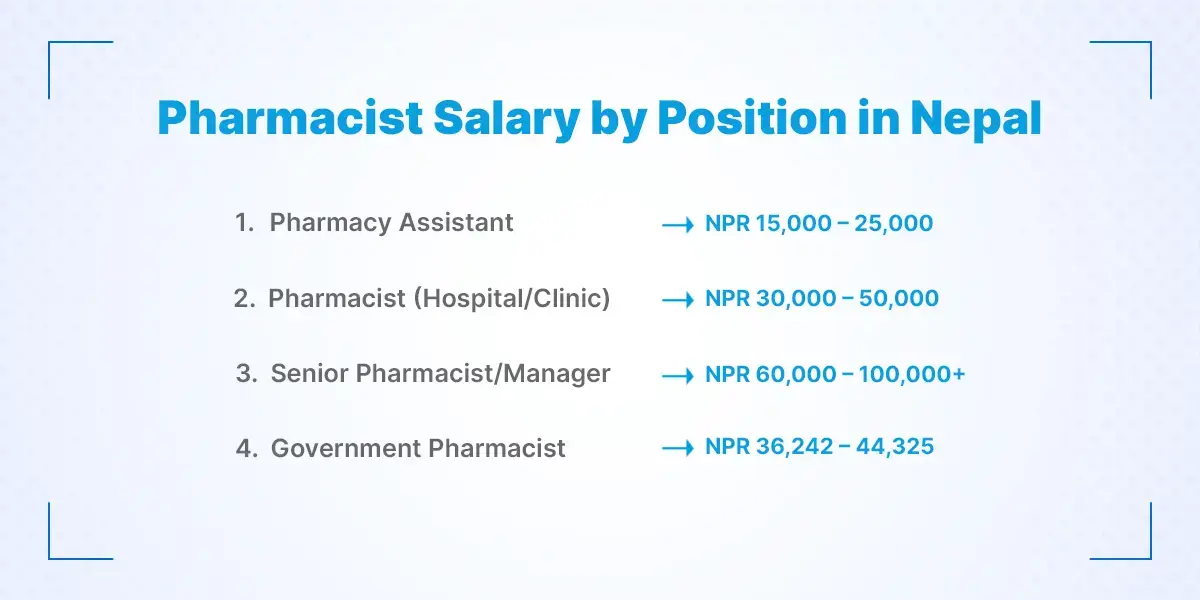
Pharmacists in Nepal earn different salaries based on their role, workplace, and experience. A pharmacy assistant usually earns less, while senior pharmacists or managers earn much more. Government pharmacists follow a fixed pay scale, while private jobs can pay higher depending on performance. Let’s look at the salary for each position in detail.
1. Pharmacy Assistant Salary in Nepal
Pharmacy assistants are usually the starting point for many in this field. Their main job is to support licensed pharmacists in preparing and handing out medicines. The monthly salary of a pharmacy assistant in Nepal is usually between NPR 15,000 and 25,000. This amount may feel small, but it provides a good base for learning. Over time, assistants can move up by gaining more skills and experience. Many assistants later continue their studies in pharmacy for better jobs. While the growth is slow, it is still a safe way to enter the healthcare system.
2. Hospital or Clinic Pharmacist Salary in Nepal
Hospital and clinic pharmacists have a more responsible role. They not only provide medicines but also guide patients on how to use them safely. The average salary for hospital pharmacists in Nepal is around NPR 30,000 to 50,000 per month. Some private hospitals may even pay a bit more, depending on workload and reputation. This role also allows pharmacists to gain real-life experience with patients. The job can be busy, but it gives strong career stability. Over time, hospital pharmacists can move into senior roles or management positions with higher pay.
3. Senior Pharmacist or Manager Salary in Nepal
Senior pharmacists or pharmacy managers enjoy some of the highest salaries in this field. They usually lead teams, manage medicine supplies, and make important decisions. The monthly income for senior pharmacists in Nepal can range from NPR 60,000 to 100,000+. Those working in large pharmaceutical companies often earn even more. This position needs years of experience, strong leadership, and advanced knowledge. With these skills, pharmacists can achieve financial stability and respect. Many professionals see this as the peak of their career in Nepal.
4. Government Pharmacist Salary in Nepal
Government pharmacists follow a fixed pay scale set by the Public Service Commission. Their salary usually falls between NPR 36,242 and 44,325 per month. Pharmacy Supervisor under assistant 5th level earns NPR 36,242. Similarly, a Pharmacy Supervisor under Senior 5th level has a monthly salary of NPR 38,290. An Inspector Pharmacy Supervisor Officer working at the 6th level earns the salary of NPR 44,325 per month. While this amount is lower than some private jobs, it comes with job security and benefits. These include pensions, regular promotions, and allowances. Many people choose this path for the long-term stability it provides. The workload may vary, but the pay scale is steady and predictable. For those seeking a safe and respected career, the government sector is a strong option.
Pharmacist Salary Table
| Position | Monthly Salary (NPR) |
|---|---|
| Pharmacy Assistant | 15,000 – 25,000 |
| Pharmacist (Hospital/Clinic) | 30,000 – 50,000 |
| Senior Pharmacist/Manager | 60,000 – 100,000+ |
| Government Pharmacist | 36,242 – 44,325 |
What Factors Affect a Pharmacist's Salary in Nepal?
A pharmacist’s salary in Nepal depends on education, experience, workplace, and even the city they work in. These factors can create a big difference in monthly earnings. Pharmacy is not a “one-size-fits-all” career. Two people with the same job title may still earn very different amounts. This is because pay is shaped by qualifications, years of work, and the type of institution. Location also plays a huge role, as salaries in Kathmandu are usually higher than in smaller towns. To understand the salary range clearly, let’s break down the main factors.
1. Education and Specialization
The level of education is one of the strongest factors in salary. A diploma holder usually earns less than someone with a bachelor’s degree in pharmacy. Those with a master’s degree or specialization often get much higher salaries, especially in pharmaceutical companies. Higher education shows deeper knowledge, and that is valued in the job market. Many students in Nepal choose to upgrade from a diploma to a bachelor's degree for this reason. Specialization in areas like clinical pharmacy or industrial pharmacy can also open doors to higher-paying roles. In short, more education usually leads to more income.
2. Work Experience and Professional Skills
Experience makes a big difference in what a pharmacist earns. A fresh graduate may start with NPR 20,000, while someone with five years of practice can make triple or more. This is because employers trust experienced pharmacists with more responsibility. Professional skills also matter, such as communication, patient handling, and management. A pharmacist who can lead a team or solve complex problems often earns more. Over time, experience and skills combine to build a solid career. That’s why learning on the job is just as important as formal education.
3. Workplace
Where a pharmacist works also affects their salary. Hospital pharmacists may earn around NPR 30,000–50,000, while retail pharmacists often get less. On the other hand, those working in pharmaceutical production or sales can earn much higher, especially in bigger companies. The private sector usually pays more than government hospitals, but government jobs offer security. Each workplace has its own benefits and drawbacks. Some people choose stability, while others chase higher pay in the industry. The workplace is often the key factor behind salary differences.
4. Location: Kathmandu vs. Other Cities
Location is another big factor in salary. Pharmacists working in Kathmandu and other major cities usually earn more than those in smaller towns. This happens because the cost of living is higher in big cities, and hospitals or companies pay extra to match it. In rural areas, salaries are often lower, but the workload can be lighter. Some government postings outside Kathmandu also come with allowances. Many pharmacists move to cities for better pay and growth opportunities. Still, those who prefer a quieter life may choose smaller towns despite the lower salary.
Career Growth and Opportunities for Pharmacists in Nepal
Pharmacy is a career with many opportunities in Nepal. Pharmacists are not just limited to working in one place. They can grow in their jobs, gain new skills, and explore different fields. With the demand for healthcare and medicines rising, pharmacists have more options than ever.
One of the main paths is working in hospitals, clinics, or government health institutions. Here, pharmacists play a key role in patient care. They make sure medicines are available and used safely. Jobs in hospitals also give experience in managing prescriptions, interacting with doctors, and handling emergencies. Government health jobs add another advantage: job security, regular promotions, and benefits like pensions. These roles are stable and respected.
Another major opportunity is in the pharmaceutical industry. This includes:
- Production – making medicines and ensuring quality.
- Quality control – testing medicines to keep them safe and effective.
- Sales and marketing – helping companies reach hospitals, clinics, and pharmacies.
Working in the industry often gives higher salaries than regular hospital jobs. It also allows pharmacists to learn new skills, like management and business planning.
For those who want to go further, there are international jobs and higher studies. Many pharmacists from Nepal find work abroad in hospitals, research labs, or pharmaceutical companies. Higher studies, like a Master’s degree or PhD, open doors to teaching, research, and advanced industry roles. Pharmacists can also become clinical researchers, quality experts, or consultants.
Career growth in pharmacy depends on learning and experience. Starting as a junior pharmacist, one can become a senior pharmacist, manager, or even a department head. Skills, education, and networking all help in moving up the ladder.
In short, pharmacy in Nepal is not just a job; it’s a career with multiple paths. Whether you want stability, higher pay, or international exposure, pharmacists have opportunities to grow and succeed. The field is evolving, and with dedication, anyone can find a rewarding path.
Pharmacist Jobs in Government vs. Private Sector
Pharmacists in Nepal have two main career paths: government jobs and private sector jobs. Each has its own advantages and challenges. Choosing between them depends on what you value more: stability or growth.
1. Government Sector
Government pharmacist jobs are very popular because of the security they offer. These jobs follow a fixed pay scale set by the government. Salaries are predictable and increase over time with promotions. In addition, government pharmacists enjoy benefits like:
- Pension after retirement
- Paid leave and holidays
- Allowances for housing or travel
- Job stability – you rarely have to worry about layoffs
Working in the government also gives a sense of respect and recognition. The workload may not be as high as in private hospitals, but the environment is structured. Many people prefer this path for long-term security and a steady career.
2. Private Sector
Private sector pharmacists often earn more than their government counterparts. Salaries are usually performance-based, meaning better work can lead to bigger pay. The private sector includes:
- Hospitals and clinics
- Retail pharmacies
- Pharmaceutical companies (production, sales, quality control)
Here, career growth is faster. Promotions, incentives, and bonuses are common. However, job security is lower than in government jobs, and workload can be high. Skills, networking, and experience play a big role in success.
3. Comparison of Benefits
- Salary: Private jobs can pay more, but government pay is stable
- Growth: The Private sector offers faster promotions; the government is slower
- Job Security: Government is safer; private depends on performance
- Other Benefits: The Government has pensions and fixed leave; the private sector may offer bonuses and training opportunities
In short, both paths have their perks. Government jobs suit those who want stability and long-term security. Private sector jobs suit those who want higher pay, faster growth, and are ready to work hard. Many pharmacists even switch between the two during their careers to balance security and earnings.
Conclusion
Pharmacy is a growing and respected career in Nepal. Pharmacists play a key role in healthcare, and their work affects many lives every day. Salary depends on education, experience, workplace, and location. Fresh graduates earn less, but with skills and experience, earnings can rise significantly. Government jobs provide stability, pensions, and steady pay, while private sector jobs offer higher salaries and faster growth. Career opportunities are also wide, from hospitals and clinics to pharmaceutical companies, research, and even international jobs.
With dedication, learning, and the right choices, pharmacists can build a strong and rewarding career. If you are interested in healthcare and want a stable, respected, and flexible profession, pharmacy in Nepal is a smart choice.
Looking for the best health and medical jobs in Nepal? Explore top hospital, clinic, and pharmacy openings today and kickstart your healthcare career!
Frequently Asked Questions
Submit your comments

Get Our App On



What is the Public Relations Officer Salary in Nepal
VIEW DETAILS
What Is the Salary of a Ticketing Officer in Nepal?
VIEW DETAILS
What Is the Salary of a Travel Consultant in Nepal?
VIEW DETAILS
How to Become an Auditor in Nepal
VIEW DETAILS


Loading Comments...