


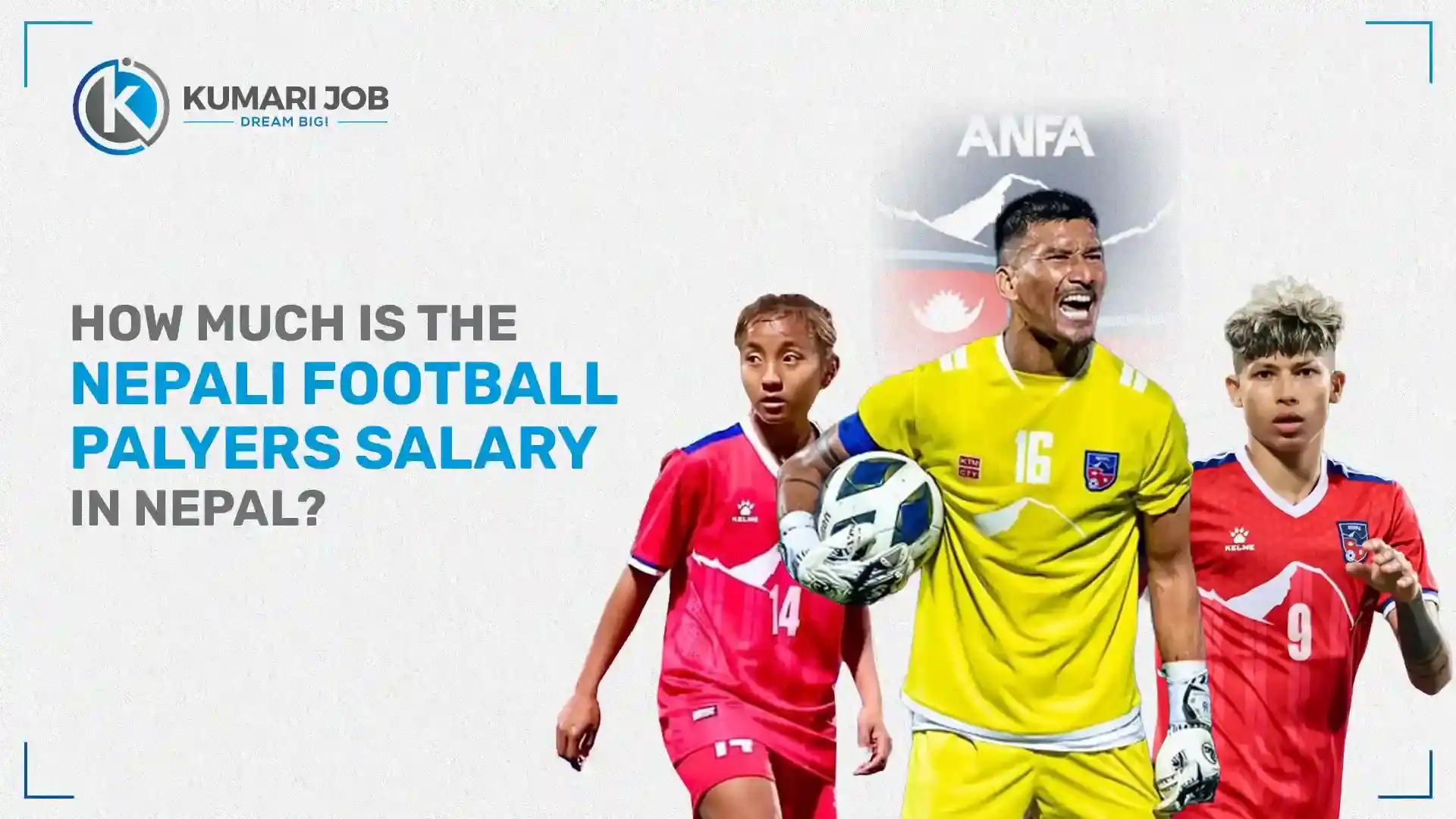

Every football fan in Nepal celebrates at the goals, the trophies, the national pride, but there is one question that is not answered: how much do these players earn? A lot of young athletes have a dream to become professional, and parents are secretly concerned with their financial security. The supporters believe that fame is synonymous with fortune, but the situation with the salaries of Nepali football players in Nepal is much more complicated.
The real picture of the income structure of club contracts, match bonuses, and national team allowances can be used to separate myth and fact. The salaries are different depending on the level of the league, performance, and sponsorships.
In this guide, you will discover the actual Nepali football players' salaries, what influences their income, and what the future holds for aspiring professionals.
In this blog
What is the Average Nepali Football Players Salary in Nepal?
The average salaries of the professional players in Nepali football are relatively low by international standards, with the average salary of the professional players standing at about NPR 30,000 per month, based on the fact that the player is in the national team or the local clubs.
In the case of the members of the national team, the All Nepal Football Association (ANFA) recently raised the monthly salary of the players who play in Nepal to about NPR 30,000, in an attempt to enhance the remuneration of the players. Martyrs Memorial A Division League club-level salaries also differ, with most players in the same range of approximate salaries under season contracts with their clubs. This average income is still small in comparison with more commercialized sports and leagues in spite of the popularity of football.
The lower salary rates demonstrate financial difficulties in the Nepal football ecosystem, where the amount of money collected through sponsorships, TV broadcasting, and match-day revenue is minimal. Bonuses, prize money, and some external earnings are used to supplement the income of many players, but the base salary is still one of the most important indicators of the financial reality of many players.
Salary Structure of Football Players in Nepal
The salary structure of football players in Nepal includes a mix of basic club pay, bonuses from wins, and extra allowances when players represent Nepal internationally. Most players do not earn a large income from just one source. Instead, their total earnings come from a mix of contracts, performance pay, and match-day allowances. This is a complete contrast to the situation in countries where high player salaries are fuelled by broadcasting revenue and massive sponsorship deals. In Nepal, the revenues are based on club contracts, payments to national teams, and additional winning and international match bonuses.
1. Club Contracts and Base Salary
Club contracts are the foundation of a footballer’s pay. Players sign a deal with a club that defines their base salary. In Nepal, A Division League players often earn a few tens of thousands of Nepalese rupees each month under these contracts. Some sources report that a standard range for domestic league players is around NPR 20,000 to NPR 70,000 per month, depending on club finances and player status. Contracts tend to be one season and can have some simple benefits, such as travel or training. The lower division players also receive less, and some clubs pay them on a match-by-match basis instead of a monthly salary.
2. Match Bonuses and Winning Incentives
Clubs can offer additional funds when players score goals, win for their team, and end up high in the league. These are bonuses that are added on top of base salaries. For example, a player may receive a small amount of money as a reward for every goal or a reward for playing on a successful team. Such rewards encourage players to play well in every game. These extras are particularly important to young or less established players to increase their earnings.
3. National Team Allowances and International Match Payments
When players are selected for the Nepal national football team, they receive additional allowances for training camps and matches. The All Nepal Football Association (ANFA) increased monthly national team salaries from about NPR 18,000 to around NPR 30,000 per month recently. On top of that, players can get daily allowances or match fees when they travel for international competitions. These payments help support players when they represent Nepal abroad.
Breakdown of Salary by Competition Levels
In Nepal, football player earnings differ a lot depending on the competition they play in. Traditional Martyr’s Memorial A Division League clubs pay modest monthly salaries, while franchise tournaments like the Nepal Super League (NSL) use an auction system where players earn fixed seasonal contracts based on category. These systems help show how income varies from regular club pay to short-term professional league contracts. Understanding this breakdown gives a clearer picture of how much Nepali footballers actually make today.
1. A‑Division League Salaries
Traditional A Division League clubs, such as Machhindra FC or Church Boys United, generally offer players monthly salaries under seasonal contracts rather than fixed auction amounts. While exact figures are not widely published, reports from local football circles and player interviews indicate that top players in A Division clubs typically earn around Rs. 30,000 to Rs. 80,000 per month, depending on performance level, experience, and club budget. This range reflects the fact that many clubs operate with limited financial resources and depend on ticket sales, small sponsorships, and local support. Players may also receive match bonuses and prize money from league awards, but base pay remains the foundation of their income.
2. Nepal Super League (NSL) Auction Prices
The Nepal Super League (NSL) uses a draft or auction system where players are signed for a single season at set contract values. Unlike the monthly pay in the A Division League, NSL earnings are based on seasonal contracts.
- Category A Players: These are the higher‑tier domestic players and in earlier NSL seasons had base prices around Rs. 150,000 to Rs. 350,000 per season, depending on demand and bidding.
- Category B & C Players: Players in these groups had base prices around Rs. 100,000 to Rs. 150,000 (B) and Rs. 50,000 to Rs. 100,000 (C) respectively, with final contracts depending on how teams bid during the auction.
3. Marquee Players
Each franchise has one marquee player in the NSL, whose contract can tend to surpass regular category limits. These marquee deals are done on a case-by-case basis and are based on the reputation of a player, fan base, and previous successes. The marquee players usually demand the most money in the league and are selected to win supporters and sponsors, with the sums they receive often being very different depending on negotiation and team strategy.
This breakdown shows how football earnings in Nepal vary from steady monthly salaries in traditional clubs to higher, one‑off seasonal fees in franchise competitions.
Factors That Affect Nepali Football Players' Salary in Nepal
Not every football player in Nepal earns the same amount of money. Some players get higher pay, while others earn much less. The difference usually depends on skill, fame, and the club they play for. If you understand these factors, you can clearly see why the Nepali football players' salaries are not equal for everyone.
1. Player Experience and Performance Record
Experience plays a very big role in salary. A player who has played for many years usually earns more than a beginner. Clubs trust experienced players because they handle pressure better. Suppose a player scores many goals or gives strong performances; his value increases. Good match records help during contract talks. National team experience also raises salary offers. Awards and strong past seasons can push the salary even higher. In short, better performance often means better pay.
2. Club Popularity and Financial Strength
Big clubs usually pay more than small clubs. Popular clubs have more fans and more sponsors. Because of this, they collect more money. When a club has strong financial support, it can offer higher salaries. Smaller clubs often work with tight budgets. So they cannot match big club offers. Players in top clubs usually get better bonuses as well. That is why club strength directly affects income.
3. Sponsorship Deals and Brand Endorsements
Some players make money off their club salary. In case a player is popular, he can be approached by brands. Such offers may involve advertisements, events, or social media advertisements. Such offers are common among well-known national team players. This additional revenue is at times the same as or higher than their monthly wages. Brand deals are usually not obtained by younger or less popular players. The greater the publicity a player receives, the higher the opportunities he has to receive additional.
4. Position Played (Striker vs Defender vs Goalkeeper)
Salary can also depend on the level that a player fits into. Strikers can get more money since they score goals. Goals win games, and as such, clubs attach a lot of importance to goal scorers. Midfielders who dominate the game are also able to get good salaries. In certain situations, the defenders and goalkeepers can receive a slightly lower salary. But in the case of a goalkeeper who plays exceptionally well, a good contract can be given to him. Ultimately, position is not the thing, but scoring jobs tends to receive better pay.
Income Beyond Salary for Nepali Footballers
A footballer in Nepal does not depend only on a monthly salary. Many players earn extra money from different sources. This extra income helps them live more comfortably. In fact, for some top players, these extra earnings make a big difference in total income.
1. Sponsorship Income
Sponsorship income comes from companies that support a player financially. A brand may pay a player to use its products. For example, sports shoe or sportswear brands may sponsor footballers. In return, the player promotes the brand during matches or events. This income depends on how popular the player is. National team players usually get better sponsorship deals. Young players may not get sponsors at the beginning. The more famous a player becomes, the higher the sponsorship income can grow.
2. Brand Endorsements
Brand endorsements are slightly different from sponsorships. Here, a player appears in ads or promotes a product publicly. This can include TV ads, posters, or online campaigns. Companies prefer players who have a good image and a strong fan following. Well-known footballers can earn a good amount from one campaign. Sometimes, one deal can give income equal to several months' salary. Lesser-known players usually get smaller deals. So popularity plays a big role here.
3. Appearance Fees
Appearance fees are payments for attending events. A player may be invited to open a shop, attend a football event, or join a local program. The organizer pays a fixed amount for the player’s presence. Famous players can charge higher fees. These events usually last a few hours. Even one appearance can bring good extra income. Young players may receive smaller fees or none at all. Senior players often benefit more from this source.
4. Social Media Promotions
Many players now earn through social media. If a player has many followers, brands may pay for promotion posts. The player shares a product or service on platforms like Facebook or Instagram. Payment depends on follower count and engagement. National team stars usually earn more from social media. New players with fewer followers earn less. Regular posting and fan interaction can increase earnings over time.
5. Prize Money from Tournaments
Tournament prize money is another source of income. When a team wins a league or cup, prize money is shared among players. Even runner-up teams receive some amount. Players may also get individual awards with cash prizes. This money is usually given after the competition ends. The amount depends on the size of the tournament. Bigger competitions offer higher rewards. For many players, this prize money is an important bonus to their regular salary.
Why is Nepali Football Players Salary in Nepal Relatively Low?
The salaries of Nepali football players are rather low because Nepali football is not yet popular in Nepal, sponsors are not eager to invest, and clubs do not receive much money. The dream of a professional football career is often not a sufficient guarantee of a stable life since many young players mistreat finances. Even players of the national teams receive very low pay compared to other sports or nations in South Asia.
1. Low Popularity of Football in Nepal
In Nepal, football is not as popular as cricket or other sports. The number of fans who come to watch matches is reduced, and stadiums are half-deserted. Such low interest restricts the number of tickets sold and lowers the general revenue of the clubs. There is also a lack of media coverage and, therefore, the sport finds it more difficult to expand on a commercial basis.
2. Hesitant Sponsors and Limited Investment
Lack of exposure and unpredictable returns is the fear that makes many brands fear investing in Nepali football. The sponsorship transactions are few or insignificant, and clubs cannot count on the same to pay high salaries. Even the best players can hardly receive competitive salaries without powerful financial support.
3. Infrastructure and League Development Issues
In Nepal, stadiums and training centers are either old-fashioned or inadequate. The local leagues are also not entirely professional, and this influences the quality of football. The bad infrastructure also deters large investors and reduces the chances of growth of players and clubs.
4. Audience and Broadcasting Limitations
- Few football matches are broadcast nationally or online, and audience reach is limited.
- Small viewership reduces advertising and sponsorship income.
- With less revenue from broadcasting, clubs struggle to pay higher salaries.
Overall, the combination of low popularity, cautious sponsors, weak infrastructure, and limited revenue keeps Nepali football salaries far below international levels.
Career Growth and Future Salary Potential in Nepali Football
The career development and long-term pay prospects in Nepali football are gradually changing towards the positive, although it still has difficulties. In recent years, a few Nepali players have moved abroad to play in leagues outside Nepal, showing that opportunities do exist for top talent. Experience and global competitions may also boost the earning power of most players. The emergence of professional leagues such as the Nepal Super League will also assist in getting a more stable platform on which players can base their careers and earn better remuneration.
1. Opportunities to Play in Foreign Leagues
Some Nepali footballers have begun to secure contracts in foreign leagues, especially in neighboring countries like Bangladesh and India. For example, players such as Arik Bista moved abroad to play in the Bangladesh Football League, exposing them to a more competitive environment and higher pay. Playing overseas gives players new skills, better match experience, and often higher salaries than in domestic leagues. Clubs outside Nepal may offer more consistent income and professional growth. These moves also raise the profile of Nepali footballers internationally. As more scouts watch South Asian competitions, successful Nepali players might find more offers in the future.
2. Salary Growth with Experience
The value of the players is usually high as they grow in experience. Those who prove themselves in home teams as well as in the team of the country can conclude more profitable contracts in the future. Players with good records are also likely to translate to higher wages by a club or be granted leadership. Success in league matches or special tournaments makes a good imprint in the personality of a player. Stability and increased opportunities for endorsement or coaching in the future are also accompanied by experience. When there is consistent playing across years, the income of many players grows evidently.
3. Impact of International Tournaments
Nepali players have a larger platform to demonstrate their talent through international tournaments. The visibility is enhanced through playing in the SAFF Championships, playing in AFC qualifiers, or playing friendly matches against foreign teams. Good performances at international matches may attract other foreign clubs. Such tournaments also aid the players in sharpening their skills by having harder opponents. Nepal is not always a country that makes much progress in major competitions, but still, the involvement can serve as a more than satisfactory boost to exposure and confidence. International playing also exposes players to greater opportunities of acquiring larger contracts and monetary rewards.
4. Professionalization of Nepal Super League
The Nepal Super League is helping raise the standard of football in Nepal by giving players a more structured, professional platform to compete. This league has attracted some foreign players, and some teams offer higher pay during the short season. For example, top players have been signed for substantial amounts, such as NRs 1.2 million as marquee players, showing there is strong earning potential in a more organized league setup. A better league structure means better visibility and more professional contracts for local players. Over time, a more stable league could lead to higher salaries year after year. Clubs may attract sponsors and improve infrastructure, which can further boost player income.
In summary, Nepali footballers still earn modestly, but with foreign opportunities, experience growth, international play, and a developing domestic league, future salary potential is on the rise. More exposure and professional structures could create better careers for players in the years ahead.
Conclusion
In Nepal, the Nepali Football Players Salary reflects both the opportunities and limitations of the local football ecosystem. Most A Division League players earn modest monthly salaries, typically between Rs. 30,000 and Rs. 80,000, while top performers in the Nepal Super League can make several times that through seasonal contracts, auction categories, and marquee deals. National team allowances, match bonuses, and sponsorship income further boost earnings for elite players.
However, salaries remain relatively low compared to other South Asian countries due to limited revenue, sponsorship hesitation, and underdeveloped infrastructure. For aspiring footballers, growth is possible through experience, international exposure, and professional leagues, but a financially rewarding career in Nepal still requires exceptional talent, visibility, and consistent performance.
Frequently Asked Questions
Submit your comments

Get Our App On



What is the Public Relations Officer Salary in Nepal
VIEW DETAILS
What Is the Salary of a Ticketing Officer in Nepal?
VIEW DETAILS
What Is the Salary of a Travel Consultant in Nepal?
VIEW DETAILS
How to Become an Auditor in Nepal
VIEW DETAILS


Loading Comments...