




Choosing BSC CSIT often feels like buying a ticket to the tech future, but the real question students quietly ask is, “Will it pay well?” In a country where the IT sector is growing faster than Kathmandu traffic, expectations are high. Some imagine six-figure monthly salaries right after graduation, while others worry about starting small. The truth, as always, sits somewhere in between, shaped by skills, experience, and a bit of hustle.
In this blog, we break down the BSc CSIT salary in Nepal in clear, practical terms, from entry-level pay to senior-level earnings. We’ll explore the average salary of BSc CSIT in Nepal, the highest-paying job roles, factors that influence income, and how salaries compare at home and abroad. With the tech sector booming, finding the right IT jobs in Nepal has never been more lucrative for graduates who possess the right mix of theoretical depth and practical coding skills. If you’re wondering whether this degree is a smart financial move or just another framed certificate on the wall, you’re in the right place.
In this blog
What is BSc CSIT and Its Career Scope in Nepal?
BSc CSIT is a four-year undergraduate degree that blends computer science theory with practical IT skills, including programming, databases, networking, AI, and software development, all under one roof. It’s designed to turn curious students into problem-solvers who can build applications, manage systems, and understand how technology ticks behind the screen. In Nepal, it’s one of the most popular IT degrees, often seen as a gateway to software companies, startups, banks, and even global remote jobs. Simply put, it’s where logic meets opportunity.
Its Career Scope in Nepal
- Software Development: Graduates can work as software or web developers in Nepal’s growing IT companies and startups.
- Data & Analytics Roles: With the right skills, opportunities exist in data analysis, business intelligence, and AI-related fields.
- Network & System Administration: Banks, ISPs, and corporate houses constantly need IT professionals to manage infrastructure.
- Cybersecurity Careers: As digital threats grow, companies look for security analysts to guard their systems like digital watchdogs.
- Freelancing & Remote Work: Many CSIT graduates earn in dollars by working remotely for international clients.
- Government & Banking Sector Jobs: IT officers and technical roles in public institutions offer stability with steady income.
- Entrepreneurship & Startups: Some don’t apply for jobs at all, they build their own apps, tech products, or IT companies.
In short, BSc CSIT doesn’t box you into one path. It hands you a toolkit, and in Nepal’s expanding tech scene, that toolkit can open more doors than you might expect.
Popular Career Paths After BSc CSIT
Completing BSc CSIT is a bit like standing at a crossroads with multiple promising directions. The degree doesn’t lock you into one predictable job; instead, it equips you with technical skills that can branch into software, data, networks, or security. Nepal’s IT industry is expanding steadily, and with digital transformation touching everything from banking to startups, opportunities are wider than ever. The real question isn’t whether jobs exist, it’s which path fits your skills and ambition best.
1. Software Developer
Software developers build the applications and systems that keep businesses running. From mobile apps to enterprise software, their code forms the backbone of modern operations. In Nepal, this is one of the most sought-after roles for CSIT graduates, especially in software companies and outsourcing firms. To become software developer in Nepal, you should focus on mastering a core stack, such as the MERN stack (MongoDB, Express, React, Node.js) or Python/Django, while building a strong GitHub portfolio to showcase your practical skills to employers. Strong command over languages like Python, Java, or .NET can significantly boost earning potential. It’s a role where problem-solving meets patience, and where fixing one bug often reveals two more waiting politely.
2. Web Developer
Web developers create and maintain websites and web applications. Front-end developers focus on design and user experience, while back-end developers manage databases and server logic. With businesses rapidly moving online, demand for skilled web developers in Nepal continues to grow. Freelancing opportunities also make this path attractive for those who prefer flexibility. Think of it as digital construction work, except your bricks are lines of code.
3. Data Analyst
Data analysts transform raw numbers into meaningful insights. They help companies understand customer behaviour, market trends, and performance metrics. In Nepal, sectors like banking, telecom, and fintech are increasingly hiring data professionals. Knowledge of tools like SQL, Excel, and Python can give graduates a competitive edge. Securing a data analyst internship is often the most effective way for students to gain hands-on experience with real-world datasets while learning to navigate the specific business needs of the local market. If you enjoy finding patterns in chaos, this career can feel less like work and more like solving a puzzle with real-world impact.
4. Network Engineer
Network engineers design and manage communication systems that connect computers and devices. They ensure smooth data flow within organisations, especially in banks, ISPs, and large enterprises. As digital infrastructure expands in Nepal, skilled network professionals remain in demand. It’s a behind-the-scenes role, when everything works perfectly, nobody notices. But when the internet goes down, suddenly you’re the most important person in the room.
5. Cybersecurity Analyst
Cybersecurity analysts protect systems from cyber threats and data breaches. With rising digital transactions and online services in Nepal, security has become a priority for organisations. These professionals monitor vulnerabilities, conduct audits, and implement protection measures. It’s a career that demands vigilance and technical depth. In a world full of digital risks, exploring cybersecurity jobs in Nepal can lead to a highly stable career where experts act like silent guardians, keeping threats out while everyone else works peacefully.
What is the Average BSc CSIT Salary in Nepal?
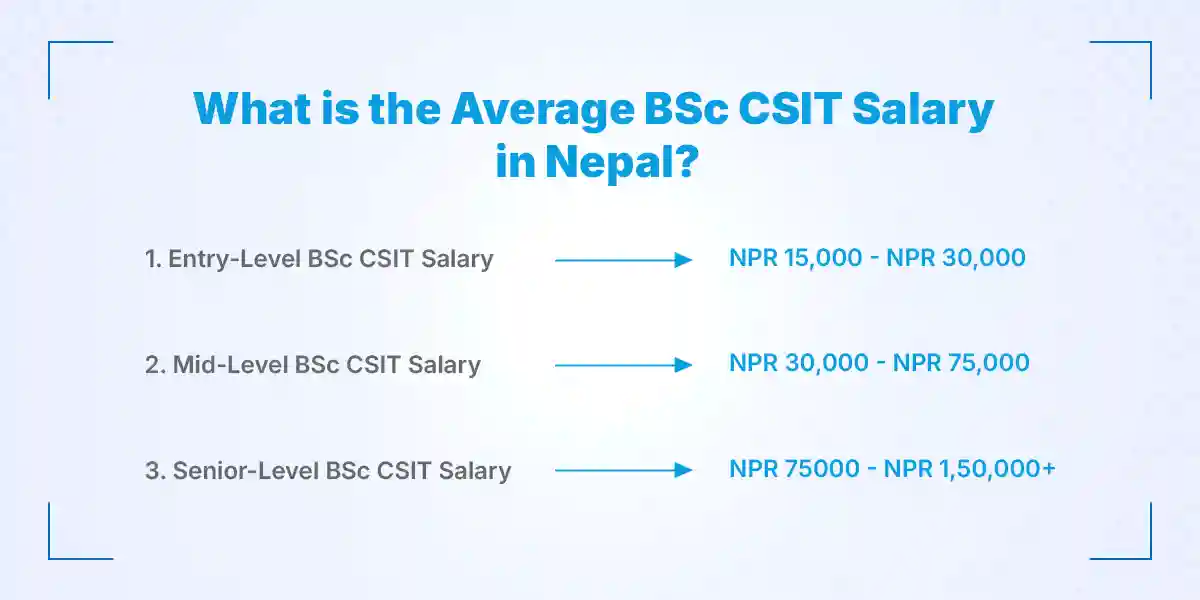
The average BSc CSIT salary in Nepal typically ranges from NPR 15,000 to NPR 1,50,000+ per month, depending on experience, skills, and company type. Fresh graduates usually start modestly, but with the right expertise and a few years of hands-on work, achieving a good salary in Nepal is a highly attainable goal for tech professionals. Nepal’s IT sector rewards practical skills more than just certificates, so growth often depends on what you can build, not just what you’ve studied. In short, the earning curve may begin gently, but it has strong upward potential for those who stay updated with emerging technologies like AI and Cloud computing.
1. Entry-Level BSc CSIT Salary
At the entry-level jobs, most fresh graduates earn between NPR 15,000 and NPR 30,000 per month. Roles often include junior developer, IT support staff, trainee programmer, or intern positions. At this stage, companies focus more on learning ability than years of experience. It’s the phase where you build your portfolio, sharpen your technical skills, and occasionally Google error messages more than you’d like to admit. The pay may start small, but the learning curve is steep and valuable.
2. Mid-Level BSc CSIT Salary
With 2-5 years of experience, salaries typically rise to NPR 30,000-75,000 per month. Professionals at this stage handle larger responsibilities such as leading modules, managing databases, or working directly with clients. Skills in frameworks, cloud tools, or specialised domains significantly boost earning potential. This is where experience begins to pay dividends literally. Employers value reliability and problem-solving ability, and compensation starts reflecting that trust.
3. Senior-Level BSc CSIT Salary
Senior professionals with 5+ years of experience can earn NPR 75,000 to over NPR 1,50,000 per month. Positions include senior software engineer, IT manager, cybersecurity specialist, or project lead. At this level, expertise, leadership, and strategic thinking matter just as much as coding skills. Many also explore remote jobs or consulting opportunities, increasing their income further. By this stage, you’re not just writing code, you’re shaping projects and guiding teams.
How Much Does a BSc CSIT Graduate Earn in Nepal Per Month?
A BSc CSIT graduate earns around NPR 15,000 to NPR 1,50,000+ per month in Nepal, depending on experience, technical skills, and where they work. Freshers usually start at the lower end, while experienced professionals, especially those in senior or specialized roles, climb much higher. While the entry-level pay might be modest, the average salary in Nepal for IT professionals is significantly higher than in most other sectors, with mid-level developers often crossing the six-figure mark. The salary ladder in IT isn’t automatic; it moves with your skills, portfolio, and problem-solving ability. In simple terms, the more value you create, the bigger the paycheck tends to follow.
1. Monthly Salary Breakdown by Experience
At the entry level, most graduates earn between NPR 15,000 and NPR 30,000 per month, often in junior developer or trainee roles. With 2-5 years of experience, salaries typically grow to NPR 30,000-75,000 as responsibilities expand. Senior professionals with strong technical depth can cross NPR 1,00,000 and even reach NPR 1,50,000 or more. IT rewards growth steadily, like compound interest, but for skills. The key difference between levels? Experience, confidence, and fewer panicked debugging sessions.
2. Private vs IT Company Salary Comparison
Traditional private companies outside the tech sector often offer modest salaries for IT roles, especially at the entry level. In contrast, dedicated IT companies and software firms usually provide better pay and faster growth opportunities. Startups may offer slightly lower base salaries but compensate with learning exposure and flexibility. Larger IT firms and multinational-linked companies tend to offer structured salary growth. Where you work matters almost as much as what you know.
3. Freelancing & Remote Job Income Potential
Freelancing and remote jobs can significantly increase earning potential for skilled CSIT graduates. Developers working with international clients often earn in dollars, which can surpass typical local salaries. However, income here depends heavily on skills, consistency, and client trust. It’s not a fixed monthly paycheck, more like a performance-based game. For those willing to build a strong portfolio and personal brand, the ceiling can be much higher than traditional office roles.
Highest Paying Jobs After BSc CSIT in Nepal
Not all IT jobs pay the same, and in Nepal’s growing tech scene, certain roles clearly sit at the top of the salary pyramid. While entry-level positions offer a starting point, specialised and high-responsibility roles command significantly higher pay. The pattern is simple: the rarer the skill, the bigger the reward. Companies are willing to invest in professionals who can solve complex problems, manage systems, or lead teams. In the world of tech, expertise is currency, and some roles are simply more valuable than others.
1. Software Engineer & Full Stack Developer
Software engineers, especially full-stack developers, are among the highest earners after BSc CSIT. They handle both front-end and back-end development, making them versatile assets for companies. In Nepal, experienced full-stack developers can earn well above NPR 80,000-1,50,000 per month, depending on expertise. Their ability to build complete applications from scratch makes them highly valuable. Think of them as the all-rounders of IT, the kind who can fix the roof and paint the walls.
2. Data Scientist & AI Specialist
Data scientists and AI specialists are increasingly in demand as businesses turn data into decision-making fuel. These roles require strong analytical skills, programming knowledge, and familiarity with machine learning tools. In Nepal, professionals in this field can earn competitive salaries, especially in fintech and tech-driven companies. It’s a field where numbers tell stories, and those who understand the language of data often get paid handsomely for translating it.
3. Cybersecurity Expert
With digital transactions and online systems expanding rapidly, cybersecurity experts have become essential. They protect organisations from hacking attempts, data breaches, and system vulnerabilities. Companies are willing to pay premium salaries for professionals who can safeguard sensitive information. In many ways, they’re the digital bodyguards of the modern workplace. When security is strong, business runs smoothly, and that responsibility doesn’t come cheap.
4. Cloud Computing & DevOps Engineer
Cloud and DevOps engineers manage deployment pipelines, cloud infrastructure, and system automation. As more Nepali companies migrate to cloud platforms, demand for these specialists continues to grow. Their work ensures applications run efficiently, securely, and without downtime. It’s a technical role requiring both coding and operational knowledge. In simple terms, they keep the engine running while everyone else drives the car.
5. IT Project Manager
IT project managers may not write code daily, but they lead teams that do. They plan timelines, allocate resources, coordinate developers, and ensure projects are delivered on schedule. With experience, this role offers strong earning potential in Nepal’s IT sector. Leadership, communication, and technical understanding are key. If developers are the builders, project managers are the architects, making sure the blueprint actually turns into a finished structure.
Factors Affecting BSc CSIT Salary in Nepal
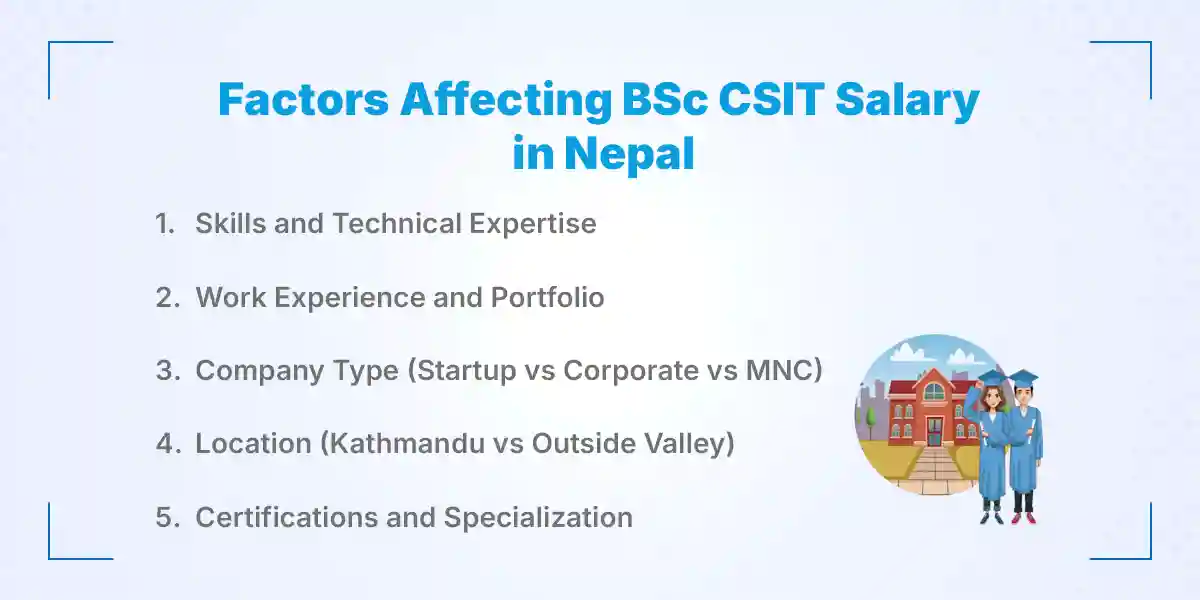
The BSc CSIT salary in Nepal isn’t fixed like a government tariff, it moves with several key factors. Two graduates can hold the same degree but earn very different salaries based on their skills, experience, and where they work. In Nepal’s IT industry, your paycheck reflects your practical value more than your academic transcript. Simply put, the market rewards those who can solve problems efficiently and consistently. Let’s break down what truly influences the numbers on that monthly payslip.
1. Skills and Technical Expertise
In tech, skills are king. Knowing basic programming might get you hired, but mastering frameworks, cloud tools, or cybersecurity can significantly boost your salary. Employers look for professionals who can build, troubleshoot, and innovate, not just follow tutorials. The deeper and more specialised your expertise, the stronger your negotiating power becomes. Think of skills as your currency; the rarer they are, the higher their exchange rate in the job market.
2. Work Experience and Portfolio
Experience adds credibility, and a strong portfolio proves you can deliver results. Companies value candidates who have worked on real projects, handled deadlines, and solved practical challenges. Even freelance or internship work counts if it demonstrates capability. Over time, experience compounds like interest in a savings account, steadily increasing your earning potential. A solid GitHub profile sometimes speaks louder than a long CV.
3. Company Type (Startup vs Corporate vs MNC)
Where you work plays a big role in how much you earn. Startups may offer lower base salaries but provide rapid learning and flexible environments. Established corporate firms typically offer structured growth and stability. Multinational companies (MNCs) or outsourcing firms often pay the highest due to global exposure and larger budgets. It’s not just about the job title, it’s about the ecosystem you’re part of.
4. Location (Kathmandu vs Outside Valley)
Location matters more than many realize. IT salaries in Kathmandu are generally higher due to the concentration of tech companies and demand for skilled professionals. While the capital remains the primary hub, exploring jobs by city reveals that Pokhara, Chitwan, and Biratnagar are emerging as significant IT clusters. Outside the valley, opportunities may be fewer and salary ranges slightly lower, typically 20% to 30% below Kathmandu standards; however, remote work is slowly reducing this gap. Geography still influences income, but in tech, the internet is gradually flattening the map, allowing developers in quieter hubs like Dharan or Itahari to command competitive pay.
5. Certifications and Specialisation
Additional certifications in cloud computing, cybersecurity, data science, or project management can significantly increase your market value. Specialised skills signal commitment and advanced knowledge to employers. While certifications alone don’t guarantee high salaries, they often strengthen your profile during negotiations. In a competitive market, that extra credential can be the small edge that tips the scales in your favour.
Why is the BSc CSIT Salary Growing in Nepal?
BSc CSIT salary is growing in Nepal because the IT sector is expanding rapidly, companies are increasingly tech-driven, and demand for skilled professionals is outpacing supply. As more businesses digitise operations, the value of qualified IT graduates rises. Simply put, tech skills are no longer a nice-to-have; they’re a must-have, and the market is rewarding those who can deliver. The salary curve is climbing steadily, reflecting both opportunity and the pressure to retain talent.
1. Growth of Nepal’s IT Industry
Nepal’s IT industry has grown from small software shops to a vibrant ecosystem of startups, outsourcing firms, and tech companies. With digital banking, e-commerce, and enterprise software on the rise, IT roles are becoming increasingly essential. More companies mean more positions and competitive salaries. The sector is like a garden that keeps expanding, and skilled graduates are the flowers everyone wants to pick first.
2. Rise of Outsourcing & Tech Startups
Outsourcing has opened Nepal to global clients, and tech startups are sprouting everywhere. Both trends create new job opportunities with higher pay. Companies looking to attract talent must offer competitive salaries to retain skilled developers, data analysts, and cybersecurity experts. Startups might not always match corporate salaries, but they often provide perks, learning opportunities, and rapid career growth, a combination that keeps the IT workforce motivated and salaries climbing.
3. Demand for Skilled Developers & Engineers
The demand for developers, network engineers, and IT specialists far exceeds supply in Nepal. Companies value practical expertise, project experience, and problem-solving ability, which directly influences compensation. As the workforce becomes more competitive, those with specialised skills or certifications can command higher salaries. In short, it’s a classic supply-and-demand story: the more in-demand your skills, the fatter your paycheck.
Is BSc CSIT a Good Career Choice in Nepal?
Yes, BSc CSIT is a promising career choice in Nepal. It offers career stability, steady salary growth, and multiple pathways for entrepreneurship or freelancing. With the IT sector expanding rapidly, skilled graduates are in high demand.
- Career Stability: IT roles are increasingly essential across industries, ensuring steady employment opportunities.
- Salary Growth Potential: Graduates can see salaries rise significantly with experience and specialisation.
- Entrepreneurship Opportunities: Knowledge in software and systems allows graduates to start their own tech ventures.
- Freelancing Potential: Remote work and freelancing for international clients can dramatically increase income.
- Diverse Job Roles: Options include software development, data analytics, cybersecurity, cloud computing, and network management.
- Continuous Learning: The tech field encourages skill upgrades, certifications, and staying relevant, keeping careers dynamic.
- Global Opportunities: IT skills are transferable internationally, offering potential for overseas employment or remote work.
Where to Find Jobs After a BSc CSIT in Nepal?
You can find jobs after BSc CSIT in Nepal on company career pages and online job portals like Kumari Job. These platforms list vacancies for IT companies, startups, and remote opportunities, making the job market more accessible than ever. Networking and professional platforms also act as your radar, helping you spot openings before they vanish. In short, there are plenty of doors; the challenge is knowing which ones to knock on and making sure your resume is polished enough to get noticed.
1. IT Companies and Software Firms
Traditional IT companies and software firms remain the most common employers for CSIT graduates. These range from small startups to large corporates offering structured roles like developers, network engineers, and IT support specialists. Working in such firms provides hands-on experience, exposure to projects, and the chance to learn from senior colleagues. It’s the classic “start local, grow global” route.
2. Online Job Portals
Online job portals in Nepal, such as Kumari Job, often list IT vacancies tailored for BSc CSIT graduates. These portals let you filter roles by experience, salary, and location, and many offer email alerts for new openings. Think of them as digital job marketplaces, scan, apply, and let opportunities come to you without endless manual searching.
3. LinkedIn
LinkedIn is a goldmine for networking and job hunting in the IT sector. You can connect with recruiters, follow company updates, and apply directly to vacancies posted by professionals. Regularly posting your achievements and portfolio can increase visibility and attract opportunities. Essentially, it’s your professional billboard in the digital city of Nepali IT.
4. International Remote Companies
Remote work has opened doors for Nepali CSIT graduates to work with international clients and firms. Platforms like Upwork, Toptal, and company-specific remote openings let skilled graduates earn in foreign currencies, often surpassing local salaries. It’s a chance to work globally while sitting in Kathmandu, like having a passport without leaving your desk.
5. Social Media Groups
Facebook groups, Telegram channels, and other social media communities often share IT job postings in Nepal. While less formal than portals, these groups provide quick notifications, discussions, and referrals. They’re like word-of-mouth for the digital age, if you keep your ear to the ground, the right opportunity often comes knocking first.
Future Scope and Salary Growth of BSc CSIT in Nepal
The future scope and salary growth of BSc CSIT in Nepal look promising, thanks to rapid digitization, tech adoption, and global IT trends. Graduates with up-to-date skills can expect steady salary growth, career progression, and opportunities to work on innovative projects. The industry rewards those who adapt, learn continuously, and embrace emerging technologies. Essentially, your career can expand like a well-coded program, scaling efficiently as your skills evolve.
1. Emerging Technologies (AI, Blockchain, Cloud)
BSc CSIT graduates who specialise in AI, blockchain, or cloud computing are in high demand. These technologies are transforming businesses, from fintech to healthcare, creating lucrative job roles. Mastering them can position graduates for cutting-edge projects and higher salaries. In short, staying ahead of tech trends is like investing early in a booming stock; the returns can be substantial.
2. Long-Term Earning Trajectory
With experience, expertise, and continuous skill upgrades, salaries can grow significantly over time. Senior roles like software architect, data scientist, or IT project lead often cross NPR 1,50,000 per month in Nepal. Those who combine technical knowledge with leadership skills see an even steeper earning curve. Think of it as leveling up in a video game: the more challenges you conquer, the bigger your rewards.
3. Leadership and Global Career Opportunities
Experienced BSc CSIT graduates can move into management, team leadership, or strategic IT roles, both in Nepal and internationally. Remote work and global outsourcing allow professionals to access higher-paying international clients without leaving home. Leadership positions not only increase salary but also expand influence and career stability. Essentially, technical skills open doors, and leadership skills help you walk through them confidently.
Conclusion
BSc CSIT offers a rewarding and dynamic career path in Nepal, combining steady salary growth, diverse job roles, and opportunities to work with emerging technologies. From software development to cybersecurity, cloud computing, and data analytics, graduates have multiple avenues to apply their skills. With experience, certifications, and practical expertise, earning potential rises significantly, and remote or international opportunities can further boost income. In short, a BSc CSIT degree is not just a certificate, it’s a launchpad for a sustainable and evolving IT career.
For aspiring IT professionals, the key is continuous learning, building a strong portfolio, and staying updated with industry trends. With dedication and strategic career choices, BSc CSIT graduates can enjoy both financial stability and professional growth. The tech world in Nepal is expanding rapidly, and skilled graduates are perfectly positioned to ride this wave successfully.
Frequently Asked Questions
Submit your comments

Get Our App On



What is the Public Relations Officer Salary in Nepal
VIEW DETAILS
What Is the Salary of a Ticketing Officer in Nepal?
VIEW DETAILS
What Is the Salary of a Travel Consultant in Nepal?
VIEW DETAILS
How to Become an Auditor in Nepal
VIEW DETAILS


Loading Comments...