


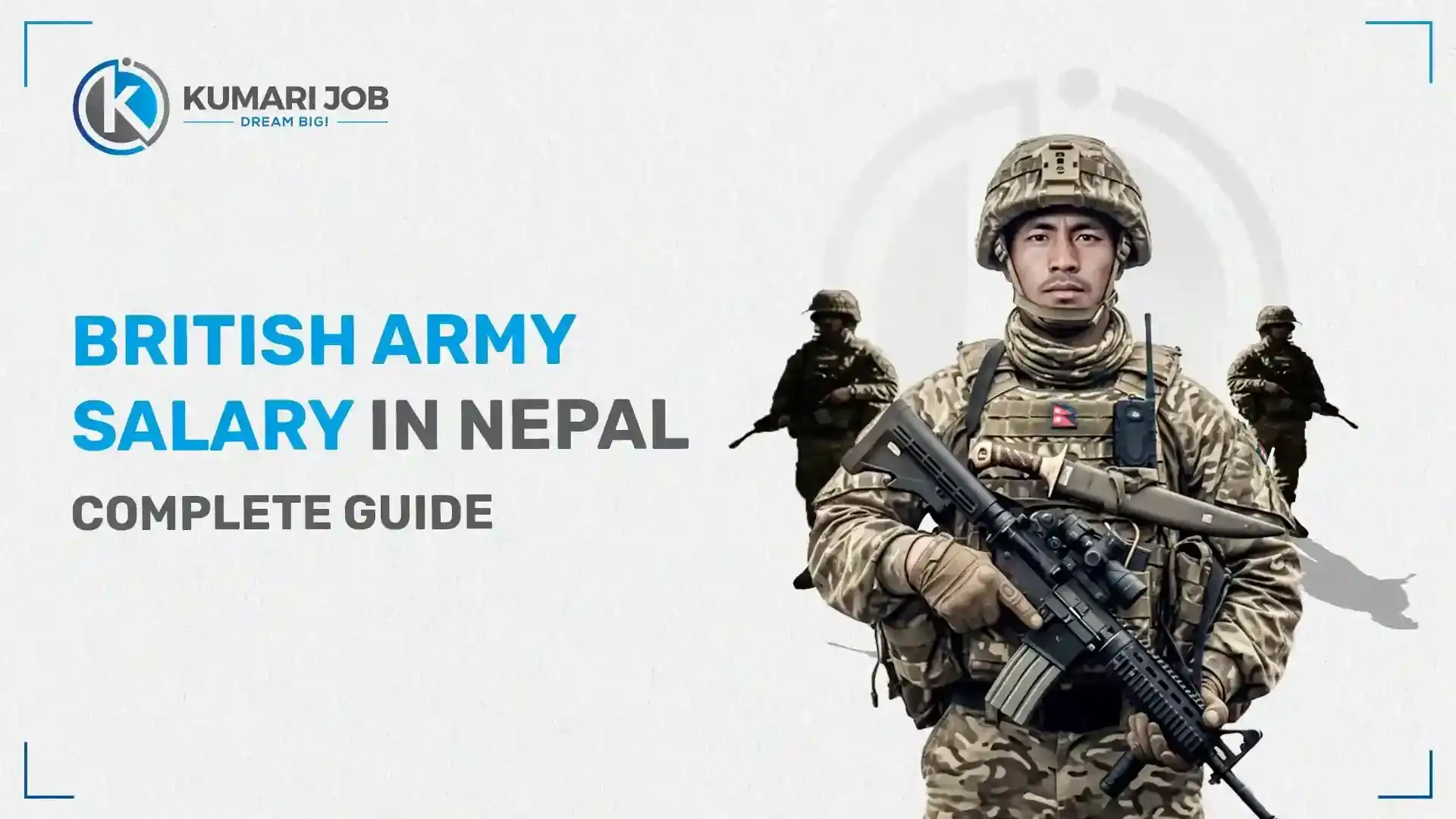

Have you ever wondered why so many Nepali youths dream of joining the British Army? It’s not just about pride and history. It’s also about the salary, benefits, and the secure future that comes with it. In Nepal, where the average income is still low, a job in the British Army feels like winning a golden ticket. Families see it as a chance for stability, respect, and better opportunities for the next generation.
In this guide, we’ll explain everything about the British Army salary in Nepal in a simple way. From the starting pay of new recruits to the pension system after retirement, we’ll cover it all in a clear and simple way. By the end, you’ll know exactly why this career is so attractive for Nepali youth.
In this blog
What is the Salary of British Army in Nepal?
A new Gurkha recruit in the British Army earns about £25,200 per year, which is almost NPR 3.7 lakh per month. This amount alone shows why thousands of Nepali youths still see this job as a life-changing opportunity. In fact, joining the British Army is considered one of the highest-paying jobs in Nepal, offering far more than most local careers.

For comparison, the average salary in Nepal is usually between NPR 15,000 to NPR 30,000 a month. Even government officers and many bank employees don’t earn anywhere close to what a fresh Gurkha soldier makes from day one. In simple words, one month’s salary of a British Army recruit can equal almost a year’s pay for many workers in Nepal.
Another reason this salary stands out is stability. The pay is fixed, reliable, and paid in a strong currency (British Pound). On top of this, soldiers also get allowances for housing, food, medical care, and overseas duties. That means their real income is even higher than the basic salary.
Here’s a quick look at the rank-wise salary scale for Gurkhas:
| Rank | Annual Salary (GBP) | Monthly Salary (NPR approx.) |
|---|---|---|
| Recruit / OR-1 (Private) | £25,200 | NPR 3,68,000 |
| OR-2 (Private full role) | £25,864 – £34,552 | NPR 3,55,000 – 4,75,000 |
| Lance Corporal (OR-3) | £35,611 – £38,023 | NPR 4,89,000 – 5,22,000 |
| Corporal (OR-4) | £37,861 – £44,796 | NPR 5,19,000 – 6,15,000 |
| Sergeant (OR-5/6) | £42,510 – £52,290 | NPR 5,83,000 – 7,18,000 |
| Warrant Officer (OR-7-9) | £47,676 – £63,718 | NPR 6,54,000 – 8,75,000 |
| Lieutenant (OF-1) | £33,183 – £43,737 | NPR 4,55,000 – 6,00,000 |
| Captain (OF-2) | £50,540 – £59,903 | NPR 6,93,000 – 8,22,000 |
| Major (OF-3) | £63,387 – £83,474 | NPR 8,70,000 – 11,46,000 |
This clear gap between the British Army's salary and Nepal’s average income explains why Gurkha recruitment is still highly respected. For many families, it’s not only about honor but also a direct path to financial security and a better lifestyle.
How much does a New Recruit earn in the British Army?
A new Gurkha recruit in the British Army earns around £25,200 per year (about NPR 3.7 lakh per month) from the very beginning of their service.
But in the first year, things work a little differently because of training pay and extra allowances. Let’s break it down:
- Basic Training Pay – During the first few months of training in the UK, recruits receive slightly lower pay than a fully trained soldier. However, it is still much higher than most salaries in Nepal.
- Full Soldier Pay – After completing training, the salary increases to the full scale of £25,200 annually.
- Allowances – On top of salary, recruits get free food, accommodation, and uniforms during training. This means they can save most of their earnings.
- Extra Benefits – Even in the first year, medical care and pension contributions start, which makes their package much more valuable than just the salary figure.
So, while a Nepali youth in Nepal might earn NPR 15,000–20,000 a month, a new Gurkha recruit earns more than ten times that amount, plus free living facilities. That’s why even the starting phase is considered life-changing for recruits and their families.
What Allowances and Benefits do Gurkha Soldiers Receive?
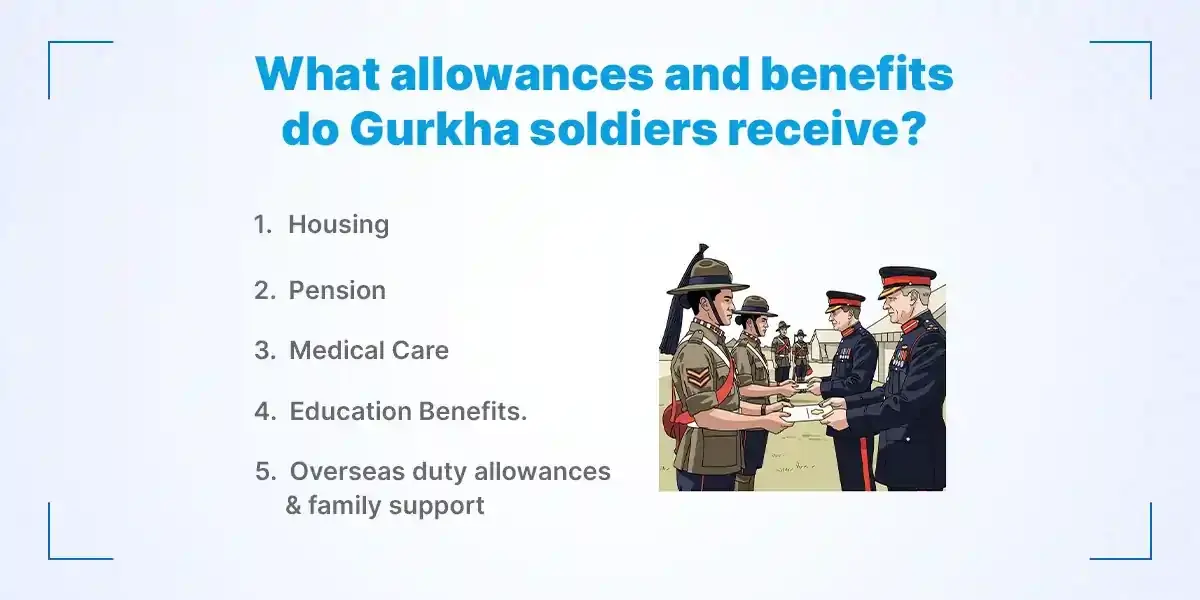
Gurkha soldiers receive many allowances and benefits on top of their salary, including housing, pension, medical care, education support, overseas duty allowances, and family support. These benefits make the British Army job very attractive for Nepali youths. Even when they are far from home, Gurkhas and their families are well taken care of. The salary is just one part; the allowances and support make the overall package much stronger.
1. Housing Allowances
Gurkha soldiers get free or sponsored housing while serving in the UK or abroad. This means they do not need to spend their salary on rent. Soldiers living in barracks or military housing have basic facilities like electricity, water, and sometimes even furniture. Housing allowances may also be provided if they live off-base. Families living abroad may also get housing support. Good housing ensures soldiers and their families live comfortably without financial stress.
2. Pension
Every Gurkha soldier is eligible for a pension after completing their service. The amount depends on the years of service and rank achieved. Even after retirement, they continue to receive this income, which provides financial security. Pensions are paid regularly, usually monthly, and help retired soldiers live comfortably in Nepal or abroad. This benefit is a major reason why joining the British Army is seen as a secure career.
3. Medical Care
Medical care is fully covered for Gurkha soldiers and their immediate family members while in service. They can visit doctors, hospitals, and even get specialized treatment without paying extra. Some medical benefits continue even after retirement. Soldiers do not have to worry about health emergencies, which makes the job less stressful.
4. Education Benefits
Gurkha soldiers’ children can get support for schooling and education in some cases. This includes financial help for school fees or access to British Army schools abroad. Education benefits ensure that the families of soldiers have better future opportunities. It also motivates soldiers to focus on their work without worrying about their children’s schooling.
5. Overseas Duty Allowances and Family Support
When serving outside the UK, Gurkha soldiers receive extra allowances for living in foreign countries. These allowances cover extra costs like food, travel, and accommodation differences. Family support includes help for spouses and children, especially if they move abroad. This ensures soldiers can concentrate on their duties while their families are well looked after.
How does British Army Salary Compare to Nepal Army salary?
The Nepal Army offers a starting monthly salary of approximately NPR 28,728 for new recruits, while a new recruit in the British Army earns around £25,200 annually, equating to about NPR 3.7 lakh per month. A British Army recruit earns nearly 17 times more than a Nepal Army recruit each month. When comparing the salaries of the Nepal Army and the British Army, the difference is huge. Gurkha soldiers in the British Army receive a higher salary than those in the Nepal Army. This difference is not just in base salary but extends to various allowances and benefits.
Facilities, Lifestyle, and Retirement Benefits Comparison
- Housing: British Army soldiers receive free or sponsored housing, whereas Nepal Army personnel in some cases have to arrange their own accommodation.
- Medical Care: Gurkhas have access to comprehensive medical care, including dental and specialist services, while Nepal Army soldiers receive basic medical facilities.
- Education Benefits: The British Army provides educational support for soldiers' families, including schooling allowances. Nepal Army offers limited educational benefits.
- Overseas Duty Allowances: Gurkhas receive additional allowances when deployed abroad, covering extra living costs. Nepal Army personnel may receive allowances, but they are generally lower.
- Retirement Benefits: Gurkhas are entitled to pensions and other retirement benefits, ensuring financial security post-service. Nepal Army personnel receive pensions, but the amount is comparatively lower.
British Army vs Nepal Army
| Feature | British Army (Gurkhas) | Nepal Army |
|---|---|---|
| Starting Salary | £25,200/year (~NPR 3.7 lakh/month) | NPR 21,480/month |
| Housing | Free/Subsidized | Self-arranged (in some cases) |
| Medical Care | Comprehensive (incl. dental) | Basic facilities |
| Education Benefits | Schooling allowances for families | Limited |
| Overseas Allowances | Yes (covers extra costs) | Limited |
| Retirement Benefits | Pension, financial security | Pension (lower amount) |
In conclusion, joining the British Army offers Nepali recruits not only a higher salary but also a range of benefits that contribute to a better quality of life and financial security.
What is the Pension System for Retired Gurkhas?
Retired Gurkha soldiers receive a pension through the Gurkha Pension Scheme (GPS) if they have completed at least 15 years of service. This pension is paid for life and adjusted to match the cost of living in Nepal, giving veterans financial security after retirement.
On top of this, many retired Gurkhas also get support from the Gurkha Welfare Trust (GWT). The GWT is a charity set up specifically to help Gurkha veterans and their families. It provides extra support that goes beyond the government pension, including healthcare, housing, education for children, and emergency aid. This ensures that Gurkha soldiers can live comfortably even after they retire from the British Army.
1. Eligibility for Pension
- Complete at least 15 years of qualifying service.
- Be discharged under conditions that allow pension benefits.
- Service before 1997 may have special rules for eligibility.
Even if a soldier does not meet all requirements, GWT can sometimes provide assistance to retired Gurkhas in need.
2. Calculation Method and Benefits After Retirement
The Gurkha pension depends on:
- Length of Service – More years served means a higher pension.
- Rank at Discharge – Higher rank equals higher pension.
- Final Pay – Pension is calculated based on the last pay received.
Pensions are paid monthly and rise gradually with inflation in Nepal.
Additional benefits may include:
- Disability Pension – For service-related injuries or illness.
- Family Pension – Paid to dependents if the Gurkha passes away.
- Lump-Sum Payments – Death gratuity or retirement gratuity.
3. Role of Gurkha Welfare Trust (GWT)
The GWT provides extra support for retired Gurkhas:
- Builds and maintains homes for veterans in Nepal.
- Offers medical and dental care beyond what the army provides.
- Provides financial help for families, including education for children.
- Helps veterans during emergencies, such as accidents or natural disasters.
In simple terms, the GPS gives a solid base pension, and the GWT ensures Gurkhas and their families have extra security, healthcare, and a better quality of life after retirement.
Why is the British Army Job Attractive for Nepali Youth?
The British Army job is attractive to Nepali youth because it offers financial security, global exposure, and long-term career benefits. While government jobs in Nepal are popular for stability, the British Army offers much higher pay, better benefits, and a chance to travel and gain new skills. Many young Nepalis see it as a way to support their families, gain respect, and explore opportunities that are not available at home. The salary and benefits alone make it a life-changing option, but there are also other reasons why joining is highly valued.
1. Financial Security
Joining the British Army gives young Nepalis a stable and high salary from the very start. Even a new recruit earns more in one month than most Nepalese earn in a year. On top of this, soldiers get housing, food, medical care, and allowances, so they can save most of their earnings. The pension system also ensures that even after retirement, they continue to have income. Families often rely on this money for education, health, and daily expenses. Unlike jobs in Nepal, this job provides a reliable and predictable income. Many see it as a way to lift their entire family financially.
2. Global Exposure
Gurkha soldiers get the chance to travel and work in different countries. They train in the UK and may be deployed across the world. This gives them exposure to new cultures, languages, and work experiences. Life in the British Army teaches discipline, teamwork, and leadership in ways that are hard to get elsewhere. Soldiers also learn modern skills and technologies, which they can use in future jobs. This global exposure makes them confident and more aware of the world outside Nepal. It also helps their families understand international opportunities.
3. Career Opportunities and Long-Term Benefits
The British Army offers clear career growth. Soldiers can be promoted to higher ranks with better salaries and responsibilities. They can also specialize in different fields like engineering, communications, or logistics. After retirement, their experience opens doors to jobs in security, training, or even in international companies. Along with pensions, medical care, and family support, these benefits provide a long-term safety net. Many Gurkhas continue to work after retirement in Nepal or abroad because of the skills and experience they gained. This combination of salary, training, and career opportunities makes it very attractive.
What Challenges do Gurkhas Face in the British Army?
Gurkhas face several challenges when joining the British Army, including a competitive selection process, life abroad, cultural differences, and strict discipline. Even though the job is attractive, it is not easy. Young Nepalis must be physically and mentally ready to meet these challenges. Life in the army can be very different from life back home, and recruits must adapt quickly.
1. Competitive Selection Process
The first challenge is the selection process, which is extremely competitive. Thousands of candidates apply each year, but only a few are chosen. Recruits must pass physical tests, written exams, and interviews. Strength, stamina, and intelligence are all tested. Many aspirants train for months or even years to meet the standards. Even small mistakes can disqualify candidates. This makes the process stressful and challenging. Only the most prepared and determined succeed.
2. Life Abroad
After selection, Gurkhas often have to live far from their families. They train in the UK and may be deployed in different countries. Being away from home can be lonely, especially during festivals or family events. Soldiers must adjust to new food, weather, and surroundings. Communication with family may be limited, making homesickness a common problem. However, this experience also teaches independence and resilience. Over time, many soldiers adapt and even enjoy the exposure to new environments.
3. Cultural Differences
Gurkhas work in an environment with different languages, customs, and lifestyles. Understanding British culture and army traditions can be difficult at first. Misunderstandings may happen in daily life or at work. Soldiers must learn to communicate clearly and respect local rules. Adapting to new norms while keeping their own identity can be challenging. Over time, many Gurkhas develop a balanced approach, combining their own culture with British military culture. This also helps them work effectively in a multinational team.
4. Discipline
Discipline in the British Army is strict and non-negotiable. Soldiers must follow orders precisely and maintain high standards of conduct. Daily routines are structured, and mistakes are not easily tolerated. Early mornings, strict training schedules, and responsibility for duties can feel intense. Some recruits find it difficult to adjust initially. However, discipline also builds character, leadership, and self-confidence. It prepares Gurkhas to handle difficult situations both in the army and in civilian life later.
Conclusion
Joining the British Army as a Gurkha is not just a job; it is a life-changing opportunity. The salary is very high compared to Nepal, and the allowances and benefits make life secure for both soldiers and their families. Training, discipline, and overseas exposure help Gurkhas grow as strong, confident, and skilled individuals.
There are challenges too, like the tough selection process, living abroad, and adapting to new cultures. But for those who succeed, the rewards are great. A stable income, pension, career growth, and global experience make it worth the effort. For many Nepali youths, joining the British Army is more than a career. It is a path to financial security, respect, and a brighter future for themselves and their families.
Are you ready to serve your country with pride? Apply for the Nepal Army vacancy today and embark on a respected, rewarding career.
Frequently Asked Questions
Submit your comments

Get Our App On



What is the Public Relations Officer Salary in Nepal
VIEW DETAILS
What Is the Salary of a Ticketing Officer in Nepal?
VIEW DETAILS
What Is the Salary of a Travel Consultant in Nepal?
VIEW DETAILS
How to Become an Auditor in Nepal
VIEW DETAILS


Loading Comments...