



Looking for a BPH job in Nepal, but unsure how much you can actually earn? You are not alone. Many fresh graduates step into the job market excited, only to find salary information scattered and confusing. It’s frustrating when you don’t know what to expect from government, NGO, or hospital roles.
This guide will clear all that confusion. We will break down BPH salaries in Nepal, from freshers to experienced professionals. You’ll see how pay differs by job type, location, and sector. By the end, you’ll have a clear idea of what to aim for and how to boost your earning potential in your public health career.
In this blog
What is BPH?
Bachelor of Public Health, or BPH, is a degree for anyone who wants to work in improving the health of communities. It’s not just about hospitals or doctors. It’s about understanding why people get sick and how to stop it before it happens.
If you choose BPH, you’ll learn how to plan health programs, work with communities, and manage health services. You’ll also get skills in research, data collection, and health education.
Here’s a simple breakdown of the degree:
- Duration: 4 years in Nepal.
- Subjects: Public health principles, epidemiology, biostatistics, environmental health, health promotion, and health management.
- Skills you Learn: Data analysis, community health planning, communication, and teamwork.
BPH professionals play an important role in the health system. They don’t just treat patients. They help prevent diseases, educate people about healthy habits, and support health policies. In hospitals, NGOs, and government programs, they make sure health projects run smoothly. They also track health data and research problems to find better solutions.
Whether it’s organizing vaccination campaigns, monitoring disease outbreaks, or teaching communities about hygiene, BPH graduates are at the center of keeping people healthy. This makes the degree highly useful, not only in Nepal but also for jobs abroad.
With the right skills and experience, a BPH graduate can grow from a field worker to a program manager, researcher, or health officer. It’s a degree that combines science, management, and community work in one.
What is the Average BPH Salary in Nepal?
The average BPH salary in Nepal ranges from NPR 25,000 to 70,000 per month, depending on experience, sector, and location. For fresh graduates just starting their careers, the monthly salary usually falls between NPR 25,000 and 35,000. These are entry-level roles, mostly in government programs, NGOs, or small hospitals. As you gain experience, your pay grows. After 3–5 years, BPH professionals can earn NPR 50,000 to 70,000 per month, and senior roles or specialized positions may go even higher.
Here’s how salaries vary in different sectors:
- Government Jobs: Usually stable and consistent. Entry-level salaries start around NPR 30,000. With promotions and allowances, experienced officers can earn 50–60k per month.
- Private Hospitals and Clinics: Salaries can start a little lower, around NPR 25–30k, but experienced staff may earn more depending on the hospital.
- NGOs and INGOs: Often pay higher than government roles, especially for experienced staff and project-based positions. Monthly salaries can range from 40–120k, plus extra benefits.
Location also matters. Kathmandu and other major cities tend to offer higher salaries than towns or rural areas. This is due to the cost of living and the availability of bigger projects or INGOs.
Summary of factors affecting BPH salary:
- Experience and seniority
- Type of organization (government, NGO, private)
- Job role and specialization
- Location (Kathmandu vs outside valley)
Understanding this helps you plan your career. You’ll know when to expect a raise, which sector to target, and where your skills are most valued. With the right experience and skills, your earning potential as a BPH professional in Nepal can grow steadily over time.
What Factors Affect BPH Salary in Nepal?
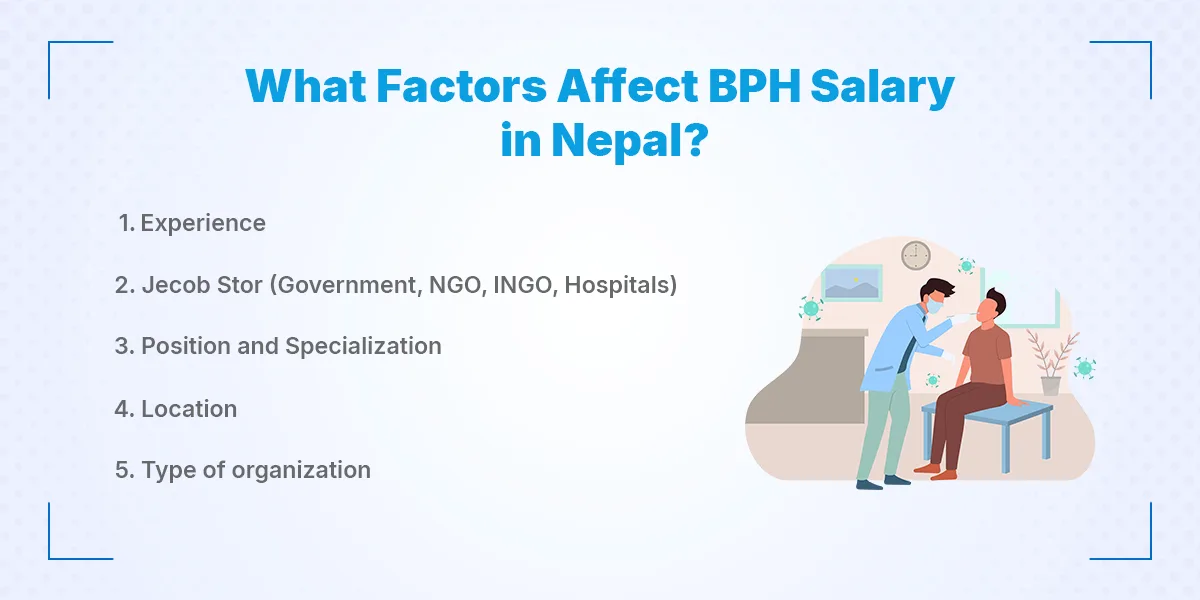
The main factors that affect BPH salary in Nepal are experience, job sector, position, specialization, location, and type of organization. Your salary is not just about the degree you hold. It depends on many factors, such as where you work, your role, and the experience you bring. Two BPH graduates with the same degree can earn very different amounts. Knowing these factors can help you make smarter career choices and aim for better pay.
1. Experience
Experience plays a big role in your salary. Fresh graduates usually start with lower pay. As you work for a few years and gain skills, your salary gradually increases. More experienced professionals may also get bonuses and extra allowances. Employers value proven experience, which often leads to promotions and higher pay.
2. Job Sector (Government, NGO, INGO, Hospitals)
The job sector also matters a lot. Government jobs tend to offer stable salaries but smaller increments. Jobs in NGOs and INGOs often pay more, especially for specialized roles or project-based positions. Private hospitals may start with lower salaries, but they can increase with experience.
3. Position and Specialization
Position and specialization can change your pay significantly. Higher roles like program coordinator or public health officer usually earn more. Specialized skills, such as data analysis, monitoring and evaluation, or field management, can increase your salary. The more responsibilities you take, the higher your pay can go.
4. Location
Location is another factor. Jobs in Kathmandu or big cities often pay more than rural areas. Some remote or field jobs give extra allowances to attract professionals. Living costs and project budgets usually influence the salary offered.
5. Type of Organization
The type of organization affects pay as well. Large INGOs or international projects usually give higher salaries and benefits. Smaller NGOs or local hospitals might pay less but provide valuable experience. The reputation and resources of the organization often determine what you can earn.
BPH Salary Based on Job Type
BPH graduates can work in many different roles, and salaries vary depending on the job type. Some positions start with low pay but grow quickly with experience. Others, especially specialized or managerial roles, offer higher salaries right from the beginning. Knowing the typical pay for each job helps you plan your career and set realistic expectations.
1. Health Assistant
The salary of health assistants ranges from NPR 25,000 to 60,000 per month. Entry-level pay is on the lower side, but it grows with experience and additional responsibilities. They assist in hospitals, clinics, and community health programs. Their work includes basic health checks, record keeping, and supporting health campaigns. Experienced health assistants may get extra allowances for night shifts or fieldwork. This role is a good starting point for fresh BPH graduates. It gives practical experience in public health services.
2. Public Health Officer
Public health officers earn around NPR 30,000 to 40,000 per month. They plan and manage community health programs and often work for government health offices or NGOs. Their responsibilities include monitoring projects, educating communities, and supporting health policy implementation. Pay increases with experience and promotions to senior officer positions. This role is ideal for graduates who want a mix of office and fieldwork.
3. Field Supervisor
Field supervisors make between NPR 35,000 and 70,000 per month. They oversee health projects on the ground and guide field staff. The role requires good management skills and hands-on problem-solving. Experienced supervisors can get higher pay, including field allowances. This job often involves traveling to project sites. It’s suited for BPH graduates who like coordinating teams and working in communities.
4. Program Coordinator
Program coordinators earn NPR 70,000 to 100,000 monthly. They manage large health projects and supervise multiple teams. Their job includes planning, budgeting, and reporting to higher authorities. Coordination skills and experience in public health programs are very important. Senior coordinators may also receive additional benefits like travel allowances.
5. Health Researcher
Health researchers can earn NPR 45,000 to 80,000+ per month, depending on the project. They collect and analyze health data and support evidence-based decisions. Skills in data analysis, report writing, and field surveys are highly valued. Research roles may include NGO, government, or academic projects. Experienced researchers often get higher pay and extra project allowances.
6. Monitoring & Evaluation (M&E) Officer
M&E officers earn around NPR 30,000 to 50,000 per month. They track project progress, analyze data, and report findings. Strong skills in Excel, SPSS, or Power BI can help increase pay. The role involves both office work and occasional field visits.
7. Community Health Educator
Community health educators make NPR 25,000 to 50,000 per month. They teach communities about hygiene, nutrition, and disease prevention. This role is mostly field-based and requires good communication skills. Experienced educators may get higher pay and travel allowances.
Government BPH Salary in Nepal
BPH graduates working in government jobs in Nepal usually get stable and reliable salaries. The pay may not be as high as in INGOs, but it comes with benefits, job security, and chances for growth. Many BPH graduates prefer government roles for long-term stability and career planning.
1. Lok Sewa Salary Range
Entry-level BPH professionals in government positions, like health assistants or public health officers, typically earn around NPR 30,000 to 35,000 per month. As they gain experience and move up the ranks, salaries can increase to NPR 50,000 to 60,000 or more. The exact salary depends on the position, responsibilities, and location of posting.
2. Allowances & Benefits
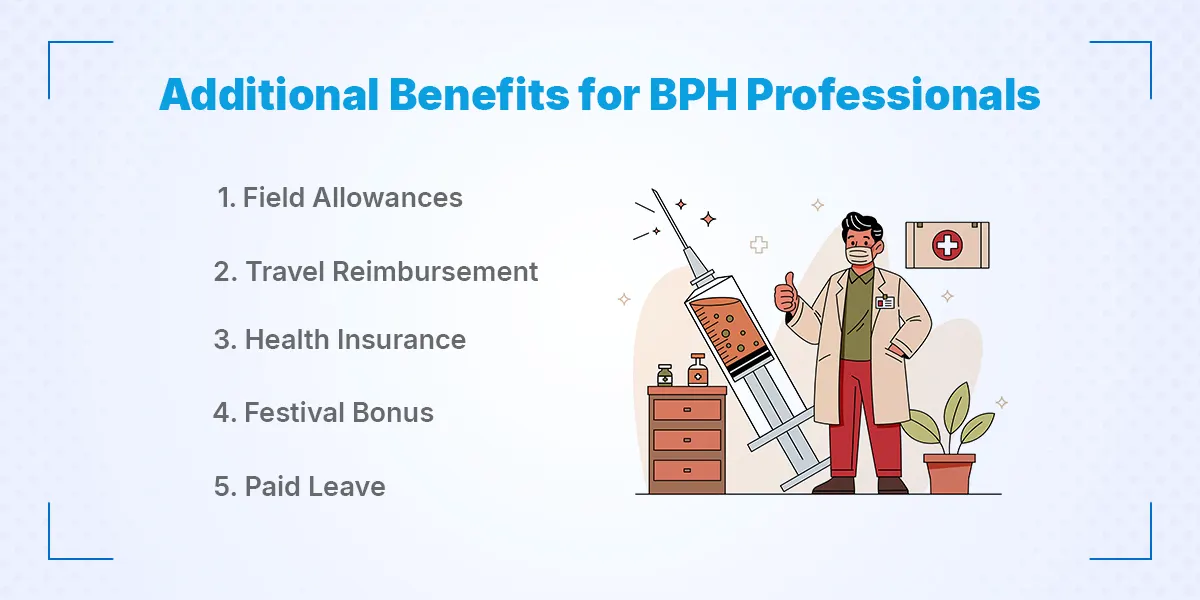
Government jobs often include extra allowances, such as field allowances for rural postings, travel reimbursement, and health benefits. Employees may also get festival bonuses, paid leave, and insurance coverage. These perks make the overall package more attractive than the base salary alone.
3. Promotion and Career Growth
Career growth in government service is structured. With experience, BPH professionals can move from junior roles to senior positions, like senior public health officer or program manager. Promotions usually come with higher pay and additional responsibilities. Long-term government service also opens opportunities for training programs, leadership roles, and specialized public health positions.
Working in government allows BPH graduates to plan their careers steadily while gaining experience across different public health programs. It is a good choice for those seeking stability, benefits, and gradual salary growth.
INGO/NGO BPH Salary in Nepal
BPH graduates who have jobs in INGOs and NGOs in Nepal often earn more than in government jobs. These roles can be exciting, with exposure to large projects, international standards, and specialized programs. Salaries vary a lot depending on the organization, project, and your experience.
1. Salary Range in INGOs
In large INGOs like WHO, UNICEF, or Save the Children, BPH professionals can earn NPR 60,000 to 130,000 per month. Senior positions, especially in program management or research, can go even higher. Entry-level roles are lower but still usually above government starting salaries.
2. NGO Project-Based Salaries
Many smaller or local NGOs pay on a project basis. These salaries usually range from NPR 30,000 to 70,000 per month, depending on the size and funding of the project. Sometimes project work is short-term, so the pay might include bonuses or stipends for extra work. Experience and skills in project management or M&E can increase your earning potential.
3. Benefits & Field Allowances
Most INGOs and NGOs provide benefits like health insurance, travel reimbursement, and field allowances. Rural or remote postings often include extra allowances to cover travel and accommodation. Some organizations also give festival bonuses, paid leave, and training opportunities. These benefits can significantly improve the overall package and make these roles more attractive.
Working in INGOs or NGOs is a great option for BPH graduates who want higher pay, practical experience, and exposure to international public health projects.
Hospital & Clinical BPH Salary in Nepal
BPH graduates can also work in hospitals and clinical settings. These healthcare jobs give hands-on experience in patient care, health programs, and hospital management. Salaries vary depending on whether you work in a private or government hospital, your experience, and the shifts you take.
1. Private Hospital Salary
In private hospitals, entry-level BPH professionals usually earn NPR 25,000 to 40,000 per month. Experienced staff or supervisors can earn up to NPR 60,000 or more, depending on responsibilities and hospital size. Private hospitals may offer faster salary growth if you take on managerial or specialized roles.
2. Government Hospital Salary
Government hospitals offer stable salaries, starting around NPR 30,000 to 35,000 per month for junior roles. With experience and promotions, pay can increase to NPR 50,000 to 60,000 or higher. Benefits like health insurance, paid leave, and allowances are also included.
3. Night Shift and Duty Allowances
Many hospitals give extra pay for night shifts or extra duty hours. This can add NPR 2,000 to 10,000 per month, depending on the hospital and hours worked. Field allowances may also be given for staff working in rural or hard-to-reach areas.
Working in hospitals is ideal for BPH graduates who want practical experience, a steady income, and opportunities for growth. Night shifts and extra allowances can make the overall salary package more rewarding.
BPH Salary in Nepal for Fresh Graduates
Fresh graduates with a BPH degree usually start their careers with modest salaries. Entry-level pay varies depending on the sector, location, and organization, but most freshers earn between NPR 25,000 and 35,000 per month. This is enough to start gaining experience, but higher pay comes with skill and responsibility.
Internships are often the first step for many BPH graduates. Internships may offer a small stipend or sometimes be unpaid, but they provide hands-on experience and exposure to real health projects. Your first full-time job usually pays more than an internship and helps you build a professional track record.
Certain skills can significantly increase your salary even as a fresh graduate. Knowledge of data analysis tools like Excel or SPSS, monitoring and evaluation (M&E) skills, and community health program experience are highly valued. Good communication, report writing, and teamwork also make you more competitive for higher-paying jobs.
Starting your career with the right skills and experience can help you move quickly to better-paying positions. Even as a fresher, focusing on practical abilities and project experience can make a big difference in your salary and career growth.
BPH Salary After Experience (1–5+ Years)
BPH professionals with 1–5 years of experience usually see a noticeable increase in their salary. After gaining practical experience, most can earn between NPR 40,000 and 70,000 per month, depending on their sector and role. Experience also opens doors to higher responsibilities and better benefits.
1. Salary Growth
As you work in government, NGO, INGO, or hospital settings, your pay grows gradually. Promotions, skill development, and project experience all contribute to higher salaries. Professionals with specialized skills like M&E, data analysis, or program management can earn even more.
2. Promotion Roles
After a few years, BPH graduates can move into supervisory or coordinator positions. Roles like Field Supervisor, Program Coordinator, or Public Health Officer become achievable. These positions come with increased pay, decision-making responsibilities, and sometimes additional allowances.
3. Senior-Level Positions
With more than 5 years of experience, senior-level roles have become available. Positions like Senior Public Health Officer, Program Manager, or Health Research Lead can offer salaries of NPR 70,000 to 120,000+ per month. Senior roles often include leadership responsibilities, managing teams, and overseeing large projects.
Gaining experience in public health not only increases your salary but also improves your career prospects. The more skills, training, and hands-on experience you have, the faster you can move into senior and better-paying roles.
Additional Benefits for BPH Professionals
BPH professionals in Nepal often get more than just a salary. Many organizations, especially the government, NGOs, and INGOs, provide extra benefits to support their staff. These perks make the overall job package more attractive and help cover work-related expenses. Knowing about these benefits can help you choose the right job and plan your career better.
1. Field Allowances
Field allowances are extra payments for BPH professionals working in rural or remote areas. They help cover travel, accommodation, and daily expenses while working outside the office. These allowances can range from a few thousand to over ten thousand NPR per month, depending on the location and organization. Fieldwork is often required in health programs, vaccination campaigns, or community surveys. Allowances make these assignments more financially manageable. Professionals with field experience often get higher allowances as they take on more responsibility.
2. Travel Reimbursement
Many organizations cover travel expenses when staff need to move between project sites or attend meetings. This can include fuel, bus fares, or taxi charges. Travel reimbursement ensures that employees are not spending their own money for work purposes. It also encourages staff to take on assignments that require commuting without worrying about costs.
3. Health Insurance
Health insurance is a common benefit in INGOs, NGOs, and government jobs. It helps cover medical expenses for employees and sometimes their family members. Having insurance provides peace of mind and financial security in case of illness or accidents.
4. Festival Bonus
Some organizations provide festival bonuses, usually around major holidays. This is an extra payment on top of the regular salary and is common in government and private sectors. It rewards employees and helps them cover festival expenses.
5. Paid Leave
Paid leave is offered for vacations, sick days, or personal reasons. Most employers have annual leave policies, and some provide additional leave for maternity, paternity, or emergencies. Paid leave ensures employees can rest without losing income and maintain a work-life balance.
Common Challenges for BPH Graduates
BPH graduates in Nepal face a few challenges when starting their careers. Knowing these issues early can help you prepare and plan better. While the degree offers many opportunities, fresh graduates often have to navigate low pay, competition, and limited job options. Being aware of these challenges can help you make smarter career choices.
1. Low Entry-Level Salary
Fresh BPH graduates usually start with modest salaries, often between NPR 25,000 and 35,000 per month. For many, this can feel low compared to the effort and education invested. Entry-level pay may also vary depending on the sector, location, and type of organization. It’s important to see this as a starting point and focus on gaining experience to increase your earning potential.
2. High Competition
Many students graduate with a BPH degree each year, which increases competition for good positions. Top roles in INGOs, government, or private hospitals can be highly competitive. Employers often look for candidates with experience, special skills, or certifications. Graduates need to stand out through internships, additional training, or practical experience.
3. Limited Jobs in Rural Areas
Rural areas often have fewer available positions, even though there is high demand for health services. Professionals may need to move to cities for better opportunities or accept field allowances for remote postings. While rural work can provide valuable experience, job options are limited and often project-based.
4. Need for Higher Studies for Better Pay
Many BPH graduates find that higher studies like MPH or MSc in Public Health can significantly increase salary opportunities. Advanced degrees open doors to senior positions, research roles, and international projects. Without further education, career growth may be slower, and pay may remain moderate.
Understanding these challenges helps BPH graduates plan strategically. With the right skills, experience, and education, it’s possible to overcome these obstacles and build a successful public health career.
How to Increase Your BPH Salary in Nepal?
You can increase your BPH salary in Nepal by gaining additional certifications, improving your skills, and gaining practical experience. Even with the same degree, some professionals earn more because they have extra qualifications or specialized skills. Focusing on the right areas can make you more valuable to employers and open doors to higher-paying positions. Small improvements in skills or experience can have a big impact on your salary over time.
1. Additional Certifications
Certifications in public health, project management, or specialized areas like maternal and child health can increase your pay. Employers value certified professionals because they bring extra expertise to their roles. Short courses or diplomas also show commitment to professional growth.
2. Public Health Research Skills
Knowing how to design studies, collect data, and interpret results can boost your salary. Research skills are highly valued in NGOs, INGOs, and government projects. Professionals with strong research experience are often considered for higher-level positions.
3. Data Analysis (SPSS, Excel, Power BI)
Skills in analyzing data using tools like SPSS, Excel, or Power BI are in demand. Being able to produce accurate reports and insights makes you more valuable. Employers may pay more for staff who can handle data efficiently and support evidence-based decisions.
4. M&E Training
Training in Monitoring and Evaluation (M&E) helps track project performance and outcomes. Professionals with M&E skills are often offered better positions and higher pay. It’s especially important in NGOs and INGOs with large health programs.
5. Field Experience
Hands-on experience in community health programs or field projects is crucial. Employers pay more for candidates who can work independently in the field. Field experience also demonstrates practical knowledge and reliability.
By combining certifications, skills, and practical experience, BPH graduates can significantly boost their salary and career growth in Nepal.
Conclusion
BPH is a valuable degree that opens many doors in public health, both in Nepal and abroad. Your salary depends on your skills, experience, job type, and location, but there is always room to grow. Starting salaries may seem modest, but with the right skills, certifications, and field experience, you can move quickly into higher-paying roles.
Working in government, hospitals, NGOs, or INGOs all offers different opportunities and benefits. Even fresh graduates can build a strong career if they focus on learning and gaining experience. The key is to stay patient, keep improving your skills, and be ready to take on challenging roles. With determination, a BPH degree can lead to a stable and rewarding career in public health.
Looking for more job opportunities in the health and public health sector? Explore the latest vacancies on Kumari Job Nepal’s leading job portal for career growth.
Frequently Asked Questions
Submit your comments

Get Our App On



What is the Public Relations Officer Salary in Nepal
VIEW DETAILS
What Is the Salary of a Ticketing Officer in Nepal?
VIEW DETAILS
What Is the Salary of a Travel Consultant in Nepal?
VIEW DETAILS
How to Become an Auditor in Nepal
VIEW DETAILS


Loading Comments...