




Many BIT graduates struggle to understand real salary ranges because pay varies widely across companies, roles, and skills. Freshers often face confusion about whether they will earn enough, how long growth takes, or why some classmates get better offers. Lack of clear guidance on industry expectations leaves graduates uncertain about job preparation, earning potential, and career direction.
In this blog, BIT salary in Nepal, you will learn average earnings, job scope, industry differences, and skills that increase pay. You will see how experience, technical ability, and specialization influence salary from entry-level to senior positions. This guide helps students set expectations, compare opportunities, and plan how to grow income through practical learning and smart career choices.
In this blog
What Is BIT and Why Is It Popular in Nepal?
BIT is a Bachelor's in Information Technology program that trains students in computing, software, networking, and digital systems. It is popular in Nepal because the demand for IT professionals grows across companies, banks, startups, and remote work markets. Many students choose BIT to access diverse job roles and long-term earning potential in the tech sector. Its balanced syllabus and wide career scope make it appealing for young learners seeking future-ready skills who want to become software developer or pursue other tech careers.
Scope of BIT in Nepal
BIT offers work opportunities in software firms, banking IT departments, corporate technology teams, and remote freelance markets. Graduates explore roles such as developer, system admin, data analyst, tester, or support engineer. Increasing digital adoption across companies expands space for BIT graduates in government, private, and startup sectors. The scope grows further when students add certifications or master advanced tools that match employer needs.
Career Growth From Entry to Senior Roles
BIT graduates start in entry level jobs like junior developers, IT assistants, or support engineers and grow into mid-level roles as skills improve. With experience, individuals move into senior positions such as team lead, project manager, system architect, or cybersecurity analyst. Some pursue leadership tracks while others enter specialised domains like AI, cloud, or data science. Career growth accelerates for graduates who learn continuously, build portfolios, and deliver visible results in early roles.
What Is the Average Salary Of BIT Graduate in Nepal?
The average salary in Nepal for BIT graduates is roughly NPR 20,000 to NPR 150,000 plus per month, depending on skill, experience, and job role. Fresh graduates usually start between NPR 20,000 and NPR 40,000, while mid-level professionals earn NPR 50,000 to NPR 100,000. Senior developers, system admins, analysts, or specialised experts often make NPR 120,000 to NPR 150,000 plus, especially when handling leadership tasks or international projects.
Monthly vs Yearly Salary Snapshot
Monthly salaries for BIT graduates range from NPR 20,000 to NPR 150,000 plus based on capability and position. When converted annually, earnings fall roughly between NPR 240,000 and NPR 1,800,000 plus for higher roles. Remote or specialized work can push yearly income beyond this range when paired with bonuses or freelance contracts. These figures shift as graduates build stronger portfolios and certifications.
Freshers vs Experienced Salary Comparison
Freshers usually earn NPR 20,000 to NPR 40,000 due to limited exposure and beginner tasks. Experienced candidates earn NPR 50,000 to NPR 150,000 plus because they handle complex work, manage systems, or lead development teams. Salary gaps widen with skill upgrades, domain expertise, and successful project delivery, giving experienced professionals higher negotiation power.
BIT Salary in Nepal by Experience Level
BIT salary in Nepal increases steadily as graduates move from basic support tasks to skilled development or management roles. Experience helps candidates gain confidence, handle larger projects, and negotiate better pay. Employers value proven delivery and workplace maturity, so salaries grow noticeably after the first few years. Understanding these levels helps students set expectations and plan career growth, especially when starting through IT internship positions that build practical skill.
Entry-Level Salary (0–1 Years)
Fresh BIT graduates typically earn NPR 20,000 to NPR 40,000 per month. Most work as junior developers, IT assistants, or support staff while learning practical skills. Growth begins when they build strong portfolios, fix real issues, or complete internships. Entry-level earnings rise faster for candidates who show initiative, problem-solving, and certification progress.
Mid-Level Salary (2–5 Years)
Mid-level professionals earn around NPR 50,000 to NPR 100,000, depending on company type and specialization. They handle core tasks such as system design, software builds, or mid level roles like team guidance. Employers trust them with more responsibility because they require less supervision. With proven results, mid-level staff can access promotions, allowances, or remote job offers.
Senior-Level Salary (5+ Years)
Senior BIT professionals earn NPR 120,000 to NPR 150,000 plus per month or more based on expertise and leadership role. They lead teams, architect systems, mentor juniors, or work as project managers. Many unlock international opportunities or consulting roles due to industry credibility. Salary continues climbing when paired with advanced specialization such as cybersecurity, cloud, or AI.
BIT Salary in Nepal by Job Roles
BIT graduates earn different salaries based on job titles, specialization, and responsibility. Roles focused on development, security, administration, or data belong to highest paid jobs in Nepal due to skill demand. Support or junior positions offer lower starting salaries but grow with experience. Understanding role-based trends helps students choose paths that match income goals and interest.
1. Software Developer / Web Developer
Software and web developers usually start between NPR 25,000 and NPR 45,000. They build applications, fix bugs, and improve user interfaces. Earnings grow to NPR 70,000 to NPR 150,000 plus when graduates gain full project ownership. Developers with strong problem-solving ability or remote work access often progress faster. Those who specialize in trending stacks or niche products achieve even higher web developer salary growth.
2. Front-End / Back-End / Full-Stack Developer
Front-end developers focus on visuals, back-end developers build logic, while full-stack engineers combine both. Full-stack roles often pay higher because firms value multi-skill workers. Salary ranges from NPR 30,000 to NPR 180,000 plus depending on specialization depth. Growth is strong for those mastering frameworks like React, Laravel, or Node. Candidates with full product life-cycle skills become top earners in local and remote markets.
3. IT Officer / IT Assistant
These roles appear in banks, corporates, and government offices. Entry salaries range between NPR 20,000 and NPR 50,000. Duties include support, maintenance, and network tasks. With years of service, IT officers gain stable increments, allowances, or promotions into system admin or security roles. Public institutions often offer job security and long-term benefits that attract BIT graduates.
4. QA / Software Tester
Testing roles start around NPR 25,000 to NPR 45,000. Manual testers earn less than automation engineers, who reach NPR 80,000 to NPR 150,000 plus. Growth depends on knowledge of tools like Selenium or Cypress. Testers who bridge communication between developers and clients gain long-term value. Automation specialists with coding skills often reach senior positions faster, especially if they begin as a QA intern and build test automation expertise early.
5. Network Administrator / System Administrator
Admins handle server, network, and system reliability. Initial salaries fall around NPR 30,000 to NPR 60,000, while senior admins make NPR 120,000 plus. Cisco, Linux, or cloud skills improve earnings and promotion chances. These roles provide stable career paths due to ongoing infrastructure demand. Admins who handle security upgrades or cloud systems see faster pay rises.
6. Data Analyst / Database Administrator
Data analysts and DBAs earn NPR 35,000 to NPR 120,000 plus, depending on the tools mastered. Employers value skills in SQL, Power BI, Python, or Tableau. Higher salaries appear in finance, telecom, and corporate sectors. Analysts who translate insights into decisions progress faster. Data roles continue growing as firms depend more on analytics for strategy, making it easier to get data analyst job when skills align with demand.
7. Cybersecurity Analyst
Security analysts start around NPR 40,000 and scale to NPR 200,000 plus with certifications. High demand exists due to rising cyber threats. Skills in SOC monitoring, penetration testing, or cloud security boost negotiation power. This field often pays more than standard developer roles because risk impact is high. Specialists with international certifications earn the salary in cybersecurity that ranks among the strongest in tech.
8. IT Support and Technical Support Roles
Support staff handle troubleshooting and client queries. Salaries begin between NPR 18,000 and NPR 40,000. Growth improves when candidates shift from basic helpdesk work into networking or server responsibility. Support roles give exposure for new BIT graduates who later specialize in development or administration. These jobs help freshers understand industry culture before moving into advanced roles.
Salary Range of BIT Graduates by Industry
BIT graduates earn differently across industries because pay scales depend on business size, revenue, and skill demand. IT companies and software firms usually pay higher because they rely directly on technical output. Corporate groups, banks, NGOs, and startups offer varied salaries based on responsibility and specialization. Freelance and remote roles often exceed local rates for graduates who secure international clients or project-based work.
1. IT Companies and Software Firms
These firms typically offer NPR 25,000 to NPR 180,000 plus based on skill and seniority. Developers, testers, and system admins grow quickly as their work directly impacts product delivery. Companies handling overseas projects pay better because billing rates are higher. The industry rewards those who complete certifications or master frameworks needed for client demands.
2. Corporate Business Groups
Large corporate houses hire BIT graduates for IT support, digital operations, or internal system roles. Salaries usually range between NPR 25,000 and NPR 80,000, with increments based on performance. These jobs provide stable work culture and long-term growth. Graduates who move into digital transformation roles earn faster promotion.
3. Banking and Finance
Banks offer NPR 30,000 to NPR 120,000 plus depending on job type and branch. Network admins, IT officers, or cybersecurity roles typically earn more due to responsibility. Banking jobs give structured increments, bonuses, and security. With experience, BIT graduates can shift into data or security teams where pay increases.
4. NGOs and Development Sector
NGOs pay NPR 40,000 to NPR 150,000 plus for IT roles, especially in data, security, or system management. Salaries rise when projects involve global funding or specialized digital tasks. Knowledge of documentation, reporting, or donor systems improves hiring. These roles often include allowances which add value to overall earnings.
5. Education and Training
Training centers, colleges, and institutions pay NPR 20,000 to NPR 70,000 for teaching or lab roles. Income grows when BIT graduates develop independent training programs or digital course modules. Trainers with strong communication earn extra through workshops or online courses. This sector suits people interested in mentoring or consulting.
6. Freelancing and Remote Work
Freelancers earn NPR 50,000 to NPR 300,000 plus depending on skills and client base. Projects in web development, automation, analytics, or app building pay well internationally. Skilled BIT graduates secure continuous work through Upwork or Fiverr. Income rises with reputation, portfolio strength, and recurring clients.
7. Startup and Tech Entrepreneurship
Startups offer variable pay, ranging from NPR 15,000 to NPR 150,000 plus or equity shares instead of salary. Graduates who join startups gain faster responsibility but uncertain income. Entrepreneurship allows BIT graduates to build software products or services with high earning potential. Those who scale their business see returns far beyond typical salary caps.
Salary Level by Location
Location plays a major role in salary because technology demand and company presence differ across regions. Kathmandu Valley offers the highest pay due to concentration of IT firms and outsourcing companies. Other cities provide growth but salaries often rise slower until candidates gain niche skills. Remote and international work expand income beyond domestic levels for graduates who secure global projects.
1. Kathmandu Valley
BIT graduates in Kathmandu earn NPR 30,000 to NPR 180,000 plus depending on role and company type. Most software companies, banks, telecoms, and outsourcing firms operate here, raising hiring competition and salary potential. Senior professionals often access international exposure or consulting opportunities due to stronger networks.
2. Pokhara
Pokhara offers NPR 20,000 to NPR 70,000 for BIT roles with slower salary growth than Kathmandu. The number of IT firms is rising but remains limited. Graduates find work in local businesses, training centers, and tourism-linked digital roles, with better pay after 2–3 years of experience.
3. Major Tech Clusters Lalitpur Bhaktapur
Tech clusters in Lalitpur and Bhaktapur host outsourcing firms, software houses, and digital startups. Salaries range NPR 25,000 to NPR 120,000 plus, depending on skill and project scope. Proximity to Kathmandu enables access to hybrid or cross-office work arrangements that improve career mobility.
4. Other Major Cities Chitwan Biratnagar Butwal
These regions provide NPR 18,000 to NPR 60,000 mainly through corporate IT roles, educational institutions, or emerging tech hubs. Growth is steady but slower due to smaller tech ecosystems. With specialization, graduates often relocate or transition to remote work to increase earnings.
5. Remote and International Work
Remote roles deliver NPR 50,000 to NPR 300,000 plus depending on skill and client base. International projects pay higher because demand for outsourced development and cybersecurity is increasing. BIT graduates with strong portfolios, communication skill, and time management often scale income beyond local salary standards. These remote options make online jobs in Nepal a valuable career path for BIT students aiming for higher earnings.
Freelancing Income for BIT Graduates
Freelancing provides strong earning potential for BIT graduates because overseas clients value programming, design, and analytical skills. Many students start freelancing while studying, then move into full-time remote careers. Success depends on skill depth, communication, and ability to deliver projects on time. With a good portfolio, freelancers often earn more than traditional office roles.
1. Potential Earnings on Upwork and Fiverr
BIT graduates on Upwork or Fiverr earn NPR 50,000 to NPR 300,000 plus depending on project volume and specialization. Developers, designers, and automation experts get repeat work from long-term global clients. Higher-rated freelancers secure premium projects and achieve month-to-month income stability as demand rises globally.
2. Popular Freelance Roles for BIT Students
Top freelancing roles include web development, WordPress builds, UI fixes, data visualization, automation scripts, and digital support services. Students with skills in React, Laravel, or Python get consistent inquiries. BIT graduates also excel in QA testing, analytics, and security assessments, which pay more due to complexity.
3. Monthly Earning Expectations
Freelancers with beginner skill often earn NPR 20,000 to NPR 60,000, while those with experience make NPR 100,000 to NPR 300,000 plus. Earnings grow with portfolio improvement, client ratings, and niche specialization. Consistent delivery helps freelancers secure ongoing contracts, which increases reliability and long-term income potential.
Factors Affecting BIT Salary in Nepal
BIT salary varies because companies reward skill, experience, and performance differently. Graduates who build strong portfolios, certifications, and work exposure earn faster growth than those relying only on degrees. Market demand, business size, and location also influence salary even when roles look similar. Understanding these factors helps students plan how to increase earnings over time.
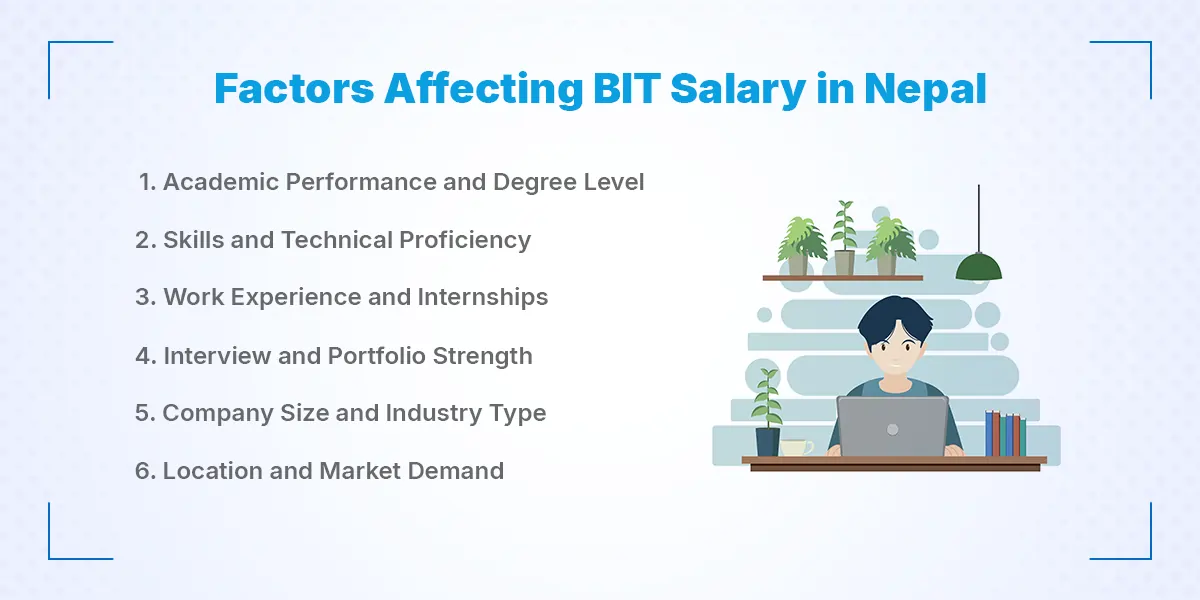
1. Academic Performance and Degree Level
Higher grades or strong project submissions improve hiring attention. Employers value candidates who understand core concepts and can apply theory in work. Bachelor holders often receive preference over diploma candidates, but practical skill closes the gap. Graduates with research or capstone projects stand out during screening.
2. Skills and Technical Proficiency
Mastery of tools, frameworks, and coding languages directly influences pay. BIT graduates with real development or cloud skills negotiate better offers. Companies pay more for individuals who solve problems independently. Continuous skill upgrades ensure long-term salary growth.
3. Work Experience and Internships
Internships expose students to teamwork, deadlines, and actual system handling. Candidates with experience face less interview pressure and faster hiring. Companies spend less time training these candidates, which increases salary offers. Hands-on projects demonstrate readiness for professional work, making internship roles a strong advantage for BIT graduates.
4. Interview and Portfolio Strength
A strong portfolio increases credibility more than certificates alone. Interview performance reflects communication, logic, and problem solving. Graduates who showcase live projects or GitHub repositories create stronger impressions. Employers pay more to candidates who express capability clearly, so learning how to prepare for interview situations strengthens both confidence and earning potential.
5. Company Size and Industry Type
Large IT firms, outsourcing companies, and banks offer higher salaries than small offices. Industry type matters because tech-heavy companies reward deeper knowledge. Growing firms with international clients often pay more to attract talent. Smaller companies offer slower growth but valuable learning exposure.
6. Location and Market Demand
Kathmandu and major tech clusters offer higher salaries due to business concentration. Smaller cities provide lower pay but stable experience opportunities. Remote jobs bypass location limits and reward skill rather than geography. Demand-driven roles like security or data earn rapid salary increases nationwide.
Skills Required to Earn Higher BIT Salary
Higher salaries come to BIT graduates who combine technical depth with communication and problem-solving ability. Companies pay more for professionals who deliver results, adapt to challenges, and support business goals. Skill development gives competitive advantage, enabling graduates to grow faster in roles and income.
1. Programming and Technical Skills
Knowledge of languages like Python, JavaScript, PHP, or Java increases job value. Graduates who master frameworks or cloud tools earn more. Strong coding ability speeds delivery, reduces debugging time, and attracts remote projects. Technical expertise remains the biggest driver of salary improvement.
2. Problem-Solving and Analytical Skills
Employers value individuals who identify issues and propose workable fixes. Analytical thinking supports software debugging, data tasks, and system improvement. Salaries rise when graduates show capacity to handle complex tasks without heavy supervision. Companies reward effective thinkers who add measurable value.
3. Communication and Teamwork
Projects require discussions, documentation, and collaboration. Candidates who explain ideas clearly and coordinate with peers build trust. Strong communication improves project flow, client satisfaction, and leadership potential. These traits often separate average performers from high earners.
4. Software Tools and Digital Skills
Knowledge of version control, automation tools, analytics platforms, or testing suites increases hiring confidence. Familiarity with popular digital tools speeds integration into work environments. Employers pay more for staff who use modern tools efficiently. Certification in key platforms often raises earning potential.
5. Time Management and Adaptability
Tech work involves deadlines, shifting priorities, and changing requirements. Candidates who adapt quickly deliver better results and avoid delays. Efficient time planning improves productivity which leads to career growth. Adaptable professionals access more roles and responsibility.
6. Client and Customer Handling Skills
Graduates who manage client communication or support services gain credibility. Understanding needs, solving concerns, or guiding users increases professional value. These skills raise salary because satisfied clients return for more work. BIT graduates who handle customers well often transition into leadership roles faster.
Career Growth Opportunities for BIT Graduates
BIT graduates access multiple growth tracks because tech skills apply across industries. Career progress accelerates when individuals learn continuously, solve problems, and deliver visible impact. Many start in support or junior roles but advance into specialist or leadership positions over time. Growth also expands through entrepreneurship, freelancing, or further studies.
1. Promotion Path From Junior to Leadership
Graduates begin as junior developers, support staff, or IT assistants. With experience, they advance to mid-level roles, senior engineer positions, and eventually team lead or manager posts. Salary rises with responsibility and performance. Candidates who mentor others or lead projects move faster into leadership roles.
2. High-Demand Fields AI Cloud Cybersecurity Data
BIT graduates often shift into emerging sectors like cloud, AI, cybersecurity, and data science. These fields offer rapid growth due to skill shortages. Specialists in these areas access high salaries and global work opportunities. Continuous training and certification help graduates transition successfully.
3. Further Education MIT MSc IT MBA Tech
Higher education strengthens depth in technology or management. Many BIT graduates pursue MIT, MSc IT, or MBA Tech to improve credibility and leadership potential. Postgraduate study opens doors to teaching roles, consulting, or senior strategic positions. Those who combine study with experience achieve faster upward movement.
How to Build a Career After BIT in Nepal?
You can build a career after BIT in Nepal by combining academic learning, skill practice, and real work experience. Success increases when students focus on hands-on projects, communication development, and active job searching. Applying early, accepting entry roles, and improving skills create momentum for long-term growth. A clear pathway helps graduates shift from learning phase to earning phase confidently.
1. Academic Requirements
Completing BIT with project work and internships builds foundation strength. Universities teach core subjects, but students must practice outside coursework. Strong grades and research topics improve attention from employers. Academic discipline helps individuals learn advanced concepts faster in workplaces.
2. Develop Key Tech and Soft Skills
Graduates should master coding, tools, and problem solving while improving communication. Soft skills support teamwork and client handling which many firms value. Skill depth matters more than certificates because companies seek practical ability. Self-learning and certifications speed growth in competitive markets.
3. Apply Through Job Portals and Websites
BIT graduates can search vacancies through Kumari Job, which posts verified openings from IT companies, banks, and corporates. Regular applications, profile updates, and vacancy tracking improve hiring chances. Submitting CVs to company pages and networking further increases visibility.
4. Prepare for Interviews and Assessments
Practicing coding tests, logical questions, and portfolio discussions builds confidence. Mock interviews and communication practice improve delivery. Graduates who explain projects clearly and show learning ability impress recruiters. Interview preparation helps candidates convert applications into job offers faster.
5. Start Your First Job or Internship
Taking entry roles or internships provides practical exposure and industry discipline. Early experience builds credibility for future promotions. Graduates who treat first jobs as learning platforms progress faster. These initial steps lay foundation for senior roles, specialization, or remote work paths.
Where to Find Jobs After BIT in Nepal?
You can find BIT jobs after BIT in Nepal in job portals like Kumari Job, LinkedIn, company pages, and college placement networks. Searching across multiple platforms increases hiring chances because different firms post in different places. Active monitoring, networking, and applying early help graduates spot openings before they close.
1. Online Job Portals
Kumari Job lists verified tech vacancies from software firms, banks, and corporates. Graduates can apply directly, set alerts, and track roles by category. Regular activity improves visibility and increases interview chances.
2. IT Company Career Pages
Many software companies post openings only on their websites. Visiting these pages helps candidates apply early and avoid competition. Companies often prioritize applicants who reach them through direct submissions.
3. LinkedIn and Tech Networks
LinkedIn connects graduates with hiring managers, tech groups, and company pages. Sharing projects, updating profiles, and engaging with posts help candidates get noticed. Referrals from networks often convert into interviews faster than generic applications.
4. College Placements and Job Fairs
Universities conduct placement drives that link graduates with employers. Job fairs allow students to meet recruiters, learn expectations, and submit CVs directly. These events also expose candidates to internship or trainee roles that lead to full-time positions.
Challenges BIT Graduates Face in Nepal
BIT graduates face several challenges before earning competitive salaries. Many struggle to bridge skill gaps or stand out among numerous applicants. Salary growth depends on learning speed, adaptability, and technical competency. Understanding these challenges helps students prepare better for job markets.
1. Low Entry-Level Pay
Fresh graduates often start with modest salaries due to limited project exposure. Employers expect skill proof rather than academic marks. Growth improves once candidates show consistency and problem-solving ability.
2. Skill Gap Between Academia and Industry
Many universities teach theory but not practical tools used in workplaces. Graduates must self-learn frameworks, testing tools, or cloud systems to compete. Industry demands practical coding and communication skill that require extra personal effort.
3. High Competition
BIT degrees are popular, which increases applicant volume. Employers filter based on portfolio, confidence, and specialization. Students need strong positioning to stand out among similar candidates.
4. Need for Self-Learning and Certification
Technology changes quickly, and companies expect constant improvement. Certifications and practice projects raise credibility. Graduates who continue learning progress faster and earn better salaries.
Future Scope of BIT in Nepal
The future scope of BIT in Nepal looks promising because digital services continue expanding. Demand grows for skilled developers, analysts, and cybersecurity experts. Outsourcing, remote hiring, and government technology plans support long-term stability. Graduates who specialize and adapt quickly will enjoy broad career pathways.
1. Growth in Outsourcing and Remote Hiring
More Nepali firms serve international clients, increasing need for skilled tech workers. Remote contracts allow graduates to work for global companies while living locally. This trend improves salary potential and exposure.
2. Government and Private Tech Initiatives
Digital Nepal projects, banking upgrades, and corporate automation boost IT hiring. Companies require trained graduates for system upgrades and data management. Better infrastructure continues to expand job availability.
3. AI Blockchain FinTech Opportunities
Emerging fields like AI, blockchain, cybersecurity, and fintech offer specialized roles. Salaries are higher in these domains due to scarce expertise. Students who upskill in these areas secure strong career growth.
4. Rising International Job Access
BIT graduates now secure jobs abroad or fully remote international roles. Immigration pathways, skill sponsorships, and foreign contracts expand earning chances. Global exposure increases long-term salary and progression.
Salary Growth After Experience
BIT salaries rise significantly once professionals gain experience and deliver results. Graduates who start with modest pay often double or triple earnings within a few years through specialization or remote projects. Promotions, leadership roles, and international work accelerate income faster than standard increments. Consistent improvement in skills ensures long-term financial growth and career stability.
Conclusion
BIT graduates in Nepal access growing opportunities across software firms, banks, corporate houses, startups, and remote markets. Earnings improve with skill depth, communication strength, and consistent learning. While challenges exist at entry levels, specialization and practical exposure quickly transform earning potential. Those who build portfolios, apply widely, and upgrade knowledge move into leadership or international roles over time.
Explore BIT-related job openings on Kumari Job and stay updated on new vacancies to start or advance your tech career with confidence.
Frequently Asked Questions
Submit your comments

Get Our App On



What is the Public Relations Officer Salary in Nepal
VIEW DETAILS
What Is the Salary of a Ticketing Officer in Nepal?
VIEW DETAILS
What Is the Salary of a Travel Consultant in Nepal?
VIEW DETAILS
How to Become an Auditor in Nepal
VIEW DETAILS


Loading Comments...