




Civil engineers often feel stuck while trying to enter INGOs because hiring requirements appear hidden, job expectations sound vague, and practical experience seems mandatory even for entry roles. Many graduates finish degrees yet fail to understand why applications receive no response or how field experience, proposal writing skills, or humanitarian exposure influence hiring decisions. Searchers want clear direction, simplified guidance, and realistic steps that save time, build confidence, and increase interview chances without unnecessary stress.
In this blog, How to Get INGO Jobs in Nepal for Civil Engineers, readers receive structured insight on responsibilities, qualifications, hiring trends, skills, vacancy sources, and salary patterns within development and humanitarian projects. Content explains how INGOs view applicants, why professional registration matters, how reporting skill improves selection, and how networking accelerates placement.
In this blog
What is a Civil Engineer’s Job?
Civil engineers support planning, designing, and managing infrastructure that improves living conditions and supports community growth. Work spans field inspection, structural assessment, supervision tasks, and solving practical challenges related to shelter, water access, safety, or construction quality. Professionals ensure plans match ground needs, budgets stay accurate, and outputs follow technical standards so projects create real impact.
What Do Civil Engineers Do in INGOs
Civil engineers in INGOs apply technical skills within humanitarian or development projects, focusing on community safety, service access, and durable infrastructure outcomes.
- Site assessment and feasibility studies
- Designing water, sanitation, housing, or road solutions
- Project planning and budgeting
- Monitoring contractor work
- Reporting and documentation
- Working with communities and stakeholders
How to Get Civil Engineering Jobs in INGOs?
You can get civil engineering jobs in INGOs by building practical field exposure, strengthening reporting ability, gaining technical certifications, and presenting achievements clearly. Recruiters value applicants who understand community needs, provide usable documentation, and show proven action from site visits. Consistent learning, networking, and targeted applications improve confidence and increase selection chances, offering clear ways to find civil engineer jobs with better results.
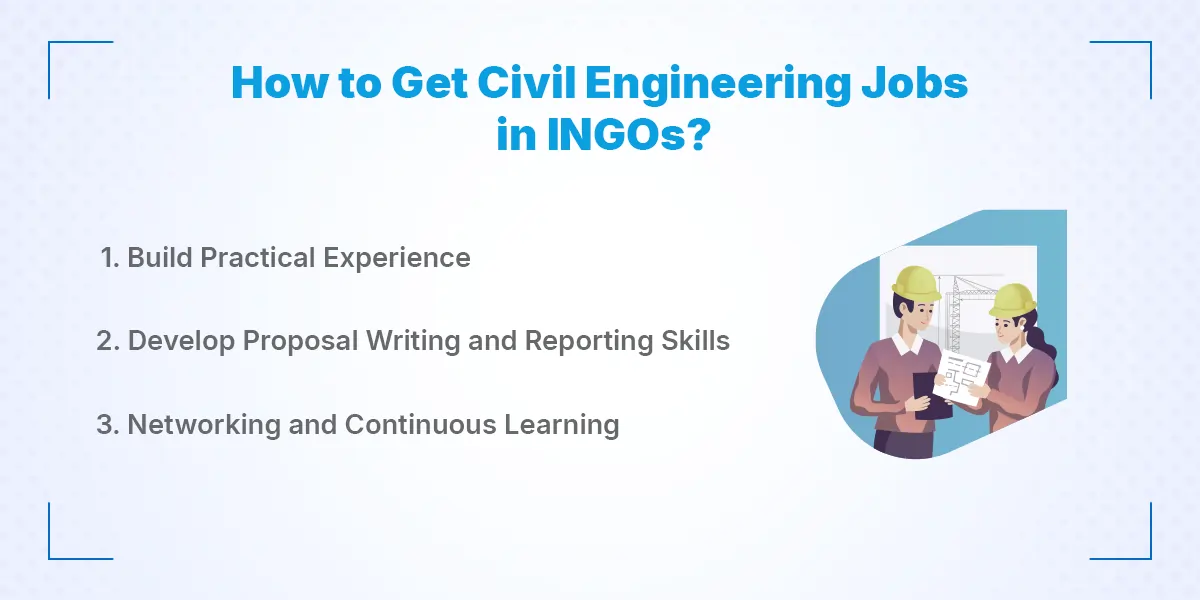
1. Build Practical Experience
Hands-on exposure from site supervision, contractor inspections, survey work, or NGO internships builds credibility. Field work teaches troubleshooting, safety awareness, and teamwork, which INGOs actively seek during hiring. Practical engagement also helps applicants speak confidently during interviews about real challenges and solutions.
2. Develop Proposal Writing and Reporting Skills
Prepare simple reports, progress summaries, and draft proposals so hiring teams see the capacity to support documentation tasks. Clear writing supports decision-making and strengthens applicant value. Civil engineers who write well gain visibility because most INGO roles depend on structured reporting to donors.
3. Networking and Continuous Learning
Use LinkedIn, seminars, workshops, and engineering association events to connect with professionals and explore vacancies. Active relationships expand visibility, support referrals, and expose applicants to emerging opportunities. Networking also offers access to mentors who guide career steps and share insider hiring insights.
Skills Required for INGO Civil Engineering Roles
INGOs demand a mix of technical accuracy and interpersonal capability because engineers handle design tasks while dealing with communities, contractors, and donors. Recruiters assess how well applicants apply theory during field conditions, manage documentation, and communicate progress. Strong skill balance builds trust, increases responsibility, and improves career growth within development projects, which often leads to better roles and improved visibility while understanding the salary scale of civil engineers in this sector.
1. Technical Competencies
Civil engineers need structural design practice, water supply knowledge, sanitation engineering awareness, and planning capacity to support humanitarian projects. AutoCAD and GIS skill strengthen feasibility study work, mapping, and design presentations. Tendering knowledge, budgeting ability, and safety compliance improve project execution and help engineers take ownership during site operations.
- Structure design
- Water supply and sanitation engineering
- AutoCAD and GIS skills
- Project planning and tendering
- Safety compliance
2. Soft Skills
Effective communication supports teamwork, community service, and reporting activities. Proposal writing shows clarity of thought and strengthens decision support value for supervisors. Problem-solving practice builds confidence while handling field challenges, coordination tasks, and stakeholder queries, which INGOs consider highly desirable.
- Communication
- Proposal writing
- Teamwork
- Problem solving
Educational Qualifications Needed
Civil engineering roles within INGOs expect academic grounding supported by project exposure. A bachelor’s degree establishes technical capability, while internships, research work, or training certificates strengthen hiring chances. Advanced study offers credibility, but practical skill, reporting ability, and field experience often drive selection more than higher degrees alone.
Is a Professional Degree Required?
Yes, a bachelor’s in civil engineering serves as a minimum entry qualification for INGO roles. A master’s degree helps applicants stand out, especially for design or coordination posts, but employers focus more on experience, documentation skills, and field adaptability than academic level.
Certifications That Improve Your Selection Chances
Certifications signal commitment to learning and raise applicant's credibility during screening. INGOs value engineers who combine academic degrees with verified technical training because that reduces training time and improves project output. Targeted courses also help applicants shift from theory toward applied humanitarian work.
1. Nepal Engineering Council License
Registration proves legal practice status and validates engineering knowledge. INGOs prefer licensed engineers because monitoring, signing documents, and supervising contractors require professional accountability. Holding this license also shows maturity, responsibility, and readiness to support infrastructure decisions within field settings.
2. WASH or Shelter Training
Short courses in water, sanitation, hygiene, or emergency shelter systems make civil engineers more relevant for humanitarian projects. Training exposes applicants to field standards that support design, implementation, and monitoring tasks. Employers often shortlist candidates with WASH awareness because these skills directly support core project outcomes like safe water access or disaster housing.
3. Project Management PMP or PRINCE2
Project management credentials display planning discipline, budgeting skill, risk awareness, and reporting strength. Civil engineers with these certificates often move faster into coordination posts or team leadership roles. These programs teach structured decision making, scheduling, and stakeholder communication, which INGOs value during complex assignments.
4. AutoCAD or GIS Certification
AutoCAD and GIS verification shows reliability in design, mapping, survey processing, and planning tasks. Certified engineers present stronger portfolios during hiring because INGOs rely heavily on visual plans and geographic data. These courses enhance efficiency, improve accuracy, and support engineers during feasibility studies or reconstruction planning.
Where to Look for INGO Civil Engineering Vacancies?
You can look for INGO civil engineer vacancies in job portals like Kumari Job, Development Aid, LinkedIn, and official organisation sites that post verified openings. Searching across multiple platforms increases visibility because roles appear at different times and through different channels. Consistent monitoring, alerts, and networking improve chances of spotting suitable posts early, helping professionals track INGO vacancies that match their skills.
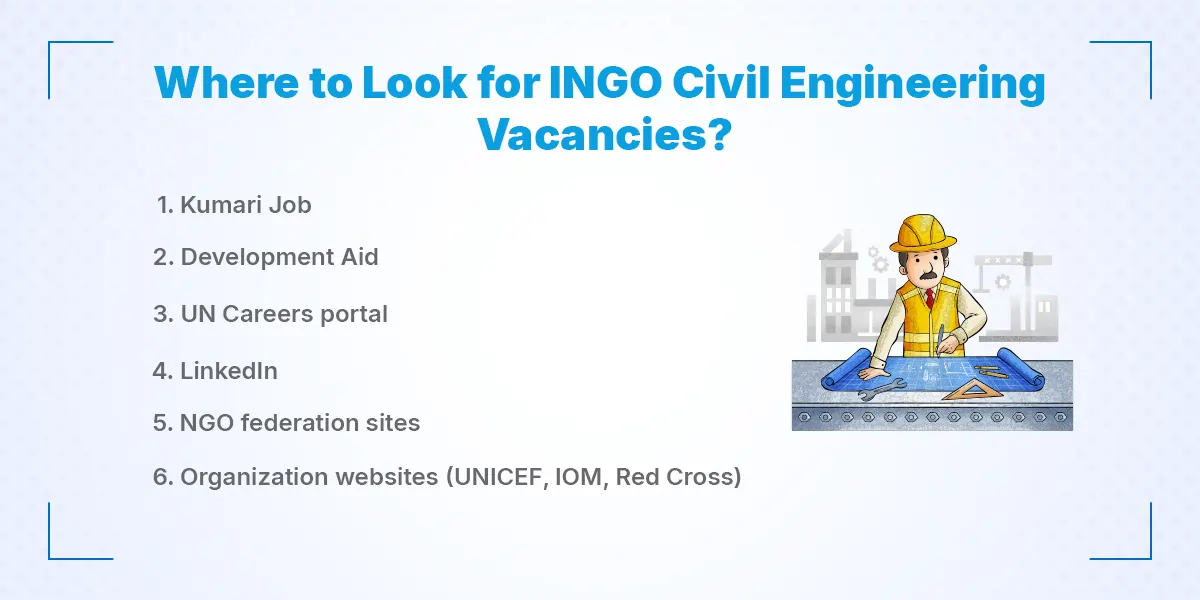
1. Job Portals
Kumari Job publishes openings for development and humanitarian engineering roles. This portal allows filtered searches, alerts, and direct applications, which save time for new or experienced engineers. Applicants also benefit from supportive content, such as interview tips or training announcements that help strengthen profiles before applying.
2. Development Aid
Development Aid hosts global and local INGO vacancies, bidding notices, and contractor requests. Engineers benefit from tracking tenders or consultancy roles, which often lead to project assignments or full-time selection. The platform also exposes users to international standards that widen career direction for engineers aiming to expand beyond Nepal.
3. UN Careers Portal
UN Careers portal lists civil engineering positions across agencies like UNOPS, UNDP, and UNICEF. Profiles on this site support talent pooling, shortlisting, and access to competitive humanitarian roles. Applicants who maintain detailed backgrounds and update their experience regularly increase their chance of placement across various UN bodies.
4. LinkedIn
LinkedIn provides job listings while supporting personal branding, referrals, and recruiter outreach. Engineers who post updates, showcase field work, and stay active gain visibility that supports faster response. Thoughtful networking on LinkedIn also encourages informal recommendations, which many hiring teams value during screening.
5. NGO Federation Sites
Federation platforms post announcements from local and international members involved in disaster risk reduction, WASH, or reconstruction. Engineers who track these pages stay informed about new programs or partner hires. The updates often include training or collaboration notices that help applicants build field exposure.
6. Organisation Websites UNICEF IOM Red Cross
Many INGOs publish posts only on their official career pages, including UNICEF, IOM, Red Cross, CARE, or Save the Children. Visiting these portals regularly helps engineers apply early which improves selection chances. Checking these sites consistently also provides insight into organisational priorities that help applicants refine their CVs and cover letters.
Application Tips That Increase Selection
Civil engineers improve hiring chances when application material reflects project relevance, reporting capacity, and real field outcomes. INGOs search for candidates who understand development priorities, display measurable achievements, and explain experience clearly across documents. Focused applications reduce screening time for recruiters and strengthen interview interest.
1. Tailored CV
Create CVs that match job descriptions by highlighting tasks or outcomes related to humanitarian engineering. Custom profiles make the experience appear more relevant and increase shortlist chances because recruiters notice alignment with role needs. Adjusting keywords, responsibilities, and technical tools for each vacancy helps applications stand out in automated or manual screening, so applicants learn how to make good CV that recruiters notice.
2. Highlight Field Work
Mention exposure from quality checks, contractor supervision, site assessment, or community interaction because INGOs value real action beyond theory. Engineers who describe ground challenges or solutions earn more trust during selection. Field details also demonstrate the adaptability which humanitarian projects require.
3. Mention Humanitarian Projects
Include involvement from disaster response, WASH programs, reconstruction efforts, or volunteer service. INGOs consider such experience proof of commitment and readiness for difficult assignment areas. Projects that show social value or resilience make profiles stronger than routine site work alone.
4. Focus on Results
Replace duty-based wording with impact statements like reduced delays, improved safety, or completed designs. Showing results signals the ability to deliver output, which recruiters prioritize during evaluation. Measurable outcomes present engineers as proactive contributors rather than passive task handlers.
Conclusion
Civil engineers who want to work in INGOs benefit from combining field skills, technical knowledge, documentation ability, and ongoing learning. The hiring journey becomes smoother when applicants understand employer expectations, highlight measurable outputs, and build visibility through platforms or professional circles. Each step taken toward practical exposure or certification increases confidence and strengthens career direction.
Focus on growing both technical and interpersonal capability, so applications reflect clarity, relevance, and impact. INGOs seek engineers who create solutions for communities, deliver quality work under pressure, and communicate progress effectively. With the right preparation, commitment, and continuous improvement, civil engineers in Nepal can successfully enter development projects and build meaningful careers that support national growth.
Frequently Asked Questions
Submit your comments

Get Our App On



What is the Public Relations Officer Salary in Nepal
VIEW DETAILS
What Is the Salary of a Ticketing Officer in Nepal?
VIEW DETAILS
What Is the Salary of a Travel Consultant in Nepal?
VIEW DETAILS
How to Become an Auditor in Nepal
VIEW DETAILS


Loading Comments...