




Many people in Nepal want stable work yet struggle to locate genuine openings in agriculture. They search online, ask locals, or visit offices, but receive slow responses or confusing guidance. This uncertainty makes candidates doubt their skills and delay applications even though agriculture is one of Nepal’s largest employers and offers steady demand.
In this blog, how to find agriculture jobs in Nepal is explained in a simple, practical way. Readers learn what agriculture jobs include, where vacancies appear, whether qualifications are required, and how skills improve hiring chances. This guide also highlights pay ranges, common mistakes during applications, and steps that help beginners move toward reliable employment.
In this blog
What are Agriculture Jobs and What does it Include?
Agriculture jobs are work roles connected to farming, livestock, food production, and agribusiness support. These jobs exist across villages, commercial farms, factories, cooperatives, and government offices. Some positions need physical labor, while others require technical skill or advisory knowledge. Pay and duties change based on training, education, and specialization. Many workers enter through skill based tasks, while qualified candidates move into officer or supervisory roles.
What does it include?
- Field work such as planting, harvesting, irrigation, and crop care.
- Agronomy roles that guide farmers on soil, seed, and fertilizer use.
- Livestock care including dairy, poultry, goat farming, and animal health monitoring.
- Research support jobs in seed testing, field trials, or lab assistance.
- Sales and marketing roles for fertilizers, machinery, feed, and farm tools.
- Agricultural extension services that provide training, field visits, and farmer support.
- Supervisory roles in agribusiness, dairy plants, or storage and processing units.
How can you find Agriculture Jobs in Nepal?
You can find agriculture jobs in Nepal in job portals like Kumari Job, government listings, and local farming networks. These sources publish vacancies for beginners, skilled workers, and technical roles. People who search, apply consistently, and build contacts often secure opportunities faster. Knowing where to look makes the process simpler and less stressful, helping candidates discover real agriculture job opportunities in Nepal.
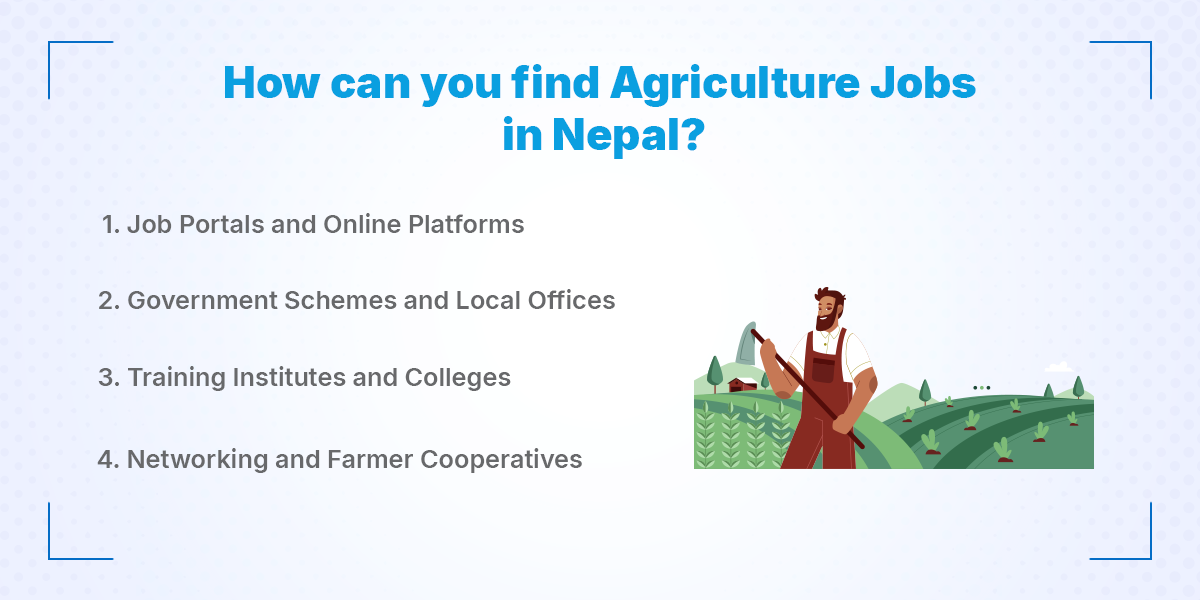
1. Job Portals and Online Platforms
Online job portals list agriculture vacancies for roles such as farm assistant, technician, supervisor, or sales agent. Sites like Kumari Job and LinkedIn provide updated openings and company details. Applicants can apply directly and track responses. Portals often filter jobs by qualification or experience, making it easier to find suitable roles.
2. Government Schemes and Local Offices
Local agriculture offices, cooperatives, and municipal programs offer seasonal or long term jobs. Government schemes support farming groups, livestock expansion, or employment programs that require field workers. Loksewa also announces technical positions for diploma or degree holders. Visiting nearby offices helps candidates check ongoing hiring.
3. Training Institutes and Colleges
Agriculture colleges and skill centers guide students toward internships and job placements. Institutes recommend candidates for field assistant roles, technician work, or agribusiness support. Training certificates improve chances of placement because employers prefer practical knowledge. Many students secure jobs through institution referrals.
4. Networking and Farmer Cooperatives
Networking with local farmers, cooperatives, and agribusiness groups opens hidden opportunities. Many positions are not advertised online but are shared within communities. Attending agriculture fairs, workshops, or meetings helps people connect with decision makers. Building relationships increases trust and leads to referrals for work.
Benefits of Agriculture Jobs in Nepal
Agriculture jobs offer reliable career paths for people across rural and semi-urban regions. These roles support both income and skill development, giving space for growth even without advanced degrees. Many workers build long-term stability while contributing to food production and local economies. As demand for food, livestock, and agribusiness rises, job availability continues expanding nationwide.
1. Rural Employment Generation
Agriculture provides work for large numbers of people in villages. It reduces migration pressure and supports families close to home. People earn without leaving their hometowns, which helps local economies grow. This employment strengthens communities by keeping skilled labor in rural areas. As opportunities expand, more youth consider agriculture as a reliable income source.
2. Stable Earning Opportunities
Farming, livestock, and agribusiness roles give a steady income across seasons. Workers gain basic pay or profit share depending on their roles. Long-term workers build financial confidence through repeat harvests or production cycles. Families benefit from a predictable income that supports daily expenses. This stability attracts people seeking dependable work.
3. Seasonal and Permanent Work Choices
Agriculture offers full-time roles and seasonal jobs, making it flexible. People select work based on skill, availability, or personal need. Students often join seasonal work to earn money and learn field methods. Experienced workers secure permanent positions in agribusiness or dairy units. This range of options suits different lifestyles and career levels.
4. Growth in Agribusiness, Processing, and Dairy Sectors
Expanding agribusiness and processing industries increase job supply for skilled and semi-skilled workers. Dairy plants, poultry farms, and food manufacturers regularly hire. Investment in agriculture leads to more factory jobs and professional roles. These sectors demand technicians, supervisors, and quality controllers. This growth encourages youth to pursue agriculture training.
5. Skill Based Promotions and Entrepreneurship Potential
Workers can grow from field roles to supervisory or advisory jobs over time. Skills gained help people start small farms, dairy ventures, or agribusiness units. Experienced workers often move into consulting or supply chain roles. Promotion depends on ability rather than only on degrees. This creates strong paths for self-employment and career independence.
Do You Need Academic Qualification for Agriculture Jobs?
Yes, qualifications matter for many agriculture roles, but the level needed changes based on job type. Basic roles may only require skill and willingness to learn, while technical positions demand formal study. Practical ability often weighs as much as certificates, which makes field experience valuable.
1. Minimum Requirements for Basic Labor Roles
Entry-level tasks such as planting, harvesting, and livestock care do not always need formal education. Many workers enter through training from experienced farmers or local cooperatives. Hard work, discipline, and flexibility help people secure these roles. Beginners improve their income as skills grow over time.
2. Diploma or Degree for Technical or Officer Level Jobs
Positions like agricultural technician, extension officer, or research assistant usually require diplomas or degrees. Colleges offer programs in crop science, animal science, or agribusiness. Government exams often set minimum education criteria for these roles. People with higher education progress faster in structured career paths.
3. Training Certificate Advantage
Short courses, internship certificates, and vocational training increase hiring chances. These certificates show practical exposure and readiness to work. Many institutes connect trainees with companies for job placement. Certification helps fresh candidates stand out.
4. Practical Field Skills Valued
Even skilled positions respect hands on learning and field results. Workers who handle machinery, livestock, or crop planning gain trust quickly. Employers value people who show problem solving and real farm knowledge. Practical skills often help candidates outperform those with certificates but no experience.
Salary for Agriculture Jobs in Nepal
Salary for agriculture jobs in Nepal ranges from around NPR 20,000 to NPR 90,000+ or more each month, depending on role, skill, and sector. Entry workers earn less, while technical officers, engineers, and agronomists receive higher pay. Many roles fall near the average salary, though benefits like insurance, allowances, and field support may also increase total earnings.
1. Entry Level Wages vs Skilled Technician Pay
Entry level or technician roles often pay NPR 20,000 to NPR 40,000 per month. Workers improve income when they gain experience in machinery handling, livestock care, or crop management. Skilled technicians may receive more due to higher responsibility. Growth is linked to skill, reliability, and field performance.
2. Private Sector vs Government Salary Range
Private farms, dairy plants, and agribusiness firms offer varied pay structures. Government or project based roles such as Agricultural Officer or Extension staff can earn NPR 25,000 to NPR 90,000 or more. Public sector jobs often include pensions, insurance, and leave benefits. Competition is higher due to job security.
3. Earnings in Dairy, Poultry, and Agribusiness
Dairy, poultry, and agribusiness units often give stable earning potential. Salaries range from NPR 20,000 for basic roles to NPR 80,000 or more for supervisors or engineers. Agribusiness staff working in processing, input sales, or supply chains may earn extra incentives. These sectors show continuous hiring across Nepal.
4. Income Variation Based on Role and Skill
Agricultural Engineers or Agronomists typically earn NPR 35,000 to NPR 89,000+ monthly, with 80 percent of professionals falling in this range. Agricultural Technologists often receive NPR 40,000 to NPR 104,000+, depending on expertise. The overall industry average remains around NPR 48,000 per month. Skill level, job type, and region influence final earnings for each person.
Factors Affecting Salary for Agriculture Jobs in Nepal
Salary in agriculture varies due to multiple influences across roles and regions. Experience increases pay because skilled workers deliver better output. Education or certificates often lead to officer or technical positions with higher earnings. Job type also matters, as field labor pays less than research, advisory, or engineering roles.
1. Experience and Skill Level
Workers with more years in farming or livestock roles earn higher pay because employers trust their performance. Skill in machinery handling, livestock management, or irrigation systems increases value. People who solve issues quickly or guide others move into supervisory roles with better salaries. Entry workers see income rise steadily as they gain responsibility, making entry level roles a practical starting point for growth.
2. Education and Training
Diplomas, degrees, or certificates improve hiring chances and pay across agriculture sectors. Technical roles such as extension officer, engineer, or agronomist require verified study. Training institutions provide certificate programs that boost employability for fresh workers. Employers prefer candidates who show both knowledge and field practice.
3. Sector and Location
Jobs in dairy, poultry, processing, or agribusiness often offer higher salaries than basic farm labor due to scale and investment. Urban or commercial farming areas provide stronger wages because demand and production levels remain high. Remote areas may pay less but still offer steady seasonal work. Workers often relocate for better earning potential in larger agriculture hubs.
Common Mistakes to Avoid While Applying
Many applicants lose opportunities because they overlook simple yet important steps. Avoiding these mistakes improves success, builds confidence, and increases chances of being shortlisted for agriculture jobs. Careful preparation shows dedication and helps employers trust your ability.
1. No Portfolio or Proof of Work
Candidates applying for roles often forget to show field experience or practical tasks they have completed. Simple proof such as photos, internship letters, or cooperative reports makes applications stronger. Employers want to see evidence of work rather than only claims. A small portfolio boosts credibility quickly.
2. Ignoring Skill Development
Some people apply repeatedly without learning new skills or updating knowledge. Agriculture demands practical ability and awareness of new techniques. Training, on field practice, or short courses improve job chances. Skill growth proves you are serious about the role.
3. Weak CV
A resume without clear skills, experience, or contact details reduces selection chances. Many applicants list unrelated points and miss relevant strengths. A clean CV showing agriculture tasks, tools used, or training creates a stronger impact. Employers choose people who present information clearly, so building a strong CV improves hiring outcomes.
4. Not Following Application Instructions
Many candidates ignore job descriptions or skip required documents. Employers see this as lack of attention and reject applications. Reading instructions, filling forms correctly, and attaching certificates shows professionalism. Small effort increases selection chances.
5. Lack of Networking
Some applicants wait for online openings but ignore community contacts or cooperative groups. Local farmers, trainers, or officers often know about hidden vacancies. Networking creates referral opportunities and faster access to work. People with wider connections find jobs sooner.
Conclusion
Finding agriculture jobs in Nepal becomes easier when candidates understand roles, qualifications, and platforms that publish openings. With growing demand in dairy, poultry, processing, and agribusiness, people with practical skill or training have strong chances to secure work. The sector supports both beginners and trained professionals, making it suitable for many career paths.
Success depends on preparation, field learning, and active searching. Creating a portfolio, improving skills, and building networks help candidates stand out. Once hired, workers can grow into supervisory roles, start agribusiness units, or move into advisory positions. Agriculture continues to provide stable prospects for Nepalese workers willing to learn and stay consistent.
Explore job opportunities and start applying to agriculture roles today. Visit Kumari Job to find openings that match your skills and move closer to stable employment.
Frequently Asked Questions
Submit your comments

Get Our App On



What is the Public Relations Officer Salary in Nepal
VIEW DETAILS
What Is the Salary of a Ticketing Officer in Nepal?
VIEW DETAILS
What Is the Salary of a Travel Consultant in Nepal?
VIEW DETAILS
How to Become an Auditor in Nepal
VIEW DETAILS


Loading Comments...