




Customer service jobs are growing fast in Nepal. As banks, IT companies, e-commerce platforms, BPOs, and startups expand, they need people who can talk to customers, solve problems, and represent their brand well.
At the same time, competition for entry-level jobs is increasing. Fresh graduates want work that helps them earn, learn, and grow without long waiting periods. Customer service jobs are easier to enter, hire quickly, and help build strong communication and workplace skills.
However, many students and job seekers feel unsure about where to start, what skills they need, and whether these roles offer real career growth. This guide breaks down everything you need to know about customer service jobs in Nepal, from roles and skills to salary and how to apply, so you can move forward with clarity and confidence!
In this blog
What Are Customer Service Jobs?
Customer service jobs focus on helping customers before, during, and after they use a product or service. The main goal is to answer questions, solve problems, and make sure customers have a positive experience. These roles act as a bridge between a company and its customers, making communication clear and smooth. Because of this, customer service is an important part of almost every business.
In Nepal, customer service jobs are commonly found in banks, fintech companies, IT firms, e-commerce platforms, telecom providers, hotels, and BPOs. While customer support usually handles specific issues or requests, call center roles focus more on high-volume calls and queries. Customer success roles, on the other hand, are more common in IT and SaaS companies and focus on long-term customer satisfaction and retention.
Core Responsibilities of a Customer Service Representative
A customer service representative is responsible for assisting customers, resolving their issues, and ensuring a smooth and positive experience with the company. This role combines communication, problem-solving, and coordination to meet customer needs while following company policies. Below are the key responsibilities that explain how customer service representatives support both customers and the business:
1. Handling Customer Inquiries and Requests
Customer service representatives handle customer questions and requests across phone calls, emails, live chat, and social media. They listen carefully to understand what the customer needs before responding. At the same time, they provide clear and accurate information about products, services, pricing, or policies. This helps customers make informed decisions and reduces confusion or repeat queries.
2. Resolving Customer Complaints and Issues
Another core responsibility is managing customer complaints in a calm and professional way. Representatives first identify the root cause of the problem and then offer practical solutions within company guidelines. When an issue cannot be solved at their level, they escalate it to the right team for faster resolution. As a result, customers feel heard and supported even in difficult situations.
3. Maintaining Customer Records and Documentation
Customer service representatives also keep detailed records of customer interactions. This includes updating customer information in CRM systems and logging issues, actions taken, and follow-up notes. Accurate records help maintain service consistency across teams and future interactions. In addition, proper documentation supports better reporting and service improvement.
4. Providing Product or Service Support
Providing support related to products or services is another important part of the role. Representatives guide customers on how to use services, understand bills, or fix basic technical problems. They also assist with orders, returns, cancellations, and refunds when needed. This support helps reduce frustration and improves overall customer satisfaction.
5. Communicating with Internal Teams
Customer service representatives regularly coordinate with internal teams such as sales, technical support, and operations. They share customer issues and feedback to ensure faster solutions and better service delivery. This internal communication helps prevent repeated problems and improves product or service quality. As a result, the entire organization becomes more customer-focused.
6. Meeting Service Quality and Performance Standards
Customer service representatives are expected to meet specific service quality targets. These include response time, resolution speed, and customer satisfaction scores. Maintaining professionalism, even during high workloads, is a key part of the job. Meeting these standards helps companies build trust and long-term relationships with customers.
How to Get Customer Service Jobs in Nepal?
To get a customer service job in Nepal, you need to know where to look, prepare the right documents, and develop the key skills that employers expect. Many candidates miss opportunities simply because they don’t understand the application process or the types of roles available. By following a clear step-by-step approach, you can increase your chances of landing a position and start building a successful career in customer service.
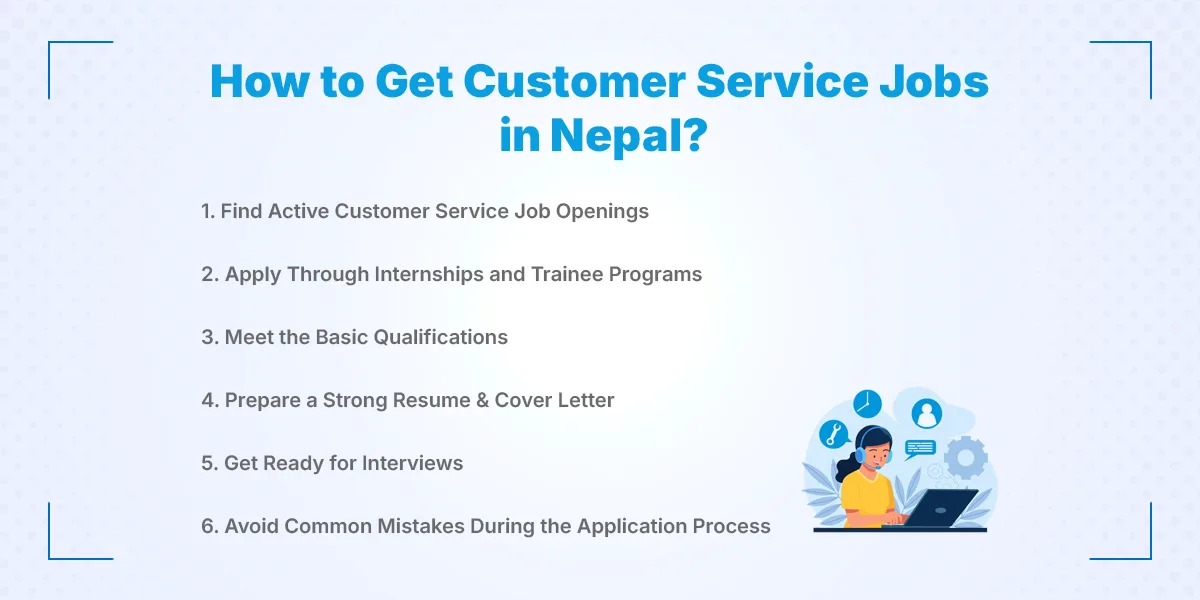
1. Find Active Customer Service Job Openings
Start by looking for openings on popular job portals and recruitment platforms that list roles in banks, BPOs, IT companies, and e-commerce businesses. Also, regularly check the official career pages of companies you are interested in. Don’t forget to follow companies’ social media pages where they often announce walk-in interviews or immediate hiring. Staying proactive and consistent in your search helps you discover more opportunities before others do.
2. Apply Through Internships and Trainee Programs
Internships and trainee programs are a great way to enter the customer service field, especially if you lack experience. These programs give you hands-on exposure to customer handling, communication, and problem-solving. Many companies hire interns full-time after successful completion of the program. Applying to these roles not only builds skills but also strengthens your resume for future positions.
3. Meet the Basic Qualifications
Most customer service roles require at least a +2 or bachelor’s degree, good communication skills in Nepali and English, and basic computer knowledge. Call center roles may also require flexibility to work in shifts, including evenings or weekends. Understanding these requirements helps you apply to jobs where you are eligible. Meeting the basic qualifications ensures that your application is considered seriously by employers.
4. Prepare a Strong Resume & Cover Letter
A strong resume highlights your communication, problem-solving, and customer-facing experience, even if limited. Tailor your resume for each job by emphasizing relevant skills and experience. Writing a concise cover letter that explains why you are a good fit can make your application stand out. Together, a well-prepared resume and cover letter increase your chances of getting interview calls.
5. Get Ready for Interviews
Customer service interviews often include questions about handling difficult customers, teamwork, and problem-solving scenarios. Practice answering these questions clearly and confidently, using examples from your experiences. Also, be ready to demonstrate patience, professionalism, and positive communication during the interview. Proper preparation boosts confidence and leaves a strong impression on potential employers.
6. Avoid Common Mistakes During the Application Process
Many candidates fail by submitting generic resumes, ignoring job requirements, or not following up after interviews. Avoid these mistakes by carefully reading job descriptions and customizing your application for each role. Pay attention to grammar, professionalism, and punctuality in communication. Staying mindful of these points increases your chances of successfully landing a customer service job.
Common Mistakes to Avoid:
- Using a generic resume for all jobs
- Ignoring specific job requirements
- Forgetting to follow up after interviews
- Submitting applications with grammar errors
- Lacking professionalism in communication
- Missing deadlines or being late
- Overlooking customization of cover letters
- Not preparing for common interview questions
What Skills Are Needed for Customer Service Jobs?
To succeed in customer service jobs, candidates need a mix of communication, problem-solving, and technical skills that help them interact effectively with customers and resolve issues efficiently. These skills not only improve daily performance but also make you a valuable member of the team. Understanding the key skills required will help you prepare better and stand out in applications and interviews.
1. Communication Skills (Spoken & Written)
Strong communication is at the heart of every customer service role. You need to clearly explain information, respond politely, and ensure customers understand solutions. Writing emails, messages, or chat responses in a professional tone is equally important. Excellent communication helps prevent misunderstandings and leaves customers satisfied.
2. Problem-Solving and Empathy
Customer service representatives must quickly identify problems and find effective solutions. Empathy allows you to understand the customer’s perspective and respond in a caring, professional manner. Combining problem-solving with empathy ensures issues are resolved efficiently while keeping the customer happy. This skill also builds trust and encourages repeat business.
3. Listening and Patience
Active listening helps you fully understand customer concerns before responding. Patience is essential, especially when dealing with frustrated or confused customers. Together, these skills allow you to provide accurate answers and maintain professionalism under pressure. They also improve the overall customer experience by making interactions smoother and more positive.
4. Time Management and Multitasking
Customer service representatives often handle multiple queries at the same time. Good time management helps prioritize urgent issues while ensuring every customer receives attention. Multitasking skills allow you to switch between calls, emails, and chat without compromising quality. Mastering these skills increases efficiency and boosts performance metrics.
5. Basic Computer and CRM Knowledge
Most customer service roles require familiarity with computers and customer relationship management (CRM) software. Knowing how to log interactions, track issues, and update customer information accurately is crucial. Basic troubleshooting skills also help resolve technical questions quickly. These technical abilities support smooth workflows and contribute to overall service quality.
What Are the Qualities of Good Customer Service?
Good customer service is defined by a combination of personal traits and professional behaviors that ensure customers feel valued and supported. These qualities help representatives handle difficult situations gracefully, build trust, and create positive experiences. Understanding these qualities is key to performing well and excelling in any customer service role.
1. Professional Attitude
A professional attitude means treating every customer interaction with respect and seriousness, regardless of the situation. It involves being punctual, polite, and dependable while following company policies. Maintaining professionalism even under stress shows reliability and builds customer confidence. This attitude sets the tone for all other interactions and reflects well on the organization.
2. Positive Language
Using positive language helps turn potentially negative experiences into constructive conversations. Words and tone can reassure customers, reduce frustration, and make solutions feel achievable. For example, saying “Here’s how we can solve this” is more effective than focusing on what cannot be done. Consistently using positive language strengthens customer relationships and improves satisfaction.
3. Customer-First Mindset
A customer-first mindset prioritizes the needs and experiences of the customer in every interaction. It means actively listening, anticipating needs, and going the extra mile to resolve concerns. Representatives who adopt this mindset create loyalty and repeat business. It also ensures that every decision or response benefits the customer, not just the company.
4. Emotional Intelligence
Emotional intelligence helps customer service representatives manage their own emotions while understanding and responding to customers’ feelings. It allows them to remain calm with frustrated clients and adapt communication styles as needed. This skill improves conflict resolution and fosters trust in challenging situations. High emotional intelligence leads to smoother interactions and more satisfied customers.
5. Consistency and Accountability
Consistency ensures that customers receive the same level of service every time they interact with a company. Accountability means taking responsibility for mistakes, following up on issues, and delivering on promises. Together, these qualities build trust and reliability in the eyes of customers. Being consistent and accountable also strengthens team performance and service standards across the organization.
Types of Customer Service Jobs in Nepal
Customer service jobs in Nepal come in many forms, including call center roles, banking and fintech support, e-commerce assistance, telecom services, hotel and travel support, and online customer service positions. Each type of role offers different responsibilities, work environments, and opportunities for growth. Understanding these options helps job seekers choose the right path and prepare for the specific demands of each sector.
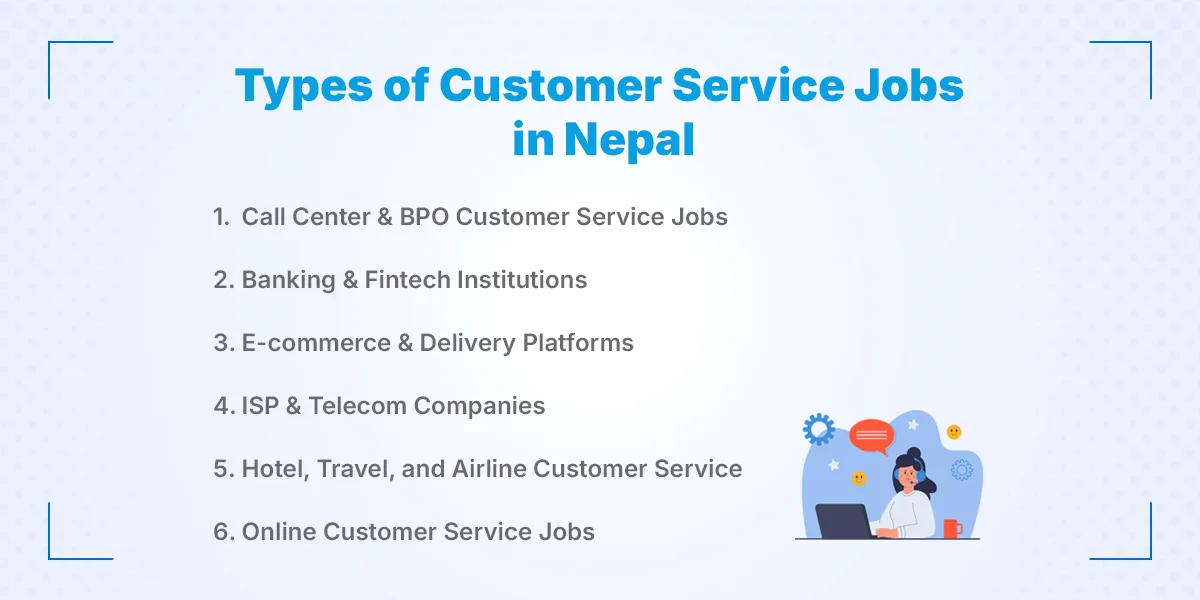
1. Call Center & BPO Customer Service Jobs
Call center and BPO roles involve handling a high volume of customer inquiries through phone calls, emails, or live chats. Representatives often follow scripts but must adapt to each customer’s situation and respond quickly. These positions require patience, multitasking skills, and the ability to work in shifts. Many call center jobs also provide training and opportunities for career advancement within the company.
2. Banking & Fintech Institutions
Customer service roles in banks and fintech companies focus on assisting clients with account inquiries, transactions, loan processes, and digital banking issues. Employees must be accurate, detail-oriented, and aware of financial regulations. Strong communication and problem-solving skills are crucial to handle sensitive customer information. These roles often offer stable growth and exposure to the financial sector.
3. E-commerce & Delivery Platforms
E-commerce and delivery customer service jobs involve helping customers with orders, refunds, cancellations, and delivery tracking. Representatives need to coordinate with logistics, warehouse, and payment teams to resolve issues quickly. Attention to detail and the ability to handle multiple queries at once are essential. These roles are growing rapidly due to the rise of online shopping in Nepal.
4. ISP & Telecom Companies
Companies like Worldlink, Vianet, Ncell, and Nepal Telecom have some of the largest customer service operations in the country. This includes field support, technical helpdesk, and social media response teams. Customer service roles in ISPs and telecom companies focus on solving network, billing, and service-related issues. Patience and technical knowledge are important, as queries can be complex or recurring. These positions often include both in-office and call center opportunities.
5. Hotel, Travel, and Airline Customer Service
In the hospitality and travel sector, customer service representatives assist with bookings, cancellations, complaints, and general inquiries. They often interact with tourists, requiring cultural sensitivity and language skills. Prompt, courteous service helps enhance the customer’s experience and builds loyalty. This sector offers opportunities for both in-person and online roles.
6. Online Customer Service Jobs
Online customer service jobs include live chat, email support, and social media management. These roles allow employees to work remotely while responding to queries efficiently. Clear writing skills, patience, and the ability to manage multiple digital channels are key. The growing demand for online support makes these roles ideal for students or those seeking flexible work arrangements.
Salary and Career Growth in Customer Service Jobs in Nepal
Customer service jobs in Nepal offer competitive salaries that grow with experience and skills, making them a viable career option for freshers and professionals alike. Beyond base pay, many companies provide performance incentives, bonuses, and opportunities for promotion. Understanding the earning potential and growth paths helps job seekers plan their career and explore long-term options in the field.
1. Average Salary Range for Customer Service in Nepal
Entry-level customer service representatives in Nepal typically earn between NPR 15,000 to NPR 25,000 per month, depending on the industry and company size. With 2–5 years of experience, salaries can increase to NPR 30,000–50,000, especially for specialized roles in banks, fintech, or BPOs. Performance bonuses and incentives can further boost total earnings. Over time, experience not only improves salary but also opens doors to more responsible positions.
2. Promotion Paths (Team Lead, Supervisor, Manager)
Customer service roles have clear promotion paths, allowing employees to advance to team lead, supervisor, or managerial positions. A team lead manages a small group, ensures service quality, and supports day-to-day operations. Supervisors oversee larger teams, handle escalations, and contribute to process improvements. Moving up the ladder increases responsibility, recognition, and pay, making career growth highly achievable for dedicated professionals.
3. Transition Opportunities to Sales, HR, or Operations
Experience in customer service also opens opportunities in other departments like sales, human resources, or operations. The communication, problem-solving, and multitasking skills gained in customer service are highly transferable. Employees who understand customer needs and business processes can easily transition to roles such as sales executive, HR coordinator, or operations assistant. This flexibility makes customer service a strong foundation for building a broader career in business.
Is Customer Service a Good Career Choice in Nepal?
Customer service can be a strong career choice in Nepal for students, fresh graduates, and anyone looking to enter the corporate world with limited experience. It is suitable for individuals who enjoy interacting with people, solving problems, and learning new skills on the job. Knowing the pros, cons, and long-term potential helps you decide if this career aligns with your goals.
1. Who Should Choose This Career
The customer service career is ideal for those who have good communication skills, patience, and a willingness to help others. It is especially suitable for freshers seeking entry-level opportunities that provide training and skill development. People who enjoy dynamic work environments and problem-solving can thrive here. Choosing this path can also be a stepping stone to higher roles in various industries.
2. Pros and Cons of Customer Service Jobs in Nepal
The main advantages of a customer support roles include quick entry into the workforce, skill-building, and opportunities for promotions. It also offers exposure to different industries and the chance to develop professional communication, multitasking, and problem-solving skills. On the downside, it can involve high-pressure situations, handling difficult customers, and shift-based work in call centers. Here's a short comparison of pros and cons of working as customer service representatives:
| Pros | Cons |
|---|---|
| Quick entry into the workforce | High-pressure situations dealing with complaints |
| Opportunity to develop communication and problem-solving skills | Shift-based work, especially in call centers |
| Exposure to multiple industries | Handling difficult or demanding customers |
| Clear paths for promotions and career growth | Repetitive tasks in high-volume roles |
3. Long-Term Career Potential
Customer service can lead to long-term career growth in management, sales, human resources, operations, or specialized support roles. Experienced professionals can become team leads, supervisors, or managers and take on strategic responsibilities. The skills learned here, such as, communication, empathy, organization, and problem-solving, are useful for almost any business sector. For those committed to learning and growth, customer service provides a strong foundation for a sustainable career.
Conclusion
Customer service jobs in Nepal offer a wide range of opportunities across industries like banking, IT, e-commerce, telecom, and hospitality. These roles provide entry-level openings, skill development, and clear paths for career growth, making them ideal for freshers and career switchers alike. By gaining experience in customer handling, problem-solving, and communication, you not only build a strong professional foundation but also open doors to higher roles in management, sales, HR, or operations.
If you are motivated to start your journey, now is the perfect time to explore available positions, apply with a tailored resume and cover letter, and develop key skills through internships or training programs. Stay proactive, upskill regularly, and keep track of job portals and company openings to secure your ideal customer service role in Nepal.
Frequently Asked Questions
Submit your comments

Get Our App On



What is the Public Relations Officer Salary in Nepal
VIEW DETAILS
What Is the Salary of a Ticketing Officer in Nepal?
VIEW DETAILS
What Is the Salary of a Travel Consultant in Nepal?
VIEW DETAILS
How to Become an Auditor in Nepal
VIEW DETAILS


Loading Comments...