




Are you a student or a fresh graduate wondering how to start a career in human resources in Nepal? An HR internship is often the first and most important step. It helps you understand real workplace practices and how HR departments function daily. Many employers in Nepal also prefer candidates with internship experience when hiring for entry-level HR roles.
In this blog, we explain how to get an HR internship in Nepal, the eligibility criteria, required skills, application steps, and the best platforms to apply so you can confidently begin your HR career journey. You will also learn what recruiters expect from HR interns and how to stand out during the selection process. This guide is designed to be simple, practical, and useful for students and fresh graduates seeking an internship in Nepal.
In this blog
What Is an HR Internship?
An HR internship is a short-term training opportunity where students or fresh graduates gain practical experience in human resource functions within an organization. It allows you to understand how HR departments manage people, policies, and workplace operations in real business environments. Through an HR internship, interns learn by assisting professionals in human resource and applying theoretical knowledge in day-to-day tasks.
HR internships are commonly offered by corporate companies, NGOs, INGOs, banks, and consultancies in Nepal. These internships help build essential workplace skills, improve employability, and prepare candidates for entry-level HR roles after graduation.
What Do HR Interns Do?
- Assist in recruitment processes such as screening CVs and scheduling interviews
- Support onboarding and orientation of new employees
- Maintain employee records and HR documentation
- Help with attendance tracking and basic payroll support
- Assist in organizing training sessions and workshops
- Handle employee communication and internal coordination
- Support daily administrative tasks within the HR department
Types of HR Internships Available in Nepal
There are several types of HR internships in Nepal, depending on the organization and the HR function you want to specialize in. Each type focuses on different responsibilities, skills, and career outcomes. Choosing the right HR internship helps you gain relevant experience aligned with your long-term career goals. Below are the most common HR internship options available for students and fresh graduates in Nepal.
1. Recruitment and Talent Acquisition Internships
Recruitment and talent acquisition internships focus on hiring and candidate management processes. Interns support HR teams in sourcing candidates through job portals, screening CVs, and shortlisting applicants. You may assist in scheduling interviews and coordinating with candidates and hiring managers. This internship helps you understand hiring strategies, employer branding, and selection methods. It is ideal for those interested in recruitment consultancy or corporate hiring roles.
2. Human Resource Management (HRM) Internships
HRM internships provide broad exposure to overall HR functions within an organization. Interns assist with employee records, attendance tracking, and HR policy implementation. You may also help with employee engagement activities and internal communication. This type of HR internship in Nepal builds a strong foundation in core HR practices. It is suitable for students aiming for long-term HR generalist roles.
3. Payroll and HR Operations Internships
Payroll and HR operations internships focus on administrative and compliance-related HR tasks. Interns help with attendance data, payroll preparation, and basic benefits administration. You may also assist in maintaining confidential employee documents and reports. This role improves accuracy, attention to detail, and understanding of labor laws. It is ideal for those interested in HR operations and compliance roles through practical payroll management.
4. Learning and Development (L&D) Internships
L&D internships focus on employee training and skill development initiatives. Interns assist in planning training sessions, preparing learning materials, and coordinating workshops. You may also help track employee training records and feedback. This internship helps you understand employee growth and performance improvement strategies. It is suitable for those interested in training, coaching, and organizational development.
5. NGO/INGO and Corporate HR Internships
NGO/INGO and corporate HR internships offer exposure to diverse work cultures and HR challenges. Interns support HR functions such as recruitment, documentation, and employee coordination in mission-driven or large organizations. You may also work on HR policies, reports, and compliance tasks. These internships provide valuable experience and strong professional credibility. They are ideal for students seeking impactful and structured HR career paths.
How to Get an HR Internship in Nepal? Step-by-Step
You can get an HR internship in Nepal by understanding HR roles clearly, building the right skills, and applying through the correct platforms. Most organizations look for motivated students who have basic HR knowledge and strong communication skills. A well-prepared CV, consistent applications, and professional networking greatly improve your chances. Following a step-by-step approach helps you avoid common mistakes and stand out from other applicants.
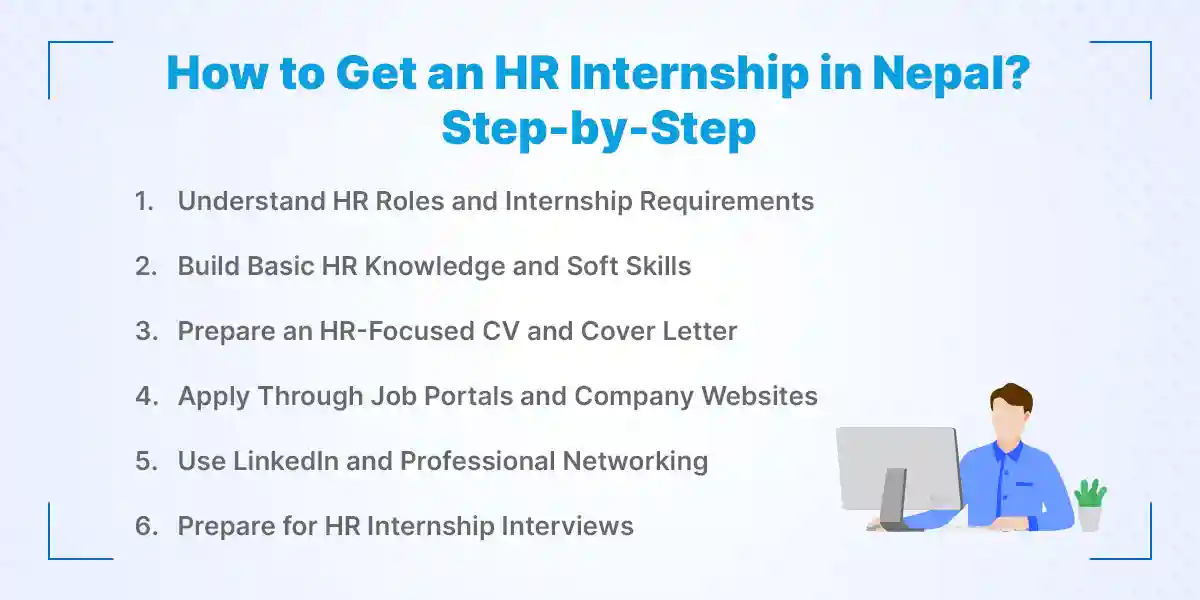
1. Understand HR Roles and Internship Requirements
Start by learning what HR interns actually do in organizations. Understand different HR functions such as recruitment, payroll, employee engagement, and training. Read internship job descriptions carefully to know what employers expect. This helps you decide which HR area matches your interests and skills. Knowing requirements in advance saves time and improves application quality. It also helps you target the right companies instead of applying blindly.
2. Build Basic HR Knowledge and Soft Skills
Develop basic knowledge of HR concepts like recruitment processes, labor laws, and workplace ethics. You can take short HR training courses or online certifications to strengthen your foundation. Along with technical knowledge, focus on communication, teamwork, and professionalism. Soft skills are highly valued in HR internships in Nepal. Strong people skills can compensate for limited experience. Employers often prefer interns who can communicate clearly and work well with others.
3. Prepare an HR-Focused CV and Cover Letter
Create a CV that highlights your education, HR-related coursework, training, and skills. Keep your CV clear, concise, and tailored for HR roles. Write a simple cover letter explaining why you want an HR internship and what you can contribute. Mention internships, volunteering, or college projects if available. A targeted CV increases your chances of shortlisting. Avoid generic CVs, as HR recruiters notice details quickly.
4. Apply Through Job Portals and Company Websites
Regularly check job portals like Kumari Job and LinkedIn for HR internship openings. Visit company websites and apply directly through their career pages. Apply to multiple organizations to increase your chances. Make sure your application documents are updated before applying. Consistency is key when applying for HR internships in Nepal. Set a daily or weekly application routine to stay disciplined.
5. Use LinkedIn and Professional Networking
Create a professional LinkedIn profile highlighting your HR interest and skills. Connect with HR professionals, recruiters, and alumni working in HR roles. Engage with HR-related posts and share learning content. Networking often leads to internship referrals and interview opportunities. Many HR internships are filled through connections rather than job ads. A strong network can open doors faster than applications alone.
6. Prepare for HR Internship Interviews
Prepare for common HR interview questions, such as why you chose HR and what you know about the company. Practice answering behavioral and situational questions confidently. Learn basic HR terms and recent HR trends in Nepal. Dress professionally and communicate clearly during interviews. Good preparation leaves a strong impression on interviewers. Confidence and clarity often matter more than perfect answers, so it is vital to prepare for an interview.
Eligibility Criteria for HR Internship in Nepal
The eligibility criteria for an HR internship in Nepal are generally flexible and student-friendly. Most organizations focus more on your willingness to learn, basic HR knowledge, and communication skills rather than extensive experience. HR internships are open to students, recent graduates, and career starters from management and social science backgrounds. Meeting these basic criteria helps you qualify for entry-level HR roles and practical training opportunities.
1. Educational Qualification (BBA, BBS, MBA, Psychology)
Most employers prefer candidates studying or graduated in BBA, BBS, MBA, Psychology, or related fields. These programs provide foundational knowledge of management, human behavior, and organizational structure. However, students from other disciplines may also apply if they show interest in HR. Academic background helps recruiters assess your understanding of workplace dynamics. A strong academic record can further improve your chances.
2. Basic Understanding of HR Concepts
Having a basic understanding of HR concepts like recruitment, employee relations, and labor laws is important. You do not need advanced HR expertise to qualify for an internship. Basic knowledge can be gained through coursework, short training, or self-study. Employers value interns who understand HR terminology and processes. This shows seriousness and readiness to learn on the job.
3. Communication and Interpersonal Skills
Strong communication and interpersonal skills are essential for any HR internship in Nepal. HR interns regularly interact with employees, candidates, and managers. Clear verbal and written communication helps avoid misunderstandings. Good listening skills and professional behavior are equally important. Employers prefer interns who can communicate confidently and respectfully in a workplace environment.
4. Internship Availability and Commitment
Organizations expect HR interns to be available for a fixed internship period, usually 1 to 3 months. Commitment to working hours and assigned tasks is highly valued. Many internships require regular office attendance or scheduled remote work. Being reliable and punctual creates a positive impression. Strong commitment often leads to recommendation letters or job opportunities later.
Skills Required to Secure an HR Internship in Nepal
To secure an HR internship in Nepal, you need a mix of communication, organizational, and basic technical skills. Employers look for interns who can interact professionally and handle HR-related tasks responsibly. While prior experience is not mandatory, having the right IT skills increases your chances of selection. These skills also help you perform well during the internship and build a strong HR career foundation.
1. Communication and People Management Skills
Strong communication skills are essential for interacting with employees and candidates. HR interns often handle emails, phone calls, and internal coordination. Good people management skills help you build trust and maintain professionalism. Clear communication reduces workplace confusion and errors. Employers prefer interns who can express ideas confidently and listen actively. This skill is critical for handling workplace interactions smoothly.
2. Recruitment and Interview Coordination Skills
Recruitment is a core HR function where interns provide daily support. You may assist in screening CVs, scheduling interviews, and coordinating with candidates. A basic understanding of hiring processes is helpful. Being organized and responsive improves the recruitment experience. These skills are especially useful for recruitment-focused HR internships. They also prepare you for future recruiter or HR officer roles.
3. Documentation and HR Reporting Skills
HR interns handle employee records, forms, and confidential documents. Attention to detail is important while maintaining accurate data. You may assist in preparing HR reports or updating files. Proper documentation supports compliance and smooth HR operations. Employers value interns who are organized and reliable. Accuracy in documentation builds trust within the HR team.
4. MS Excel and HR Software Basics
Basic MS Excel skills are commonly required for HR internships in Nepal. You may use spreadsheets for attendance, employee data, or simple reports. Familiarity with HR software or tools is an added advantage. Even basic computer skills improve productivity. Learning these tools early makes you more job-ready. These skills also save time and reduce manual errors.
5. Professional Ethics and Confidentiality
HR interns deal with sensitive employee and company information. Maintaining confidentiality is extremely important in HR roles. Professional ethics guide your behavior and decision-making. Employers expect interns to act responsibly and respectfully. Strong ethical standards help build trust and long-term HR credibility. This skill is essential for a successful HR career.
Best Platforms to Find HR Internships in Nepal
The best platforms to find HR internships in Nepal are online job portals like Kumari Job and company career pages. These platforms regularly publish verified internship opportunities from corporate companies, NGOs, INGOs, and consultancies. They are easy to access and trusted by employers in Nepal. Using these platforms consistently increases your chances of securing a suitable HR internship.
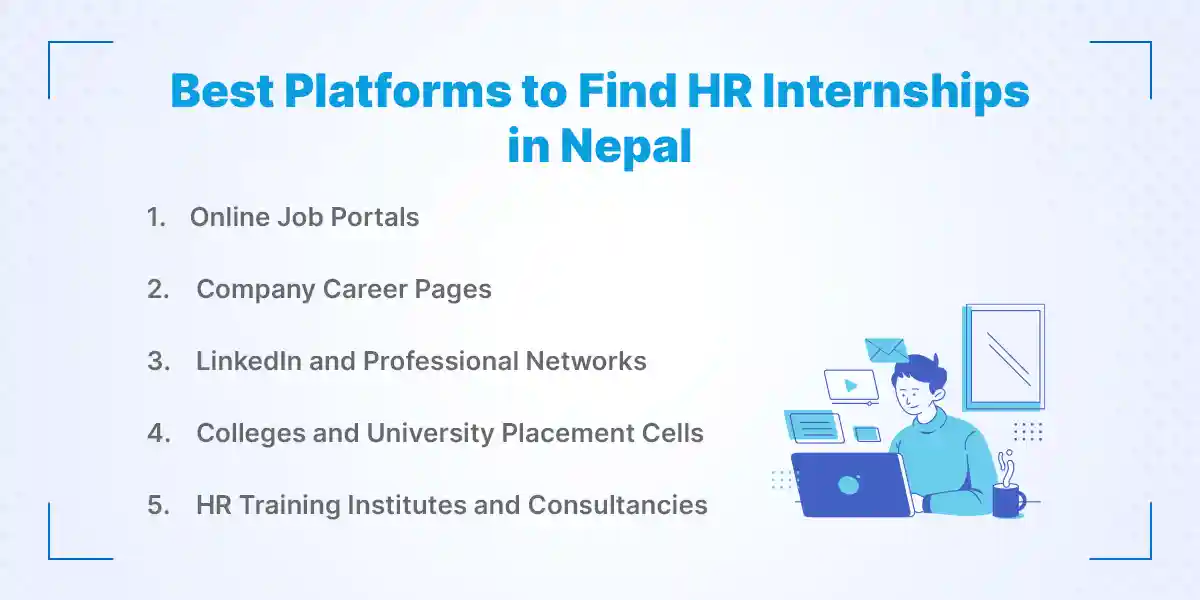
1. Online Job Portals
Online job portals like Kumari Job are one of the most reliable ways to find HR internships in Nepal. Kumari Job regularly posts internship openings for HR students and fresh graduates. You can search for internships by category and location easily. The platform allows direct application to employers. Regularly checking Kumari Job helps you stay updated. It is widely used by both employers and job seekers. Applying early increases the chance of shortlisting.
2. Company Career Pages
Many organizations post HR internship openings on their official career pages. Applying through the company website shows a genuine interest in the organization. Corporate companies and NGOs prefer direct applications. Career pages often include detailed internship descriptions. This helps you understand expectations clearly. Early applications through career pages improve selection chances. Following companies you like helps you apply faster.
3. LinkedIn and Professional Networks
LinkedIn is a strong platform for finding HR internship opportunities in Nepal. HR professionals often share internship openings on their profiles. Connecting with HR managers improves your visibility. Professional networking can lead to referrals and recommendations. A well-optimized LinkedIn profile attracts recruiters. Active engagement increases opportunities. Sending polite messages can open new doors.
4. Colleges and University Placement Cells
Colleges and universities provide internship support through placement cells. These cells share HR internship opportunities with enrolled students. They often partner with companies for internship programs. Placement cells also guide students on applications. Using college resources adds credibility. Students should regularly follow placement updates. Faculty referrals can also help.
5. HR Training Institutes and Consultancies
HR training institutes and consultancies offer internship opportunities to trainees. These institutes have strong industry connections. Internships provided through consultancies offer practical HR exposure. Some programs include guaranteed internship placement. This is helpful for beginners who want to build a career in this field. It also improves confidence and job readiness. Training-based internships often speed up learning, especially when paired with advanced hr training in Nepal.
Career Opportunities After an HR Internship in Nepal
An HR internship in Nepal opens doors to multiple entry-level and long-term career paths in human resources. It helps you gain hands-on exposure to recruitment, employee management, and HR operations. Many organizations prefer hiring interns as full-time staff once they understand the company culture and systems. This practical experience strengthens your CV and improves your employability in both local and multinational companies. Over time, HR internships can lead to stable and well-paying professional roles.
1. HR Assistant and HR Officer Roles
After completing an HR internship, many candidates start their careers as HR Assistants or Junior HR Officers. These roles involve supporting daily HR activities such as maintaining employee records, assisting with recruitment, and coordinating HR documentation. You may also help with attendance tracking, onboarding, and internal communication. Over time, consistent performance can lead to promotions and higher responsibilities. This role builds a strong foundation for a long-term HR career.
2. Recruitment and Talent Acquisition Careers
HR interns with strong communication skills often move into recruitment and talent acquisition roles. These positions focus on sourcing candidates, screening CVs, scheduling interviews, and coordinating with hiring managers. You also gain experience in employer branding and candidate relationship management. With experience, you can specialize in technical hiring or bulk recruitment. This career path offers faster growth and exposure to multiple industries.
3. Corporate HR and Administrative Jobs
Many interns transition into corporate HR or administrative roles after completing their internship. These jobs involve HR coordination, office administration, policy implementation, and employee support. You may work closely with management on HR compliance and internal procedures. Such roles help you understand business operations along with HR functions. They are ideal for those seeking stable, structured career growth.
4. Long-Term HR Career Growth in Nepal
An HR internship can be the starting point for long-term career growth in Nepal’s expanding corporate sector. With experience and further education, you can grow into roles like HR Manager, HR Business Partner, or Training Manager. Continuous learning in labor laws, HR analytics, and leadership boosts career progression. HR professionals are needed across all industries, ensuring steady demand. This makes HR a reliable and scalable career option in Nepal.
Salary and Duration of HR Internships in Nepal
HR internships in Nepal are usually short-term programs designed to provide practical workplace exposure rather than high pay. Most HR internships last between 1 to 3 months, while some structured programs may extend up to 6 months. In terms of salary, many internships are unpaid or offer a modest stipend ranging from NPR 5,000 to NPR 15,000 per month, depending on the organization. Corporate companies and INGOs are more likely to provide a paid internship in Nepal. The main value of an HR internship lies in skill development, experience, and future job opportunities.
Is an HR Internship worth it in Nepal?
Yes, an HR internship in Nepal is worth it because it provides real-world exposure to HR practices and helps students apply theoretical knowledge in a professional setting. It builds practical skills in recruitment, documentation, and employee coordination. An internship also strengthens your CV and improves employability for entry-level HR roles. Many organizations prefer hiring candidates with internship experience. It helps you understand workplace culture and HR responsibilities early in your career.
Conclusion
An HR internship in Nepal is a strong starting point for students and fresh graduates who want to build a career in human resources. It offers hands-on experience in recruitment, employee management, documentation, and workplace coordination. Through internships, candidates gain practical exposure that classrooms alone cannot provide, helping them understand real organizational HR functions. This early exposure also helps interns identify their strengths and preferred HR specializations.
With growing demand for skilled HR professionals across corporate sectors, NGOs, and consultancies, internships act as a gateway to long-term career opportunities. They improve confidence, professional skills, and job readiness. Choosing the right platform, staying proactive, and learning continuously can turn an HR internship into a successful career foundation. A well-utilized internship often leads to job offers or strong professional references.
Frequently Asked Questions
Submit your comments

Get Our App On



What is the Public Relations Officer Salary in Nepal
VIEW DETAILS
What Is the Salary of a Ticketing Officer in Nepal?
VIEW DETAILS
What Is the Salary of a Travel Consultant in Nepal?
VIEW DETAILS
How to Become an Auditor in Nepal
VIEW DETAILS


Loading Comments...