



Do you want to gain international public health experience while still in Nepal? Many students and early-career professionals struggle to find credible opportunities that build skills and enhance their resumes. Missing proper guidance often leads to wasted applications or rejection.
In this blog, readers will learn how to apply for a WHO internship in Nepal. The guide explains what a WHO internship is, types of internships available, eligibility criteria, required skills, where to find opportunities, and tips to improve selection chances. Following these steps helps candidates apply efficiently and gain valuable international experience in public health through UN jobs in Nepal.
In this blog
What Is a WHO Internship? Types of Internship In WHO
WHO internship is a short-term training program offered by the World Health Organization to students and recent graduates. It provides practical experience in global health, research, policy, and administrative functions. Interns gain exposure to international public health projects and contribute to WHO initiatives at the country, regional, or headquarters levels, making it an excellent internship in Nepal for hands-on learning. The program helps develop professional skills, understand health systems, and build a network of public health experts. WHO internships are usually unpaid but offer valuable learning and career development opportunities.
1. Public Health Internship
This internship focuses on public health programs and projects, including disease prevention, health promotion, and epidemiology. Interns assist with field research, community health assessments, and awareness campaigns. Tasks may include analyzing health data, supporting vaccination drives, or preparing educational materials for local communities. It is ideal for students studying public health, epidemiology, or community health.
2. Medical and Health Sciences Internship
This role targets candidates with a background in medicine, nursing, pharmacy, or other health sciences. Interns may assist with clinical research, medical reporting, or health program implementation. They gain exposure to hospital collaborations, disease monitoring, and clinical guideline development. It is suitable for students pursuing advanced health-related degrees or practical experience in clinical settings.
3. Data, Research, and Statistics Internship
This internship involves collecting, analyzing, and interpreting health-related data. Interns work on surveys, statistical models, and research reports to support WHO decision-making. They may assist in monitoring disease outbreaks, evaluating program effectiveness, or developing data dashboards. Candidates with skills in statistics, epidemiology, or data analysis benefit the most from this role.
4. Communication and Administration Internship
Interns in this area support the WHO's internal and external communication, documentation, and administrative tasks. Responsibilities include preparing reports, managing social media content, organizing events, and coordinating meetings. This role develops skills in professional communication, office management, and prepares candidates for administration job roles in Nepal.
5. Policy, Finance, and Program Support Roles
These internships focus on supporting policy development, program management, and financial planning. Interns may assist in drafting policy briefs, tracking budgets, or evaluating program performance. Candidates with backgrounds in public policy, management, or finance gain practical experience contributing to international health initiatives.
How to Get an Internship at WHO in Nepal? Step-by-Step
To get an internship at WHO in Nepal, candidates need to follow a structured approach to maximize their chances of selection. The process involves identifying suitable roles, preparing necessary documents, understanding how to apply for UN jobs, submitting applications through official channels, and completing the interview and selection stages. Understanding each step helps applicants avoid mistakes, ensures all requirements are met, and improves the likelihood of being accepted. Careful preparation, attention to eligibility, and timely follow-up are key to securing a WHO internship.
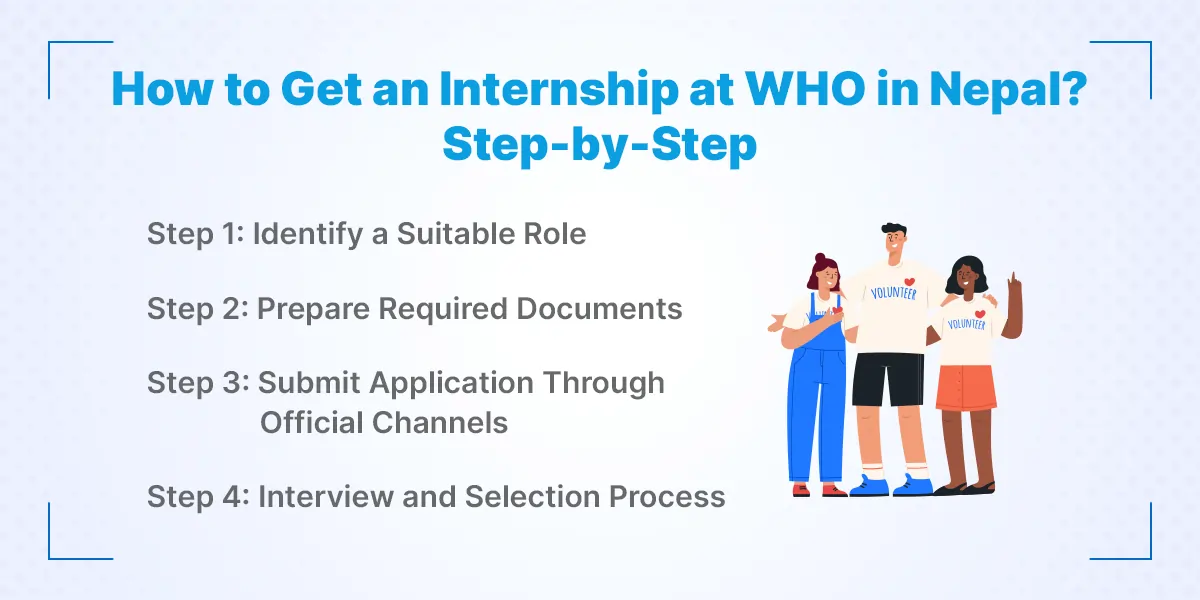
Step 1: Identify a Suitable Role
Start by researching available WHO internship opportunities in Nepal. Visit the WHO Nepal country office website, the WHO global career portal, and authorized internship announcement pages. Look for roles that align with your academic background, career goals, and skill set. Carefully read job descriptions to understand responsibilities, required competencies, and preferred qualifications. Consider the duration, work schedule, and specific department to ensure it matches your availability and professional interests. Shortlist 2-3 roles that best fit your profile to focus your efforts efficiently.
Step 2: Prepare Required Documents
Once you have identified suitable roles, gather all necessary documents for submission. Essential documents typically include a current resume highlighting academic achievements, relevant projects, and work experience. Prepare a motivation letter explaining why you want to intern at WHO, what you can contribute, and your career objectives. Include academic transcripts, identification proof, and any certifications related to public health, research, or administration. Ensure all documents are accurate, properly formatted, and error-free. Creating a complete and polished set of documents demonstrates professionalism and helps you prepare a CV effectively for the internship.
Step 3: Submit Application Through Official Channels
Submit your application through the official WHO career portal or the WHO Nepal country office. Carefully complete online forms, providing accurate personal information, educational background, and work experience. Attach all prepared documents and respond to any specific application questions, such as essay prompts or scenario-based assessments. Verify that contact details are correct for potential follow-up. Submitting through official channels ensures your application reaches the correct department and is considered valid. Double-check all details before final submission to avoid mistakes that could disqualify your application.
Step 4: Interview and Selection Process
After submitting your application, shortlisted candidates may be contacted for an interview, either virtually or in person. Conduct thorough interview preparation by researching WHO’s mission, ongoing projects in Nepal, and global health initiatives. Review relevant technical knowledge, public health trends, and your own previous experience. Be ready to answer questions about your skills, motivation, teamwork, and problem-solving abilities. After evaluation, selected candidates will receive an internship offer detailing duration, department, responsibilities, and reporting requirements. Maintaining professionalism, punctuality, and clear communication during this stage increases your likelihood of final selection.
Eligibility Criteria for WHO Internship
To apply for a WHO internship, candidates must meet specific eligibility requirements set by the organization. These criteria ensure that interns have the necessary academic background, skills, and legal status to contribute effectively. Eligibility depends on age, education level, enrollment or graduation status, language proficiency, and nationality or visa regulations. Meeting these standards increases the likelihood of being shortlisted and completing the internship program.
1. Age Requirements
Candidates must generally be at least 18 years old to be eligible for a WHO internship. Some positions, particularly those with fieldwork components or sensitive responsibilities, may also have an upper age limit to comply with local labor regulations. Age criteria are important to ensure that interns are legally permitted to work in the assigned location and are capable of handling the physical and mental demands of the role. Interns under 18 may only qualify in exceptional cases with parental consent or for limited short-term assignments.
2. Academic Background Requirements
Applicants should have an academic background that aligns with the type of internship they are applying for. Public health, epidemiology, medicine, nursing, and life sciences degrees are preferred for health-focused roles. For internships in administration, communication, finance, or policy, degrees in management, business, social sciences, or related disciplines are usually required. A strong academic foundation ensures that interns can understand technical tasks, contribute to ongoing projects effectively, and adapt quickly to the professional environment.
3. Enrollment or Graduation Status
Interns must either be currently enrolled in a recognized university program or have recently graduated, typically within the last year. WHO internships are designed to provide students and early-career professionals with practical experience that complements their academic studies. Some specialized or senior-level internship positions may require candidates to have completed specific degrees or certifications before joining. Maintaining active enrollment or recent graduation status ensures that interns are in a learning mindset and able to apply their academic knowledge effectively.
4. Language Proficiency Expectations
Most WHO internships require strong proficiency in English, as it is the primary working language for reports, communication, and official documentation. Depending on the location or nature of the project, additional language skills, such as French, Spanish, or local languages, may be beneficial. Strong language proficiency allows interns to understand instructions accurately, participate in team discussions, prepare technical documents, and communicate effectively with colleagues and stakeholders. Candidates should be prepared to demonstrate their language skills through tests or written submissions.
5. Nationality and Visa Considerations
WHO accepts applicants from any nationality for internship programs; however, local offices may prioritize candidates from the host country for certain positions. International candidates must ensure they have the necessary visa, work permit, or legal authorization to participate in the internship. Complying with nationality and visa requirements guarantees that the internship can proceed without legal complications and allows the intern to fully engage in project activities, travel if required, and access office facilities without restrictions.
Skills Needed for WHO Internship
To succeed in a WHO internship, candidates need a combination of technical, analytical, and interpersonal skills. These skills enable interns to contribute effectively to health programs, research projects, and administrative tasks. Developing the right competencies ensures that interns can handle responsibilities, communicate clearly, and adapt to the dynamic environment of an international organization. Possessing these skills also increases the likelihood of being selected and excelling during the internship period.
1. Research and Analytical Skills
Interns must be able to conduct research, review scientific literature, and analyze health-related data. This includes identifying relevant information, evaluating sources, and drawing meaningful conclusions. Analytical skills help in assessing the effectiveness of public health programs, interpreting statistical data, and preparing evidence-based recommendations. Strong research capabilities allow interns to contribute to policy briefs, project evaluations, and technical reports effectively.
2. Communication and Writing Ability
Clear written and verbal communication is essential for WHO interns. They must draft reports, prepare presentations, and correspond professionally with colleagues and stakeholders. Effective communication ensures that project findings, recommendations, and updates are conveyed accurately. Interns must also be able to simplify complex information for different audiences, including policymakers, community members, or international teams.
3. Public Health Knowledge
Interns should have foundational knowledge in public health, epidemiology, or related health sciences. Understanding disease prevention, health promotion, and global health challenges allows interns to participate meaningfully in projects. Public health knowledge supports tasks such as monitoring disease outbreaks, designing awareness campaigns, and assisting in program implementation at the community or organizational level.
4. Data Handling and Reporting Skills
Ability to manage, organize, IT skills, and interpret data is crucial. Interns may work with databases, spreadsheets, or statistical software to track health indicators and generate reports. Accurate data handling ensures reliable analysis and informed decision-making. Reporting skills are also necessary to summarize findings, create visualizations, and present actionable recommendations to supervisors or teams.
5. Teamwork and Cross-Cultural Collaboration
WHO internships often involve working in diverse teams across different cultural and professional backgrounds. Interns must be able to collaborate effectively, respect differing viewpoints, and contribute positively to group projects. Strong teamwork skills help in problem-solving, coordinating tasks, and achieving project objectives. Cross-cultural collaboration enhances interpersonal understanding and builds networks essential for international public health work.
Where to Look for WHO Internship Opportunities in Nepal?
You can look for WHO internship opportunities in Nepal through WHO’s official career portal and local WHO country office announcements. Job portals like Kumari Job regularly post internship openings and provide details on application procedures, eligibility, and deadlines. Social media platforms such as LinkedIn also feature WHO internship updates. University career centers may share relevant opportunities with enrolled students. Checking multiple sources ensures you stay informed about all available internships.
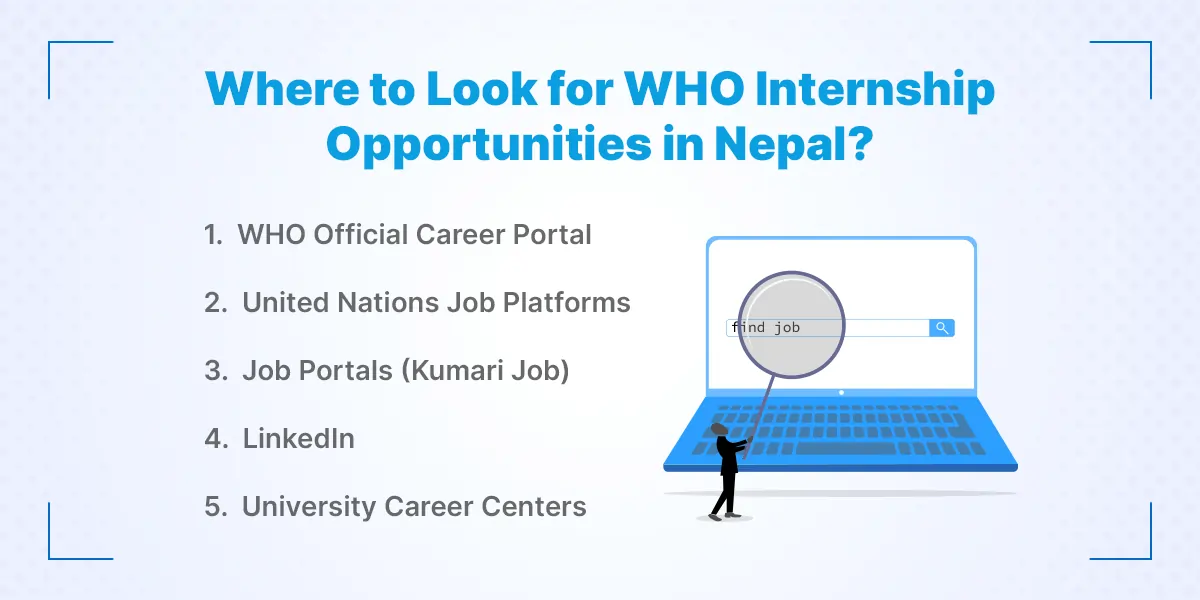
1. WHO Official Career Portal
The WHO official career portal is the most reliable source for internship opportunities worldwide, including Nepal. It lists available positions by department, location, and program focus. Each listing provides detailed information about responsibilities, expected deliverables, required qualifications, and duration of the internship. Candidates can create accounts to receive notifications about new openings and track the status of their applications. Regularly visiting the portal increases the likelihood of finding timely and accurate internship postings.
2. United Nations Job Platforms
WHO internships are often posted on United Nations job platforms such as UN Careers or Inspira. These platforms aggregate internship and job opportunities across UN agencies, including WHO. Candidates can filter listings by country, field of interest, or type of program. Profiles can be created to manage applications, set alerts for new internships, and submit supporting documents online. Using UN platforms ensures access to official postings and helps candidates meet all procedural requirements.
3. Job Portals (Kumari Job)
Kumari Job gives information about internship announcements and other related details, including eligibility, application deadlines, and required documents. Local job portals like this provide curated lists of both national and international opportunities, including WHO internships in Nepal. They often include guidance on preparing resumes, writing effective cover letters, and tips for interview success. Using portals like Kumari Job alongside official WHO sources helps candidates stay updated on all available opportunities and increases the chances of applying on time.
4. LinkedIn
LinkedIn serves as both a professional network and a platform for internship announcements. WHO, regional offices, and partner organizations often post openings on LinkedIn. Candidates can follow WHO pages, join professional groups in public health, and connect with alumni or previous interns to gain insights. LinkedIn also allows direct application for some postings, networking with current employees, and staying updated with organizational announcements. Leveraging LinkedIn enhances visibility and helps build connections that may support selection.
5. University Career Centers
University career centers are valuable resources for students seeking WHO internships. They often receive direct internship notifications and provide workshops, seminars, and guidance on application preparation. Career centers may assist in drafting resumes, writing motivation letters, and preparing for interviews. They also help students understand eligibility criteria and deadlines. Engaging with a career center increases preparedness and improves the chances of submitting a strong, competitive application.
Career After WHO Internship
Completing a WHO internship opens multiple career pathways in public health, global health, policy, and research. Interns gain practical experience, professional exposure, and networking opportunities that enhance employability. The skills and knowledge acquired during the internship make candidates competitive for roles in international organizations, NGOs, research institutions, and public health agencies. This experience can also strengthen academic pursuits and future leadership positions in global health.
1. Job Roles in International Organizations
WHO internship experience prepares candidates for various positions in international organizations such as UNICEF, UNDP, World Bank, and other UN agencies. Interns may qualify for roles in program management, policy analysis, health program coordination, research, or technical advisory positions. Exposure to global health operations and international collaboration during the internship provides a strong foundation for applying to these roles.
2. Opportunities in NGOs and INGOs
Interns gain skills that are highly valued by non-governmental and international non-governmental organizations. Experience in program planning, monitoring, evaluation, and community health projects makes candidates suitable for NGO/INGO jobs in Nepal in health-focused organizations, humanitarian agencies, or development projects. Networking with professionals during the internship can lead to referrals and future employment opportunities.
3. Public Health and Policy Career Paths
A WHO internship strengthens career prospects in public health, health policy, and healthcare administration. Interns develop an understanding of disease prevention, health systems, and policy development, which is applicable in governmental health departments, research institutions, and policy advisory roles. The internship provides credibility and practical experience for candidates pursuing leadership positions in public health.
4. Impact on Academic and Research Careers
WHO internships enhance academic growth by offering hands-on research experience and exposure to international health projects. Interns can leverage their experience for advanced studies, research publications, or participation in global health conferences. The internship also helps in building a professional network, which can support collaborative research projects and academic mentorship opportunities in the future.
Tips to Get Selected for the WHO Internship
Getting selected for a WHO internship requires strategic preparation, including tailoring applications, highlighting relevant skills, and demonstrating motivation for public health work. Focusing on your academic alignment, professional experiences, and personal interest in global health enhances your chances. Effective preparation for the interview stage and attention to detail in application materials further improve the likelihood of selection.
1. Resume and Motivation Letter Preparation
Craft a concise, well-structured resume that highlights academic achievements, relevant projects, research experience, and technical skills. The motivation letter should clearly explain why you want to intern at WHO, what you can contribute, and how the experience aligns with your career goals. Use specific examples from coursework, volunteering, or previous internships to demonstrate capability. Tailoring both documents to the specific internship role increases visibility and appeal to recruiters.
2. Aligning Academic Background with the WHO Work Areas
Ensure that your academic background aligns with the responsibilities of the internship you are applying for. For public health, epidemiology, or medical roles, highlight relevant courses, research projects, or practical experience. For administrative or policy internships, focus on management, communications, or policy-related coursework. Showing a clear match between your education and the role demonstrates preparedness and commitment.
3. Demonstrating Public Health Interest
Show genuine interest in public health, global health issues, or WHO programs through your application. Mention relevant volunteer work, research projects, or participation in workshops, seminars, or health campaigns. Evidence of active engagement indicates motivation and understanding of the field, making your application stand out among other candidates.
4. Interview Preparation Strategies
Prepare thoroughly for interviews by researching WHO’s mission, ongoing projects in Nepal, and global health challenges. Practice common interview questions, including behavioral and scenario-based queries, and be ready to discuss your skills, experiences, and motivations clearly. Demonstrate professionalism, confidence, and understanding of the internship role. Effective interview preparation helps leave a positive impression on the selection committee.
Conclusion
Securing a WHO internship in Nepal provides an excellent opportunity to gain practical experience in global health, public health programs, research, and policy development. The internship equips candidates with essential skills, professional exposure, and networking opportunities that enhance career prospects in international organizations, NGOs, and research institutions. Following the structured application process, meeting eligibility requirements, and preparing strong application materials significantly improve the chances of selection.
By focusing on relevant academic background, developing key skills, and demonstrating a genuine interest in public health, applicants can stand out in a competitive selection process. Careful research, timely application submission, and effective interview preparation ensure a successful WHO internship experience that can shape a long-term career in global health and policy.
Frequently Asked Questions
Submit your comments

Get Our App On



What is the Public Relations Officer Salary in Nepal
VIEW DETAILS
What Is the Salary of a Ticketing Officer in Nepal?
VIEW DETAILS
What Is the Salary of a Travel Consultant in Nepal?
VIEW DETAILS
How to Become an Auditor in Nepal
VIEW DETAILS


Loading Comments...