




Do you apply again and again, yet never hear back from international organisations? Many students in Nepal spend months submitting forms without clarity, direction, or feedback. Confusion around eligibility, unclear application steps, weak documents, plus a lack of guidance stop capable candidates from moving forward. Missed deadlines and wrong platforms reduce chances before selection teams even review profiles.
In this blog, you will learn how to get a UNICEF internship in Nepal through a clear step-by-step approach. Content explains what the UNICEF internship means, available internship types, eligibility rules, required skills, the correct application process, trusted sources to find openings, plus realistic career growth after selection. This guide supports readers who want to get un job in Nepal by focusing on practical actions that remove confusion and reduce application errors. Clear guidance helps candidates move forward without guesswork or wasted effort.
In this blog
What is a UNICEF Internship? Types of UNICEF Internship
UNICEF internship is a structured learning opportunity that allows students or recent graduates to work with UNICEF teams on real programs and projects. UNICEF internship focuses on practical exposure in areas such as child protection, education, health, nutrition, social policy, WASH, communication, and data support. Internship roles support ongoing initiatives while helping interns build professional skills through supervised tasks. UNICEF internship placements usually run for a fixed duration and follow clear performance expectations. UNICEF internship experience strengthens profiles for NGO, INGO, and UN system careers.
Types of Internship Programs at UNICEF
1. UNICEF Global Internship Programme
UNICEF Global Internship Programme offers paid internship roles across different UNICEF offices worldwide. The programme allows applicants from Nepal to apply for international or remote-based roles, depending on vacancy terms. Positions focus on research, communication, program support, monitoring, and data analysis. Selection follows a competitive process based on academic background, skills, and alignment with motivation.
2. UNICEF Nepal Country Office Internship
UNICEF Nepal Country Office internship provides local exposure within UNICEF Nepal operations. Roles support country-specific programs related to child rights, education access, health systems, nutrition improvement, and emergency response. Internship assignments may involve field coordination, reporting, documentation, or communication with stakeholders. Nepal-based placements suit candidates seeking direct development sector experience.
3. Research and Project-Based Internships
Research and project-based internships focus on data collection, policy analysis, reporting, and evaluation tasks. These roles support specific UNICEF projects with defined outputs and timelines. Assignments often require academic strength in research methods, statistics, public policy, or social sciences. Such internships build strong analytical skills valued across UN agencies and development organisations.
How to Get an Internship at UNICEF in Nepal
To get an internship at UNICEF in Nepal, applicants must follow a clear and structured application process aligned with UNICEF hiring standards. UNICEF selects interns based on academic relevance, skill match, and motivation toward child-focused development work. Candidates aiming for UN internships should avoid random applications or unofficial sources that reduce selection chances. Strong preparation, correct platform use, plus role alignment, improve outcomes. Each step below explains how candidates can move forward with clarity.
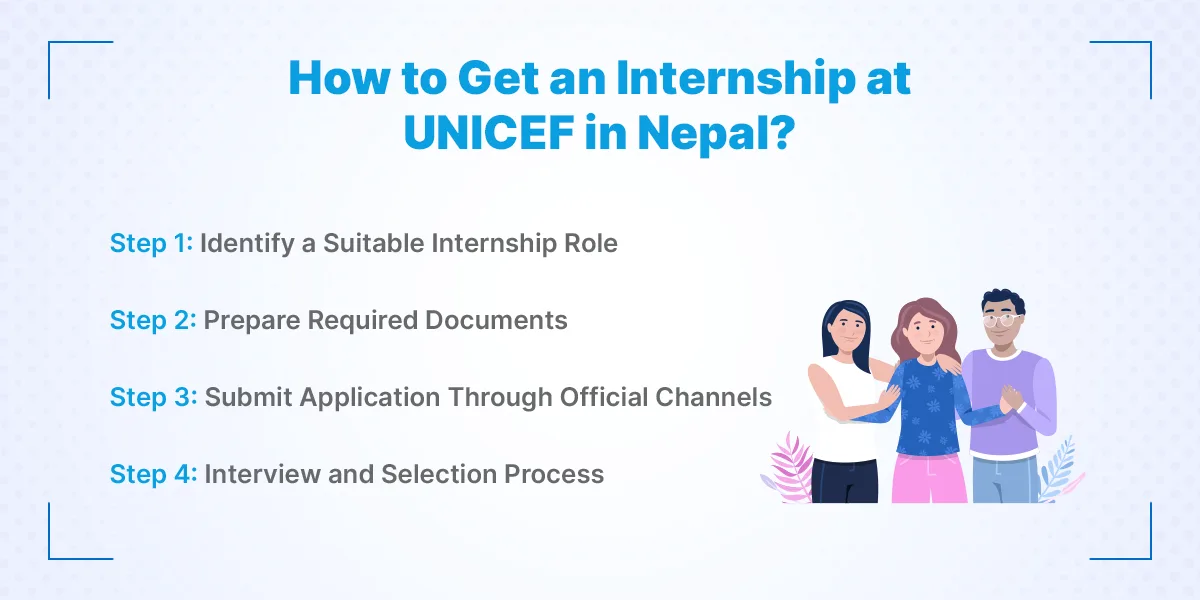
Step 1: Identify a Suitable Internship Role
Start by reviewing available internship roles linked to UNICEF focus areas such as education, health, nutrition, child protection, communication, or data support. Match academic background, coursework, or research experience with the role requirements listed in vacancy notices. Role alignment increases shortlisting probability because recruiters assess relevance first. Avoid applying for multiple unrelated positions during the same cycle. Focus on one role that closely fits skills and academic direction.
Step 2: Prepare Required Documents
Prepare a concise CV highlighting academic achievements, research work, volunteering, or NGO exposure. Write a focused cover letter explaining interest in the UNICEF mission and relevance to the selected role. Academic transcripts, enrollment proof, or graduation certificates may also be required. Clear formatting and role-specific content improve document screening results. Strong documentation reflects professionalism and readiness for UN working standards.
Step 3: Submit Application Through Official Channels
Submit application only through the UNICEF official careers portal or UN recruitment platforms. Follow instructions carefully, including file format, word limits, and submission deadlines. Incomplete or late submissions receive automatic rejection. Regularly track application status through a registered account. Official channels ensure the application reaches the correct recruitment teams.
Step 4: Interview and Selection Process
Shortlisted candidates receive interview invitations through email or portal notifications. Interview panels assess motivation, subject knowledge, communication ability, plus ethical awareness. Practical questions often focus on teamwork, problem-solving, and UNICEF mandate understanding, making interview preparation essential for strong performance. Successful candidates receive offer letters outlining duration, stipend details, and reporting structure. Preparation improves confidence and performance during interviews.
Eligibility Criteria for UNICEF Internship
Eligibility criteria for UNICEF internship define who can apply and move forward in the selection stages. UNICEF sets clear conditions related to education, age, enrollment, plus language ability. Meeting basic criteria does not guarantee selection, but failing any requirement leads to rejection. Applicants should review the criteria carefully before applying to avoid wasted effort. Eligibility rules apply equally across global and Nepal-based internships.
1. Educational Requirements
Applicants must be currently enrolled in an undergraduate, graduate, or postgraduate degree program or must have graduated within recent years as specified in the vacancy notice. Academic background should relate directly to UNICEF work areas such as social sciences, public health, education, international relations, data studies, or communication. Coursework relevance improves application strength during screening. Research projects or thesis work aligned with child-focused development adds value. Strong academic records reflect readiness for professional responsibilities.
2. Age and Enrollment Status
UNICEF internship candidates must usually be at least eighteen years old at application time. Enrollment in a recognised academic institution or recent graduation status remains mandatory. Proof of student status or a completion certificate may be requested during selection. Candidates without active academic linkage often fail eligibility checks. Clear enrollment status prevents delays during verification stages.
3. Language Requirements
English proficiency remains mandatory for all UNICEF internship roles. Strong writing and verbal communication skills support reporting, coordination, and documentation tasks. Knowledge of Nepali provides an added advantage for Nepal country office roles. Additional UN languages increase competitiveness for global internship programs. Language skills help interns collaborate across multicultural teams.
Skills Needed to Get a UNICEF Internship
Skills needed to get a UNICEF internship extend beyond academic qualifications alone. UNICEF evaluates practical ability, communication strength, ethical awareness, plus teamwork readiness during selection. Skill alignment with program needs improves shortlisting chances significantly. Intern roles often involve research, reporting, coordination, and data handling tasks. Balanced skill sets help interns perform effectively within professional environments. Each skill category below explains expectations clearly.
1. Technical and Academic Skills
Technical and academic skills include subject knowledge linked to UNICEF focus areas such as public health, education, nutrition, social policy, or development studies. Research methods, report drafting, and data interpretation support daily assignments. Academic projects related to child development or social impact strengthen profiles. The ability to apply theory to practical tasks matters more than grades alone. Technical strength improves supervisor trust and task allocation.
2. Communication and Writing Skills
Communication and writing skills support coordination with teams, partners, and stakeholders. Clear writing helps prepare reports, briefs, meeting notes, and presentations. Verbal clarity supports discussions during meetings and field coordination. The ability to simplify information improves collaboration across departments. Strong communication reduces errors and improves work efficiency.
3. Digital and Analytical Skills
Digital and analytical skills support data entry, analysis, and documentation work. Familiarity with spreadsheet tools, presentation software, and basic data visualisation adds value. Analytical thinking helps interpret surveys, monitoring reports, and research findings. Technology awareness improves productivity during project execution. Digital competence remains essential across UNICEF offices.
4. Soft Skills and Professional Ethics
Soft skills and professional ethics guide behaviour within diverse and sensitive work environments. Teamwork, time management, and accountability support smooth operations. Ethical awareness ensures respect for child protection principles and confidentiality. Cultural sensitivity supports effective collaboration across communities. Professional conduct builds long-term career credibility.
Where to Look for UNICEF Internship Opportunities?
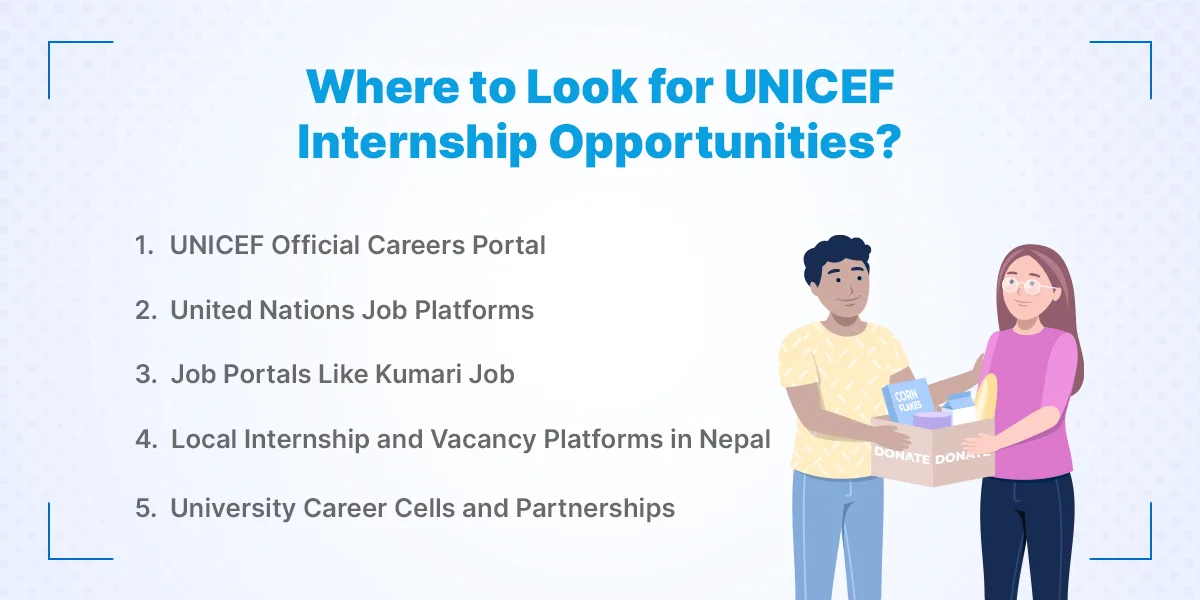
You can look for UNICEF internship opportunities on the official site of UNICEF and also job portals like Kumari Job that publish verified internship openings. Reliable platforms help applicants avoid fake listings and missed deadlines. Official sources provide accurate eligibility details, role descriptions, plus application timelines. Using multiple trusted channels improves visibility of new opportunities. Regular monitoring increases the chances of timely application.
1. UNICEF Official Careers Portal
UNICEF's official careers portal serves as the primary source for all internship vacancies. Portal lists global and country-specific internship roles with clear requirements. Applicants can filter roles by location, function, or contract type. Application submission happens directly through registered user accounts. The official portal ensures transparency and authenticity.
2. United Nations Job Platforms
United Nations job platforms publish internships across different UN agencies, including UNICEF. These platforms aggregate opportunities under one system for easier tracking. Applicants can explore similar roles across development, research, and policy sectors. UN platforms follow standardised recruitment procedures. Centralised listings support broader career planning.
3. Local Internship and Vacancy Platforms in Nepal
Local internship platforms publish NGO and INGO opportunities, including UNICEF-related roles. These platforms target students and graduates seeking development sector exposure. Vacancy updates often circulate through newsletters or social channels. Local portals support early career exploration. Consistent checking improves awareness.
4. University Career Cells and Partnerships
University career cells share internship notices through institutional networks. Partnerships with development organisations increase access to opportunities. Career offices guide students on application preparation and deadlines. Academic referrals add credibility during selection. University support strengthens internship readiness.
5. Job Portals Like Kumari Job
Job portals like Kumari Job share UNICEF internship updates relevant to Nepal-based candidates. Platforms often explain eligibility, deadlines, plus application links in a simplified format. Kumari Job also provides career guidance resources for students and graduates. Local job portals help candidates track openings efficiently. Verified postings reduce misinformation risks.
Career Growth After a UNICEF Internship
Career growth after a UNICEF internship opens multiple professional pathways within the development and humanitarian sectors. UNICEF internship experience builds credibility, practical exposure, plus strong professional networks. Many interns move into higher responsibility roles after completing assignments successfully. Experience gained supports career progression across UN agencies, NGOs, and INGOs. Long-term impact depends on performance, skill development, and continued engagement.
1. Transition to Consultancy or Project Roles
Many former interns transition into short-term consultancy or project-based roles within UNICEF or partner organisations. Consultancy roles focus on research support, monitoring, reporting, or coordination tasks. Strong performance during an internship increases chances of contract recommendations. Project roles offer deeper involvement in program implementation. These roles act as stepping stones toward long-term development careers.
2. Long-Term Career Paths at UNICEF
UNICEF internship experience supports entry into fixed-term professional positions over time. Candidates may apply for national officer or professional staff roles after gaining the required experience. Internal familiarity with UNICEF systems improves competitiveness. Continuous learning and strong performance records matter during recruitment. Long-term careers require patience and consistent skill growth.
3. Career Opportunities in NGOs and INGOs
NGOs and INGOs value UNICEF internship experience highly during recruitment. Skills gained align with program management, research, advocacy, and field coordination roles. Internship exposure improves adaptability across development projects. Many organisations prefer candidates with the UN system. Career mobility increases across local and international organisations.
Tips to Improve Your Selection Chances
Selection chances for the UNICEF internship improve through focused preparation and clear role alignment. UNICEF recruiters assess relevance, motivation, plus understanding of child-centred development work. Generic applications reduce visibility during screening stages. Strong preparation reflects seriousness and professional intent. The practical steps below help candidates stand out.
1. Tailoring Applications to UNICEF Mandate
Tailor application content around the UNICEF mandate related to child rights, education, health, nutrition, and protection. Link academic work, volunteering, or research directly to UNICEF focus areas. Avoid generic statements that apply to unrelated organisations. Show understanding of the UNICEF mission through examples. Mandate alignment improves recruiter confidence. Consistent messaging strengthens application impact.
2. Demonstrating Field Knowledge of Nepal
Demonstrate field knowledge of Nepal through awareness of local development challenges. Reference issues such as child health access, education gaps, nutrition concerns, or emergency response needs. Local context awareness shows readiness for country office roles. Field knowledge strengthens interview discussions. Nepal-specific understanding adds practical value. Context awareness supports better role contribution.
3. Showing Impact-Driven Motivation
Show impact-driven motivation through clear purpose and learning goals. Explain how internship experience supports long-term contribution to child-focused development. Avoid vague career statements without direction. Connect personal goals with measurable outcomes. Purpose clarity strengthens selection decisions. Impact focus shows commitment beyond short-term gain.
Conclusion
Getting a UNICEF internship in Nepal requires clarity, preparation, plus disciplined action. Applicants who understand eligibility rules, skill expectations, and official application channels avoid common mistakes. Role alignment, strong documentation, and clear motivation improve selection outcomes. UNICEF internship experience offers real exposure to development work while building professional credibility. Early preparation gives applicants a clear advantage.
UNICEF internship in Nepal also supports long-term career growth across UN agencies, NGOs, and INGOs. Skills gained through field support, research, and coordination remain valuable across development sectors. Candidates who apply with purpose, local awareness, and ethical intent increase success chances. Consistent effort, learning focus, and patience turn internship opportunities into lasting career progress.
To explore UN jobs in Nepal, visit Kumari Job for verified openings, clear eligibility details, and updated application deadlines.
Frequently Asked Questions
Submit your comments

Get Our App On



What is the Public Relations Officer Salary in Nepal
VIEW DETAILS
What Is the Salary of a Ticketing Officer in Nepal?
VIEW DETAILS
What Is the Salary of a Travel Consultant in Nepal?
VIEW DETAILS
How to Become an Auditor in Nepal
VIEW DETAILS


Loading Comments...