



Recruiting the right talent is one of the biggest challenges for businesses today. With hundreds of applications for a single position, manually sorting resumes and tracking candidates is time-consuming, prone to errors, and can lead to missed opportunities. This is where an Applicant Tracking System (ATS) becomes a game-changer for HR teams and recruiters.
In this blog, we will explain what an ATS is, how it works, its key features, benefits, and tips for implementation. We will also highlight which is the best ATS software in Nepal for businesses looking to streamline their recruitment process and hire efficiently. By the end of this guide, you will have a clear understanding of how ATS can transform hiring for your organization.
In this blog
What Is an Applicant Tracking System (ATS)?
An Applicant Tracking System (ATS) is software that automates and manages recruitment processes, including job posting, resume screening, and candidate tracking.
ATS helps HR teams streamline hiring by reducing manual work, improving the speed of candidate shortlisting, and ensuring compliance with labor regulations. It organizes candidate information in a central database, making it easy to search, filter, and track applicants throughout the recruitment process.
Modern ATS platforms integrate seamlessly with job portals, company career websites, and internal HR databases, allowing recruiters to collect applications from multiple sources automatically. This integration ensures that no candidate is missed, all data is centralized, and recruitment metrics can be tracked in real time. By automating repetitive tasks, HR teams can focus on interviewing, onboarding, and improving candidate experience, making the hiring process faster and more effective.
How Does an ATS Work?
An ATS works by automating the entire recruitment process, from receiving applications to tracking candidates and analyzing hiring metrics. The system streamlines HR workflows, reduces manual errors, and ensures that all candidate information is organized in a central database. It uses advanced features like resume parsing, keyword scanning, automated communication, and reporting tools to make hiring faster, efficient, and compliant. By integrating with job portals, career sites, and internal HR databases, an ATS ensures no candidate is overlooked and provides valuable insights into the recruitment pipeline.
1. Resume Parsing and Keyword Scanning
ATS automatically scans resumes and extracts key information such as skills, experience, education, and certifications. It uses keyword matching to rank candidates according to job requirements. This saves HR teams hours of manual review and ensures top candidates are identified quickly. Advanced ATS platforms also detect variations in skills or terminology to avoid missing qualified applicants.
2. Candidate Database Management
All candidate profiles are stored in a centralized system, allowing recruiters to search, filter, and access applications anytime. This database ensures that no applicant is lost, even if the hiring process takes weeks or months. It also allows HR teams to maintain talent pools for future openings.
3. Workflow Automation
ATS automates repetitive tasks such as interview scheduling, collecting feedback from interviewers, and updating candidate status. Automated notifications keep candidates informed and HR teams organized. This reduces scheduling conflicts and ensures a smooth and transparent recruitment process.
4. Analytics and Reporting
The system generates reports on key recruitment metrics, including time-to-hire, source of candidates, and pipeline health. These insights help HR teams optimize recruitment strategies, identify bottlenecks, and make data-driven decisions. Analytics also allow organizations to track compliance and hiring trends over time.
Key Features of an ATS
An ATS offers key features that automate recruitment, improve candidate management, and streamline HR workflows. These features help HR teams save time, reduce errors, and manage applicants efficiently from application submission to final hiring. By centralizing candidate data and automating repetitive tasks, ATS ensures a structured recruitment process, better communication with candidates, and actionable insights through analytics. Businesses can also integrate ATS with job boards and other HR tools to improve reach and efficiency.
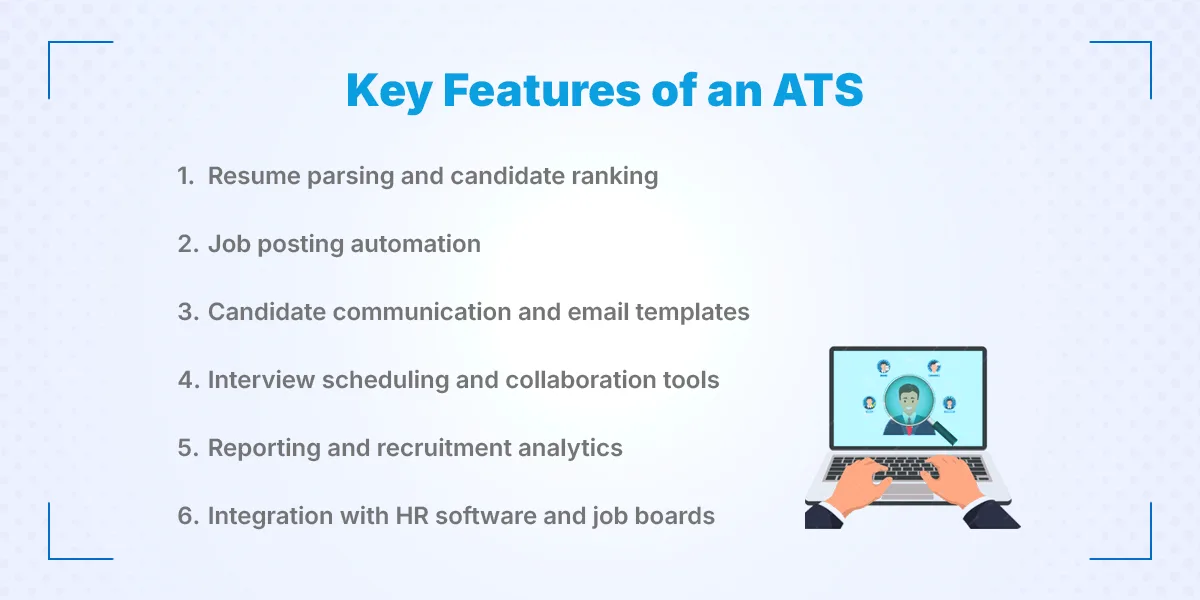
1. Resume Parsing and Candidate Ranking
ATS automatically extracts relevant information from resumes such as skills, education, experience, and certifications. It then ranks candidates based on how closely they match job requirements. This reduces manual screening time and helps recruiters focus on the most qualified applicants. Advanced systems also detect variations in terminology to avoid overlooking suitable candidates. Candidate ranking ensures faster shortlisting and improves the quality of hires.
2. Job Posting Automation
With ATS, job postings can be automatically published to multiple job boards, career websites, and social media platforms simultaneously. This saves HR teams significant time and ensures consistent visibility of openings. Automation also helps track which platforms generate the most qualified applicants. By reaching a wider audience efficiently, businesses increase the chances of attracting top talent.
3. Candidate Communication and Email Templates
ATS provides pre-built email templates for communicating with applicants, including acknowledgment emails, interview invitations, and rejection letters. Automated communication keeps candidates informed and enhances their experience. It also allows HR teams to track responses and follow-ups directly within the system. This reduces errors, ensures timely responses, and strengthens the employer’s brand.
4. Interview Scheduling and Collaboration Tools
The ATS helps schedule interviews by syncing calendars of candidates and interviewers. It sends reminders and allows feedback to be collected and stored in one place. This ensures coordination among all stakeholders and reduces scheduling conflicts. Collaboration tools allow multiple interviewers to evaluate candidates consistently and make data-driven hiring decisions. The system also tracks interview history for transparency and accountability.
5. Reporting and Recruitment Analytics
ATS generates reports on key metrics like time-to-hire, candidate source effectiveness, and pipeline status. These analytics help HR teams identify bottlenecks, measure recruitment efficiency, and optimize hiring strategies. Detailed reporting also aids in compliance audits and workforce planning. By leveraging data-driven insights, organizations can make smarter decisions and continuously improve recruitment outcomes.
6. Integration with HR Software and Job Boards
Modern ATS platforms integrate seamlessly with HR management systems, payroll software, and external job boards. This ensures smooth data transfer, reduces duplication, and keeps records consistent across systems. Integration allows recruiters to track candidates from application to onboarding without losing critical information. It also enables better collaboration between HR teams and hiring managers.
Benefits of Using an ATS
An ATS helps HR teams streamline recruitment, reduce manual work, and make better hiring decisions. It improves efficiency while ensuring a fair and structured hiring process.
1. Saves Time for HR Teams
An ATS automates repetitive tasks such as resume screening, interview scheduling, and candidate communication. This significantly reduces the time HR teams spend on manual processes. By handling administrative work automatically, recruiters can focus on evaluating top candidates and improving recruitment strategies. It also speeds up the hiring process, helping companies fill positions faster.
2. Improves Quality of Hire
By ranking candidates based on skills, experience, and keyword matches, ATS ensures that only the most qualified applicants are prioritized. This improves the overall quality of hire and reduces the risk of bad recruitment decisions. Advanced systems also allow HR to track candidate performance through stages, ensuring informed hiring.
3. Enhances Candidate Experience
Automated communication such as acknowledgment emails, interview notifications, and status updates keeps candidates informed at every stage. Timely and clear communication improves the overall candidate experience and strengthens the employer brand. Candidates feel respected and engaged throughout the process.
4. Reduces Hiring Biases and Ensures Compliance
ATS standardizes evaluation criteria and uses objective ranking methods, reducing the influence of personal bias in hiring decisions. The system also helps HR comply with labor laws, data privacy regulations, and internal policies. Structured workflows ensure fairness, consistency, and transparency in recruitment.
5. Centralizes Candidate Information
All applicant data is stored in one place, allowing easy access, filtering, and retrieval. This centralized approach improves collaboration among HR teams and hiring managers. It also creates a talent pool for future openings, reduces duplicate data entry, and simplifies reporting.
Which Is the Best ATS Software in Nepal?
Kumari Job ATS is the top choice for Nepalese companies because it combines ease of use, powerful automation, and local support tailored to the Nepali market. It streamlines job posting, resume screening, and candidate tracking, saving HR teams significant time. Many businesses trust it for its reliability, real-time analytics, and ability to improve the quality of hires while reducing administrative work.
How to Implement an ATS in Your Organization
Implementing an ATS involves selecting the right software, training HR teams, and migrating existing candidate data for smooth adoption. Following a structured approach ensures the system improves hiring efficiency and integrates seamlessly into your organization’s workflow.
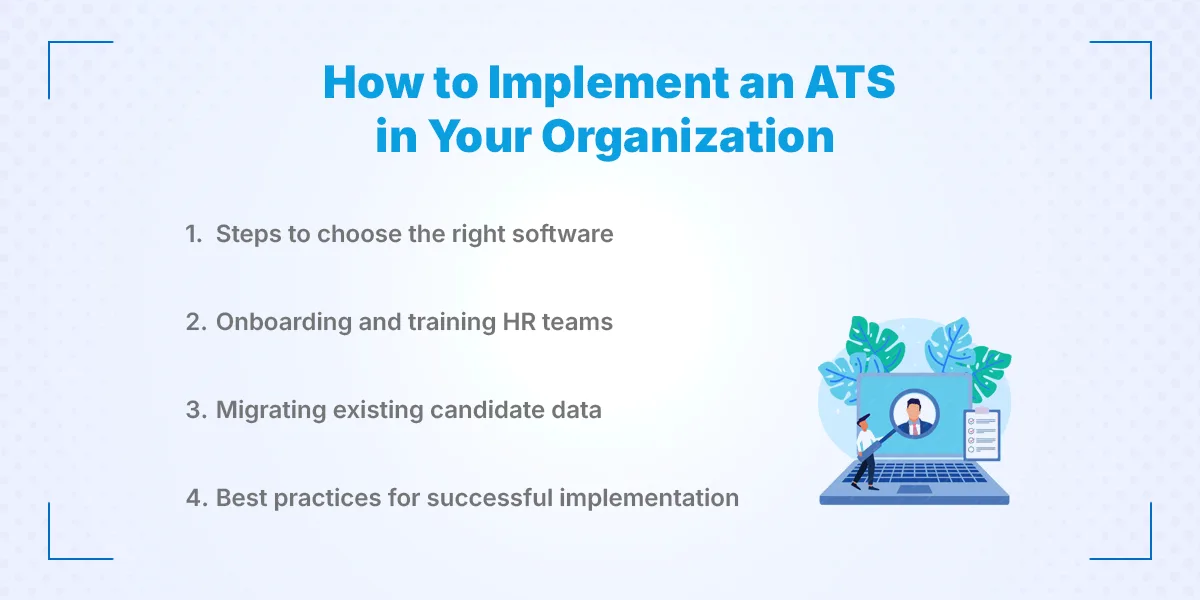
1. Choose the Right Software
Start by evaluating ATS options based on your company’s size, recruitment volume, and specific needs. Consider user-friendliness, integration with job portals and HR tools, local support, and pricing. Selecting the right software reduces adoption challenges and ensures that HR teams can use all features effectively. Clear criteria and trial periods help make a confident choice.
2. Onboard and Train HR Teams
Proper onboarding and training are essential for successful ATS adoption. HR staff must learn how to manage candidate pipelines, set up automated workflows, and use reporting tools. Training can include hands-on sessions, video tutorials, or vendor-led workshops. Well-trained teams adopt the system faster and avoid common mistakes that can reduce efficiency.
3. Migrate Existing Candidate Data
Moving resumes and candidate information from spreadsheets, emails, or legacy systems is a critical step. Ensure data is cleaned, organized, and compatible with the new ATS. Proper migration prevents loss of valuable candidate information and enables HR teams to maintain historical records for reporting and compliance.
4. Set Up Workflows and Automation
Configure automated processes like resume screening, candidate ranking, interview scheduling, and email communication. Tailor workflows to your recruitment process while maintaining compliance with labor laws. Automation reduces manual workload, speeds up hiring, and provides a consistent experience for both HR and candidates.
5. Monitor, Evaluate, and Improve
After implementation, track key metrics such as time-to-hire, candidate engagement, and pipeline efficiency. Gather feedback from HR users and hiring managers to identify challenges or gaps. Continuous evaluation and system optimization ensure the ATS remains effective and adapts to evolving recruitment needs.
Conclusion
Implementing an ATS brings numerous benefits to modern recruitment, including streamlining hiring processes, reducing manual work, improving candidate tracking, and enhancing overall hiring efficiency. For companies in Nepal, adopting an ATS is crucial to stay competitive, make data-driven hiring decisions, and ensure a smooth, compliant, and effective recruitment workflow. By leveraging an ATS, HR teams can focus more on strategic talent management while improving the quality of hires and overall organizational productivity.
Looking to simplify hiring and track candidates efficiently? Kumari Job provides the best ATS and recruitment support in Nepal to help your HR team hire smarter and faster.
Frequently Asked Questions
Submit your comments

Get Our App On



What is the Public Relations Officer Salary in Nepal
VIEW DETAILS
What Is the Salary of a Ticketing Officer in Nepal?
VIEW DETAILS
What Is the Salary of a Travel Consultant in Nepal?
VIEW DETAILS
How to Become an Auditor in Nepal
VIEW DETAILS


Loading Comments...