




Are you a fresh graduate or someone just starting your career in Nepal, wondering how much a management trainee actually earns? It can be confusing. You see job postings, but the salary numbers are all over the place, and you don’t want to end up undervaluing yourself.
The good news is, understanding management trainee salaries doesn’t have to be hard. By looking at average pay, industry ranges, and growth opportunities, you can get a clear picture of what to expect and how to plan your career.
In this article, we will break down management trainee salaries in Nepal, share key factors that affect pay, and give tips to boost your career from day one.
In this blog
Who is a Management Trainee?
A management trainee is someone who joins a company at the entry level to learn how the business works. Think of it as a stepping stone into a bigger role. Companies hire trainees to train them in different areas, help them understand day-to-day operations, and prepare them for managerial positions in the future. This role is perfect for fresh graduates or anyone starting their career because it gives real, hands-on experience.
Purpose of the Role in Organizations
The main goal of a management trainee is to learn quickly, adapt to the company culture, and gain experience in multiple areas of the business. Trainees are often rotated across departments to understand how the organization functions as a whole. This approach helps companies build strong future leaders who already know how things work before they take on bigger responsibilities.
Career Growth from Trainee to Managerial Roles
Starting as a trainee is just the beginning. Over time, as you gain experience and prove yourself, you can move up the ladder. The career growth usually follows a path like this:
- Start as a Management Trainee, learning the basics and observing operations.
- Move to Junior Manager or Assistant Manager, taking on small teams or projects.
- Become a Team Lead or Department Manager, handling bigger responsibilities.
- Progress to Senior Manager or Executive roles, leading entire departments or strategic initiatives.
This journey may take a few years, but it gives a solid foundation in management, decision-making, and leadership. By the end of the traineeship, you not only understand your organization better but are also ready to take on bigger challenges confidently.
What is the Average Salary of a Management Trainee in Nepal?
The average salary of a management trainee in Nepal in 2026 ranges from NPR 15,000 to NPR 40,000 per month. Fresh graduates usually start at the lower end, while those with relevant experience or in bigger companies can earn more.
Compared to previous years, trainee salaries have seen steady growth. Companies are offering slightly higher pay now than they did a few years ago, reflecting inflation and the increasing demand for skilled young professionals. To understand how this compares to the overall job market, you can check the average salary in Nepal across different professions.
Several factors influence how much a management trainee earns. Your educational background, work experience, and performance in interviews play a big role. The size and reputation of the company also matter, as larger organizations often pay better. Additionally, the location and type of industry can impact compensation, with some sectors offering higher starting salaries than others. Understanding what constitutes a good salary in Nepal's current economy can help you evaluate job offers better.
Salary Range of Management Trainee by Industry
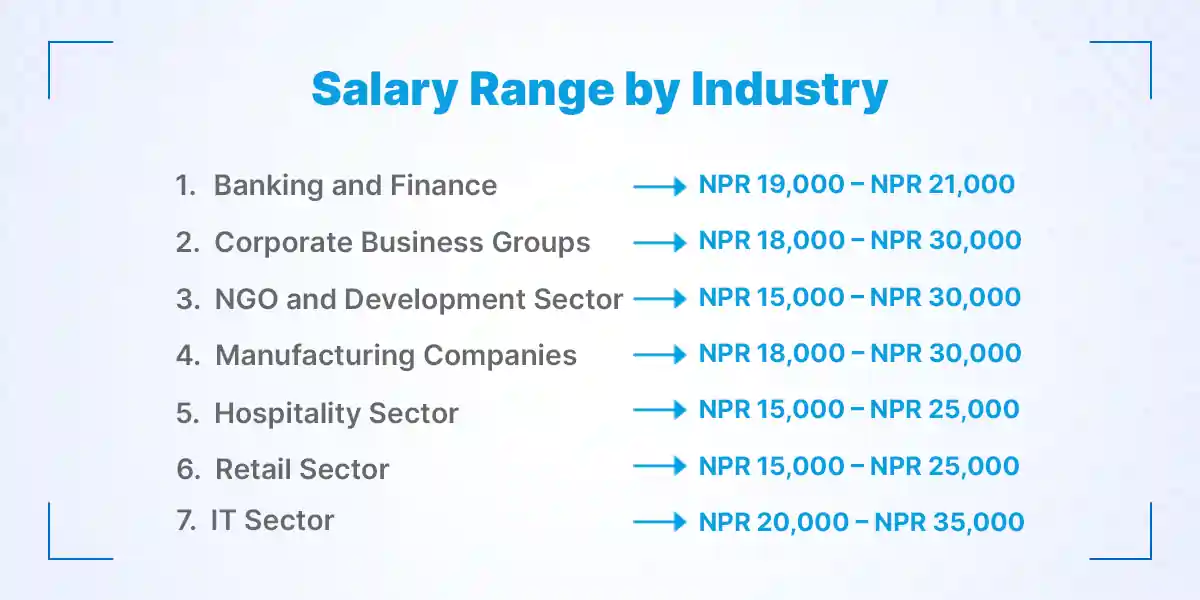
When it comes to management trainee salaries, the numbers can vary a lot depending on the industry you join. Some sectors pay more because of the type of work or company size, while others may start lower but offer good learning opportunities. Knowing the salary range by industry can help you plan your career and set realistic expectations. Let’s take a look at how different industries in Nepal pay their trainees in 2026.
1. Banking and Finance
Banks usually offer a stable start for management trainees. The typical salary ranges from NPR 19,000 to NPR 21,000 per month. While the pay may not be very high at first, banks often provide training programs, exposure to financial systems, and clear career growth paths. Bonuses or incentives can also increase earnings over time. Trainees here get to learn about loans, accounts, customer service, and corporate finance. It’s a good option if you want a structured work environment and long-term career growth.
2. Corporate Business Groups
Corporate companies tend to offer a wider salary range, from NPR 18,000 to NPR 30,000. The variation depends on the company size, brand reputation, and role responsibilities. Working in corporate groups exposes you to multiple departments and business operations. You may start in one area, but can move to others as you gain experience. These jobs often come with extra perks like performance bonuses, training sessions, and networking opportunities.
3. NGO and Development Sector
NGO and development organizations pay between NPR 15,000 and NPR 30,000. Entry-level pay is usually lower than corporate or IT jobs, but the work focuses on social impact and community projects. You get experience in project management, reporting, and working with teams. Some organizations also provide allowances, transport, or accommodation. If you care about making a difference while learning management skills, this sector can be a good fit.
4. Manufacturing Companies
Salaries in manufacturing jobs are usually around NPR 18,000 to NPR 30,000. Trainees may start in operations, production, or quality control roles. You learn how products are made, managed, and delivered. Companies may also provide on-the-job training and the chance to move into supervisory roles. It’s a practical sector for those who like hands-on work and understanding processes.
5. Hospitality Sector
Hotels, restaurants, and tourism companies offer salaries from NPR 15,000 to NPR 25,000. While the pay may start lower, trainees gain experience in customer service, management, and operations. You often work in shifts, which teaches time management and teamwork. This is an excellent opportunity to land roles in the hospitality sector.
6. Retail Sector
Trainees working in retail sector jobs earn around NPR 15,000 to NPR 25,000 per month. Trainees usually work in store operations, sales, or inventory management. You learn how businesses handle customers, stock, and staff. Some companies offer incentives based on sales performance. It’s a good starting point if you want practical business experience.
7. IT Sector
IT companies tend to pay the highest among trainees, ranging from NPR 20,000 to NPR 35,000. You may start in project management, support, or administrative roles. The work is fast-paced, and companies often provide training in software and digital tools. Growth can be quick if you show skills and dedication. IT is ideal for those who like tech and want higher starting pay. Though it might sound less at first, keep in mind that these figures are above the minimum salary in Nepal.
Factors Affecting Management Trainee Salary in Nepal
Several factors determine how much a management trainee earns in Nepal. Not everyone starts at the same pay, even for similar roles. Some things are within your control, like skills and experience, while others depend on the company or industry. Knowing these factors can help you understand your salary and plan your career better.
1. Educational Background
Your education plays a big role in starting salaries. Graduates from well-known universities or with relevant degrees may get higher pay. For example, a finance degree might help you earn more in a bank, while an IT degree is valued in tech companies. Sometimes, additional certifications can also increase your starting salary. Companies see education as a sign of your knowledge and potential.
2. Skills and Qualifications
The skills you bring to the table affect your salary. Trainees who can communicate well, solve problems, or handle digital tools are often offered more. Specific qualifications, like software knowledge or project management courses, can make a difference. Basically, the more you can contribute from day one, the higher your pay is likely to be.
3. Work Experience
Even small amounts of experience can boost your salary. Internships, part-time work, or relevant projects show that you understand the workplace. Companies value candidates who can adapt quickly and need less training. If you have experience in the same industry, your starting pay may be noticeably higher than a fresh graduate with no experience.
4. Interview Performance
How you perform in interviews matters a lot. Confidence, clarity, and preparation can influence the offer. Companies often adjust starting salaries based on how well they think you will fit the role. A strong interview can sometimes make a bigger difference than education or experience.
5. Company Size & Reputation
Larger companies or well-known brands often pay better than smaller ones. They usually have structured pay scales, training programs, and benefits. Working for a reputable company can also open doors for future opportunities. Smaller firms may offer less money but sometimes provide faster growth or more hands-on learning.
6. Location and Industry
Where you work and the sector you join impact your salary. Companies in big cities like Kathmandu may pay more than those in smaller towns. Similarly, IT or banking sectors often offer higher pay than retail or hospitality. Choosing the right location and industry can make a real difference in your earnings.
Skills Required to Become a Management Trainee in Nepal
To succeed as a management trainee, you need more than just a degree. Companies look for certain skills that show you can handle responsibilities and grow into a manager. These skills help you perform well in your role and stand out from other candidates. Let’s take a closer look at the key abilities every management trainee should have.

1. Leadership and Communication Skills
Being able to lead and communicate is very important. Even as a trainee, you may need to guide small tasks or work with a team. Clear communication helps you share ideas and understand instructions properly. Leadership skills show that you can take initiative and handle responsibilities, which companies value for future growth.
2. Problem-Solving Skills
Every workplace has challenges, and being able to solve problems quickly is a big plus. Companies want trainees who can think clearly and find solutions without always waiting for guidance. This skill helps you handle day-to-day issues efficiently. It also shows that you are proactive and capable of handling pressure.
3. Decision-Making Skills
Good decision-making is key for management roles. Even small choices can affect the team or project. Trainees who can weigh options, think logically, and make the right call are highly appreciated. This skill grows as you gain experience but starting early gives you an advantage.
4. Digital and Software Skills
In today’s world, knowing basic software and digital tools is essential. Companies expect trainees to use spreadsheets, emails, and other programs efficiently. Familiarity with digital tools helps you work faster and more accurately. It also prepares you for more advanced tasks in the future.
5. Time Management Skills
Managing time well is critical in any job. Trainees often have multiple tasks to handle each day. Being organized and finishing work on time shows responsibility and professionalism. Good time management also reduces stress and improves productivity.
6. Customer Service Skills
Even if you are not in a direct customer role, understanding customer needs matters. Companies value trainees who can interact politely, listen carefully, and solve issues. Strong customer service skills build trust and make you more valuable to the organization.
How to Become a Management Trainee in Nepal?
To become a management trainee in Nepal, you need the right education, skills, and preparation to apply for entry-level roles in companies. Starting your career as a trainee is easier when you know what companies look for. Most organizations hire fresh graduates, but they expect certain qualities and readiness. If you follow the right steps, you can secure a traineeship and start your growth path in management.
1. Educational Requirements
Most management trainee roles require at least a bachelor’s degree. Degrees in business, finance, management, IT, or related fields are preferred. Some companies may also accept candidates from other backgrounds if they show strong skills. Completing additional certifications can give you an advantage. Your education shows your basic knowledge and readiness for professional work.
2. Develop Key Skills
Companies look for trainees with leadership, communication, problem-solving, and time management skills. Being good with digital tools and software is also important. You don’t need to be perfect, but showing potential to learn fast is crucial. These skills make it easier to handle tasks and impress your managers during training.
3. Apply on Job Portals and Company Websites
Most companies post trainee roles online. Popular job portals like Kumari Job, company career pages, and LinkedIn are good places to start. Prepare a clear resume highlighting education, experience, and skills. Tailor your applications for each role to increase your chances.
4. Prepare for the Interview
Preparing well for an interview is the final step to landing a job. Research the company, practice common questions, and show confidence. Share examples of your skills or past experiences, even if from college projects or internships. Companies want to see enthusiasm, willingness to learn, and the ability to fit in with the team.
5. Start Your Traineeship
Once selected, focus on learning as much as possible. Observe how departments work, ask questions, and take notes. Perform your tasks efficiently and show initiative. A successful traineeship can open doors for higher managerial roles in the future.
Where to Find Management Trainee Jobs in Nepal?
To find management trainee jobs in Nepal, you can use online portals like Kumari Job, check company career pages, use LinkedIn, or attend job fairs and college placements. Finding the right opportunities is easier when you know where to look. Many fresh graduates miss openings just because they don’t check the proper sources. By focusing on the right platforms, you can save time and improve your chances of landing a traineeship.
1. Online Job Portals
Online job portals are one of the easiest ways to find trainee roles. Websites like Kumari Job regularly post management trainee vacancies across industries in Nepal. You can apply directly with your resume and track new openings easily. Checking frequently increases your chances of getting noticed by employers.
2. Bank and Corporate Career Pages
Many banks and corporate companies post trainee openings on their official career pages. Regularly visiting these pages ensures you don’t miss any opportunities. These roles often come with structured training programs and clear growth paths. Applying directly also shows initiative, which recruiters value.
3. LinkedIn
LinkedIn is not just for networking; it’s also a strong platform for finding jobs. Companies post management trainee positions here, and you can apply directly. Following company pages or connecting with employees increases your chances of spotting openings early. LinkedIn also helps you get referrals from professionals in the industry.
4. Job Fairs and College Placements
Job fairs and campus placements are a great way to meet recruiters in person. Many companies visit colleges to hire fresh graduates for trainee roles. You can ask questions, learn about the company, and sometimes even secure interviews on the spot. It’s also a good chance to explore different industries and compare opportunities.
Salary Growth after the Traineeship
After completing a management traineeship in Nepal, your career and salary can grow significantly. The traineeship is designed to give you hands-on experience, learn company processes, and prepare you for higher responsibilities. Companies use this period to evaluate your performance, skills, and potential. If you do well, it can lead to promotions and higher pay faster than starting directly in a managerial role.
Once the traineeship ends, many companies offer a regular position with a better salary. The increase depends on your performance, the company’s pay structure, and the industry. Typically, your salary can increase by 20% to 50% compared to the trainee stipend. In addition to basic pay, some companies provide performance bonuses, allowances, or incentives based on your work.
Career growth after a traineeship usually follows a clear path. Promotions are often tied to experience, skill development, and your ability to handle responsibilities independently. Moving from a trainee to a junior manager or assistant manager role is common within 1–2 years. From there, consistent performance can lead to team lead, department manager, or even higher executive positions over time.
Key points about salary growth after traineeship:
- Salary increases are usually given when you move from a trainee to a full-time position.
- Performance and skill development are the main factors in deciding your new salary.
- Promotions and salary hikes can come every 1–2 years, depending on your work.
- Bonuses or incentives may be added based on company policy or project success.
- Working in high-paying sectors like IT or banking can accelerate salary growth.
- Building strong relationships and learning fast can make you eligible for better roles sooner.
Overall, completing a traineeship successfully can be a strong start for your career. It not only increases your salary but also opens doors to higher managerial roles in the future.
Conclusion
Becoming a management trainee in Nepal is a smart way to start your career. It gives you real work experience, teaches you how companies operate, and prepares you for bigger roles in the future. The salary may start modest, but with dedication and learning, it grows steadily. Your education, skills, and performance all play a role in how much you earn and how fast you advance. Choosing the right industry, company, and location can also make a difference. Most importantly, the traineeship is not just about money; it’s about building a strong foundation for your career. If you focus, learn, and stay consistent, it can lead to a successful and rewarding managerial path.
Looking for banking jobs in Nepal? Apply now for management trainee roles and take the first step toward a rewarding career.
Frequently Asked Questions
Submit your comments

Get Our App On



What is the Public Relations Officer Salary in Nepal
VIEW DETAILS
What Is the Salary of a Ticketing Officer in Nepal?
VIEW DETAILS
What Is the Salary of a Travel Consultant in Nepal?
VIEW DETAILS
How to Become an Auditor in Nepal
VIEW DETAILS


Loading Comments...