




Many Nepali youth want airport jobs yet feel confused about entry paths, duties, and income. Applicants often assume airport work guarantees quick money but later discover wide pay differences based on skills, shifts, and employer type. Lack of guidance on qualification, workload, and growth makes people hesitate before applying. Without real salary insight, job seekers struggle to judge whether the field matches their goals.
In this blog, readers get clarity on ground handler salary in Nepal, job duties, required skills, eligibility standards, growth potential, and hiring sources. This guide simplifies earning ranges, sheds light on workload expectations, and helps beginners prepare for career entry in aviation service roles, especially those aiming for airlines job opportunities.
In this blog
Who is a Ground Handler?
Ground handler is a staff member who supports airport operations by assisting aircraft, passengers, and baggage flow on the ground. Their duties include loading bags, guiding aircraft movement, or helping travelers during check-in or boarding. They work for airlines, airport authorities, or handling companies inside terminals and ramp zones. This role keeps flights on time and ensures safe airport activities.
What Do Ground Handlers Do?
Ground handlers support flight operations from check-in to arrival by managing baggage, helping passengers, and assisting aircraft movement. Their work ensures smooth boarding, timely departures, and safe ground activity around planes.
- Load and unload baggage from planes.
- Transport luggage between terminals and aircraft.
- Guide travelers during check-in and boarding.
- Provide wheelchair or escort support to passengers needing assistance.
- Marshal aircraft, place safety cones, and signal movement.
- Coordinate with pilots, cabin crew, and security teams.
- Track baggage records and relay updates to service counters.
What is the Salary of a Ground Handler in Nepal?
The salary range of ground handler in Nepal is about NPR 25,000 to NPR 50,000 per month for entry posts, while skilled or senior roles in major or international airlines can reach NPR 80,000 to NPR 100,000 or more. Pay rises with airline type, shift duty, experience, and position level, which helps applicants understand the average salary they can expect in aviation handling roles.
1. Ground Staff
Ground staff handling check-in, boarding, and luggage flow earn near NPR 25,000 to NPR 45,000 monthly at domestic airports. Pay increases when staff manage crowds or complex airline services. Workers in busy hubs or premium carriers earn higher. Extra duty hours often boost earnings beyond base pay, making this one of the common entry level roles for aviation beginners.
2. Customer Service and Ticketing
Customer service staff at counters earn roughly NPR 30,000 to NPR 50,000 each month. Those with computer skills or language ability may reach higher pay faster. Ticketing staff dealing with reservations and passenger management gain extra income through service perks. Growth improves after experience or a shift in leadership roles.
3. Allowances and Shift Benefits
Airport shifts often run early morning or late night, so workers receive timing allowances. Some airlines offer food, transport, or uniform benefits. Temporary duty perks apply during heavy flight traffic. Benefits differ widely between companies and airport locations.
4. Monthly and Yearly Average Salary Range
Entry workers usually earn NPR 300,000 to NPR 600,000 yearly, depending on airline and duty conditions. Experienced employees or international airline staff may earn NPR 1,000,000 annually. Salary grows faster for those who manage teams or handle operational oversight. Performance and training help secure higher brackets.
Factors Influencing Ground Handler Salary
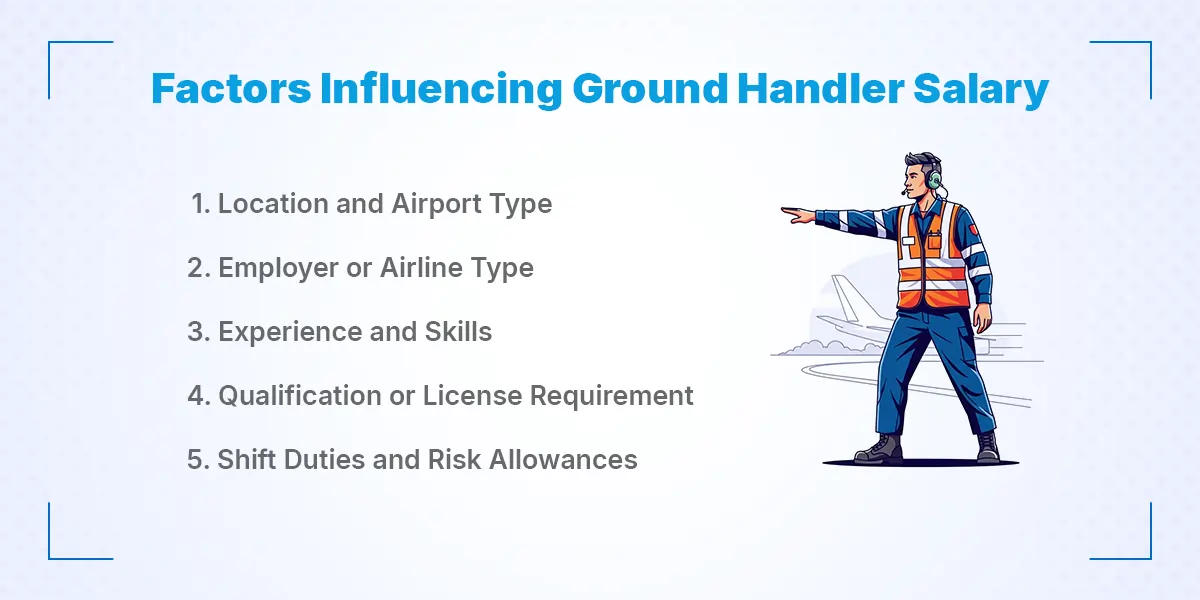
Ground handler pay changes based on airport size, employer type, skill level, and work pressure. Busy hubs and premium airlines offer higher wages than small terminals or basic service firms. Experience, special training, and shift duties also raise income for capable workers. Better credentials and adaptability increase salary progression speed, helping candidates compare earnings with roles like pilot salary and other aviation careers.
1. Location and Airport Type
Ground handlers at major airports like TIA earn more due to heavy flight activity and higher service demand. Domestic terminals with limited flights pay lower salaries. International service hubs offer better benefits and faster increments. Work environment and passenger volume strongly shape pay levels.
2. Employer or Airline Type
Premium airlines and foreign carriers often offer higher compensation than local service contractors. Employees of major handling firms receive better uniforms, food, or transport benefits. Salary structure differs by company strength and customer traffic. Workers tied to reputed airlines gain quicker growth chances.
3. Experience and Skills
Workers with proven ability earn more than fresh entrants. Staff who handle multiple roles or possess language skills progress faster. Team leaders and trainers receive higher wages through performance reviews. Skill development directly affects long-term earning potential.
4. Qualification or License Requirement
Some positions require certification or safety training, which raises salaries. Candidates holding aviation diplomas or handling courses stand ahead in hiring processes. Employers value trained staff because they adapt faster. This makes qualification an income advantage.
5. Shift Duties and Risk Allowances
Early morning or night shifts bring timing benefits and extra pay. Ramp jobs include weather challenges or safety risks, so handlers often receive hardship allowances. Busy seasons or peak days may add temporary perks. Salary strength improves when workers accept demanding duties.
Skills Required to Become a Ground Handler
Ground handling roles demand people who can work under pressure, handle physical tasks, and communicate clearly. Airport activity moves fast, so workers must stay alert and follow safety rules. Service attitude and system knowledge help staff support passengers and aircraft teams smoothly.
1. Physical stamina and safety awareness
Ground handlers lift bags, guide aircraft, and stand for long hours. Strong stamina helps workers manage loads without injury. Safety awareness protects people and machines around planes. Staff must follow rules to prevent accidents during peak rush. Fitness and alertness remain key success factors in this job.
2. Teamwork and communication ability
Airport operations require tight coordination between pilots, cabin crew, security, and terminal units. Ground handlers communicate instructions, share updates, and support team workflow. Good teamwork reduces delays and mistakes. Clear speech helps resolve issues quickly. Listening ability improves cooperation and task flow.
3. Customer service discipline
Many roles involve dealing with travelers during check-in or boarding. Patience and politeness improve passenger experience. Calm behavior during crowd pressure matters. Proper service skills support the airline's image and smooth flow. A helpful attitude increases chances of positive feedback and recognition.
4. Basic computer or system knowledge
Ticketing, check-in, and baggage systems run through software. Ground staff use these tools to record data, print tags, or monitor luggage. Basic typing and system handling improve job efficiency. Training on airline systems adds an advantage for new applicants. Quick system learning helps workers adapt to frequent updates.
Eligibility Criteria for Ground Handler Jobs in Nepal
Ground handler roles require minimum education, communication strength, and physical ability. Airports prioritise applicants who can work under pressure and follow safety standards. Screening ensures staff meet behaviour, health, and skill benchmarks before duty.
1. Academic qualification requirements
Most jobs require a plus two completion, while some roles accept SLC for entry. Airline training or aviation courses improve hiring chances. Higher posts, like supervisor,s may need diplomas or degrees. Extra certifications support faster promotion.
2. Language and communication ability
English and Nepali fluency help staff interact with travellers or airline units. Clear speech and polite tone enhance customer service. Language skill boosts hiring preference in international airports. Extra languages like Hindi add an advantage.
3. Physical fitness and background checks
Ground staff must handle physical tasks and meet strength standards. Background verification ensures conduct and security clearance. Medical checks may apply to ensure fitness for long shifts. Clean records improve acceptance chances.
How to Find Ground Handler Jobs in Nepal?
You can find a ground handler job in Nepal in job portals like Kumari Job and airline vacancy pages that publish hiring notices. Applicants also follow airport companies and training centers for entry updates. Tracking multiple sources improves the chances of a timely application.
1. Airport handling companies
Private handling firms recruit staff for baggage, ramp, or service roles. These companies post openings when flight volume grows. Visiting their sites or offices helps applicants learn requirements. Networking with employees may reveal internal hiring cycles. Staying connected with HR units increases awareness of the upcoming intake.
2. Airline vacancies
Airlines recruit directly for check-in, ticketing, and service posts. Openings appear on official websites and notice boards. Cabin crew drives demand for support posts, so airlines often hire regularly. Checking updates ensures faster application. Following airline social pages keeps applicants informed.
3. Job portals like Kumari Job
Kumari Job and similar portals share airport-related vacancies with deadlines and eligibility notes. Applicants learn the required skills and entry steps through these platforms. Alerts help job seekers apply on time. Portals also list training programs and internship channels. Consistent browsing gives candidates a better chance of finding openings first.
4. Internship programs or airport training centers
Some candidates join aviation training institutes to secure placements. Internships offer on-site learning that raises hiring chances. Certificates support CV strength for entry roles. Training also builds confidence before duty. Industry exposure helps applicants stand ahead during interviews, making internship roles valuable for career entry.
Career Growth and Opportunities
Ground handling offers steady growth for workers willing to learn, adapt, and handle responsibility. Promotions come through experience, training, and performance reviews. Aviation expansion also creates new roles for active staff, helping motivated workers aim for a good salary over time.
1. Supervisor roles
Experienced handlers move into supervisor positions that oversee teams and shift duties. They monitor workflow, guide junior staff, and solve ground issues during busy hours. This role includes reporting, coordination with airlines, and decision-making in service delays. Supervisor posts pay more and improve visibility among management. Consistent performance in duty tasks speeds movement toward senior roles.
2. Flight operations and airline services
Skilled workers may shift to flight operations or passenger service management units. These areas handle aircraft departure planning, boarding support, and communication with pilots or crew. Workers learn procedure control, time management, and coordination between ground and air teams. Jobs in this track often lead to management responsibility or shift oversight roles. Staff here develop strong planning and customer handling skills.
3. Safety compliance or ramp management posts
People trained in safety or ramp control enter compliance teams that ensure safe movement around aircraft. They enforce rules, conduct risk checks, authorise vehicle access, and monitor ground signals. Ramp managers direct aircraft positioning and supervise pushback tasks. These jobs involve higher risk and responsibility, which leads to improved allowances. Growth in this track supports future safety officer or airside control positions.
Conclusion
Ground handling provides a practical airport entry path for young workers seeking secure aviation careers. Earnings grow with skills, airline type, shift pressure, and job responsibility, making this field suitable for those ready to learn and work actively. Demand remains strong as airports increase services, add flights, and need more support staff. Airlines continue hiring for handling, ticketing, and customer roles, giving motivated applicants frequent chances to enter the industry.
This sector also offers long-term growth through promotions, leadership posts, safety positions, and training-based advancement. Workers who build discipline, service ability, and system knowledge move toward stable and respected aviation careers.
Frequently Asked Questions
Submit your comments

Get Our App On



What is the Public Relations Officer Salary in Nepal
VIEW DETAILS
What Is the Salary of a Ticketing Officer in Nepal?
VIEW DETAILS
What Is the Salary of a Travel Consultant in Nepal?
VIEW DETAILS
How to Become an Auditor in Nepal
VIEW DETAILS


Loading Comments...