




Ever wondered how much salary an Adhikrit receives in Nepal? Many job seekers, students, and even working professionals are always curious about this. After all, the Adhikrit (Section Officer) post is one of the prestigious government posts. This job comes with more than just a job title. It has a stable salary, a good benefits package, and secure long-term career opportunities. But the big question on everyone's lips is about the numbers, how much in salary actually take home each month?
In this blog, we’ll break down the complete adhikrit salary in Nepal for 2026. We’ll cover the basic pay, allowances, perks, and even how the salary grows over time. By the end, you’ll know exactly why this job is so popular.
In this blog
Overview of Adhikrit Position in Nepal
An Adhikrit or a Section Officer is a mid-level officer in the Nepal government. They work in different government ministries, departments, and offices. They have mainly the responsibility of dealing with files, preparing reports, and supporting decision-making. They also train junior staff and meet deadlines. They sometimes need to move to field areas to review how the projects are being executed. They are a middleman between senior officers and the people. It's not just paperwork; it involves problem-solving and decision-making as well. That is why the profession demands a mix of knowledge, communication skills, and responsibility. It is generally considered to be the first step on the career ladder for a government job.
The Adhikrit position is very important for managing the everyday work of the government. Many tasks and papers can be delayed without them. They help turn decisions from higher-ups into action. They also help create rules to improve services. They ensure offices follow laws and procedures. When problems arise, they are the first to try to fix them. They also talk to the public and help solve their issues. This role helps the whole system run smoothly. Because of their efforts, government offices can work well and assist people better.
Becoming an Adhikrit (Section Officer) is more than just a job; it is a respected role in society. People see it as a sign of honor and smartness. The job offers a good salary, benefits, and a clear path for promotions to higher positions like Undersecretary and Joint Secretary. Over time, salary and benefits increase with years of work. A pension after retirement adds to its appeal. Many people study for years to pass the Lok Sewa Aayog exam for this job. The respect, pay, and job security make the Adhikrit position very desirable in Nepal. It is a career that brings pride and satisfaction.
What is the Adhikrit Salary in Nepal in 2083?
The monthly salary of a Sakha Adhikrit (Section Officer) in Nepal starts with NPR 45,103, as per the fiscal year 2082/83. Including grade increments, it amounts to about NPR 59,121. On top of that, allowances can further boost the figure of total monthly take-home pay. This is much higher than the current minimum salary in Nepal, which makes the position financially attractive for job seekers. Let's discuss the adhikrit salary in Nepal in more detail:
1. Basic Monthly Salary of Section Officer in Nepal
The starting basic salary for an Adhikrit is NPR 45,103 every month. This is the fixed amount paid before adding any extra benefits or allowances. This figure was previously 43,689 for the fiscal year 2081/2082. It serves as the foundation of the salary structure and applies to all newly appointed Adhikrit officers.
2. Grade-Wise Total (With Grade Rate)
In addition to the basic salary, every civil servant is given a “grade rate” based on their experience and rank within the service. For a Section Officer, the grade rate is about NPR 2,137. When you add this grade rate to the basic salary, the total salary comes to approximately NPR 56,287 per month. This amount increases gradually as the Adhikrit moves up the grades or receives promotions over the years.
3. Salary Variation Over Service Years & Promotions
With more years of service, an Adhikrit can be promoted to higher positions such as Under-secretary or other senior roles. Each promotion brings a higher basic salary and an increased grade rate. So, an officer with more experience and a higher rank earns more money. This means the salary naturally grows as they spend more time in service and climb the career ladder.
Allowances and Perks for Adhikrit or Section Officers
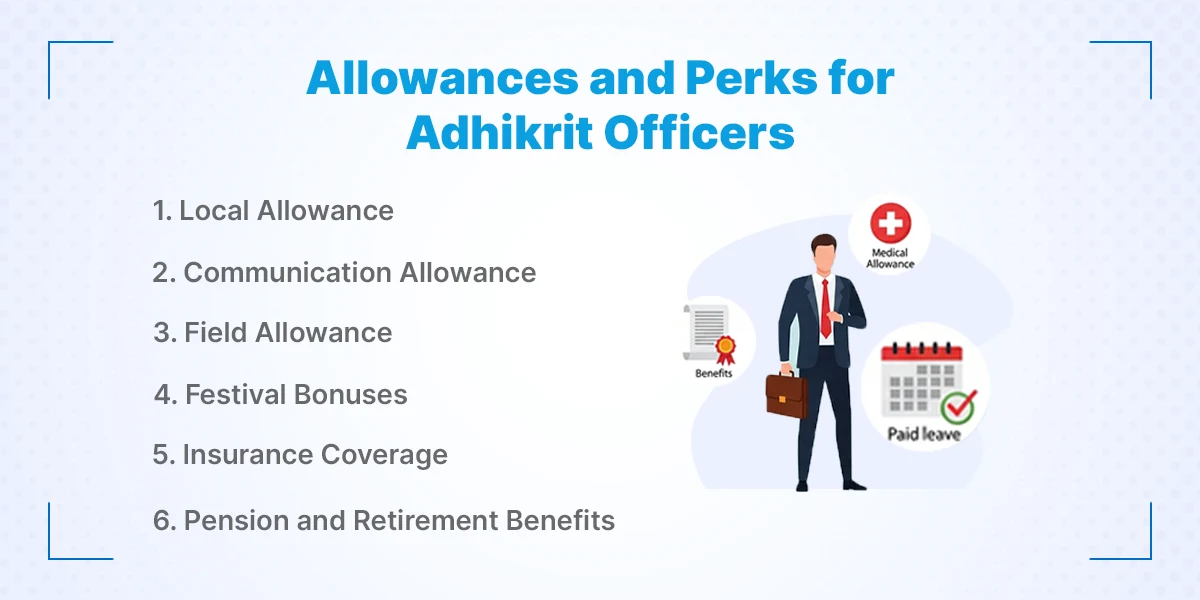
Adhikrits in Nepal not only receive a fixed salary. The government offers different allowances to cover the extra expenses of livelihood and work. These allowances add to the monthly salary, so the total salary is increased. Apart from cash, there are other benefits like insurance and pension that secure current and future life. Let us discuss these allowances and benefits step by step.
1. Local Allowance
Adhikrit officers are given a local allowance to cover extra expenses when they work elsewhere. It is for expenses such as traveling and living daily in the working area. The amount may differ depending on the location, especially if it is distant from the hometown. It helps prevent officers from spending their own money on official work. This is kept over the monthly salary and paid in regular intervals. It makes working away from home less stressful and convenient.
2. Communication Allowance
Since Adhikrit officers need to be connected for official reasons, they are provided with a communication allowance. The allowance is utilized to cover phone bills, internet charges, and other expenses on communication. It is a fixed amount given every month. This allowance enables officers to communicate freely with the office, team, or public without any extra cost. It makes communication smooth, which is required for prompt decisions and work progress.
3. Field Allowance
When the Adhikrit officers travel to the field locations or remote places for inspections and work, they are awarded a field allowance. This is helpful in financing traveling, eating, and staying expenses when not in the office. The allowance depends on the distance the officer travels and how long he stays in the field. This helps in field work and encourages officers to travel to project sites often. If not, the officers will need to expense themselves for these expenditures, which is impossible.
4. Festival Bonuses
Government officials, including Adhikrit officers, get festival bonuses every year. It is an extra payment of one month's salary that is typically received during major festivals such as Dashain and Tihar. It helps officers celebrate festivals without financial stress. Festival bonuses are a special reward that adds to overall earnings. Officers look forward to this bonus every year as compensation for hard work.
5. Insurance Coverage
Adhikrit officials receive government insurance coverage. They are insured with life insurance and medical insurance benefits. Insurance covers medical bills if they or their family members get sick. It also provides monetary support to their family in the event of an unfortunate occurrence. This is a relief that they enjoy and helps them focus on work without worrying about unexpected costs.
6. Pension and Retirement Benefits
After years of service, Adhikrit officers are awarded a pension by the government. A pension refers to an annuity that is paid to retired people after retirement so that they can sustain their living costs. It is determined by their salary and years of service. Besides a pension, other retirement benefits include gratuity and provident fund savings. These benefits give them financial security even when the officer retires. However, the pension and gratuity system has been removed from the fiscal year 2082/83. Now, the new employees will be enrolled in a contribution-based social security fund system (SSF).
Comparison of Adhikrit's Salary with Other Government Positions
The salary of an Adhikrit is one of the best for entry-level jobs in Nepal's civil service. It is higher than the salary of Kharidar or Nayab Subba and also has more responsibilities. Kharidar salaries start lower and have fewer chances for raises. Adhikrits also receive more benefits than many junior staff, making the total pay better. This is why many young people want to become Adhikrits to begin their government careers.
However, higher jobs like Undersecretary or Joint Secretary earn much more than Adhikrits over time because they have more responsibilities and experience. As officers get promoted, the salary gap increases. Still, the Adhikrit salary provides a good starting point and a chance to grow. It is a respected job that can lead to better positions in the future. Overall, the Adhikrit salary is good within the government pay system and offers financial stability.
Government Position Salary Comparison
| Position | Grade | Basic Monthly Salary (NPR) | Total Monthly Salary with Allowances |
|---|---|---|---|
| Section Officer (Adhikrit) | 6 | 45,103 | 59,121 |
| Kharidar | 10 | 32,902 | 48,872 |
| Nayab Subba | 10 | 34,730 | 51,310 |
| Undersecretary | 6 | 52,279 | 67,737 |
| Joint Secretary | 5 | 60,950 | 76,110 |
| Secretary | 2 | 72,082 | 81,888 |
| Chief Secretary | 2 | 77,211 | 87,359 |
Factors Affecting Adhikrit's Salary Growth
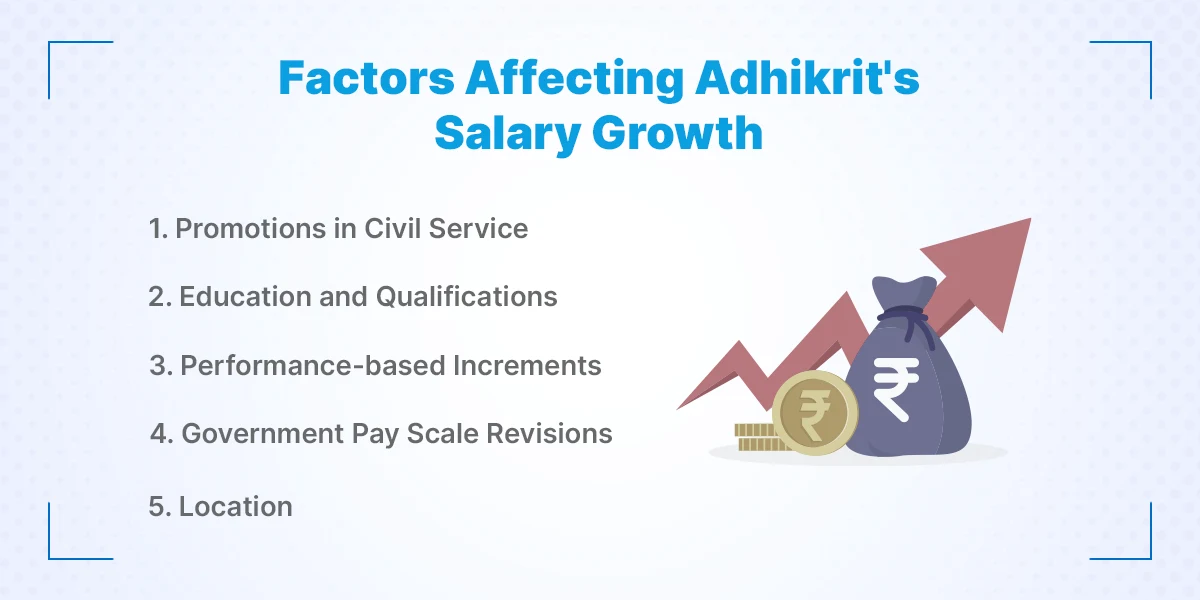
An Adhikrit's salary doesn't stay the same forever. It varies and generally rises over time. Several factors determine how much salary an Adhikrit may earn over the years. Some of them are promotions, education, job performance, and governmental policies. Even the place where the officer is posted can make a difference. Let us explain each of these factors in detail.
1. Promotions in Civil Service
One of the big reasons for which an Adhikrit's salary is raised is promotion. When an officer gets a promotion to a senior rank, his or her basic salary also goes up. Promotions usually mean more responsibility and a higher grade. For example, an Adhikrit may get promoted to Undersecretary after some years. Each step up means more salary and better allowances. Working hard and gaining experience, thus, can lead to a better salary via promotions.
2. Education and Qualifications
Having higher education or other professional certifications can help boost Adhikrit's salary. At times, officers who hold master's degrees or specialist training are paid a bit more. The government tends to reward higher qualifications with more points for salary increments or faster promotion prospects. This works to encourage officers to keep learning and improving. Education, hence, plays a significant role in salary enhancement. It can culminate in better jobs and compensation.
3. Performance-Based Increments
The job performance of an Adhikrit also has a bearing on salary hike. Officers who perform well and meet targets can get special increments or bonuses. These rewards encourage good work and responsibility. Performance appraisal decides who is to get extra pay. Salary, then, is not so much a function of years served but of how one performs. Hard work and responsibility can increase an officer's pay sooner.
4. Government Pay Scale Revisions
The pay scale is updated by the government periodically. The government may update salaries when the economy changes or when there is a rise in prices. These updates include all civil servants, including Adhikrit officers. Salary may go up, thus, even without promotion, as a result of updated pay scales. It helps the officers cope with the cost of living better. It is a regular feature of government service.
5. Location
Where an Adhikrit is posted can also influence salary and allowances. Officers posted in remote or difficult areas can get extra allowances. This is to partly compensate for higher living costs or travel difficulties. Postings in urban areas can have fewer extra allowances but greater facilities. Location allowances can add a considerable amount to the total salary. Posting location is, therefore, an important component of salary progression.
Career Growth and Promotion Opportunities for Section Officers in Nepal
After becoming an Adhikrit, there is a clear path to grow in your government career. Many officers get promoted to higher posts like Undersecretary, Joint Secretary, and even beyond. Each step up brings more responsibility and better pay. The promotions usually depend on your work experience, performance, and passing certain exams or evaluations. Moving up the ladder is important for both career growth and salary increase. So, becoming an Adhikrit is merely the beginning of a more extended journey.
The time for promotion is not set. It usually takes a couple of years of service for an Adhikrit to be promoted as an Undersecretary. Some are promoted earlier if they perform extremely well or are very qualified. To be promoted, you have to pass certain tests. The government conducts these tests through the Lok Sewa Aayog (Public Service Commission). The exams examine your knowledge and skills for the next job rank. Others take more time depending on government policy and vacancy availability. What is needed is patience and perseverance. Most of the officers plan their careers based on this timeline, with the understanding that hard work pays off.
Promotion directly affects allowances and salary. When you are promoted to a higher rank, your basic salary also increases. Your grade rate and allowances also move up with it. That is, you receive more money every month. Promotions also mean more perks and job security. That is why the majority of Adhikrit officers try to move up the hierarchy to improve their financial and professional standing.
How to Become an Adhikrit (Section Officer) in Nepal?
To become an Adhikrit (Section Officer) in Nepal, you must pass the Lok Sewa Aayog (Public Service Commission) examination. This competitive exam is the main route into the civil service for administrative roles. In addition to the exam, candidates must meet specific eligibility criteria, including educational qualifications and age limits. The selection process can be tough and competitive, but with proper preparation, it offers a clear pathway to a stable and respected career in Nepal's government administration.
1. Eligibility Criteria
To apply for the Adhikrit position, candidates must meet the following requirements:
- Educational Qualification: A minimum of a bachelor's degree from a recognized university.
- Age Limit: Candidates should be between 21 and 35 years old. However, there are relaxations for women and disabled individuals, extending the age limit up to 40 years.
- Nationality: Must be a Nepali citizen.
These criteria ensure that applicants possess the necessary academic background and are within the age range suitable for a long-term career in the civil service.
2. Lok Sewa Aayog Examination Process
The examination process for the Adhikrit position is structured into several stages:
- Written Examination: This is the first phase, consisting of multiple papers that test general knowledge, language proficiency, and subject-specific knowledge related to administrative functions.
- Computer Skill Test: Candidates who pass the written exam are required to demonstrate basic computer skills, including typing and familiarity with office software.
- Interview: The final stage involves a personal interview to assess the candidate's communication skills, personality, and suitability for the role.
Each stage is designed to evaluate different competencies essential for effective administrative work.
3. Tips for Preparing and Increasing Selection Chances
To enhance your chances of success in the Lok Sewa Aayog examination:
- Understand the Syllabus: Familiarize yourself with the exam syllabus and focus on the key areas.
- Regular Study Schedule: Set aside dedicated time each day for study to cover all subjects systematically.
- Practice Previous Papers: Solve past exam papers to understand the question patterns and time management.
- Stay Updated: Keep abreast of current affairs, especially those related to Nepal's governance and administration.
- Computer Proficiency: Regularly practice typing and using office applications to ensure readiness for the computer skill test.
Consistent preparation and a strategic approach are key to clearing the examination and securing the Adhikrit position.
Conclusion
Becoming an Adhikrit in Nepal is a great career choice for many people. The job offers a good salary, steady growth, and important benefits like allowances and a pension. With a starting basic salary of over NPR 45,000, plus extra perks, it provides financial security. The path to promotion and higher pay is clear, but it takes time and hard work. Passing the Lok Sewa Aayog exam is the main step to getting this job, and proper preparation makes all the difference.
If you want a respected government role with a stable future, being an Adhikrit is a smart option. Now you have a better idea about the salary, perks, and career path. If you are ready to work hard and grow, this job can bring pride and peace of mind for many years ahead.
Frequently Asked Questions
Submit your comments

Get Our App On



What is the Public Relations Officer Salary in Nepal
VIEW DETAILS
What Is the Salary of a Ticketing Officer in Nepal?
VIEW DETAILS
What Is the Salary of a Travel Consultant in Nepal?
VIEW DETAILS
How to Become an Auditor in Nepal
VIEW DETAILS


Loading Comments...