




Finding a job in the kitchen can feel confusing. Many people want to start a career in the food industry, but they do not know where to begin. You may be worried that you need high skills or a lot of experience. Or you feel unsure about what a kitchen helper actually does every day. Do not stress. Every top chef started somewhere, and the kitchen helper role is a great entry point for those interested in hotel management jobs.
In this guide, you will learn everything about the kitchen helper job description. You will discover the main duties, required skills, qualifications, salary, and how to apply. By the end, you will know exactly if this job is the right choice for you and how to start your journey.
In this blog
Who is a Kitchen Helper?
A kitchen helper is a beginner-level staff member who supports the kitchen team in restaurants, hotels, cafes, and catering services. Their main job is to make sure the kitchen runs smoothly. They help chefs and cooks with simple but important tasks. This role does not require much experience, which makes it the perfect starting point for anyone who wants to work in the food industry.
A kitchen helper works mostly behind the scenes. They focus on food preparation, cleaning, and organizing items. Even if their tasks look small, they save a lot of time for the cooking team. So, the work they do is very valuable.
Kitchen helpers are often the first people to enter the kitchen and sometimes the last to leave. They help prepare the space before the shift begins and clean up after the work is done. This job teaches discipline, teamwork, and kitchen rules, which are important for future growth in hospitality.
Main Support Areas
- Helping chefs and cooks during food preparation
- Cleaning dishes, tools, and work surfaces
- Organizing ingredients and storing items properly
Who Can Become a Kitchen Helper
Almost anyone can start in this role, especially people who:
- Want to build a career in cooking or hospitality
- Prefer practical learning instead of classroom learning
- Ready to work in a busy and fast-moving environment
- Do not have formal training, but are willing to learn
A kitchen helper job builds confidence. It allows beginners to watch, learn, and grow step by step. Many chefs today first started as kitchen helpers. With time and effort, this role can open the door to becoming a cook, a chef assistant, or even a top chef in the future.
Core Responsibilities of a Kitchen Helper
A kitchen helper does many important tasks that keep the kitchen running well. They support chefs so food can be cooked faster and served on time. Most tasks are simple, but they must be done with care. When the helper does the job right, the whole kitchen team works smoothly.

1. Food Preparation Support
Kitchen helpers assist chefs during food prep. They wash fruits, vegetables, and other ingredients so they are clean and ready. Sometimes they cut, peel, or chop items into the right size. They may mix simple ingredients or help with salads and side dishes. They follow instructions carefully to keep the food taste and quality right. They also check that ingredients are fresh. If something looks bad, they report it to the chef. This support helps chefs save time and focus on cooking big dishes. It also teaches the helper basic cooking skills, which helps them grow in their career.
2. Cleaning and Sanitization Duties
Cleanliness is one of the main responsibilities of a kitchen helper. They wash dishes, tools, and utensils throughout the shift. They wipe tables, counters, and cooking surfaces to keep the kitchen safe. They also mop the floor when needed to avoid accidents. Helpers clean as they go, so the kitchen never becomes messy. They throw waste in the right place. They make sure everything meets hygiene rules. A clean kitchen means healthy food and happy customers. This helps the restaurant keep a good reputation.
3. Kitchen Equipment Handling
Kitchen helpers use simple equipment every day. They may work with mixers, ovens, fryers, and dishwashers. They learn how to operate these tools carefully. They must follow safety rules to avoid burns or injuries. The helper helps clean the equipment after use. They check if anything is dirty or damaged and inform the chef. This keeps the tools in good condition. The more they work with kitchen equipment, the more confident they become. This skill is useful for future kitchen jobs, too.
4. Inventory and Stock Management Assistance
Kitchen helpers help check ingredient stock. They organize items in the right storage areas, like freezers or shelves. They label food to avoid confusion about dates. When something is running low, they inform the chef. Helpers also bring ingredients when the cooking team needs them. This saves the chef time during busy hours. They help unload deliveries and keep everything tidy. Good stock management helps avoid food waste. It also ensures cooking never stops because of missing items.
Key Skills Required for Kitchen Helpers
Working as a kitchen helper is more than just washing dishes or carrying ingredients. It is a role that requires both personal and practical skills. Some skills help you work well with the kitchen team, while others ensure you handle kitchen tasks safely and efficiently. Learning these skills not only makes your work easier but also helps you grow in the food industry. A kitchen helper with the right skills becomes a valuable part of the team and may have better chances to move up in their career.
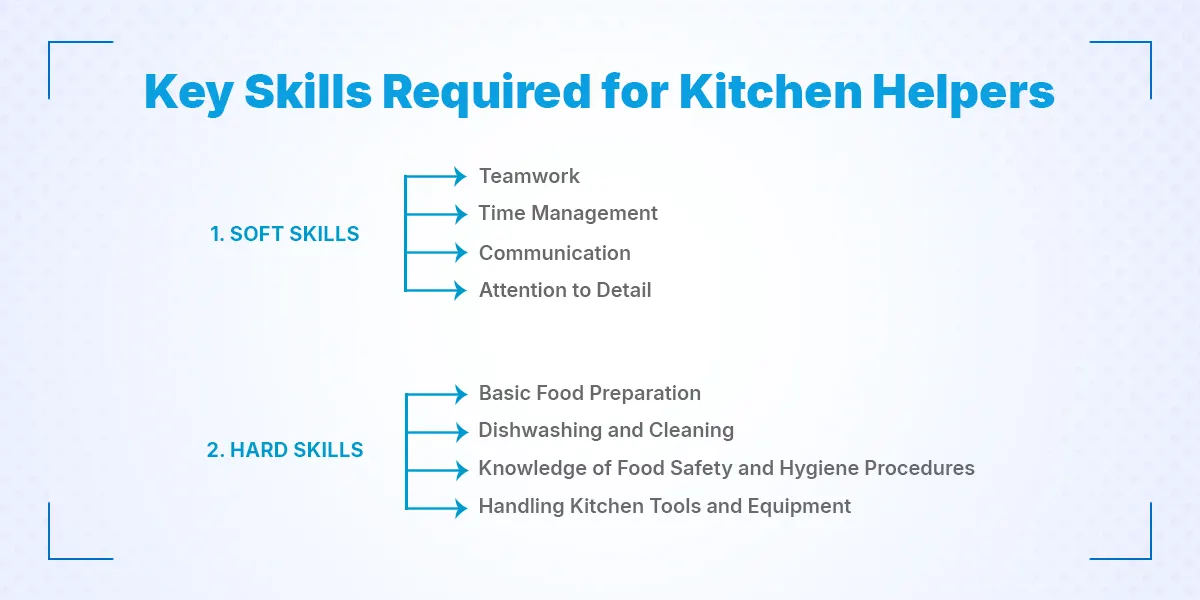
Soft Skills
Soft skills are about how you interact with others and manage your work. These skills make the kitchen run smoothly even during busy hours.
1. Teamwork
In a kitchen, everyone depends on each other. A kitchen helper must work closely with chefs, cooks, and other staff. Helping each other and sharing tasks make the kitchen faster and more organized. Good teamwork also creates a friendly environment, which makes long shifts easier.
2. Time Management
Kitchens are fast-paced. You need to finish tasks on time without rushing and making mistakes. Time management means planning your work, knowing what to do first, and keeping up with the chef’s instructions. A helper who manages time well reduces delays and helps the kitchen meet orders quickly.
3. Communication
Clear communication is very important. You must understand instructions correctly and report any issues. For example, if an ingredient is missing or equipment is broken, you need to tell the chef immediately. Good communication also avoids confusion and prevents mistakes.
4. Attention to Detail
Small mistakes can affect food quality or hygiene. Paying attention to detail ensures vegetables are cleaned properly, dishes are spotless, and ingredients are measured correctly. Helpers with strong attention to detail also notice if something is wrong in the kitchen before it becomes a problem.
Hard Skills
Hard skills are practical skills you use daily in the kitchen. These are easier to learn with practice, but are very important for safety and efficiency.
1. Basic Food Preparation
Kitchen helpers assist chefs with basic preparation tasks. This includes washing, peeling, chopping, and cutting vegetables and fruits. Sometimes, it also involves mixing ingredients or making simple dishes. Learning food prep helps the helper understand cooking better and prepares them for higher roles.
2. Dishwashing and Cleaning
Maintaining cleanliness is a major responsibility. Helpers wash dishes, pots, and pans, clean utensils, wipe counters, and mop floors. Regular cleaning prevents accidents and keeps the kitchen hygienic. A clean kitchen also ensures that food is safe for customers.
3. Knowledge of Food Safety and Hygiene Procedures
Helpers must know basic rules to keep food safe. This includes storing food correctly, checking expiration dates, and avoiding contamination. They must also wash their hands often and wear clean uniforms. Following hygiene rules prevents illness and keeps the kitchen safe for everyone.
4. Handling Kitchen Tools and Equipment
Kitchen helpers use knives, peelers, blenders, ovens, and other equipment. Knowing how to use these tools safely is very important to avoid injuries. Helpers also clean and maintain equipment after use. This skill ensures that tools last longer and that the kitchen works efficiently.
5. Stock and Inventory Awareness
Although not always listed, helpers often help organize ingredients and check stock. They know where things are stored, which saves chefs time. They also inform the chef if something is missing or running low.
Qualifications and Training Needed
Becoming a kitchen helper does not require complicated degrees or years of experience. Most people can start this job with a basic education and a willingness to learn. The role focuses more on practical skills and good habits than formal schooling. Still, knowing the right qualifications and training can help you succeed and grow faster in the kitchen.
1. Educational Requirements
In most places, there is no strict educational requirement for a kitchen helper. Many restaurants accept candidates who have completed basic school education. What matters most is your attitude and readiness to work. Being able to read instructions and follow simple guidelines is helpful. Some kitchens prefer candidates who can understand hygiene rules and safety instructions. Even if you do not have advanced education, a positive attitude can make you a strong candidate. Beginners often learn on the job while helping experienced chefs.
2. Food Safety or Hygiene Certifications (Advantage)
Although not always required, food safety or hygiene training is a big advantage. Courses teach how to handle food safely and prevent contamination. You will learn proper washing, storing, and cooking techniques. These certifications also show your employer that you care about quality and safety. Some restaurants may offer short training before you start. Completing a certificate can also open doors to better positions later. It gives you confidence to work in any professional kitchen.
3. On-the-Job Training
Most kitchen helpers learn while working. You start with simple tasks like washing dishes, peeling vegetables, and cleaning surfaces. Over time, you learn more advanced duties like food prep and equipment handling. Experienced chefs guide you step by step. This hands-on training is practical and easy to follow. By watching and helping, you understand how a professional kitchen operates. It also helps you develop discipline, teamwork, and good work habits.
Being prepared with basic education, hygiene knowledge, and a willingness to learn makes starting as a kitchen helper easier. Training on the job helps you gain experience fast. With these qualifications, you can grow into higher kitchen roles over time.
How to Become a Kitchen Helper?
To become a kitchen helper, you need a basic education, a willingness to learn, and a good attitude toward kitchen work. These are the jobs for freshers who are ready to start at the ground level and gain experience. Many people start without any prior experience and grow over time. With the right approach, anyone can enter the food industry through this position.
1. Start with Basic Requirements
The first step is to meet simple requirements. Most restaurants ask for a basic school education. You should be able to read instructions and understand simple rules. Physical fitness helps because the job can be busy and requires standing for long hours. Good hygiene and cleanliness are important. A positive attitude and willingness to follow instructions make you a strong candidate. Even without experience, showing interest in learning can get you the job.
2. Gain Knowledge of Kitchen Work
It helps to learn about kitchen tasks before applying. You can read about basic food prep, cleaning, and safety rules. Watching cooking videos or helping at home can give some hands-on practice. Understanding hygiene rules is very important. Knowing how to handle kitchen tools safely is helpful. This knowledge shows employers that you are serious and ready to work. Even small preparation makes a big difference when you start your first job.
3. Apply and Learn on the Job
Once ready, start applying for kitchen helper jobs. Many restaurants, hotels, and cafes regularly open opportunities for entry-level staff. During your first few weeks, focus on learning from experienced chefs. Take small tasks seriously and pay attention to instructions. Over time, you will gain confidence and handle more responsibilities. Showing dedication can also open doors for promotions. On-the-job experience is the fastest way to grow in the food industry.
How to Find & Apply for Cleaner Jobs?
To find and apply for cleaner or kitchen helper jobs, you can search locally, check online job portals like Kumari Job, and reach out to restaurants, hotels, or cafes directly. Many beginners worry they won’t get hired without experience. The truth is, most employers value honesty, hard work, and willingness to learn more than prior experience. With the right approach, you can quickly discover opportunities and start working.
1. Look for Job Openings
Check nearby restaurants, hotels, and cafes for vacancies. Some places post notices on their notice boards or at the reception. You can also search online using keywords like “kitchen helper” or “cleaner jobs near me.” Job portals like Kumari Job, social media groups, and local community pages often share new openings. Asking friends or family if they know of any jobs can help. Being active and checking regularly increases your chances of finding work quickly.
2. Prepare a Simple Application and Apply
For most entry-level cleaner or kitchen helper jobs, a simple application is enough. Include your name, contact details, and any basic experience if you have it. Mention your willingness to work hard and learn. Some employers may call you for a short interview. Being polite, honest, and confident goes a long way. Even small efforts in your application can make a big difference. After making a proper CV, apply for the jobs.
3. Follow Up and Attend Interviews
After submitting your application, follow up politely with the employer. If you get an interview, dress neatly and arrive on time. Show that you are ready to learn and work hard. Ask questions if something is unclear. During your first days on the job, observe carefully and follow instructions. Being responsible and attentive can help you keep the job and even get recommendations for future opportunities.
Kitchen Helper Salary and Career Growth Opportunities
In Nepal, most entry-level kitchen helpers in small restaurants or local eateries earn around NPR 12,000 to NPR 15,000 per month. Some positions for slightly experienced helpers may offer NPR 15,000 to NPR 20,000, but this depends on the restaurant, hotel, or city. High-end hotels or top-quality restaurants may pay more, but these are not the typical rates. Some jobs also provide meals or accommodation, which can help with living costs.
Career growth is possible if you work hard and learn quickly. A kitchen helper can gradually move into roles like junior cook or kitchen assistant. By observing chefs, practicing food preparation, and learning cooking techniques, you can improve your skills. Taking responsibility for cleaning, managing inventory, and handling kitchen tools makes you more valuable to the team. Over time, reliable helpers may secure permanent positions, higher pay, or promotions. Learning new skills and showing dedication can eventually lead to better roles such as cook, chef assistant, or even senior kitchen positions.
Being a kitchen helper is a strong first step in the food industry. Even with modest starting pay, the experience, discipline, and skills you gain can open doors to a long-term career with more responsibility and better income.
Conclusion
A kitchen helper plays an important role in keeping a kitchen running smoothly. Even though the tasks may seem small, they are the foundation of every successful restaurant or hotel kitchen. This job is perfect for beginners who want to enter the food industry and learn practical skills. By doing your work carefully, following hygiene rules, and helping the team, you can gain valuable experience.
Over time, these skills can lead to higher positions like cook, chef assistant, or even senior kitchen roles. Starting as a kitchen helper is more than just a job. It is the first step toward a rewarding career in hospitality. Hard work, learning, and dedication will help you grow steadily.
Frequently Asked Questions
Submit your comments

Get Our App On



What is the Public Relations Officer Salary in Nepal
VIEW DETAILS
What Is the Salary of a Ticketing Officer in Nepal?
VIEW DETAILS
What Is the Salary of a Travel Consultant in Nepal?
VIEW DETAILS
How to Become an Auditor in Nepal
VIEW DETAILS


Loading Comments...