


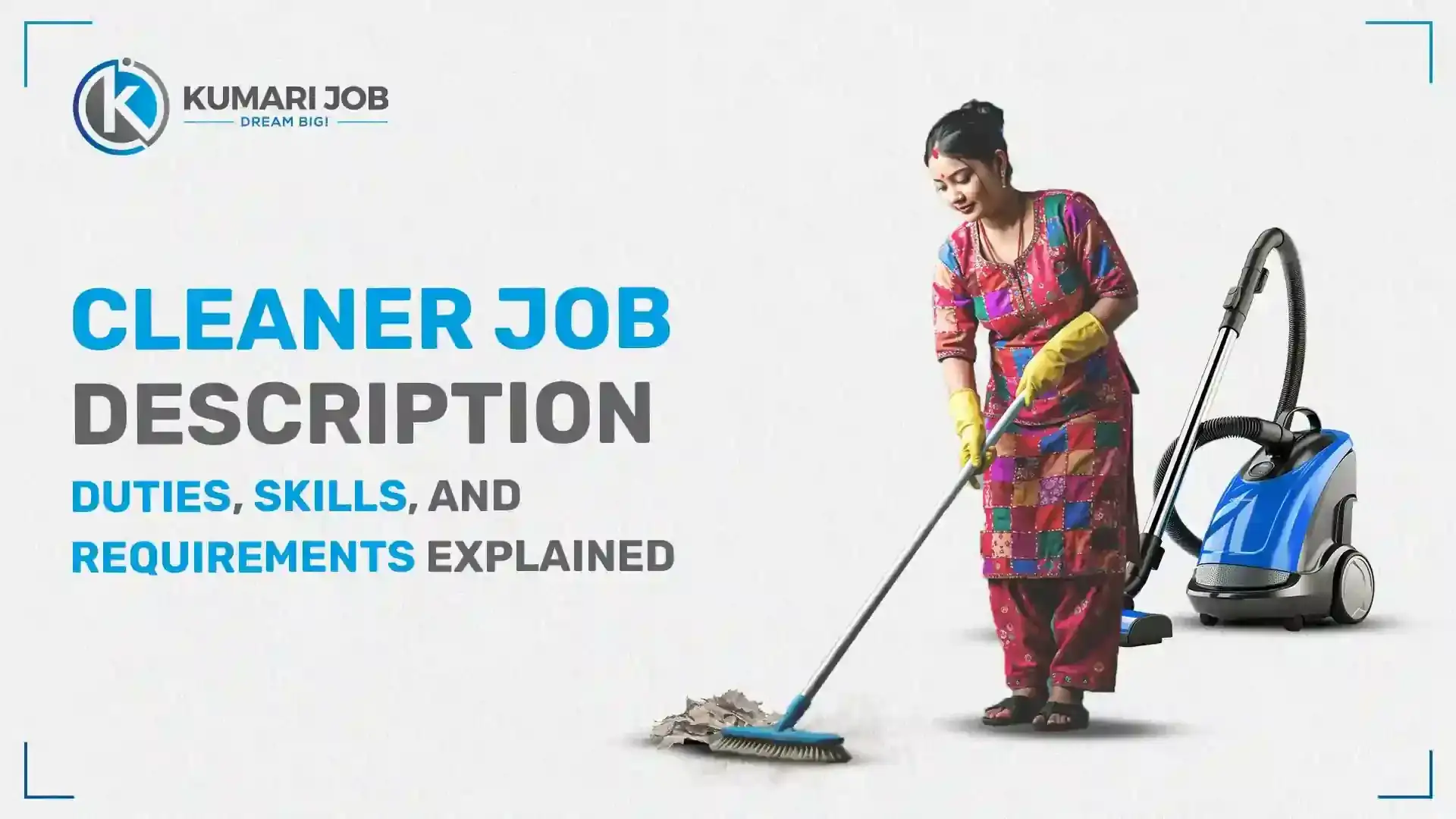

Cleaning is not just about looking good. It’s more about health, safety, and feeling at ease. Whether it's a clean office room, a tidy hotel room, or a spotless home, cleaners play a vital role behind the scenes daily.
From homes and hospitals to offices and factories, opportunities for professional and effective cleaners have grown in demand. With homes and businesses more concerned than ever before with cleanliness, cleaning services have become more valuable in all sectors.
In this guide, we'll walk you through all you need to know about cleaner job descriptions, including their day-to-day responsibilities, key skills, qualifications, salary, and application. If you're hiring a cleaner or would like to be one, this blog's got you covered.
In this blog
Who is a Cleaner?
A cleaner is a person who keeps the environment clean, organized, and hygienic. The primary task is to maintain various environments, including homes, workplaces, and public places, in a clean and well-maintained condition. It could mean everything from cleaning floors and dusting to disinfecting and disposing of waste. The work may look easy, but it is responsible for maintaining other individuals' safe, comfortable spaces. Cleaners work behind the scenes, yet they directly impact the healthiness and comfort of how an environment feels.
Good cleaners are not just people who have a mop and a broom; they're responsible, detail-oriented people who take pride in doing the job properly. They are often self-motivated and able to do repetitive tasks without losing focus. They possess key characteristics such as punctuality, honesty, and a strong work ethic, especially when cleaning in private spaces or handling sensitive materials. Each cleaner also works independently, so trustworthiness and reliability are important. Professionalism and a good attitude are very important, even if formal training is not required.
Cleaners can clean in various locations, each with its own focus. Residential cleaners take care of individual homes, doing overall cleaning, laundry, and organization. Office or commercial cleaners usually clean after hours so workspaces can be ready for the next day. In hospitality and hotels, cleaners, also known as housekeeping staff, clean rooms and public spaces to ensure they are clean for guests. Industrial cleaners work in big, often riskier settings like factories or warehouses. Cleaners within healthcare units or hospitals must undergo strict sanitation procedures to prevent infection and create a hygienic environment for patients and staff.
Core Responsibilities of a Cleaner
No matter where they work, in homes, offices, hospitals, or hotels, cleaners follow a list of basic duties that keep the environment clean, safe, and cozy. Although the equipment and the routine vary slightly from one environment to another, the basic responsibilities are quite uniform. Here is a breakdown of the daily duties that most cleaners undertake as part of their job.

1. Sweeping, Mopping, and Vacuuming
One of the most fundamental tasks of any cleaner is cleaning floors. Depending on the flooring material, this could be done by sweeping with a broom, mopping with water and soap, or vacuuming rugs and carpets. Clean floors not only look nice, but they also reduce the possibility of slipping and falling. Floors in busy areas, such as offices, schools, and hospitals, may need to be cleaned multiple times throughout the day. A cleaner should have knowledge of how to use different machines and tools in the correct manner to complete the work efficiently.
2. Dusting and Surface Cleaning
Dusts get collected quickly, especially in places that are not cleaned regularly. Cleaners clean surfaces like desks, shelves, countertops, windowsills, and furniture. Within offices, this would involve dusting electronics like computer screens and phones. In homes, it may involve more detailed work like wiping picture frames or decorative items. Dusting frequently helps prevent air contamination and maintains a fresh and clean environment.
3. Sanitizing High-Touch Areas
Sanitizing is crucial in today's times, especially in areas such as schools, offices, and hospitals. Cleaners typically disinfect the door handles, elevator buttons, light switches, phones, keyboards, and other high-touch areas. This minimizes the spread of germs and viruses, making the environment safe for everyone. Proper use of disinfectants and understanding of sanitation protocols are key to doing this part of the job well.
4. Restocking Cleaning Supplies and Toiletries
One of the responsibilities of a cleaner in most companies is tracking inventory. This includes refilling materials like paper towels, hand soap, toilet paper, and air fresheners in toilets or common bathrooms. In some settings, they may also be tasked with restocking cleaning equipment like mop buckets, cleaning implements, sanitizers, or spray bottles. Having all the supplies on hand keeps the facility running and clean at all times. It also demonstrates detailed awareness and responsibility.
5. Waste Disposal and Bin Management
Emptying the trash can is also a regular duty. Waste needs to be removed from different areas, and liners need to be changed accordingly. This would include kitchen trash cans, bathroom trash cans, office trash cans, and recycling trash cans. In factories or hospitals, waste disposal might involve handling biohazards or chemicals, where strict procedures and protective gear are required. Whatever the setting, maintaining standards of hygiene in spaces where waste is stored demands keeping the waste zones clean and sanitary.
6. Reporting Safety or Maintenance Issues
Cleaners are often the first to see if something is broken or not working. This could be a leaking tap, a flickering light bulb, or a loose tile. They are primarily responsible for identifying and reporting these problems to their bosses so that they can be resolved promptly. Cleaners do this to stop accidents and keep everyone informed about what is working well in the building.
7. Other Job-Specific Responsibilities
Depending on where they work, cleaners will also perform other responsibilities. For example:
- In private homes, this may include washing clothes or doing dishes.
- In hotels, cleaners will make up the beds and clean guest rooms.
- In factories, tasks may include cleaning large machines or operating specialized equipment.
- In hospitals, cleaners must follow strict hygiene protocols, including wearing protective equipment and using medical-grade disinfectants.
Every setting can be a level of ability and focus, but the aim in each situation is the same: to create a clean, safe, and welcoming environment.
Essential Skills for Cleaning Professionals
Cleaning may seem like a simple job, but it requires a special skill set to get it right. From physical endurance to a sharp eye for the tiny details, a good cleaner brings more than just tools with them in their bag. Let's discuss the key skills every cleaner needs and why they are essential in day-to-day tasks.

1. Physical Stamina and Endurance
Cleaning is a physically demanding job. You're on your feet all day, bending, stretching, lifting, and walking around. Whether you're sweeping floors, cleaning toilets, or carrying cleaning supplies, you need the energy and endurance to carry you through your work without exhausting yourself.
That is why physical endurance is so crucial. You don't have to be an athlete, but being reasonably fit and being able to keep pace with manual labor is a big advantage. Many of these cleaners work extended shifts or back-to-back jobs, so being able to pace yourself and stay active throughout the day is key to performing well as one of these employees.
2. Attention to Detail
Ever notice the way a freshly cleaned space feels completely new, lighter, more peaceful, and more welcoming? That's all about careful attention to detail. Cleaners don't just focus on the big things, like floors and windows. They also look for the little things like dust behind pieces of furniture, fingerprints on glass, or stains on couches, and take care of them before anyone even knows.
Attention to detail means you care about the standard of your work. It also shows professionalism and pride in work. In hotels, hospitals, or even at home, such small things make a big difference and build trust with employers or clients.
3. Time Management and Punctuality
In cleaning, time really matters. Whether you’re working a morning shift in an office or cleaning a hotel room between guest check-ins, there’s often a schedule to stick to. Cleaners need to manage their time well so every task is completed without rushing or cutting corners.
Punctuality is also very important. Showing up on time builds trust and shows you can be depended on. When you clean for a business, your shift might match with others' schedules, so being late can hold things up. Reliable cleaners who keep their appointments and show up for work get more job offers and repeat customers.
4. Knowledge of Cleaning Chemicals, Tools, and Safety Procedures
There is actually some science behind proper cleaning. You need to know what cleaning products to apply to which surfaces, what chemicals never go together, and the right way to use equipment like vacuum cleaners, mops, brooms, or floor polishers. This not only improves cleaning quality but also prevents accidents and damage.
Safety is also a large part of the job. Many cleaners work with strong chemicals or in environments where sanitation is a top priority, such as hospitals, schools, or kitchens. Gloves, masks, and caution signs (like "wet floor" boards) are all part of basic safety protocol. The more you know about the safe and proper use of cleaning chemicals, the better you will perform and protect yourself and others.
5. Verbal and Written Basic Communication Skills
Cleaners do not need to be good at communicating, but some basic skills are most useful. You will likely have to talk with a supervisor, listen to instructions, prepare a checklist, or report to someone about a cleaning issue. If you are able to clearly hear and communicate yourself, all works better.
Effective communication also creates more solid working relations. When cleaning a person's house or doing a team task in an office or hotel, respect and courtesy in conversation make a great difference. Having the ability to question, clarify assignments, or provide feedback avoids misunderstandings and enhances cooperation.
6. Independence or Team Work Ability
Depending on the job, you might have to work alone, for example, cleaning a single-family home or as a member of a larger group, like a hospital or hotel. Either way, you must be flexible and comfortable with both.
Working alone means you need to be independent. You should be able to handle your own tasks, fix problems when they come up, and work without someone watching you. Working in a team requires cooperation and sometimes helping others finish their work on time. Cleaners who can adapt to both types of work will do well and enjoy their jobs.
Cleaner Job Requirements & Qualifications
To become a cleaner, you typically don’t need a big list of qualifications, which is why it's such an attractive option for many people who are searching for employment, particularly those who want to get to work quickly. However, there are a couple of things employers tend to seek out when they're hiring, particularly when the job requires a bit more responsibility or is in special settings such as hospitals or industrial plants. Let's examine.
Do You Need a Formal Education?
The best part is that most cleaning work does not require a formal education. School-level education would be the most likely to do, and in most instances, it is not even required. What you essentially need is a positive attitude, a punctual work ethic, and a willingness to do the job to the best of your ability. If you can follow instructions, be precise, and work fine under pressure, you already have all the skills required for this job.
Entry-Level vs Experienced Cleaners
Almost all cleaners' work is open to newbies, and if you are not yet experienced in cleaning, don't worry, you can get the work and learn through the process. The employer may sometimes provide some basic training during the first few days.
However, having some experience can put you at an advantage, especially in jobs that require working independently or in sensitive settings such as offices, hotels, or hospitals. Experienced cleaners are usually quicker, more efficient, and more familiar with various cleaning techniques and equipment, making them better choices for employers.
Certifications That Can Help
You do not need a certificate to be a cleaner, but having one will definitely increase your chances of being hired and potentially earn you a better salary. Some good certifications are:
- Basic Hygiene or Sanitation Course: It means that you have learned how to clean effectively and safely, especially in kitchens, schools, or health facilities.
- Workplace Safety Training: This includes the use of personal protective equipment (PPE), the proper handling of chemicals, and the prevention of accidents. It's especially useful if you are working in industrial or healthcare settings.
Short courses in cleaning, sanitation, or safety are offered by different vocational training centers in Nepal and other countries. Even a one-day workshop could give a welcome kick and make your resume stand out.
Work Environment & Schedule
Cleaning jobs are flexible and can fit into a variety of lifestyles. Whether you need full-time work, a few hours a day, or something in between, there's usually a cleaning job that will fit your needs. The location and work can vary significantly, depending on where you work and the type of environment you prefer.
1. Different Types of Work Arrangements
- Full-time cleaners usually work between 6 to 8 hours a day and are usually found working in offices, hospitals, schools, or hotels. These jobs are more structured and perhaps have more benefits.
- Part-time cleaning jobs are great for students, parents, or anyone who wants to earn some extra money without having to work long hours. These jobs are common in small offices or private residences.
- Contractual or freelance cleaners are hired for a specific job or short-term project. For example, an apartment is cleaned weekly by someone or deep cleaning is done after an event or renovation.
- Shift-based roles are also very common, especially in places that operate 24 hours, like hospitals, hotels, or large commercial buildings. These shifts can be in the early morning, during the day, or overnight, giving you the option to choose a time that suits your routine.
2. Where do Cleaners Usually Work?
Cleaners are needed everywhere. Here are some of the most common work environments:
- Houses – Cleaners help homeowners keep their houses clean, neat, and hygienic.
- Offices – Most office cleaners sweep desks, floors, and washrooms after or during office hours.
- Hotels – Cleaners working in hotels are often termed as housekeeping staff. They help keep hotel guest rooms and shared facilities clean and ready for the next occupant.
- Hospitals and Clinics – Cleaners at these places follow strict hygiene and sanitation procedures to prevent infection.
- Schools and Universities – Bathrooms, classrooms, and hallways need to be cleaned on a regular basis to provide a clean environment for both students and educators.
- Factories or Industrial Premises – This type of work involves cleaning large machines or floors, sometimes with the use of heavy equipment.
- Outdoor Areas – Cleaners are also present in public areas, cleaning streets, buildings, or parks.
What is the salary of a Cleaner in Nepal?
Cleaners in Nepal typically earn between NPR 10,000 and NPR 30,000 per month, depending on their workplace and the duration of their employment. The salary of a cleaner varies greatly depending on numerous variables. For example, someone who is employed full-time at a hotel in Kathmandu may earn more than someone who cleans houses part-time in a village. Let's examine what determines the differences.
1. Experience Matters
As with most professions, veteran cleaners will usually be paid more. If you've been in the business for a couple of years, chances are you clean faster and more efficiently and understand how to handle different situations, like tough stains, specialty surfaces, or customer requests. Employers will generally prefer this and compensate more for good, competent cleaners.
On the other hand, if you're recently hired, you might begin at a lower pay. But eventually, with some experience, you may be able to move up and receive higher pay.
2. Industry Differences
Your wage may also be affected by the industry you work in. For instance:
- Hotel or hospitality janitors may be paid slightly higher, especially if the hotel is high-end or in a tourist area.
- Hospital and health cleaners will also have more stringent cleaning standards and may earn a premium for the extra responsibility.
- Industrial cleaners employed in factories or warehouses can earn more because the work is physical and the equipment is specialized.
- Domestic cleaners, especially casual or part-time cleaners, may be able to earn less but can also have greater flexibility in their hours.
3. Working Hours and Shifts
Your working hours also play a great role in how much you are paid. Full-time cleaners usually get a set monthly allowance, whereas part-time cleaners or hourly cleaners earn money according to the days or hours they work. Some of them also do late-night work, early-morning work, or weekend work, and that kind of work may earn a bit more money.
If you have more shifts or overtime, you can earn more money every month.
4. Location – Urban vs Rural
Where you work matters as well, cleaners working in big cities like Kathmandu, Pokhara, or Biratnagar receive higher salaries compared to those in small townships or rural villages. This is because the cost of living in cities is higher, and there is a bigger demand for professional cleaners, more so in offices, hotels, and business complexes.
In rural villages, there are fewer opportunities or customers, and this can translate to lower salaries.
How to Find & Apply for Cleaner Jobs?
You can look for cleaner jobs in Nepal on online job sites like Kumari Job and by contacting local cleaning firms or businesses directly. It is not as hard to find a cleaning job as you think. With all those hotels, offices, houses, and businesses searching for reliable cleaners, there are always plenty of jobs going on. You just need to know where to look and how to ask.
Platforms and Agencies That Post Cleaning Jobs
Start by examining popular Nepali job sites like Kumari Job and Facebook job groups in your local area. Some cleaning agencies put up jobs on behalf of companies, so visiting their offices or calling them personally can open up new job opportunities. You can also ask around in your neighborhood. Sometimes, the best jobs come through word of mouth.
Tips for Job Seekers
1. Make a Simple, Clean CV
Even on cleaning jobs, a simple CV makes you stand out. You don't need to be extravagant. Just include:
- Your name and telephone number
- A short personal statement (1–2 lines)
- Any work experience: Even unofficial (such as cleaning homes)
- Skills you can do well (such as floor cleaning, time organization, or operating equipment.
Keep it brief and neat. A single page will do. Headings and bullet points will make it readable.
2. Highlight Relevant Experience and Skills
If you have previously worked, even part-time, or for a relative, mention it. Employers prefer to have some experience or even familiarity with the fundamentals of cleaning.
Highlight also those skills that are aligned with the job, including:
- Ability to handle cleaning equipment
- Knowledge of the safe use of chemicals
- Time management
- Independent work or group work
Even if you have no prior experience as a cleaner, being able to show that you are careful, attentive, and responsible can get you the job.
3. Prepare for Basic Interviews
Interviews for cleaning jobs are generally straightforward and to the point. You may be questioned:
- Have you worked as a cleaner before?
- Can you work full- or part-time?
- Can you work early mornings or late shifts?
- Are you able to accept directions and accomplish tasks on time?
Be sincere and confident. If you are inexperienced, let them know that you are ready to learn and accept directions. Attitude is of great importance in such a case. You can get cleaner jobs in Nepal through online job portals like Kumari Job and by directly contacting local cleaning businesses or agencies.
Conclusion
Cleaners do important work to keep our homes, workplaces, and public areas safe and healthy. They work quietly behind the scenes, but without them, things don’t run smoothly. If you want to hire a cleaner or become one, it takes more than just a little effort. All you need is regularity, dependability, and care.
With the right skills, attitude, and desire to learn, cleaning can be a rewarding, flexible, and steady job. As the need for cleanliness grows, so does the demand for skilled cleaners. So, if you join this field, be proud of your work; you’re not just cleaning, you’re helping create better spaces for people to live and work.
Are you looking for similar opportunities in Nepal? Visit Kumari Job to explore verified vacancies and apply easily online today!
Frequently Asked Questions
Submit your comments

Get Our App On



What is the Public Relations Officer Salary in Nepal
VIEW DETAILS
What Is the Salary of a Ticketing Officer in Nepal?
VIEW DETAILS
What Is the Salary of a Travel Consultant in Nepal?
VIEW DETAILS
How to Become an Auditor in Nepal
VIEW DETAILS


Loading Comments...