




Many young Nepalis feel unsure about their future because good jobs with steady pay are hard to find. You might be worried about choosing a career that pays well and stays in demand for years. Nursing can solve this worry; it offers job stability and a clear path to work in hospitals, community clinics, and even abroad.
The nursing profession in Nepal is a key part of the health system, helping sick people recover and keeping communities healthy. According to the Nepal Nursing Council, there are over 113,000 registered nurses working in the country, including staff nurses and auxiliary nurses, showing how big the field has grown. Yet many more are needed as hospitals and clinics expand and the healthcare system reaches rural areas. This growing need makes nursing a respected and reliable career choice for students and job seekers alike because demand is rising across Nepal’s healthcare sector.
In this blog
What is the Scope of Nursing in Nepal?
The scope of nursing in Nepal is broad and expanding, with growing job opportunities in hospitals, clinics, community health programs, government services, and international healthcare markets.
Nepal has seen a steady increase in private hospitals, medical colleges, diagnostic centers, and local health posts over the last decade. Nurses are needed not only in major cities like Kathmandu, Pokhara, and Biratnagar, but also in rural municipalities where healthcare access is improving. They play a central role in patient care, emergency response, maternal health, and disease prevention. As Nepal’s healthcare system continues to expand, the demand for qualified nurses is expected to remain strong and stable.
Why Nursing is a High-Demand Career in Nepal
Nursing is a high-demand career in Nepal because there is a shortage of skilled professionals, rapid growth of private hospitals, and continuous expansion of government healthcare programs.
Many healthcare facilities struggle to find enough trained nurses, especially in rural and semi-urban areas. At the same time, the private healthcare sector is growing, with new hospitals and medical colleges opening every year. Government programs focused on maternal health, immunization, and community healthcare also require qualified nursing staff. These factors together make nursing one of the most secure and in-demand professions in Nepal.
Career Opportunities for Nurses in Nepal
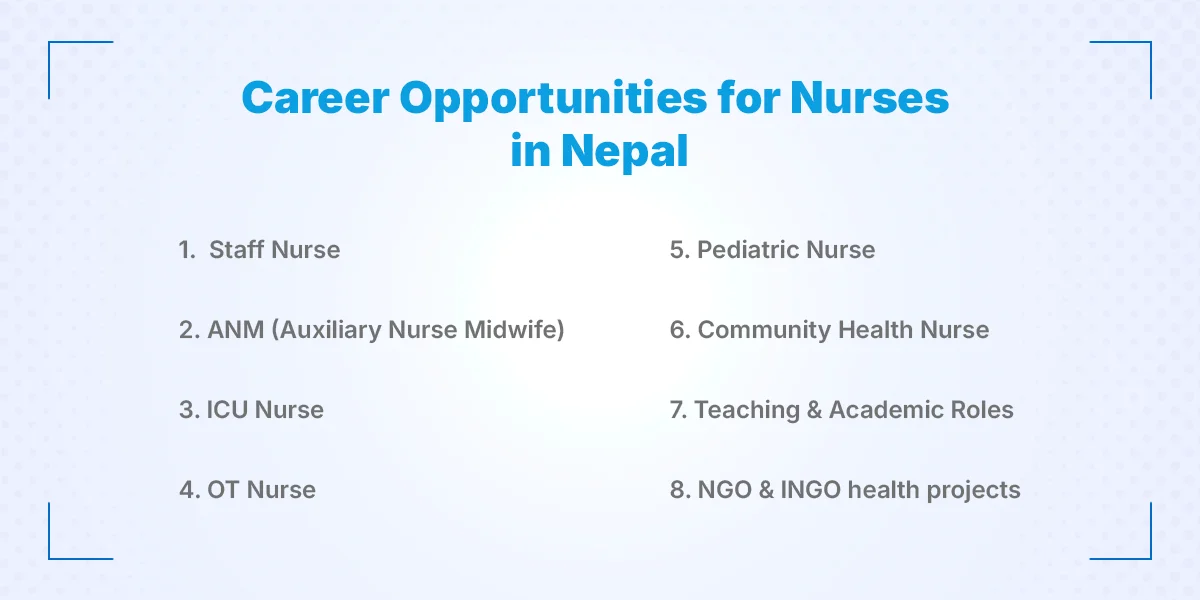
Nursing in Nepal offers diverse career paths across hospitals, communities, academic institutions, and international organizations. As the healthcare system expands, specialized roles are increasing in both government and private sectors. Nurses can choose clinical, academic, or project-based careers depending on their qualifications and interests.
1. Staff Nurse
A staff nurse is the most common nursing role in Nepal and works directly with patients in hospitals and clinics. They are responsible for patient care, medication administration, monitoring vital signs, and assisting doctors during treatment. Staff nurses work in general wards, emergency departments, and outpatient units. This role provides strong practical experience and is often the starting point for career growth. With experience, staff nurses can move into senior or supervisory positions.
2. ANM (Auxiliary Nurse Midwife)
ANMs mainly serve in rural health posts and community clinics. They focus on maternal care, child health, vaccination programs, and basic treatment services. This role is very important in improving healthcare access in remote areas of Nepal. ANMs often work under government health programs and local municipalities. It is a stable position with a strong community impact.
3. ICU Nurse
ICU nurses handle critically ill patients who require constant monitoring and advanced medical support. They work in intensive care units and manage life-support equipment. This role requires strong clinical skills and quick decision-making ability. ICU nurses often receive higher salaries compared to general ward nurses. Specialized training and experience are usually required.
4. OT Nurse
OT (Operation Theatre) nurses assist surgeons during operations and ensure surgical procedures run smoothly. They prepare surgical instruments, maintain a sterile environment, and monitor patients during surgery. This role requires attention to detail and strong teamwork. OT nurses are in high demand in private hospitals and specialty centers. With experience, they can specialize further in surgical disciplines.
5. Pediatric Nurse
Pediatric nurses specialize in caring for infants, children, and adolescents. They work in pediatric wards, children’s hospitals, and neonatal units. This role requires patience, communication skills, and emotional understanding. Pediatric nurses help with vaccination, growth monitoring, and child treatment plans. Specialized pediatric training improves career prospects and salary potential.
6. Community Health Nurse
Community health nurses focus on public health services rather than hospital-based care. They work in awareness campaigns, disease prevention programs, and local health initiatives. This role supports maternal health, sanitation programs, and chronic disease management. Community nurses often collaborate with local governments and NGOs. It is a meaningful career path for those interested in public health.
7. Teaching & Academic Roles
Experienced nurses can move into academic roles in nursing colleges and training institutions. They teach clinical subjects, supervise practical training, and guide nursing students. Academic positions usually require a Bachelor’s or Master’s degree in Nursing. This role offers stable working hours compared to hospital shifts. It is ideal for nurses interested in education and leadership.
8. NGO & INGO Health Projects
Many NGOs and INGOs in Nepal run healthcare, maternal health, and emergency response projects. Nurses in these roles work in community outreach, disaster relief, and health education programs. These positions often offer competitive salaries and exposure to international healthcare standards. Strong communication skills and project experience are valuable here. It also opens pathways for international career growth.
Government vs Private Nursing Jobs in Nepal
Government and private nursing jobs in Nepal differ mainly in job security, pay structure, workload patterns, and long-term benefits like pension/provident fund and formal allowances.
What is the Salary of Nurses in Nepal?
The salary of nurses in Nepal typically ranges from NPR 18,000 to NPR 70,000+ per month, depending on whether they work in government or private hospitals, their experience level, and specialization.
Salary differences mainly depend on sector, job level, and location. Government nurses follow a fixed pay scale system, while private hospital salaries vary widely. Specialized roles such as ICU and OT nurses usually earn more than general ward nurses. Nurses who work abroad earn significantly higher salaries than those in Nepal.
1. Government Nurse Salary in Nepal
Government nurse salaries are structured under official pay scales, which provide better stability and long-term financial security. The minimum benchmark tied to the 5th-level scale is around NPR 34,730 per month, according to recent government references. With experience and promotion to higher levels, total monthly income generally increases to around NPR 45,000–70,000, depending on grade and allowances.
In addition to base salary, government nurses receive structured benefits such as grade increments, paid leave, and formal service benefits. Salary growth follows a clear promotion system, making long-term earnings more predictable. This structured pay system is one reason many nurses prefer government positions despite competitive entry requirements.
2. Private Hospital Nurse Salary in Nepal
Private hospital salaries vary based on hospital size, city, and department. Although the government set a benchmark of NPR 34,730 per month, reports show that many private institutions still pay below this standard. Entry-level private nurses commonly earn between NPR 20,000–30,000, while mid-level nurses may earn NPR 30,000–40,000 depending on experience.
Specialized nurses working in the ICU, OT, or emergency departments can earn more due to advanced skills and shift demands. However, private sector benefits such as insurance, allowances, and overtime pay differ from hospital to hospital. Before accepting a job, nurses should always check the full compensation package, not just the base salary.
3. Nursing Salary Abroad
Nursing salaries abroad are significantly higher than in Nepal, but earnings depend on the country, licensing requirements, and experience. In the UK (NHS), Band 5 nurses earn between £31,049 and £37,796 per year, excluding additional allowances. In Australia, the entry-level registered nurse award rate is approximately AUD $1,215.70 per week.
In Japan, monthly salaries often range from around ¥196,041 (entry level) to ¥418,091 (average), depending on role and experience. In Middle Eastern countries such as Qatar, average monthly earnings are reported around QAR 5,415, with variations based on employer and benefits. When converted to Nepali currency, overseas earnings can reach several lakhs per month, making international nursing opportunities financially attractive.
Where to Find Nursing Jobs in Nepal?
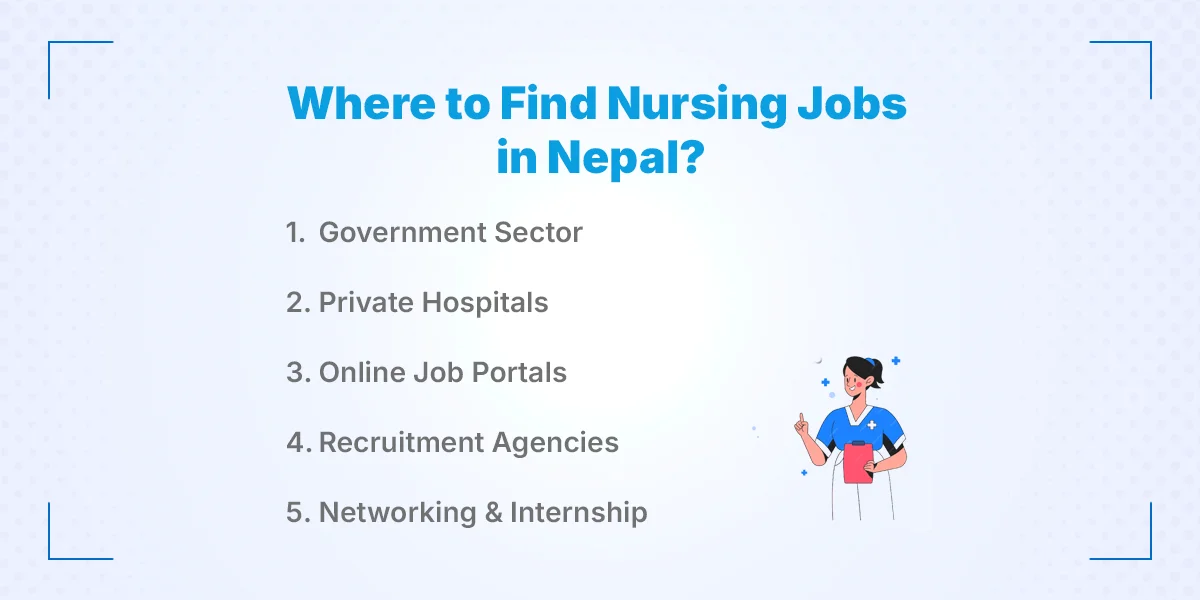
You can find nursing jobs in Nepal through the government sector, private hospitals, trusted online job portals like Kumari Job, recruitment agencies, and professional networking or internship opportunities. These channels cover both entry-level and experienced positions across Nepal. Government openings are more structured, while private and online platforms offer faster hiring. Choosing the right method depends on your qualification, urgency, and career goals.
1. Government Sector
Government nursing jobs are mainly published through the Public Service Commission (PSC) and official health ministry notices. These positions offer strong job security and structured pay scales. Recruitment usually involves written exams and interviews. Competition is high because of long-term benefits and stability. Nurses must regularly check official government websites and newspapers for vacancy announcements.
2. Private Hospitals
Private hospitals frequently hire nurses for general wards, ICU, OT, and emergency units. Large hospitals in cities like Kathmandu, Pokhara, and Bharatpur often recruit throughout the year. Hiring processes are usually faster than government recruitment. Candidates may be selected based on interviews and practical skills. Experience and specialization increase the chances of better salary offers.
3. Online Job Portals
Online job portals have become one of the fastest ways to find nursing vacancies in Nepal. Platforms like Kumari Job regularly publish updated nursing and healthcare openings from both government and private sectors. Applicants can filter jobs by location, experience level, and specialization. Online applications save time and allow direct communication with employers. Creating a strong profile and uploading an updated CV increases visibility.
4. Recruitment Agencies
Recruitment agencies help connect nurses with hospitals and healthcare institutions. Some agencies specialize in healthcare placements, including overseas opportunities. They assist with documentation, interview preparation, and employer coordination. However, candidates should always verify agency credibility before paying any service fees. Trusted agencies can simplify the job search process.
5. Networking & Internship
Professional networking plays a major role in nursing career growth. Internships during nursing studies often lead to permanent job offers. Staying connected with senior nurses, hospital HR teams, and college instructors increases job opportunities. Attending health workshops and training programs also improves visibility. Many hospitals prefer hiring candidates who already completed internships in their institution.
What Skills Are Required for Nursing Career Growth?
Nurses need strong clinical knowledge, clear communication, emergency decision-making ability, and effective teamwork skills to grow in their careers and move into higher-paying or specialized roles.
Technical qualification alone is not enough for long-term success. Hospitals and healthcare institutions look for nurses who can handle pressure, coordinate with doctors, and manage patients confidently. Skill development directly affects promotion, specialization, and salary growth.
1. Clinical Expertise
Clinical expertise is the foundation of a successful nursing career. Nurses must understand patient assessment, medication administration, infection control, and treatment protocols. Strong clinical skills reduce medical errors and improve patient outcomes. As experience increases, nurses can specialize in ICU, OT, pediatric, or emergency care. Continuous training and certifications help maintain updated medical knowledge.
2. Communication Skills
Communication skills are essential for interacting with patients, doctors, and family members. Nurses must clearly explain treatment plans and provide emotional support to patients. Poor communication can create confusion and affect patient safety. Good listening skills are equally important in understanding patient symptoms and concerns. Effective communication also improves teamwork within hospital departments.
3. Emergency Handling
Emergency handling skills allow nurses to act quickly in critical situations. In cases like cardiac arrest, trauma, or sudden complications, fast and accurate decisions can save lives. Nurses must stay calm under pressure and follow emergency protocols confidently. Regular training in CPR and critical care procedures strengthens this ability. Experience in emergency or ICU units further improves response skills.
4. Teamwork and Coordination
Healthcare is a team-based system where coordination is essential. Nurses work closely with doctors, lab technicians, pharmacists, and administrative staff. Strong teamwork ensures smooth patient care and reduces mistakes. Respectful collaboration improves the workplace environment and efficiency. Nurses who demonstrate leadership and coordination skills are often promoted to supervisory roles.
Challenges in Nursing Career in Nepal
The main challenges in a nursing career in Nepal include low starting salaries, frequent night shifts, and heavy workload due to staff shortages in many healthcare facilities.
While nursing offers stability and long-term growth, the early years can be demanding. Many nurses experience physical and emotional stress, especially in busy hospitals. Understanding these challenges helps students prepare realistically for the profession.
1. Low Starting Salary
Low starting salary is one of the biggest concerns for new nurses in Nepal. Many entry-level positions in private hospitals offer modest pay compared to the workload. Even though government benchmarks exist, not all institutions follow the same standard. This can make it financially difficult during the first few years of employment. However, salary usually increases with experience, specialization, and promotion.
2. Night Shifts
Night shifts are a regular part of hospital nursing jobs. Nurses often work rotational shifts, including overnight duty in emergency and ICU units. This can affect sleep patterns, health, and family life. Long-term night duty may cause fatigue and stress if not managed properly. Good time management and proper rest are essential to maintain physical and mental health.
3. Heavy Workload
Heavy workload is common due to high patient numbers and limited staffing in some hospitals. Nurses may handle multiple patients at the same time, especially in government facilities. Documentation, medication administration, and emergency cases add additional pressure. Physical demands such as standing for long hours also increase fatigue. Despite these challenges, many nurses continue in the profession because of job stability and career growth opportunities.
Future Scope of Nursing in Nepal
The future scope of nursing in Nepal is strong, driven by the growth of private hospitals, rising demand for specialized nurses, and increasing international job opportunities. Healthcare services are expanding across urban and semi-urban areas. As medical technology improves, hospitals require more skilled nursing professionals. At the same time, global demand for trained nurses continues to rise, creating new career pathways.
1. Increasing Private Hospitals
Private hospitals are rapidly expanding in major cities like Kathmandu, Pokhara, and Chitwan. New specialty centers, diagnostic labs, and medical colleges are opening each year. This growth directly increases demand for qualified nurses in different departments. Private healthcare institutions also compete to improve service quality, which requires skilled nursing staff. As the private sector grows, job opportunities for nurses will continue to increase.
2. Specialized Nursing Demand
Specialized nursing roles are becoming more important in Nepal’s healthcare system. ICU, OT, dialysis, oncology, and pediatric units require nurses with advanced training. Hospitals prefer candidates with certifications and hands-on experience in specific departments. Specialized nurses often receive better salary packages compared to general ward nurses. Continuous skill development will play a key role in future career growth.
3. Rising International Opportunities
International demand for nurses is increasing in countries like the UK, Australia, Japan, and the Middle East. Many Nepali nurses prepare for language tests and licensing exams to work abroad. Overseas opportunities offer higher salaries and global work exposure. Recruitment agencies and international health programs are actively hiring qualified nurses from Nepal. This trend suggests strong long-term global career prospects for Nepali nursing professionals.
Is Nursing a Good Career in Nepal?
Yes, nursing is a good career in Nepal because it offers stable employment, steady demand in both government and private sectors, opportunities for specialization, and strong international career prospects. While the starting salary in some private hospitals may be modest, long-term growth, promotion pathways, and overseas opportunities significantly improve earning potential. Nursing also provides job security, social respect, and the chance to make a meaningful impact on people’s lives.
Conclusion
The scope of nursing in Nepal continues to grow with expanding career opportunities in government hospitals, private healthcare institutions, academic roles, and NGO projects. Salary potential improves with experience, specialization, and sector choice, while international demand offers even higher earning possibilities for qualified nurses.
With steady job demand, long-term stability, and strong social respect, nursing remains one of the most secure and meaningful professions in Nepal. If you are looking for more job opportunities in the healthcare sector or even in IT and other industries, you can explore updated vacancies through trusted platforms or connect via direct message for guidance.
Frequently Asked Questions
Submit your comments

Get Our App On



What is the Public Relations Officer Salary in Nepal
VIEW DETAILS
What Is the Salary of a Ticketing Officer in Nepal?
VIEW DETAILS
What Is the Salary of a Travel Consultant in Nepal?
VIEW DETAILS
How to Become an Auditor in Nepal
VIEW DETAILS


Loading Comments...