




Finding your first barista job can feel confusing. You see listings online, but the responsibilities, skills, and even the salary are all unclear. It’s easy to feel lost or unsure if you’re ready.
Don’t worry. You’re not alone. Many job seekers struggle to understand exactly what a barista does and what employers are looking for. Knowing the role clearly can save you time, help you prepare, and boost your chances of landing the job.
In this guide, we’ll break down the barista job description step by step. You’ll learn the key responsibilities, must-have skills, training tips, salary expectations, and how to shine in applications and interviews.
In this blog
Who is a Barista?
A barista is a person who makes and serves coffee and other drinks in a coffee shop or cafe. In many places, you will see baristas behind the counter taking orders, using coffee machines, and handing drinks to customers. The main job of a barista is to make great coffee and provide friendly service.
At its heart, the barista role is about coffee and people. Baristas use espresso machines, coffee grinders, and other tools to prepare drinks like espresso shots, cappuccinos, lattes, teas, and more. They follow recipes to make sure each drink tastes good every time.
Baristas also do other tasks that keep the coffee shop running smoothly. These include:
- Taking customer orders and answering questions about the menu
- Operating the cash register or point‑of‑sale (POS) system
- Cleaning and organizing the coffee bar and work area
- Restocking supplies like coffee beans, milk, syrups, cups, and lids
- Making customers feel welcome and helping them choose drinks
Many baristas learn their skills on the job, especially in busy shops where they pick up experience quickly. Some people also take barista training classes to learn more about coffee and brewing methods.
Being a barista is more than just pressing buttons. Good baristas pay attention to detail, stay calm during busy times, and care about giving customers a great experience. If you enjoy working with people and love coffee, being a barista can be a great first job and a stepping stone to more advanced roles in the coffee world.
Core Responsibilities of a Barista
Being a barista is more than just making coffee. You also help customers, keep the café running smoothly, and make sure everything looks clean and welcoming. Each day is busy, and you need to handle drinks, food, and orders carefully. Let’s break down the main responsibilities of a barista so you know what to expect.
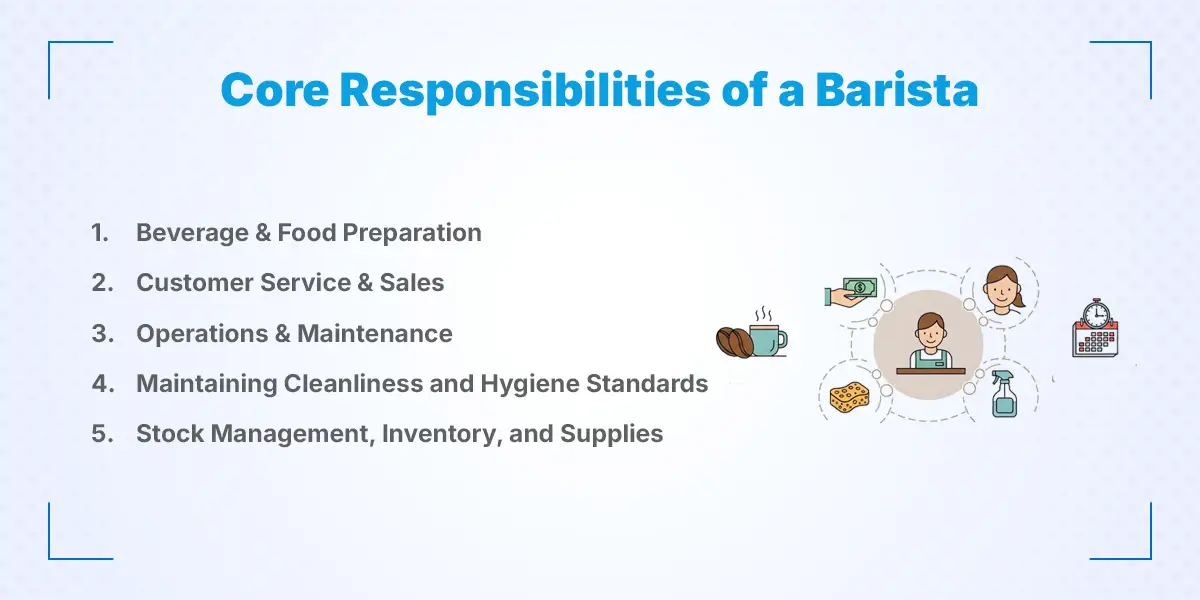
1. Beverage & Food Preparation
A barista’s main job is making drinks and serving light foods. You will prepare coffee, espresso, lattes, cappuccinos, and teas following simple recipes. Many cafés also ask baristas to handle pastries, sandwiches, or snacks. You need to make sure each drink or food item looks good and tastes consistent. Using coffee machines, grinders, and other tools safely is important. Sometimes you may also customize drinks based on what the customer wants. Attention to detail helps keep customers happy and coming back.
2. Customer Service & Sales
Baristas are the face of the café. You greet customers, take orders, and answer questions about drinks or food. Being polite and friendly is very important. Sometimes you might suggest menu items or specials to increase sales. Handling complaints calmly and making customers feel comfortable is also part of the job. Good customer service can make people remember the café and return again.
3. Operations & Maintenance
Baristas operate coffee machines, grinders, and other café equipment daily. You need to check if the machines are working properly before and after your shift. Some maintenance, like cleaning machines or replacing parts, may be needed. Following safety rules prevents accidents. Being responsible for the equipment also saves money for the café. Keeping things organized helps the café run smoothly during busy hours.
4. Maintaining Cleanliness and Hygiene Standards
Cleanliness is a big part of a barista’s work. You should wipe counters, clean coffee machines, and wash utensils regularly. Floors, tables, and chairs also need attention. Handling food safely prevents health problems. Wearing gloves or aprons when needed keeps hygiene high. A clean café makes customers feel safe and comfortable.
5. Stock Management, Inventory, and Supplies
Baristas help track coffee, milk, syrups, cups, and other supplies. You may restock items during your shift or let the manager know when something is running low. Organizing storage areas keeps things easy to find. Proper stock management avoids running out of important items. Some cafés also ask baristas to check expiry dates of food or drinks. Being careful with inventory saves money and ensures smooth service every day.
Education and Training for Baristas
Becoming a barista doesn’t always need a college degree, but knowing the right skills can make a big difference. Training helps you make better coffee, serve customers well, and feel confident at work. Many baristas learn on the job, while others take classes to improve faster. Let’s look at the main ways you can get trained and prepare for this job.
Do You Need Formal Education to Become a Barista?
You don’t need a formal college degree to be a barista. Most cafés hire people who have a high school education or equivalent. What matters more is your willingness to learn and work hard. Good communication, a friendly attitude, and a love for coffee are more important than degrees. Some employers may prefer applicants with certificates, but it’s not always required. The focus is usually on your skills and how well you handle customers.
Barista Training Programs and Certifications
There are training programs in Nepal that teach barista skills step by step. These programs often cover espresso making, brewing methods, and latte art. Certifications from recognized coffee organizations can make your resume stronger. Even short courses give you confidence and show employers that you are serious. Some programs also teach about coffee beans, roasting, and flavors. You can usually find these programs online or in local coffee schools.
On-the-Job Training and Apprenticeships
Most baristas learn a lot while working at a café. On-the-job training helps you understand real customer needs and fast-paced work. Experienced baristas or supervisors guide you and correct mistakes. Apprenticeships are longer programs where you learn every part of the café. You practice making drinks, handling food, and managing orders. This is one of the easiest ways to gain experience quickly.
Specialty Coffee Workshops to Boost Your Skills
If you want to stand out, specialty workshops are great. They teach advanced skills like latte art, brewing techniques, or coffee tasting. These workshops are usually short but very practical. You get hands-on experience and learn tricks that make your drinks look and taste better. Attending them also helps you meet other coffee enthusiasts and professionals. It’s a good way to show your passion for coffee.
Essential Skills to Become a Barista
Being a barista is more than just making coffee. You need the right skills to do your job well, keep customers happy, and handle a busy café. Some skills you can learn on the job, while others take practice and training. Let’s look at the most important skills every barista should have.
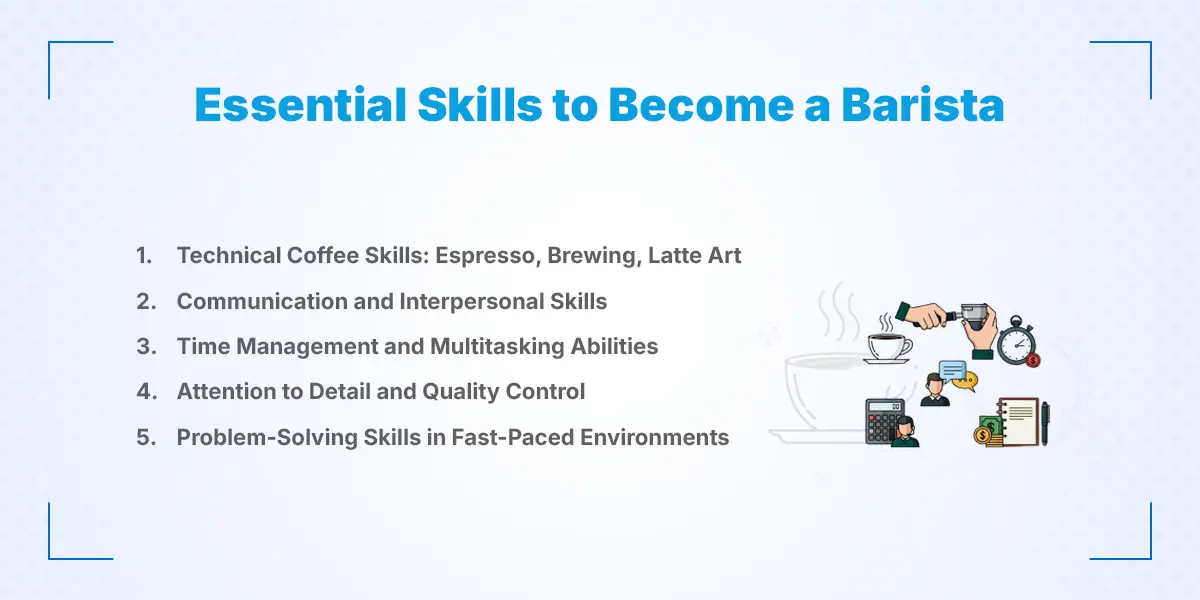
1. Technical Coffee Skills: Espresso, Brewing, Latte Art
A barista must know how to make coffee properly. This includes making espresso, brewing different types of coffee, and creating latte art. You need to follow recipes so drinks taste the same every time. Using coffee machines and grinders safely is very important. Learning how to steam milk and mix drinks takes practice. With time, you can make drinks quickly and perfectly. These skills help you look professional and make customers happy.
2. Communication and Interpersonal Skills
Talking to customers is a big part of being a barista. You greet them, take orders, and answer questions about drinks or food. Being polite, friendly, and patient is very important. You also work with other staff, so good teamwork matters. Listening carefully helps you understand customer needs. Strong communication makes customers feel welcome and valued.
3. Time Management and Multitasking Abilities
Cafés can get very busy, especially during mornings or weekends. You need to make drinks, handle orders, and serve customers at the same time. Prioritizing tasks helps you work faster and stay organized. Multitasking without making mistakes is important. Managing time well prevents long lines and keeps customers happy. With practice, it becomes easier to handle a busy shift.
4. Attention to Detail and Quality Control
A good barista notices small details. Drinks must be the right temperature, with correct portions and good presentation. Food items should be fresh and served nicely. Checking each order before giving it to the customer is important. Small mistakes can affect taste or customer experience. Being careful shows professionalism and care.
5. Problem-Solving Skills in Fast-Paced Environments
Busy cafés can bring unexpected problems. Machines may stop working, orders can get mixed, or customers may be unhappy. A barista needs to stay calm and fix issues quickly. Thinking fast helps you handle problems without stress. Finding solutions while serving customers shows skill and reliability. This makes both customers and coworkers trust you more.
Career Path and Growth Opportunities
Being a barista is more than just making coffee. It can be the start of a long and exciting career if you keep learning and improving. Many baristas begin with entry-level positions, but with experience and dedication, there are plenty of ways to grow in the coffee world.
Most baristas start as entry-level staff, focusing on learning to make drinks, serve customers, and handle daily café tasks. This is the best stage to build confidence and basic skills. Once you are comfortable, you can move up to senior barista or shift supervisor. At this stage, your responsibilities may include:
- Training new staff
- Managing shifts and workflow
- Making sure the café runs smoothly
- Helping with customer satisfaction and quality
With more experience, a barista can become a café manager. Managers handle staff schedules, inventory, ordering, and overall café performance. They also oversee daily operations and ensure the café meets quality standards.
Some baristas choose to specialize in coffee skills, like latte art, coffee roasting, or advanced brewing techniques. Specialization makes you valuable for high-end cafés, hotels, or specialty coffee shops.
There are also opportunities to branch out further. Experienced baristas can:
- Become trainers or workshop instructors
- Work as coffee consultants or product specialists
- Open their own café or coffee business
Attending workshops, practicing consistently, and learning new skills help you stand out. Being a barista is not just a job; it can be a career with many paths. The more you practice, learn, and stay passionate, the higher you can go in the coffee industry.
Salary and Industry Outlook for Baristas
The salary of a barista depends on experience, the city you work in, and the type of café. Most baristas earn a monthly salary, but tips and small bonuses can add extra income too. Salaries are usually higher in big cities like Kathmandu or Pokhara because cafés there are busier and can pay more. Knowing the salary range helps you understand what to expect and how your earnings can grow over time.
Here’s a basic idea of barista pay in Nepal per month:
- Entry‑level barista (0–2 years experience): around NPR 20,000
- With some experience (2–5 years): about NPR 40,000+
- Experienced barista (5+ years): around NPR 50,000 or more
Most baristas in Nepal earn between NPR 20,000 and NPR 50,000+ per month, depending on experience and skills. Beginners might start near NPR 19,550–20,000 per month, while skilled or senior baristas earn closer to NPR 50,000 or more in bigger cafés. Tips from customers and service bonuses also add extra income on top of the base pay.
In smaller towns or local cafés, the salary might be a bit lower, especially if tips are small or rare. In Kathmandu and other big cities, cafés often pay better and give more chances to grow. With time and strong skills, baristas can earn more, move into higher roles, or even switch to better‑paying hospitality jobs or specialty coffee roles.
How to Prepare for a Barista Job Application?
To prepare for a barista job, you need a clear resume, a relevant cover letter, and proof of your skills and experience. Preparing these carefully shows employers you are ready and serious about the role. It also helps you stand out from other candidates in a busy café environment. Let’s break down the key parts of a strong application:
1. Writing a Resume for a Barista Role
Your resume should be short, clear, and focused on relevant experience. Include previous café work if you have any, or other customer service experience. Mention your skills like coffee preparation, food handling, or cash register experience. Highlight any training or certificates you have. Use bullet points for clarity. Keep your resume to one page if possible. Make sure it is free of mistakes and easy to read. A clean, simple CV helps employers see your strengths quickly.
2. Creating a Coffee-Relevant Cover Letter
A cover letter tells the employer why you want the job and what you can offer. Mention your passion for coffee and helping customers. Highlight any experience or training that makes you a good fit. Keep it short: three to four sentences per paragraph is enough. Avoid copying your resume word-for-word. Show enthusiasm and a friendly tone. End with a simple thank-you and your contact details.
3. Highlighting Skills and Training Even as a Fresher
If you are new, focus on transferable skills like teamwork, communication, and reliability. Mention any barista courses, workshops, or coffee-related training you have done. Even small experiences like making coffee at home or volunteering at events can be included. Show willingness to learn and adapt. Use examples to demonstrate your skills. Employers value attitude and learning ability as much as experience. This makes freshers more competitive for the role.
4. Gathering References and Work Samples
References are people who can vouch for your skills or work ethic. Ask former employers, teachers, or trainers who know your work. Work samples can include photos of latte art, brewing techniques, or certificates. Keep these organized and easy to share. You can attach them to your application or bring them to the interview. Having references and samples ready shows professionalism and preparation. It can give you an extra edge over other applicants.
Barista Job Description Sample
A barista plays a vital role in delivering high-quality beverages and creating a welcoming café experience. The following sample job description details the core responsibilities, essential skills, and benefits associated with this role, providing a clear reference for job seekers and employers alike.
We are looking for a friendly and skilled barista to join our café team. As a barista, you will prepare coffee, tea, and light food items while providing excellent customer service. You will help create a welcoming environment for every guest and ensure that every drink meets quality standards.
• Prepare coffee, espresso, and other beverages following standard recipes.
• Serve light food items such as pastries, sandwiches, and snacks.
• Take customer orders accurately and provide friendly service.
• Operate coffee machines, grinders, and point-of-sale systems.
• Maintain cleanliness and hygiene standards in the café.
• Restock supplies and manage inventory as needed.
• Assist in daily operations, including opening and closing tasks.
• Good knowledge of coffee preparation and brewing methods.
• Strong communication and customer service skills.
• Ability to multitask in a busy café environment.
• Attention to detail and a focus on quality.
• Willingness to learn and improve skills.
• Previous café experience or barista training is a plus, but not required.
• Competitive salary and tips.
• On-the-job training and skill development.
• Opportunities for career growth and specialization.
• Friendly and supportive work environment.
Please send your resume and a short cover letter highlighting your interest in coffee and customer service to [email address] or apply in person at [Café Address].
Conclusion
Becoming a barista is more than just making coffee. It’s about serving people, creating a friendly atmosphere, and learning valuable skills that can take your career further. Whether you are starting fresh or have some experience, understanding the role, the responsibilities, and the skills needed will make a big difference. A barista job can open doors to higher positions, specialty coffee roles, or even running your own café one day.
With practice, patience, and a positive attitude, anyone can succeed in this role. If you love coffee and enjoy helping people, working as a barista can be a rewarding and exciting career choice in Nepal.
Frequently Asked Questions
Submit your comments

Get Our App On



What is the Public Relations Officer Salary in Nepal
VIEW DETAILS
What Is the Salary of a Ticketing Officer in Nepal?
VIEW DETAILS
What Is the Salary of a Travel Consultant in Nepal?
VIEW DETAILS
How to Become an Auditor in Nepal
VIEW DETAILS


Loading Comments...