




Many employees feel stressed and worried when their salary is delayed. Monthly salary is important for paying rent, bills, loans, and daily expenses. When the expected payment does not arrive on time, employees often wonder how to ask their employer about the delay without creating conflict or appearing unprofessional.
The best way to request a delayed salary is to communicate politely, follow company procedures, and keep a record of all conversations. In this guide, you will learn what a delayed salary means, how to ask for unpaid wages professionally, how to write a salary follow-up email, and what steps to take if your salary is still not paid.
In this blog
What Is a Delayed Salary?
A delayed salary is a salary payment that an employee does not receive on the scheduled payday set by the employer. Instead of being paid on time, the salary is credited after the expected payment date due to various reasons such as payroll processing issues, banking delays, or administrative errors.
A delayed salary is different from an unpaid salary because a delayed salary is paid later, while an unpaid salary remains outstanding and has not been paid at all. Common reasons for delayed salary payments include cash flow problems, payroll mistakes, bank processing delays, technical issues, and missing employee information.
Why Employees Should Follow Up on a Delayed Salary
Following up on a delayed salary helps employees protect their financial interests and ensures that payment concerns are addressed promptly. Professional communication often leads to quicker resolutions. Employees who document salary-related conversations also create useful records if further action becomes necessary.
- Helps manage personal financial obligations.
- Encourages employers to investigate payment issues quickly.
- Protects employee rights and entitlements.
- Creates written documentation of salary concerns.
- Reduces misunderstandings between employees and management.
How to Ask for Delayed Salary Professionally
To ask for a delayed salary professionally, you should politely contact your employer or HR department through a formal message or email, clearly mention the missing salary period, and request an update on the payment status without using aggressive or emotional language.
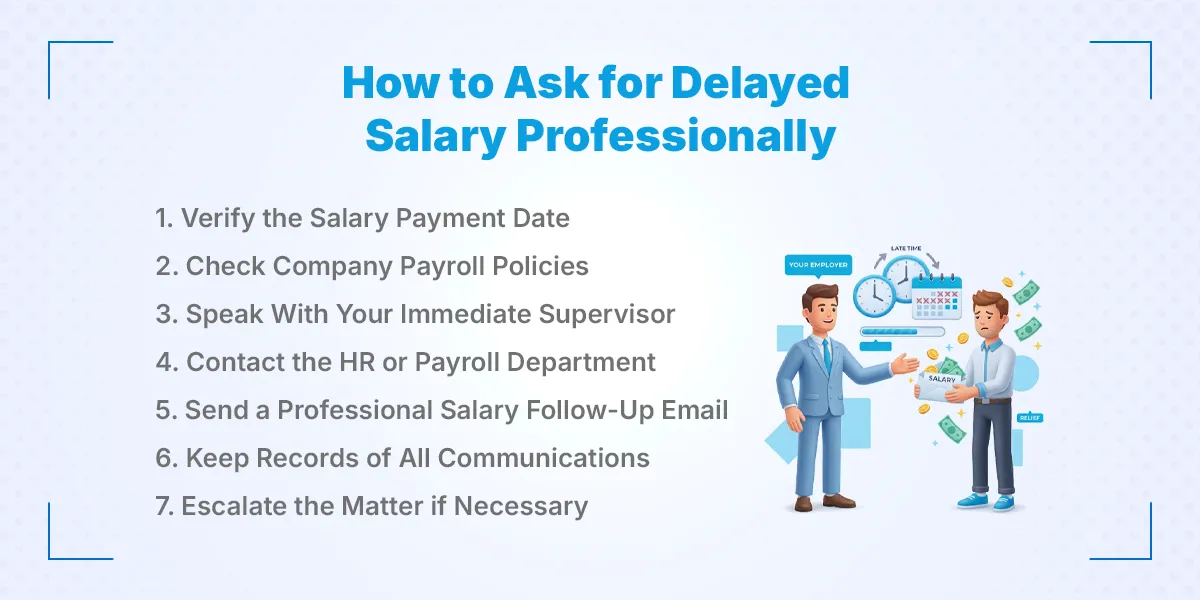
1. Verify the Salary Payment Date
Before raising concerns, confirm the official salary payment schedule. Some delays may result from weekends, public holidays, or bank processing times. Reviewing your employment contract or company handbook can clarify the expected payment date. Verifying this information prevents unnecessary confusion.
2. Check Company Payroll Policies
Payroll policies often explain payment schedules, processing timelines, and procedures for reporting salary issues. Employees should review these policies before contacting management. Understanding company procedures helps ensure that requests follow established channels. This can speed up the resolution process.
3. Speak With Your Immediate Supervisor
Supervisors may already know about payroll delays or company-wide payment issues. A polite conversation can often provide quick answers. Employees should explain the situation clearly and ask for an update on the payment status. Maintaining a respectful tone supports productive communication.
4. Contact the HR or Payroll Department
If the supervisor cannot resolve the issue, contacting HR or payroll is the next step. These departments typically handle salary processing and payment inquiries. Employees should provide relevant details such as their name, employee ID, and expected payment date. Clear information helps payroll teams investigate efficiently.
5. Send a Professional Salary Follow-Up Email
A written email creates a documented record of the request. Employees should clearly state the delayed payment issue and politely ask for an update. Professional language improves the chances of receiving a timely response. Emails also provide evidence if future escalation becomes necessary.
6. Keep Records of All Communications
Employees should save copies of emails, letters, and messages related to salary discussions. Accurate records help track responses and actions taken by the employer. Documentation can also support formal complaints if the issue remains unresolved. Organized records strengthen an employee's position.
7. Escalate the Matter if Necessary
If the salary remains unpaid after multiple follow-ups, escalation may be appropriate. Employees can raise the issue with senior management, company leadership, or relevant labor authorities. Escalation should remain professional and fact-based. The goal is to achieve payment while protecting workplace relationships whenever possible.
Best Ways to Request a Delayed Salary
Different situations may require different communication methods.
- Verbal Request to a Manager: Suitable for minor delays or initial inquiries.
- Formal Email Request: Provides written documentation and clear communication.
- Written Letter to HR: Useful for serious or prolonged salary delays.
- Internal Company Grievance Procedure: Appropriate when normal communication channels have not resolved the issue.
Choosing the right approach depends on company policies and the severity of the delay.
How to Write an Email for Delayed Salary
To write an email for a delayed salary, you should clearly and politely mention your unpaid salary period, include your employee details, and request an update on the payment status in a professional tone. Keep the message short, respectful, and focused on asking for clarification or the expected payment date.
1. Important Details to Include
Employees should include:
- Full name
- Employee ID (if applicable)
- Department or position
- Expected salary payment date
- Brief explanation of the issue
- Request for payment status or clarification
2. Professional Tone and Wording
Professional communication demonstrates respect and encourages cooperation. Employees should avoid emotional or accusatory language. Clear and courteous wording often produces better results. A respectful tone also helps preserve workplace relationships.
3. Common Mistakes to Avoid
- Using aggressive or threatening language
- Making assumptions without facts
- Sending repeated messages within a short period
- Failing to provide necessary payment details
- Ignoring company procedures
Avoiding these mistakes increases the likelihood of a positive outcome.
Sample Delayed Salary Request Messages
Sample delayed salary request messages are short, polite texts or emails used to ask your employer or HR about an unpaid salary. These messages should clearly mention the salary delay and request an update on the payment status in a respectful tone.
You can use simple wording, such as asking for confirmation of the pending salary and the expected payment date. Keeping the message professional, clear, and brief increases the chances of a quick and positive response from your employer.
1. Short Salary Follow-Up Message
Subject: Salary Payment Follow-Up
Dear HR Team,
I hope you are doing well. I would like to inquire about my salary payment for this month, which I have not yet received. Could you please provide an update regarding the payment status?
Thank you for your assistance.
Kind regards,
[Your Name]
2. Professional Email Example
Subject: Inquiry Regarding Delayed Salary Payment
Dear HR Department,
I hope this message finds you well. I am writing to follow up regarding my salary payment, which was due on [Date] but has not yet been credited to my account.
I would appreciate any information regarding the reason for the delay and the expected payment timeline. Thank you for your time and assistance.
Sincerely,
[Your Name]
3. Formal Salary Reminder Template
Subject: Formal Request for Outstanding Salary Payment
Dear HR Manager,
I am writing to formally request an update regarding my salary payment, which remains outstanding beyond the scheduled payment date.
I kindly request clarification regarding the delay and an estimated date for payment. I appreciate your prompt attention to this matter.
Thank you.
Regards,
[Your Name]
What to Do If Your Salary Is Still Not Paid
If your salary is still not paid after follow-ups, you should first contact HR or management again with a polite reminder and request a clear payment timeline. Keep all communication written and professional so you have a record of your complaint.
If the issue is still not resolved, review your employment contract, gather proof of unpaid salary, and escalate the matter to higher management or labor authorities if necessary. This helps protect your rights and increases the chance of getting your salary on time.
1. Follow Up Again Politely
A second professional follow-up may be necessary if no response is received. Employees should reference previous communications and request an update. Persistence combined with professionalism often encourages action. Written follow-ups maintain a clear record.
2. Request a Written Explanation
Employers should be able to explain significant payment delays. A written explanation provides clarity and accountability. Understanding the reason for the delay helps employees evaluate their next steps. Documentation can also be useful if disputes arise later.
3. Review Employment Contract Terms
Employment contracts often contain information about salary schedules and payment obligations. Reviewing these terms helps employees understand their rights. Contract details may support future discussions with management. Employees should keep copies of all relevant documents.
4. Seek Legal or Labor Authority Assistance
When internal efforts fail, employees may consider contacting labor offices or legal professionals. Labor authorities can provide guidance regarding wage payment rights and employer responsibilities. Seeking assistance may help resolve ongoing disputes. Employees should gather all relevant documentation before proceeding.
Employee Rights Regarding Delayed Salary
Employees generally have the right to receive wages according to agreed employment terms. Employers are responsible for paying salaries accurately and on time. Failure to do so may violate labor regulations depending on the applicable jurisdiction. Understanding these rights helps employees respond appropriately to payment issues.
Employer Obligations for Salary Payment
- Pay wages according to agreed schedules.
- Maintain accurate payroll records.
- Address payment errors promptly.
- Communicate clearly regarding payroll issues.
Labor Law Considerations
Labor laws vary by country and region. Employees should review local employment regulations to understand their rights. Government labor departments often provide information about wage-related disputes. Awareness of legal protections helps employees make informed decisions.
Compensation or Penalties for Late Payment
Some jurisdictions may require employers to pay penalties or compensation for delayed wages. These rules depend on local labor laws and employment agreements. Employees should verify applicable regulations before making claims. Professional legal advice may be beneficial in complex situations.
Common Reasons for Salary Delays
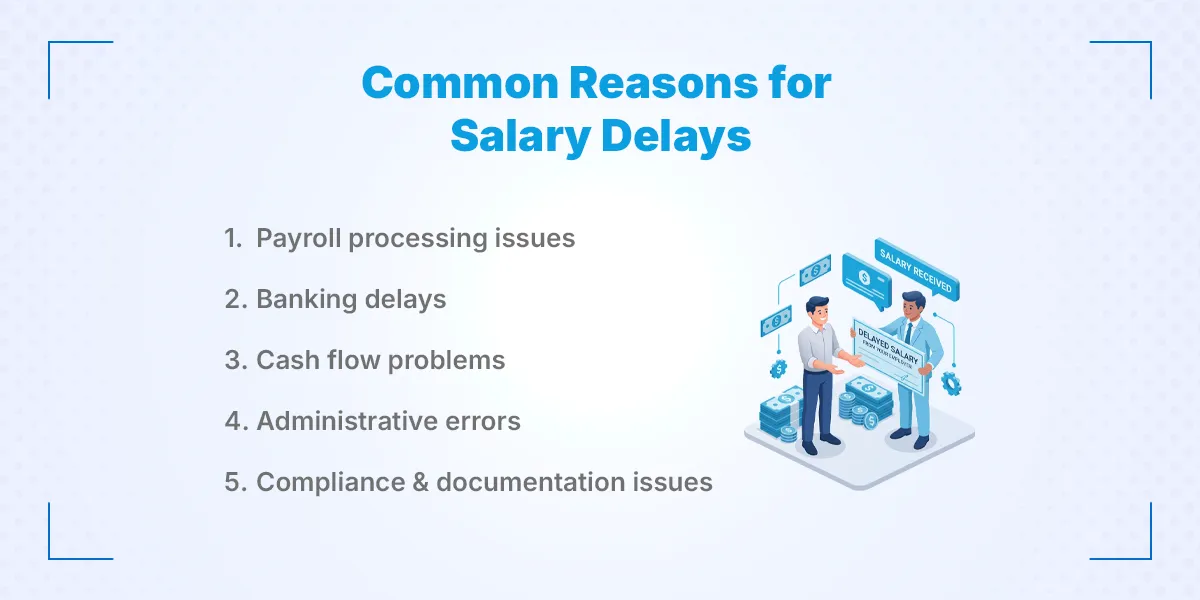
Salary delays can happen for several operational and financial reasons within a company. Understanding these reasons helps employees respond calmly and professionally when payment is late.
1. Payroll Processing Issues
Payroll processing issues occur when there are delays or errors in preparing employee salary records. This can happen due to system glitches, incorrect data entry, or delays in final approval before payment is released.
2. Banking Delays
Banking delays happen when salary transfers are stuck in the banking system or take longer than expected to process. Holidays, system maintenance, or interbank transfer issues can also slow down payments.
3. Cash Flow Problems
Cash flow problems arise when a company does not have enough available funds to pay employee salaries on time. This is common in businesses facing low revenue or financial instability.
4. Administrative Errors
Administrative errors include mistakes in employee details such as incorrect account numbers, missing records, or approval delays from management. These issues often cause unexpected salary postponements.
5. Compliance and Documentation Issues
Compliance and documentation issues occur when employee records are incomplete or not updated according to company or legal requirements. Salary payments may be delayed until all required documents are verified and approved.
Why Professional Communication Matters When Requesting Delayed Salary
Professional communication increases the likelihood of resolving salary issues efficiently. Employers are more likely to respond positively when employees remain respectful and solution-focused. Clear communication also reduces misunderstandings and preserves professional relationships. Maintaining professionalism becomes especially important when escalation is required.
- Preserves workplace relationships.
- Encourages faster issue resolution.
- Demonstrates maturity and professionalism.
- Creates a positive communication record.
- Reduces unnecessary conflict.
Conclusion
The best way to request a delayed salary from your employer is to remain calm, verify payment details, communicate professionally, and follow company procedures. Documenting every interaction and maintaining a respectful tone can significantly improve the chances of resolving the issue quickly.
If the salary delay continues despite repeated follow-ups, employees should review their employment contracts, request written explanations, and seek assistance from labor authorities when necessary. Professional communication combined with proper documentation remains the most effective approach for addressing unpaid salary concerns.
Frequently Asked Questions
Submit your comments

Get Our App On



What is the Public Relations Officer Salary in Nepal
VIEW DETAILS
What Is the Salary of a Ticketing Officer in Nepal?
VIEW DETAILS
What Is the Salary of a Travel Consultant in Nepal?
VIEW DETAILS
How to Become an Auditor in Nepal
VIEW DETAILS


Loading Comments...