



Finding a teacher vacancy in Kathmandu can feel frustrating with endless job posts, unclear requirements, and schools that never reply after you apply. Many candidates struggle with questions like: Which schools are real? What qualifications do I actually need? And how do I make my application stand out? If you’re feeling stuck, you’re not alone.
The good news is: with the right information, the process becomes much easier. In this guide, you’ll learn where genuine teaching jobs are posted, what most schools in Kathmandu look for, and the smart way to apply so you increase your chances of getting shortlisted faster.
In this blog
What Are the Requirements for Teacher Vacancy in Kathmandu?
The basic requirements for teacher vacancy in Kathmandu usually include the right academic qualification, relevant training, a teaching license (when required), and strong communication skills. Most schools look for teachers who can manage classrooms confidently, understand student needs, and teach clearly and responsibly.
Private schools and government schools may have slightly different rules, but overall, the expectations are quite similar.
1. Academic Qualifications (Primary, Secondary, College)
For primary level, many schools prefer +2 or a Bachelor’s degree with basic teaching knowledge. For secondary and higher levels, B.Ed or subject-specific Bachelor’s and Master’s degrees are usually expected. Colleges often require at least a Master’s degree in the subject. The right qualification helps schools trust that you understand both the content and proper teaching methods.
2. Teaching License / TSC (When Needed)
Government and community schools commonly require a teaching license or TSC certification. Private schools may not always make it compulsory, but it still gives you a strong advantage. A license shows that you understand national standards, ethics, and classroom rules. It also improves job security and growth opportunities in the long run.
3. Training (B.Ed, M.Ed, Montessori, etc.)
Teachers with formal training are highly preferred in Kathmandu schools. Programs like B.Ed, M.Ed, Montessori, and early-childhood training help teachers plan better lessons and handle different learning styles. Trained teachers usually feel more confident in class. Schools believe trained teachers can improve student results and overall classroom quality.
4. Experience Preference
Many schools like candidates who have at least 1–2 years of experience, especially for higher grades. However, freshers can still get opportunities if they show confidence and subject clarity. Demo classes help schools see real teaching ability, not just certificates. Experience simply makes classroom management and lesson planning easier.
5. Communication & Classroom Skills
Strong communication and classroom skills are equally important as certificates. Teachers need to explain clearly, maintain discipline, and keep students engaged. Good classroom management builds a positive learning environment. Schools want teachers who guide students patiently and handle situations calmly.
Where Can You Find Teacher Vacancy in Kathmandu?
You can find teacher vacancies in Kathmandu through school websites, trusted job portals like Kumari job, social media groups, personal networks, and walk-in applications. Most schools now post vacancies online first, so staying active and updated really matters.
When you know where to search, you save time and avoid fake or outdated job posts. The key is to check regularly and apply smartly instead of randomly sending CVs everywhere.
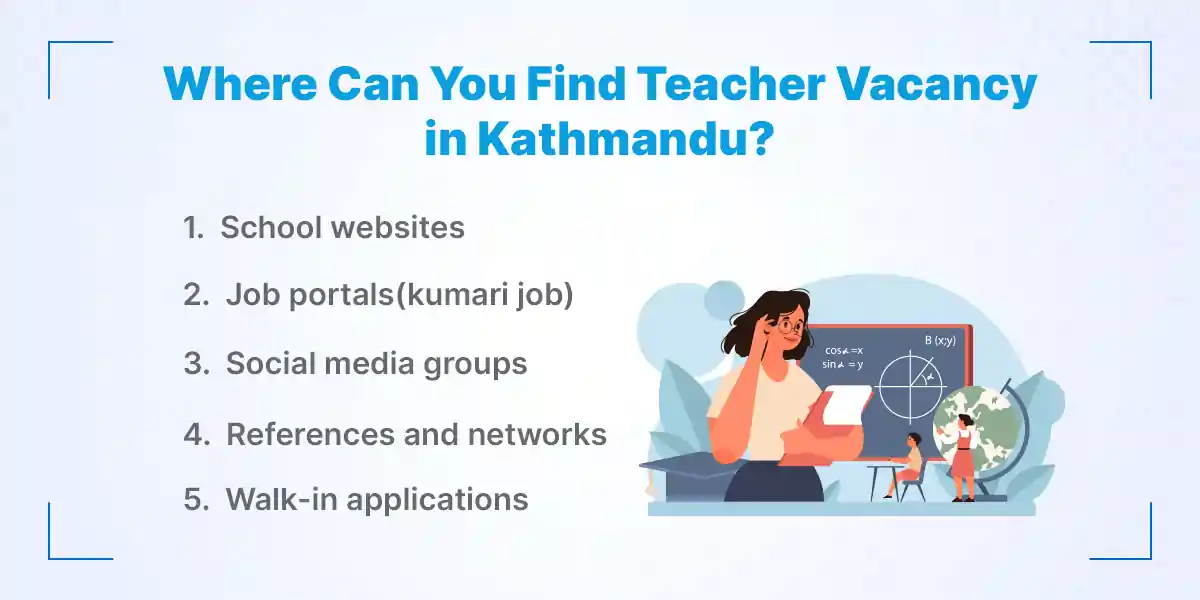
1. School Websites
Many schools in Kathmandu publish vacancy notices directly on their official websites. This is one of the most reliable sources because you are applying straight to the school. You can also learn more about the school culture, facilities, and expectations. Make a list of schools and check their “Career” or “Notice” page once or twice a week.
2. Job Portals (Like Kumari Job)
Job portals such as Kumari Job and other Nepali job sites regularly post teacher vacancies. These portals allow you to filter jobs by location, subject, and experience level. You can also upload your CV and apply to multiple schools easily. Always read the job description carefully before applying so your profile matches what they are looking for.
3. Social Media Groups
Facebook and other social media platforms have many groups dedicated to job sharing and education careers. Schools often post quick hiring updates there when they need teachers urgently. However, some posts may be unclear or incomplete, so always verify the school details before applying. Use social media mainly for leads not as your only job source.
4. References and Networks
Personal connections still play a big role in Kathmandu’s job market. Teachers, seniors, relatives, and former colleagues can recommend you when they hear about openings. Schools often trust referrals because they come from known people. Building relationships in the education field increases your chances of getting shortlisted faster.
5. Walk-In Applications
Some schools accept direct walk-in applications, especially during admission season. You can visit the school with your CV, certificates, and a polite application letter. Meeting the administration face-to-face sometimes creates a stronger impression than email. Just make sure to visit during office hours and dress professionally.
How to Apply for Teacher Vacancy in Kathmandu
To apply for teacher vacancies in Kathmandu, you need a well-prepared CV, a short cover letter, all important documents, and confidence during the interview and demo class. The goal is to present yourself professionally and clearly show why you’re the right teacher for the role.
When your application is organized, schools take you more seriously. A clean process also reduces mistakes like missing documents or weak emails.
1. Prepare a Strong CV / Resume
Your CV should clearly highlight your education, training, teaching experience, and key skills. Keep it simple, clean, and not too long usually 1–2 pages is enough. Add achievements like results, classroom projects, or extra activities you handled. Make sure your phone number and email are correct so schools can contact you easily.
2. Write a Short Cover Letter
A cover letter helps you introduce yourself before the school even meets you. Explain briefly why you want to join the school and why you’re suitable for the position. Keep it polite, professional, and focused on teaching skills not personal stories. A good cover letter increases the chance of getting shortlisted.
3. Collect Important Documents
Before applying, gather copies of your certificates, license (if any), experience letters, citizenship, and recent passport-size photos. Schools may also ask for recommendation letters or character certificates. Keeping everything ready saves time when schools call you suddenly. Organized documents show that you are disciplined and serious about the job.
4. Submit Your Application
Schools may ask you to apply through email, online forms, or by visiting in person. Always follow the instructions exactly as mentioned in the vacancy notice. Write a clear subject line and attach documents neatly (PDF is best). Double-check your files before sending to avoid mistakes.
5. Prepare for Interview and Demo Class
Most schools will ask for an interview and sometimes a demo class. Practice your lesson plan, timing, voice clarity, and classroom control. Be friendly but confident, and focus on student engagement rather than only finishing content. Good demo performance often becomes the final deciding factor for selection.
How much do teachers earn in Nepal?
Teacher salaries in Nepal generally range from around NPR 18,000 to over NPR 100,000 per month, depending on the school type, level, and experience. Government teachers usually earn between NPR 39,000–68,000+ with benefits, while private school teachers may start lower but can earn more in reputed and international schools.
Overall, government jobs provide stability, pension, and allowances, while private schools may offer quicker growth but fewer guaranteed benefits.
| Category | Salary Range (Monthly) | Notes / Benefits |
|---|---|---|
| Government / Community Schools (Public) | ||
| Entry / Lower Levels (Third/Second Class) | NPR 39,000 – 55,000+ | Includes basic pay + allowances |
| Higher Levels (First Class) | NPR 68,000+ | Increases with rank and years of service |
| Newly Appointed Teachers | Approx. NPR 43,000 – 56,000 total | Depends on posting level and location |
| Benefits | — | Pension, festival bonus, SSF, housing/travel allowances |
| Private Schools (Kathmandu / Urban) | ||
| Entry Level | NPR 18,000 – 30,000 | Often lower for beginners |
| Mid-Level / Experienced | NPR 35,000 – 60,000+ | Depends on school reputation and subject |
| Elite / International Schools | NPR 70,000 – 100,000+ | Higher standards and workload |
| Payment Structure | — | Sometimes per-period or contract, fewer benefits |
Why Choose Teaching Jobs in Kathmandu?
Teaching jobs in Kathmandu offer career growth, stability, skill development, and the chance to make a real difference in students’ lives. With so many schools and institutions, motivated teachers have many opportunities to build a strong future.
Kathmandu is also a hub for training, workshops, and new teaching methods, which helps teachers stay updated and confident in their profession.
1. Career Growth
Many schools in Kathmandu provide opportunities to move from teacher to coordinator, vice-principal, or even principal. With experience and training, you can take leadership roles and earn better salaries. Continuous learning and certifications also open doors to colleges and international schools. Teaching becomes a long-term professional journey, not just a short job.
2. Stability
Teaching offers more stability compared to many other private sector jobs. Schools usually operate year-round, and qualified teachers remain in demand. Regular working hours also help maintain work-life balance. This makes teaching a reliable career choice for the future.
3. Skill Development
Teachers constantly develop communication, leadership, planning, and problem-solving skills. Workshops, seminars, and training programs in Kathmandu help teachers improve themselves. These skills are useful not only in schools but also in other careers later. Teaching shapes you into a confident and well-rounded professional.
4. Contribution to Education
Teaching allows you to guide young minds and shape future generations. Helping students learn, grow, and build confidence is deeply rewarding. Many teachers feel proud when their students succeed in life. Choosing this career means contributing directly to the education system of Kathmandu.
Conclusion
Finding a teacher vacancy in Kathmandu becomes easier when you clearly understand the requirements and application process. Many candidates struggle only because they apply without proper preparation. When you organize your CV, documents, and training, you immediately stand out from other applicants. With the right mindset, you can confidently move forward and increase your chances of getting selected.
If you’re looking for education jobs in Nepal, start preparing your CV, check trusted platforms like Kumari Job, and apply smartly your next opportunity may be closer than you think.
Frequently Asked Questions
Submit your comments

Get Our App On



What is the Public Relations Officer Salary in Nepal
VIEW DETAILS
What Is the Salary of a Ticketing Officer in Nepal?
VIEW DETAILS
What Is the Salary of a Travel Consultant in Nepal?
VIEW DETAILS
How to Become an Auditor in Nepal
VIEW DETAILS


Loading Comments...