




Research drives decisions in health, policy, business, and development across Nepal. It helps governments plan better, organizations design stronger programs, and businesses understand people and markets.
If you enjoy studying deeply, observing details, and asking thoughtful questions, you may have already felt drawn toward a research career. Yet, when you search for research jobs in Nepal, the path often feels unclear. Titles vary and real expectations are rarely explained. The roles sound impressive, but how do you actually get there? What qualifications matter most? And which roles truly fit you?
This guide answers those questions, step by step. It explains research jobs in Nepal, the associated roles, qualifications, salaries, and growth paths, step by step. By the end, you will know where you fit, how to prepare, and how to move toward a research career with confidence.
In this blog
What Are Research Jobs in Nepal?
Research jobs in Nepal are roles where you collect, analyze, and interpret information to answer important questions and support decision-making. These jobs involve designing surveys, conducting field studies, analyzing data, preparing reports, and presenting findings to influence policy, programs, or business strategies.
Depending on the sector, you might focus on healthcare, social development, education, environment, economics, or market trends. Essentially, research jobs are about turning curiosity and evidence into meaningful insights that help organizations and communities make informed decisions.
1. Why Research Careers Are Growing in Nepal
Research careers in Nepal are expanding as organizations increasingly rely on data-driven decisions. NGOs, INGOs, and government bodies need research to design effective programs, evaluate policies, and monitor progress. Similarly, universities and think tanks are hiring more researchers for studies that influence development, public health, and education. The growth of technology and access to data has also opened new areas like data analytics, market research, and environmental studies.
2. Who Should Consider a Career in Research
Research careers are ideal for people who are naturally curious, enjoy learning continuously, and like solving problems through evidence and observation. If you are patient, detail-oriented, and enjoy working with data or interacting with communities to understand real-world challenges, research roles can be very fulfilling.
Whether you are a fresh graduate or someone with professional experience looking to specialize, these jobs allow you to combine analytical skills with practical impact, making your work both meaningful and respected.
Types of Research Jobs in Nepal
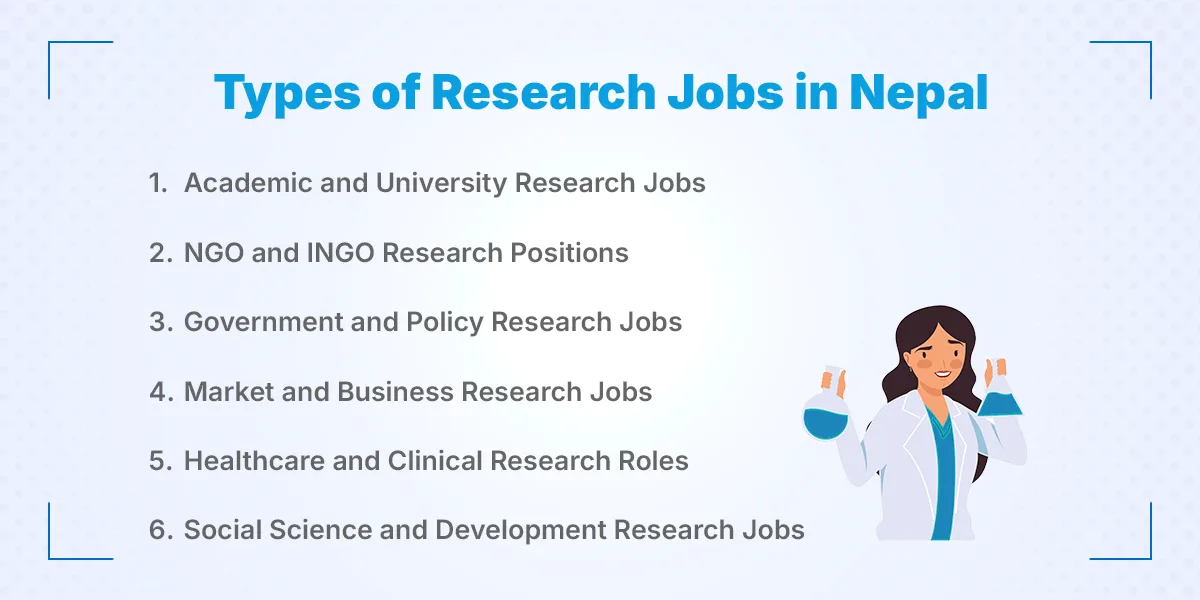
Research jobs in Nepal come in many forms, including academic and university research, NGO and INGO positions, government and policy research, market and business research, medical research, and social science and development research. Each type focuses on different goals and environments. Some are highly field-based, while others focus on data analysis or policy studies. Let’s take a closer look at each type.
1. Academic and University Research Jobs
These positions are primarily found in universities, colleges, and academic institutions. You might work as a research assistant or project researcher on studies ranging from science and technology to social sciences and humanities. Your tasks often include literature review, data collection, analysis, and contributing to publications or academic journals. These roles are ideal if you enjoy structured research, writing, and contributing to knowledge creation.
Academic research jobs also provide opportunities to collaborate with professors, attend conferences, and gain credentials. This can significantly boost your career in teaching or higher-level research roles.
2. NGO and INGO Research Positions
NGOs and INGOs hire researchers to support programs in development, education, health, human rights, and disaster management. These roles often involve fieldwork, such as surveys, interviews, and community assessments, as well as analyzing data to improve program design and outcomes. You may also write reports or policy briefs that help the organization secure funding or influence government policy. This type of research work is highly practical and impact-driven, giving you a chance to see how your findings directly affect communities. It’s ideal for people who enjoy blending fieldwork with analytical thinking.
3. Government and Policy Research Jobs
These roles focus on producing evidence to guide government policies and programs. You may work with ministries, planning commissions, or national agencies to conduct surveys, analyze data, and provide insights for decision-making. The work is structured and follows strict procedures since it can influence national strategies. These jobs are great for people who want to see the real impact of their research and gain experience in policy-making. They can also lead to long-term roles or advisory positions in public administration.
4. Market and Business Research Jobs
Market research jobs are usually in companies, consultancies, or industry groups. You’ll study customer behavior, product performance, or market trends using surveys, interviews, or digital tools. Then, you interpret the data and present findings to managers or clients to guide business decisions. These roles suit people who like fast-paced work and applying research to solve real-world problems. Over time, they can lead to senior positions in marketing, strategy, or analytics.
5. Healthcare and Clinical Research Roles
These roles involve studying medical treatments, public health issues, or patient outcomes. You might work in hospitals, research centers, pharmaceutical companies, or NGOs, running clinical trials, surveys, or health studies. These roles are very critical since your findings can influence health policies or treatment guidelines. These jobs are perfect for people with a science, medicine, or public health background who want to improve patient care and public health. The work is challenging but highly rewarding because it directly impacts lives.
4. Social Science and Development Research Jobs
These roles study human behavior, social trends, and development challenges like education, poverty, gender equality, or migration. You may collect data, analyze surveys, and produce reports for NGOs, governments, or policy organizations. Fieldwork is often involved, interacting with communities to get real insights. These roles suit people who want to make a positive social impact and support evidence-based decisions. Social science research allows you to combine academic skills with practical work that helps improve lives.
Each type of research job offers a unique perspective and skill set, allowing you to find a path that matches your interest, strengths, and career goals. Next, we will explore where you can find these research opportunities in Nepal, so you know exactly where to start your journey.
Where to Find Research Jobs in Nepal?
Research jobs in Nepal can be found on online job portals, career websites, universities and think tanks, NGOs and INGOs, and through government notices or project announcements. Each of these sources caters to different types of research roles, from entry-level assistant positions to senior analytical or policy jobs. Let’s explore each source in detail so you know where to begin your search.
1. Job Portals and Career Websites
Online job portals and career websites are among the easiest ways to find research openings in Nepal. Sites like Kumari Job and LinkedIn regularly post positions across multiple sectors, including NGOs, healthcare, education, and market research. These platforms often provide filters to narrow down roles by experience level, location, or field of study, making it easier to find positions that match your profile.
2. Universities, Think Tanks, and Research Centers
Universities, research institutes, and think tanks frequently hire researchers for academic studies, policy analysis, and applied projects. You may find assistant or project-based roles, internships, or research fellowships that allow you to work on funded studies or collaborate with senior academics. These positions provide exposure to structured research methods, academic writing, and publication opportunities, which are invaluable for long-term career growth. Following university job boards and institute announcements can help you discover roles that are not widely advertised elsewhere.
3. NGO, INGO, and Development Sector Openings
NGOs and INGOs offer research positions that often focus on development programs, health, education, gender, or social issues. Jobs here typically involve fieldwork, data collection, program evaluation, and report writing to influence program decisions or funding proposals. You’ll also find many project-based positions, giving you practical experience and exposure to real-world challenges in communities. Networking with sector professionals and following NGO websites can help you learn about upcoming opportunities before they are widely posted.
4. Government Notices and Project Announcements
Government departments, ministries, and public projects occasionally advertise research roles to support policy planning, monitoring, or statistical surveys. These positions may include policy research, census projects, economic studies, or environmental assessments. Application requirements are often formal, requiring proper documentation, adherence to deadlines, and sometimes competitive exams. Keeping an eye on official notices and subscribing to government newsletters can help you stay updated on these specialized opportunities.
Each of these sources opens a unique pathway to research roles, allowing you to explore options based on your skills, interests, and preferred work environment. Next, we will cover how to apply for research jobs in Nepal, providing a clear step-by-step guide to increase your chances of landing the right position.
How to Apply for Research Jobs in Nepal?
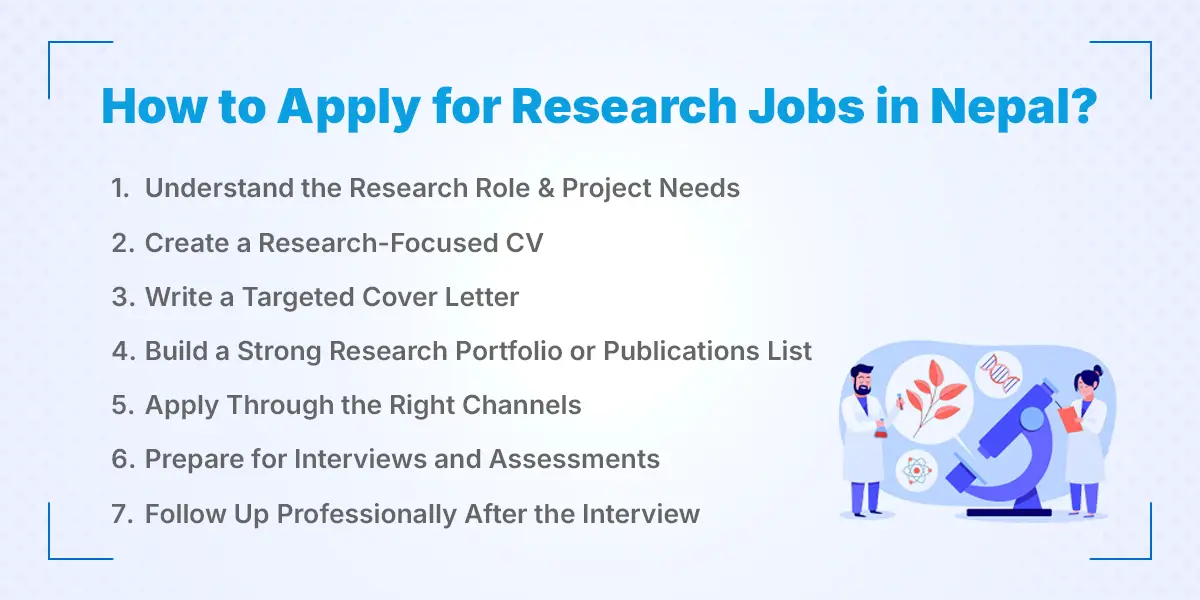
Applying for research jobs in Nepal involves understanding the role and project needs, creating a research-focused CV, writing a targeted cover letter, and building a strong portfolio. Each step helps you stand out as a capable candidate and shows that you understand the expectations of research positions. Let’s break down each step in detail so you know exactly how to prepare.
1. Understand the Research Role & Project Needs
Before applying, carefully review the job description or project terms of reference. Identify what skills, experience, and tasks are expected, whether it’s fieldwork, data analysis, report writing, or community engagement. Understanding these requirements helps you curate your application to show that you are a perfect fit. It also gives you an idea whether the position aligns with your career goals and interests.
2. Create a Research-Focused CV
A strong CV for research roles highlights your experience in data collection, analysis, surveys, and report writing. Include any academic projects, internships, fieldwork, or publications that demonstrate your research skills. Use clear headings and bullet points to make your accomplishments easy to scan. Remember, this document is your first impression, so accuracy and clarity are crucial.
3. Write a Targeted Cover Letter
Your cover letter should explain why you are interested in this specific research role and how your skills match its requirements. Mention your understanding of the organization’s work or the project’s goals to show you’ve done your homework. Keep it concise, professional, and focused on your contribution rather than repeating your CV. A well-crafted cover letter can make you stand out, especially when competing with many applicants for a research position.
4. Build a Strong Research Portfolio or Publications List
A portfolio showcases your practical research experience and outputs. Include reports, survey results, publications, presentations, or even datasets you’ve worked on. If you’re early in your career, academic projects, theses, or case studies can also be part of your portfolio. Linking to online publications or professional profiles can make it easier for recruiters to review your work. A solid portfolio demonstrates your ability to handle the tasks the job requires.
5. Apply Through the Right Channels
Submit your application through the method specified in the job posting, whether it’s an online portal, email, or institutional website. Follow instructions carefully, including file formats, naming conventions, and deadlines. Applying through the correct channels ensures your application is received and considered. Keep track of your applications to stay organized and avoid missing deadlines.
6. Prepare for Interviews and Assessments
Research interviews often test your knowledge of research methods, data handling, and problem-solving skills. You may also be asked to explain your previous projects or approach to fieldwork. Preparing examples, reviewing methodologies, and practicing clear explanations can help you perform confidently. Some positions may include written assessments or case studies, so being ready for practical tasks is important. Showing professionalism and clarity can set you apart from other candidates.
7. Follow Up Professionally After the Interview
After an interview, sending a short, polite follow-up email can reinforce your interest in the role. Thank the interviewers for their time and briefly highlight your enthusiasm or relevant skills. Following up demonstrates professionalism, attention to detail, and genuine interest. It also keeps you on the recruiter’s radar as they make final decisions.
These steps, when done carefully, create a strong application and improve your chances of landing the research role you are aiming for.
Qualifications and Skills Required for Research Jobs
To succeed in research jobs in Nepal, you need a combination of educational qualifications, technical and analytical skills, soft skills, and familiarity with research tools and software. Each of these areas helps you perform effectively, whether you are collecting data, analyzing findings, or presenting insights. Employers look for candidates who can combine knowledge, methodical thinking, and practical skills to deliver meaningful results. Let’s break down these qualifications and skills so you know what to focus on as you prepare for a research career.
1. Educational Requirements for Research Roles
Most research jobs require at least a bachelor’s degree in a relevant field, such as social sciences, public health, economics, statistics, or environmental studies. Some specialized roles, particularly in healthcare, policy analysis, or advanced data research, prefer a master’s degree or higher.
More than academic qualifications, field experience, internships, or research projects matter too. For beginners, strong academic performance, relevant coursework, and research exposure can make a significant difference when applying.
2. Technical and Analytical Skills
Technical and analytical skills form the backbone of research work. You need to be able to collect, clean, and interpret data accurately, identify patterns, and translate findings into actionable insights. Common technical and analytical skills include:
- Data collection and survey design
- Statistical analysis
- Data visualization
- Critical thinking
- Report writing
These skills allow you to produce reliable research outputs that organizations can trust.
3. Soft Skills Needed for Research Professionals
Beyond technical expertise, soft skills are crucial for navigating research projects successfully. Researchers need strong communication skills to explain findings, collaborate with teams, and interact with communities or stakeholders. Attention to detail ensures data accuracy, while patience and persistence help you manage long-term projects.
Problem-solving and adaptability are essential when research conditions or project requirements change. Essentially, soft skills help you apply your technical abilities effectively in real-world situations.
4. Research Tools and Software Commonly Used
Familiarity with research tools and software improves efficiency and credibility in your work. Depending on the field, you may use:
- Statistical software like SPSS, Stata, R, or Python for data analysis
- Survey tools like Google Forms for field data collection
- Spreadsheet software (Microsoft Excel or Google Sheets) for organizing and analyzing data
- Reference, citation and documentation tools
- Presentation software such as PowerPoint or Canva for visualizing findings
Being comfortable with these tools shows employers that you can handle both the technical and practical aspects of research.
Salary Range and Career Growth in Research Jobs
Research jobs in Nepal offer a wide range of salaries depending on experience, organization, and sector. Entry-level research positions typically start at around NPR 20,000 to 35,000 per month, depending on the organization and sector. Mid-level roles such as Research Officers or Analysts may earn between NPR 35,000 and 60,000 monthly. Senior positions, like Research Managers or Principal Investigators, can earn NPR 70,000 and above, especially in INGOs or international projects. Salaries may also include benefits such as project allowances, health coverage, or training opportunities, making the overall compensation more attractive.
Here’s a detailed, up‑to‑date salary range table for research jobs in Nepal based on the latest available data:
| Research Role / Level | Typical Monthly Salary (NPR) |
|---|---|
| Research Assistant (Entry-Level) | 27,000 – 50,000 |
| Research Officer / Associate (Mid-Level) | 40,000 – 87,000 |
| Research Analyst / Mid-Level Associate | ~33,000 – 60,000+ |
| Senior Researcher / Lead Roles | 80,000 – 120,000+ |
| Project Manager / Senior MEL / Specialist | 70,000 – 100,000+ |
| Freelance / Consultant Research Expert | Variable (project-based) |
Understanding the earning potential and career growth can help you make informed decisions about which path to pursue and how to plan your professional development. Alongside salaries, research roles provide opportunities to advance into senior positions, management, or consultancy work. Let’s look at each aspect in detail.
1. Factors That Affect Research Salaries
Several factors influence how much you can earn in research roles. These include your level of education, years of experience, the type of organization (government, NGO, INGO, or private sector), and the field of research. Location and the scale of the project also matter, as urban-based projects or international-funded programs often offer higher pay. Additionally, specialized skills like data analysis, advanced statistics, or policy expertise can increase earning potential significantly.
2. Career Progression in the Research Field
Research careers generally follow a structured path from entry-level roles to mid-level and senior positions. With experience, you can take on more responsibility, lead projects, manage teams, and contribute to strategic decisions. Gaining expertise in specialized fields or methodologies can accelerate career growth and open doors to higher-paying roles. Many researchers also progress into roles that blend management, policy, and consultancy work over time.
3. Future Scope of Research Jobs in Nepal
Research jobs in Nepal are growing quickly because of technology, development needs, and partnerships with local and international organizations. More job openings, funding opportunities, and research projects are appearing in 2026 than ever before.
Technology is driving much of this growth. Since companies, government offices, and schools are increasingly adopting digital tools, demand for research roles in data analysis, AI, and machine learning has grown. Data analysts and data scientists in tech-focused companies can earn between NPR 60,000 and 400,000 per month. Jobs like AI analyst or data researcher are becoming common.
Research in policy and development is also expanding. Institutes, think tanks, and government offices are hiring people to evaluate programs, guide policies, and support evidence-based decisions in health, education, and governance. Moreover, international and national collaborations provide grants and joint project opportunities. Early-career researchers can gain experience, mentorship, and exposure while working on projects that have both local and global impact.
4. Long-Term Career Opportunities and Global Exposure
A research career in Nepal can provide long-term stability and opportunities for international exposure. Experienced researchers may work on global projects, collaborate with international organizations, or even publish work in academic journals. Some move into consultancy, advisory roles, or policy positions, offering flexibility and higher earning potential. Overall, research careers combine personal growth, professional development, and the chance to make a meaningful impact locally and globally.
Opportunities and Tips to Build a Successful Research Career in Nepal
The research sector is growing steadily, with new opportunities in health, education, social sciences, policy, and data-driven studies. Technology, international collaboration, and demand for evidence-based decision-making are opening doors for ambitious researchers who are prepared to seize them. To succeed in this environment, there are several practical steps you can take:
1. Gain Field Experience and Internships
Hands-on experience is critical. Participating in internships, assistant roles, or small-scale projects helps you understand research methods, collect real-world data, and build credibility. Even short-term assignments can provide exposure to fieldwork, surveys, or data analysis that sets you apart from other candidates.
2. Network with Researchers and Institutions
Building professional relationships is key to learning about new projects, mentorship opportunities, and funding possibilities. Attend workshops, seminars, conferences, and connect with senior researchers or alumni in your field. Networking increases visibility and often leads to unadvertised positions or collaborations.
3. Publish Research and Improve Visibility
Sharing your findings through reports, articles, or journals boosts your credibility and demonstrates expertise. Even small publications, case studies, or online research summaries show employers and collaborators that you can produce high-quality outputs. Over time, a strong publication record can open doors to senior and consultancy roles.
4. Upskill Through Training and Certifications
Continuously improving your technical and analytical skills is essential. Learn data analysis tools, survey software, statistical methods, or policy frameworks. Short courses, workshops, or certifications enhance your profile and make you more competitive in a rapidly evolving research sector.
Conclusion
Research jobs in Nepal offer exciting opportunities for those who love learning, exploring, and solving real-world problems. With growing demand in technology, policy, healthcare, and social development, research roles are no longer limited to academia. Research is now central to decision-making in business, government, and NGOs. The pay is well, and opportunities are growing.
The realm of research welcomes all kinds of learners, in multiple fields, at every level, from entry-level assistants to senior researchers and consultants. Begin by gaining hands-on experience, building skills in data and analysis, exploring reputed job portals, and networking with institutions and experts, you can create a meaningful and rewarding career. If you enjoy curiosity-driven work and making an impact, a research career in Nepal could be both fulfilling and future-proof.
Submit your comments

Get Our App On



What is the Public Relations Officer Salary in Nepal
VIEW DETAILS
What Is the Salary of a Ticketing Officer in Nepal?
VIEW DETAILS
What Is the Salary of a Travel Consultant in Nepal?
VIEW DETAILS
How to Become an Auditor in Nepal
VIEW DETAILS


Loading Comments...