




Are you wondering how to gain real-world experience before starting college or a career? Many students feel unsure about where to start and which internships fit their skills and interests. Exploring opportunities early helps you understand workplace dynamics and discover career paths that match your strengths.
In this blog, we will guide you on how to get an internship after 12th grade. You will learn about different types of internships, the skills required, benefits, and practical tips to secure positions successfully. By the end, you will be equipped to apply confidently for an internship in Nepal and make the most of your professional experience.
In this blog
What is an Internship?
An internship is a short-term work experience that allows students to gain practical knowledge and exposure to a professional environment. It provides hands-on learning, helping students understand how industries operate and what skills are required for various roles.
Internships after class 12 provide students with an early opportunity to explore career options before choosing higher education or a full-time job. They help develop essential skills like communication, teamwork, and problem-solving while building confidence and awareness of workplace expectations. These experiences make students better prepared for future academic or professional challenges.
Types of Internships After Class 12
Internships after class 12 come in different forms, allowing students to explore multiple industries and career paths. These opportunities help build practical skills, gain workplace exposure, and understand professional expectations. Choosing the right type of internship can guide future education and career decisions. Students can opt for corporate roles, creative positions, IT-focused projects, NGO work, or research-based experiences depending on their interests and goals.
1. Corporate/Office Internships
Students can work in roles related to HR, marketing, administration, or finance. These internships involve managing documents, assisting with office operations, supporting marketing campaigns, or handling customer communication. Corporate internships teach organisational skills, professional etiquette, and basic business operations. They provide exposure to office workflows, teamwork, and deadlines, helping students understand how businesses function in real life. Additionally, students learn to adapt to professional environments and build confidence in interacting with colleagues and supervisors.
2. Digital Marketing Internships
Internships in digital marketing allow students to work on social media campaigns, SEO projects, content writing, and online branding. Participants learn tools for analytics, social media management, and keyword research. They gain practical experience in creating strategies, writing posts, and measuring campaign success. Pursuing a digital marketing internship in Nepal helps students build portfolios and understand the growing online marketing industry. Moreover, students develop creative problem-solving skills and learn to track and improve campaign performance effectively.
3. IT Internships
IT internships include roles like web development, software testing, coding projects, or basic app development. Students learn programming languages, database management, and project handling. These experiences develop technical skills, problem-solving abilities, and exposure to real IT projects. Securing an IT internship in Nepal provides insight into software workflows, debugging, and collaboration in tech teams. Additionally, students gain an understanding of workplace discipline, task prioritisation, and teamwork in technology-driven projects.
4. Creative & Media Internships
Students can take internships in graphic design, video editing, photography, journalism, or content creation. These roles help develop practical creativity and technical skills in media software. Interns assist in projects, campaigns, and multimedia production. They gain hands-on experience in storytelling, editing, and presenting ideas visually. Furthermore, these internships provide networking opportunities with professionals and exposure to real client projects in the creative industry.
5. NGO and Social Work Internships
Internships in NGOs involve assisting with community projects, volunteering, or event management. Students participate in awareness programs, data collection, or campaign execution. They develop teamwork, leadership, and problem-solving skills. These internships also help students understand social issues, build empathy, and gain experience in managing projects and interacting with communities. Additionally, students learn organisational skills and how to work with diverse teams to achieve social impact.
6. Research and Academic Internships
Students can work with universities, labs, or research organisations on projects in science, technology, or social studies. They learn research methodology, data analysis, and report writing. These internships improve analytical thinking, documentation skills, and understanding of academic work. They are useful for students planning higher education or research-oriented careers. Moreover, students gain exposure to professional mentors and learn to conduct research systematically and ethically.
How to Get an Internship After 12: Step-by-Step
You can get an internship after 12 by identifying your career interests, preparing a strong resume, and applying to relevant opportunities. Following a structured approach increases your chances of selection and helps you gain meaningful work experience. Internships after class 12 provide early exposure to professional environments, skill development, and networking opportunities. Consistency and preparation are key to securing the right position.
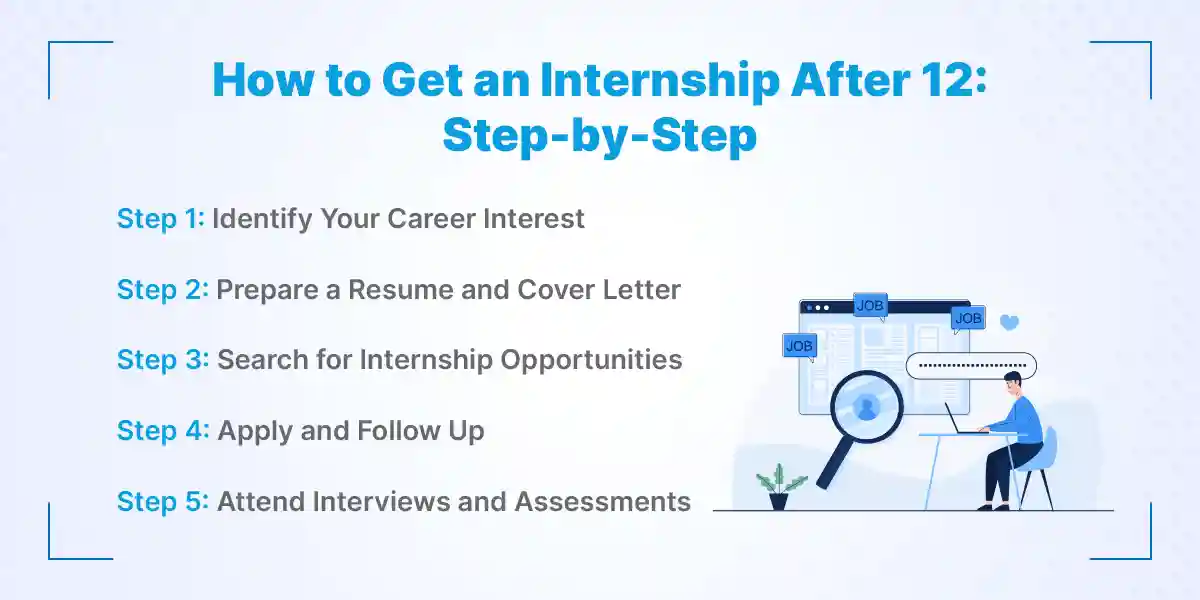
Step 1: Identify Your Career Interest
Start by exploring your strengths, hobbies, and subjects you enjoy. Narrow down industries or roles that align with your interests, such as IT, digital marketing, creative work, or social services. Understanding your preferences helps in choosing suitable internships and ensures a productive learning experience. It also allows you to focus on roles where you can develop relevant skills and gain exposure in your desired field. Additionally, knowing your interests can guide your long-term career planning and help you set realistic goals.
Step 2: Prepare a Resume and Cover Letter
Create a resume highlighting your education, skills, and any prior experience. Include a tailored cover letter explaining your interest in the role and willingness to learn. Even if you have limited experience, emphasising enthusiasm, academic achievements, and transferable skills makes a strong impression. Proofread documents carefully and ensure they reflect professionalism and attention to detail. A well-prepared resume and cover letter increase your chances of standing out among other applicants.
Step 3: Search for Internship Opportunities
Look for internships on platforms like Kumari Job, company career pages, LinkedIn, or college placement portals. Keep track of application deadlines and eligibility requirements. Research organisations to find roles that match your skills and career goals. Staying organised ensures you don’t miss valuable opportunities. Additionally, networking with mentors, teachers, or alumni can help you discover hidden opportunities not listed online.
Step 4: Apply and Follow Up
Submit applications carefully, following the instructions provided by the organisation. Attach your resume, cover letter, and any required documents. After applying, send polite follow-up emails to show interest and professionalism. This demonstrates initiative and can improve your chances of being noticed by recruiters. Following up also helps clarify any questions about the application or interview process, keeping you informed.
Step 5: Attend Interviews and Assessments
Prepare for interviews by understanding the role, company, and industry. Practice common questions and highlight your skills, enthusiasm, and willingness to learn. Some internships may require assessments or short tasks. Performing well in these evaluations shows your commitment and readiness to contribute effectively to the organisation. Additionally, demonstrating a positive attitude and eagerness to learn leaves a lasting impression on recruiters.
Skills Needed for Internship After 12
Skills required for an internship after 12 help students perform tasks effectively, adapt to professional environments, and learn quickly. Strong communication, technical abilities, and organisational skills make candidates more competitive. Developing problem-solving and adaptability ensures interns can handle workplace challenges. Building relevant IT skills also supports learning from mentors, completing tasks efficiently, and building a foundation for future careers. Having the right skill set increases confidence and makes the internship experience more productive and rewarding.
1. Communication Skills
Effective communication is essential for expressing ideas clearly, interacting with supervisors, and collaborating with colleagues. Interns must convey information through emails, reports, and verbal discussions. Listening actively, asking questions, and seeking feedback are also important. Good communication ensures smooth workflow, prevents misunderstandings, and improves overall professional impression. Additionally, it builds relationships, demonstrates professionalism, and enhances teamwork during the internship.
2. Technical or Domain Skills
Interns need knowledge relevant to the field, such as basic programming for IT, digital tools for marketing, or research skills for academic projects. Learning software, platforms, or specialised techniques improves efficiency and contribution to assigned tasks. Hands-on practice and familiarity with industry standards help interns perform confidently. Developing technical skills early prepares students for more advanced roles in the future. Furthermore, it allows interns to showcase competence and adds value to their resume.
3. Time Management and Organisation
Managing multiple tasks and meeting deadlines is crucial for a successful internship. Interns should prioritise work, plan schedules, and track progress. Being organised reduces stress, increases productivity, and ensures the timely completion of assignments. Time management also demonstrates reliability and commitment to supervisors. Additionally, these skills help balance learning new tasks while maintaining quality in all assigned responsibilities.
4. Problem-Solving and Adaptability
Interns must think critically to resolve challenges and adjust to unexpected situations in the workplace. Being adaptable allows them to learn new tasks, handle different roles, and work with diverse teams. Problem-solving skills help complete tasks efficiently and independently when guidance is limited. These abilities improve confidence, decision-making, and resilience. Furthermore, adaptability and problem-solving prepare interns for future roles and long-term career growth.
Eligibility Criteria for Internships After 12
Eligibility criteria for internships after 12 ensure that candidates are prepared to handle workplace tasks and gain meaningful experience. Most internships require completion of class 12 in any stream, while some roles may prefer specific subjects like commerce, science, or arts. Apart from academics, employers look for basic skills, enthusiasm, and a willingness to learn. Meeting these requirements is the first step for those who want to get a job after 12th pass and ensures interns can contribute effectively to assigned projects. Understanding these criteria helps students focus on suitable opportunities aligned with their capabilities and career interests.
1. Academic Requirements
Candidates must have completed class 12 from a recognised board. Certain internships may require specific streams or subjects, such as commerce for finance internships or science for research roles. Maintaining a good academic record demonstrates dedication and learning ability. Some companies also consider grades to shortlist candidates for competitive programs. Meeting these academic requirements ensures eligibility and readiness for professional tasks during the internship.
2. Skills and Competencies
Interns should possess basic skills relevant to the internship, such as communication, technical knowledge, or computer literacy. Competencies like teamwork, time management, and problem-solving are also important. Employers prefer candidates who can learn quickly and adapt to workplace demands. Demonstrating these abilities increases confidence and effectiveness during tasks. Developing skills beforehand improves performance and makes the internship experience more productive and rewarding.
3. Certifications (If Any)
While most internships do not require certifications, having them can give candidates an edge. Examples include computer applications, language proficiency, or industry-specific short courses. Certifications validate knowledge, demonstrate commitment to learning, and increase employability. They can help students secure specialised roles or higher responsibility tasks during the internship. Additionally, certifications enhance resumes and showcase initiative to potential employers.
Benefits of an Internship After Class 12
Internships after class 12 provide students with early exposure to professional environments and practical learning. They allow students to explore different career options and understand workplace expectations. Internships also help in skill development, building resumes, and gaining confidence. Engaging in real-world tasks prepares students for higher studies or full-time employment. Overall, internships create a foundation for professional growth and personal development while offering valuable industry insights.
1. Practical Experience
Internships give hands-on experience in real work scenarios. Students learn daily tasks, industry workflows, and job responsibilities. They gain insight into workplace culture and expectations. Practical exposure also helps in applying academic knowledge to professional tasks. This experience builds competence, understanding of job roles, and readiness for future opportunities.
2. Resume and Skills
Completing an internship strengthens resumes and highlights relevant skills. Students develop technical abilities, soft skills, and work ethics. Employers value candidates with prior exposure, even at the entry level. Skills gained during internships enhance employability for higher education or job opportunities. Additionally, documented experience improves credibility and increases chances of selection in competitive roles.
3. Networking
Internships allow students to connect with mentors, colleagues, and industry professionals. Building relationships can open doors to future internships, jobs, or career guidance. Networking helps in understanding industry trends and expectations. Maintaining professional contacts increases exposure to opportunities beyond the internship. Strong networks also provide support, feedback, and recommendations for career advancement.
4. Confidence
Internships help students gain confidence in performing tasks and interacting in professional settings. Exposure to real responsibilities reduces hesitation and fear of mistakes. Confidence grows as students complete assignments and receive feedback. This boosts self-esteem and prepares them for future roles. Additionally, confident interns can communicate effectively and demonstrate readiness for higher responsibilities.
Where to Find an Internship After 12?
You can find an internship after 12 through online job portals like Kumari Job, LinkedIn, and company career pages. These platforms regularly update opportunities suitable for recent graduates and provide details about application procedures. Exploring multiple sources increases the chances of finding relevant internships. Additionally, college placements and networking events can connect students with industry contacts for potential positions.

1. Online Job Portals
Job portals like Kumari Job list internships across industries and locations. Students can filter by sector, duration, or eligibility. Detailed descriptions and application links make the process easier. Regularly checking portals ensures timely applications. These platforms also provide tips for resumes and interview preparation, increasing chances of selection.
2. LinkedIn
LinkedIn offers professional networking and internship postings from local and global companies. Students can follow companies, join relevant groups, and apply directly to openings. Creating a strong profile increases visibility to recruiters. LinkedIn also allows direct messaging to hiring managers for inquiries. Engaging with content and connections can lead to more internship opportunities.
3. Company Career Pages
Many organisations post internships directly on their career or recruitment pages. Students can apply by submitting resumes and cover letters as per instructions. Checking company websites ensures accurate information and eligibility details. Some companies also offer exclusive internships not listed elsewhere. Following company updates improves the chances of early applications.
4. Facebook Groups
Certain Facebook groups focus on internship and job opportunities for students. These groups share openings, application deadlines, and tips. Joining relevant groups helps students stay informed about new positions. Members can also ask questions and receive guidance from peers. Active participation increases awareness and access to niche internships.
5. College Placements
Colleges often organise placement drives or internship fairs for students. Career offices connect students with companies offering structured programs. Placement events guide applications, interviews, and resumes. Networking with alumni or visiting company representatives can lead to valuable opportunities. Participating in college placements enhances chances of securing quality internships.
Tips to Succeed in an Internship After 12
To succeed in an internship after 12, students must maintain professionalism, stay proactive, and make the most of learning opportunities. Completing tasks efficiently while developing skills and documenting achievements enhances growth. Building relationships with mentors and colleagues opens doors for future roles. Following these tips ensures a productive, rewarding, and career-boosting internship experience.
1. Be Punctual and Professional
Arrive on time and maintain a professional attitude throughout the internship. Meeting deadlines, following workplace etiquette, and dressing appropriately show reliability. Being punctual and professional builds trust with supervisors and colleagues. It also creates a positive impression, increasing chances for recommendation or full-time opportunities.
2. Learn Actively and Take Initiative
Engage actively in assigned tasks and ask questions to understand processes better. Volunteering for additional responsibilities demonstrates enthusiasm. Learning from mentors and observing workplace practices improves skills and knowledge. Taking initiative highlights dedication and sets interns apart from peers. It also enhances confidence and prepares students for future challenges.
3. Document Your Work and Skills
Keep a record of projects, achievements, and skills gained during the internship. Maintaining a portfolio or log helps showcase capabilities to future employers. Documentation reflects progress and provides material for resumes and interviews. It also helps evaluate personal growth and areas needing improvement. Well-documented experience adds credibility and professionalism.
4. Build Connections
Interact with mentors, colleagues, and industry professionals to establish relationships. Networking can provide guidance, references, and potential job leads. Maintaining positive communication and showing interest in learning strengthens professional bonds. Strong connections increase exposure to opportunities and support career growth beyond the internship.
Conclusion
Internships after class 12 provide a strong foundation for students to explore careers and gain real-world experience. They help develop practical skills, build resumes, and increase confidence in professional environments. Engaging in internships also allows students to identify their interests and prepare for higher education or full-time employment.
By actively learning, documenting work, and networking during internships, students can maximise their growth and future opportunities. Applying through platforms like Kumari Job, company career pages, and LinkedIn ensures access to diverse roles. A proactive and professional approach makes internships a valuable step toward a successful career.
Frequently Asked Questions
Submit your comments

Get Our App On



What is the Public Relations Officer Salary in Nepal
VIEW DETAILS
What Is the Salary of a Ticketing Officer in Nepal?
VIEW DETAILS
What Is the Salary of a Travel Consultant in Nepal?
VIEW DETAILS
How to Become an Auditor in Nepal
VIEW DETAILS


Loading Comments...