



Many graduates want hospital work yet feel stuck. Skills exist, but no guidance. Vacancies appear, but applicants remain unseen. Freshers fear interviews. Others doubt their course choice. These pain points block careers, create stress, delay earnings, lead people to take on unrelated jobs, and foster frustration over missed opportunities.
In this blog, readers learn clear steps on how to get jobs in hospitals in Nepal. You see what hospital roles mean, required training, places to apply, and simple actions that improve hiring chances. This guide promises focused advice without confusion, helping seekers move from searching to securing work, reducing anxiety, and building direction.
In this blog
What Are Hospital Jobs in Nepal?
Hospital jobs in Nepal are roles that serve patient care, hospital administration, and clinical operations. These positions range from doctors, nurses, and technicians to reception staff, billing workers, HR teams, and support crews. Hospital employment offers stable income, respected service, and a chance to impact lives.
Hospitals act as major employers in cities and rural areas. Private hospitals, government facilities, clinics, nursing homes, and health centres hire staff for medical and non-medical duties. Workers gain exposure, learn teamwork, and build practical skills. Many find long careers because hospitals expand, new units open, and services grow.
Why Hospital Jobs Remain in Demand?
- Nepal’s growing population needs continuous care.
- More private hospitals increase hiring.
- People value medical services, creating steady roles.
- Families seek treatment often, driving the workload.
- Training institutes produce job seekers each year.
- Cities like Kathmandu and Pokhara add medical centres.
- Many workers stay long term, so new applicants fill gaps.
Types of Hospital Vacancies in Nepal
Hospitals in Nepal hire workers for medical, support, and administrative duties, offering varied hospital job roles for many applicants. Vacancies suit freshers, trained staff, and specialists. Growing facilities open new units, creating more jobs each year. Candidates choose roles based on skill, education, and interest. Each category supports patient treatment, service delivery, and smooth hospital function.
1. Clinical Roles
Doctors diagnose illness, prescribe treatment, and make medical decisions. Nurses manage bed care, medicines, monitoring, and emotional support for patients and families, and many students aim to get nursing jobs because of the growing demand. Lab technicians run blood tests, culture studies, and diagnostic checks that help doctors confirm conditions. Pharmacists dispense medicines, explain dosage, prevent misuse, and maintain proper stock. Radiographers operate imaging equipment such as X-ray, CT scan, or ultrasound to detect injuries or disease. Physiotherapists support mobility, pain relief, recovery after injury, and long-term rehabilitation plans.
2. Non-Clinical Roles
Receptionists greet visitors, register patients, manage phone calls, and guide people to the correct departments. Admin officers coordinate departments, organise schedules, handle records, and support management tasks. HR assistants manage hiring, attendance, performance checks, and staff needs. Account staff oversee billing, payroll, financial reports, and payment procedures. Customer relations workers solve complaints, collect feedback, and maintain satisfaction. Housekeeping supervisors make sure wards, beds, and floors stay clean and safe. Store or inventory managers track supplies, medicines, and tools, and ensure departments receive what they need.
3. Emergency and Support Roles
Ambulance staff respond to urgent calls, give first aid, and move patients to hospitals safely. Medical social workers counsel families, arrange networks for financial help, and link patients to community resources. Patient care attendants support movement, feeding, hygiene needs, and basic comfort tasks during recovery. These roles keep hospitals running smoothly by filling gaps in direct care and emergency support.
Qualifications Required for Different Hospital Jobs
Hospital jobs in Nepal need different qualifications based on the role level. Some roles accept +2 graduates, while others ask for diplomas or professional degrees. Hospitals value skill, training, and practical exposure. Workers grow faster when they upgrade skills and complete relevant courses. Matching your education with the right position increases hiring success and long-term growth.
1. Entry-Level Roles
Office assistants, ward helpers, data entry workers, and front desk staff support daily tasks in wards and reception counters, making them common entry level roles for new workers. These positions handle filing, basic patient coordination, floor support, and visitor guidance. Most hospitals accept +2 or vocational training for these vacancies because workers learn duties on the job. Freshers start here to gain experience, then move to higher roles with added training.
2. Mid-Level Technical Roles
Mid-level jobs include health assistants, lab technicians, radiography staff, and pharmacy workers responsible for technical services. These roles need diplomas or bachelor's degrees since workers run tests, handle samples, assist procedures, or dispense medicine. Practical training and internship experience improve hiring chances because hospitals trust workers with patient health. Skills such as accuracy, record keeping, and safety knowledge matter a lot.
3. Specialist and Clinical Roles
Doctors, nurses, pharmacists, physiotherapists, and MSc-level specialists make clinical decisions and oversee treatments, which places them above roles like lab technician’s paygrade. These positions demand MBBS, MD, BSc Nursing, BPharm, or postgraduate degrees because they carry major responsibility for diagnosis and care. Candidates must hold registration or licensing, ensuring they meet national standards before serving patients. Many continue advanced training to qualify for specialised departments.
4. Soft Skills Hospitals Look For
Hospitals prefer staff who show patience, empathy, and the ability to calm people during stress. Communication matters because workers interact with patients, relatives, and team members daily. Teamwork helps departments function without conflict, improving service quality. Computer skills support billing, reporting, and data entry tasks that are now digital in many hospitals. Continuous improvement in these areas builds confidence and career growth.
Where to Find Hospital Jobs in Nepal?
You can find hospital jobs in Nepal on job portals like Kumari Job, hospital career pages, training institutes, and through personal contacts. Many hospitals publish openings online, while others rely on referrals or walk-in notices. Candidates who search across these channels get faster results. Using multiple sources boosts visibility and increases hiring chances.
1. Online Job Portals
Kumari Job posts verified hospital vacancies suitable for freshers and experienced workers. Other hospitals maintain dedicated career pages where applicants can apply directly. Job seekers create accounts, upload CVs, set alerts, and track shortlisted roles. Checking portals daily helps avoid missing seasonal or urgent postings, especially for nursing or admin jobs.
2. Training Institutes and Affiliations
Nursing colleges, pharmacy centres, and clinical training schools often link students to hospitals through placements. Many institutions conduct career counselling and recommend students to HR teams after internships. Hospitals trust these referrals because trainees already understand procedures. Students who stay active with their institute network often secure first jobs faster.
3. Networking and Referrals
Internships help workers meet doctors, nurses, and managers who influence hiring decisions. Fellow students share leads, interview questions, and vacancies they notice. Senior staff recommend reliable interns when departments require new workers quickly. Networking opens doors to hidden jobs not posted publicly and speeds up selection.
4. Direct Walk-in and Hospital Notice Boards
Some hospitals announce hiring through reception posters or notice boards placed near entry gates. Applicants visit in person, submit CVs, and attend walk-in interviews within days. This method favours locals and freshers seeking immediate work exposure. Showing a consistent presence proves interest and allows interaction with decision makers.
How to Apply for Hospital Jobs in Nepal?
You can apply for hospital jobs in Nepal through job portals, hospital websites, walk-ins, and referrals. Applicants who follow a simple process get faster results. A clear CV, proper documents, and interview readiness improve selection chances. Consistency matters because follow-up and repeated applications attract attention.
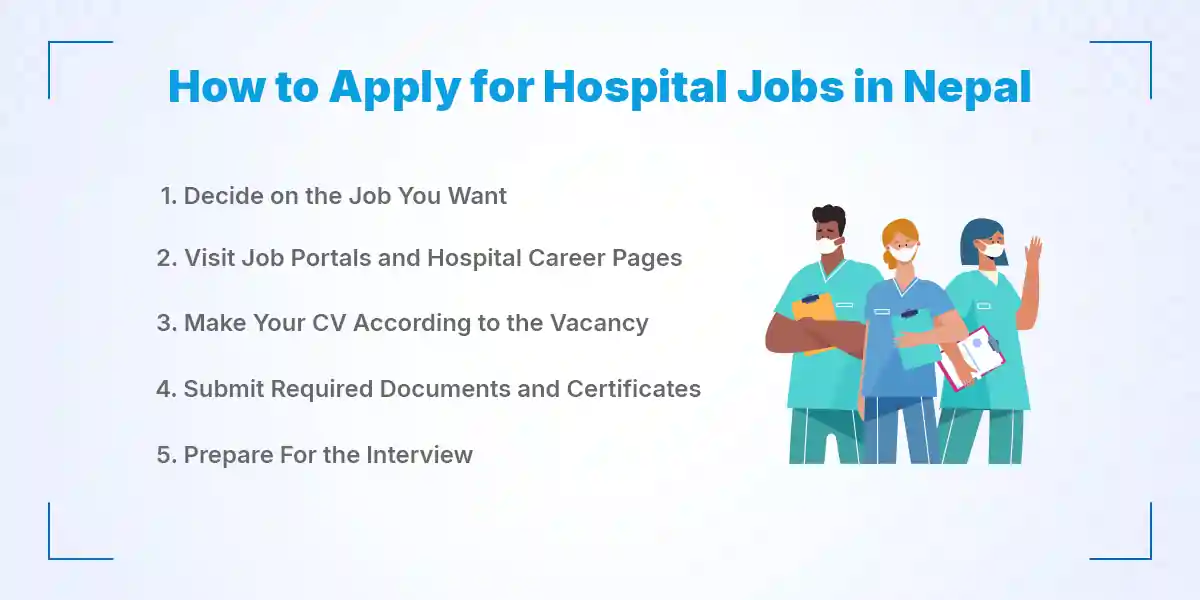
Step 1: Decide on the Job You Want
Identify roles that match your skills, training, and interest, such as clinical or administrative positions. Study job descriptions to know duties, shift needs, and required training. Compare your strengths with job expectations to avoid mismatches. Clear targets save time and increase your success rate.
Step 2: Visit Job Portals and Hospital Career Pages
Browse portals like Kumari Job and hospital career sections for verified openings on a daily basis. Create accounts, enable alerts, and track applied positions. Some hospitals advertise only on their websites, so checking career pages brings hidden vacancies. Applying quickly helps because medical facilities often recruit fast.
Step 3: Make Your CV According to the Vacancy
Write a professional CV that highlights internship work, patient handling, software skills, and relevant courses. Use short points so hiring teams understand your profile in seconds. Customise sections to match each vacancy, especially for technical or ward-based roles. A specific CV shows effort and increases shortlisting chances.
Step 4: Submit Required Documents and Certificates
Attach academic certificates, character letters, license copies, and training proof as requested. Make sure files are clear and readable before uploading. Follow submission rules, whether online or at front desks, to avoid rejection. Proper document handling shows responsibility and professionalism.
Step 5: Prepare for the Interview
Review common hospital interview questions related to teamwork, patient care, and shift flexibility so you can prepare for interview success. Practice answering with confidence and keep responses short and clear. Maintain a neat appearance and a polite tone during interactions. Good preparation helps you stand out and convert applications into offers.
Training and Courses That Improve Hospital Hiring Chances
Special courses increase hiring chances in hospitals because they show skill and readiness for work. Hospitals prefer workers who bring practical ability, not just degrees. Job seekers who complete training programs move faster into roles than those without exposure. Courses help freshers stand out during interviews and build confidence in real tasks.
1. Nursing Diplomas and Certificates
Nursing diplomas teach patient care, medicine handling, basic procedures, infection control, and ward duties. Students work in real hospitals during their practicum, which builds familiarity with rounds, reporting, and shift discipline. These programs prepare candidates for roles such as staff nurse, nursing assistant, or OPD support. Hospitals value these credentials because trained workers understand protocols and need less coaching during duty.
2. Lab and Radiology Training
Lab and radiology training build competence in sample collection, microscopy, reporting, X-ray operation, ultrasound support, and machine safety. Trainees learn how to read basic results and assist specialists with tests. Hospitals prefer certified technicians because accuracy affects diagnosis and treatment outcomes. These courses open opportunities in pathology labs, diagnostic centres, radiology units, and emergency departments.
3. Hospital Administration and Management Training
Administration training covers record keeping, billing, documentation standards, software usage, and patient flow coordination. Learners understand hospital hierarchy, reporting formats, appointment systems, and insurance desk operations. Graduates qualify for front desk jobs, OPD coordination, admission desk roles, and office assistant duties. Hospitals appreciate candidates with admin training because they adapt faster and reduce workload on supervisors.
4. Customer Care Training
Customer care training develops communication skills, conflict resolution, complaint handling, and calm interaction with emotional families. Trainees learn how to guide patients, deliver information without confusion, and maintain a positive tone during busy hours. These abilities help in reception, call centre desks, ward support, and service quality units. Hospitals appreciate customer care skills because patient satisfaction relies heavily on interaction quality.
Salary Expectations in Nepali Hospitals
Salary expectations in Nepali hospitals range by role, skill, and employer type. Entry staff such as CMAs or ANMs earn around NPR 18000 to 30000 monthly. Staff nurses often receive NPR 30000 to 65000 or more, while new doctors earn NPR 45000 to 80000 plus benefits. Senior specialists in private settings can reach NPR 200000 to 400000 or more, making the average salary of doctors careers notably higher than other clinical roles.
1. Entry Level Ranges
Entry workers such as CMAs, ANMs, ward assistants, and front desk staff earn NPR 18000 to 30000 based on hospital size and location. Fresh nurses start within NPR 15000 to 25000, depending on shift duties. Doctor interns earn around NPR 12000 to 25000 during training. Growth happens as workers gain confidence and handle independent tasks.
2. Professional and Skilled Roles
Mid-level nurses with three to seven years of experience earn NPR 30000 to 50000 because they manage patient units more independently, showing a clear salary range of nurse progression. Health assistants receive NPR 25000 to 60000 based on exposure and skill proof. Radiographers, lab technicians, and pharmacy staff earn similar figures when they show accuracy and reliability. These salaries increase faster in private hospitals with busy departments.
3. Specialist Roles
General physicians earn NPR 40000 to 80000 in early years and cross NPR 90000 as experience grows, while highly skilled areas like the salary of anesthesiologist often fall in higher brackets. Senior doctors, consultants, or surgeons move beyond NPR 200000 in private hospitals due to expertise and patient load. Government specialists receive stable income with benefits rather than very high starting salaries. Specialist nurses, such as ICU or emergency nurses, also receive higher pay than regular units.
4. Growth Potential
Growth depends on skill, training, location, and hospital reputation. Workers gain raises when they handle bigger duties or move to larger facilities. Completing advanced training or higher degrees leads to promotions. Hospitals reward reliable staff because patient care depends heavily on trusted workers.
Conclusion
A career in hospitals gives stable income, community respect, and a chance to support recovery for families every day. Jobs range from reception to surgery, so candidates have multiple paths based on education and interest. Success depends on choosing the right role, gaining relevant training, and applying consistently instead of waiting for perfect timing.
Nepal’s healthcare sector continues expanding as private hospitals, clinics, and government centres open new units. This growth creates steady vacancies for freshers and experienced workers. Job seekers who stay updated, learn skills, network, and prepare for interviews secure work faster. Focus on learning, confidence, and persistence so your effort converts into employment and long-term progress.
Frequently Asked Questions
Submit your comments

Get Our App On



What is the Public Relations Officer Salary in Nepal
VIEW DETAILS
What Is the Salary of a Ticketing Officer in Nepal?
VIEW DETAILS
What Is the Salary of a Travel Consultant in Nepal?
VIEW DETAILS
How to Become an Auditor in Nepal
VIEW DETAILS


Loading Comments...