




Have you ever thought about working in an embassy? Many young people in Nepal dream of it because these jobs come with good pay, stable careers, and international exposure. Embassy jobs in Nepal are seen as very secure, and they also give you a chance to experience global work culture while living here at home.
Now imagine working in an environment where you meet people from around the world every day. You gain knowledge, learn new cultures, and even build connections that last a lifetime. These jobs are not just about earning money; they are about growth, too. If you are serious about your future and want to move ahead, embassy work can be a golden choice. Let’s explore how you can build your path toward it.
In this blog
Why Choose an Embassy Job in Nepal?
Working in an embassy gives you both stability and growth. Unlike many private jobs that are uncertain, embassies usually provide long-term opportunities. The work environment is different from local jobs because you get exposure to international rules and systems. It also feels more professional, and people value the experience highly. For many, the prestige of working in an embassy is enough motivation.
Another strong reason to choose an embassy job is the benefits you receive:
- Good salary packages compared to local jobs.
- A chance to meet and work with foreign nationals.
- Opportunities to learn about global culture.
- Career growth and training support.
Most importantly, embassy jobs open the door for future opportunities. Once you have embassy experience, you may get chances to work abroad or apply for higher-level roles. Even in Nepal, employers respect this background, so it becomes easier to grow. If you are someone who wants more than just a paycheck, this career could be perfect for you.
Types of Embassy Jobs in Nepal
Embassies in Nepal offer a wide variety of jobs. Some are simple and focus on day-to-day office tasks, while others need more training and expertise. People from different fields like management, IT, and language studies can find a role that matches their skills. These jobs are usually divided into categories, and each has its own requirements and responsibilities.
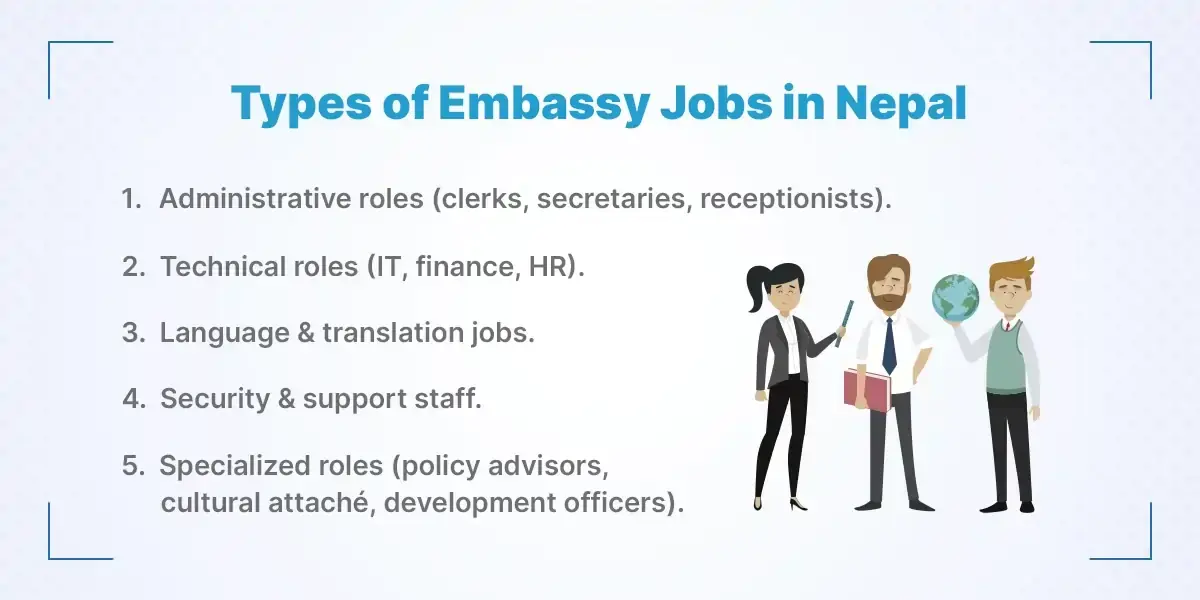
1. Administrative Roles
Administrative jobs are common in almost every embassy. These include clerks, secretaries, receptionists, and office assistants. The work is usually about managing documents, scheduling meetings, and helping with communication. While the tasks may look simple, they require attention to detail and professionalism. If you are good at organizing and handling office work, this could be a great fit.
2. Technical Roles
Technical roles cover IT, finance, and human resources jobs. These positions need people with special knowledge and skills. For example, IT staff handle embassy systems and security, while finance officers look after budgets and accounts. HR workers deal with hiring and staff management. These jobs are highly valued because embassies rely on skilled professionals to keep their systems running smoothly.
3. Language & Translation Jobs
Many embassies need translators or interpreters. Since they work with both local people and foreign staff, language skills are important. If you are fluent in English and other languages, your chances are higher. Translators help in meetings, prepare official documents, and make sure nothing is misunderstood. It can be a very rewarding job if you enjoy communication.
4. Security & Support Staff
Security jobs are important for protecting embassy property and staff. Guards and security officers make sure everything is safe. Support staff, like drivers and maintenance workers, also play a big role in daily embassy work. These jobs may not require high degrees, but they are just as essential. Without support staff, embassies cannot function smoothly.
5. Specialized Roles
Some embassies hire experts like policy advisors, cultural officers, or development officers. These roles usually need higher qualifications and strong experience. They work on international programs, cultural events, or development projects between Nepal and other countries. If you want to build a strong career in international relations, these positions could be a great choice.
Eligibility & Qualifications for Embassy Jobs
To work in an embassy, you need the right mix of education and skills. Most jobs require at least a Bachelor’s degree, while higher posts may ask for a Master’s. But education alone is not enough; embassies also check your experience, skills, and professionalism. Many roles also require strong English language skills since most communication happens in English.
1. Educational Qualifications
A Bachelor’s degree is the minimum for many embassy jobs. Degrees in international relations, management, law, IT, or business are often preferred. For specialized roles, a Master’s degree may be required. Sometimes, professional courses in HR, finance, or language studies can also help. Having a strong educational background makes your profile stand out.
2. Work Experience
Embassies prefer candidates with experience. Even if it is in private companies, government offices, or NGOs, it can be useful. For higher roles, they often look for at least a few years of proven work. Fresh graduates can still apply for entry-level posts, but competition is high. Practical experience in administration, finance, or IT gives you an advantage.
3. Language Skills
English is the most important language for embassy jobs. Some embassies may also ask for knowledge of their own national language, like French, German, or Chinese. Having more than one language skill makes you more valuable. Translation and communication roles, in particular, give preference to people with multiple language skills. So, improving your language is always a good idea.
Skills Needed to Work in Embassies
Embassy jobs need more than just education. You must have certain soft skills and technical abilities. These skills help you adjust to a multicultural environment and handle your tasks well. Since embassy work is very professional, they look for candidates who can work responsibly and with confidence.
1. Communication Skills
Strong communication is the basis of embassy jobs. You will need to write reports, handle phone calls, and talk with both local and foreign staff. Clear communication avoids mistakes and builds trust. Embassies value people who can explain ideas simply and politely. If you are good at both written and spoken English, you already have an edge.
2. Cross-Cultural Understanding
Working in an embassy means dealing with different cultures. You may face different customs, ways of talking, or working styles. Being open-minded and respectful is very important. People who can adapt quickly and show understanding are often successful. Cross-cultural awareness also makes your daily work smoother and more enjoyable.
3. Problem-Solving and Adaptability
Embassy work can sometimes be stressful. You may have to solve issues quickly or handle sudden changes. Employers want staff who can stay calm and think clearly in such situations. Adaptability is also important because embassy rules are often strict. If you can adjust to changes and still do your job well, you will stand out.
How to Apply for Embassy Jobs in Nepal?
To apply for embassy jobs in Nepal, check embassy websites regularly and apply with a strong CV and cover letter. Finding and applying for embassy jobs is not difficult, but you need to be careful. Each embassy has its own process, so you should follow the instructions clearly. Most of them publish vacancies on their official websites, but you can also check trusted job portals. Since competition is high, your application must be clear and professional.
1. Where to Find Vacancies
The best place to look is the official website of the embassy. They post all job openings there. Some embassies also use job portals in Nepal or publish in newspapers. Make it a habit to check regularly, as vacancies don’t stay open for long. A missed deadline means you lose the chance.
2. Application Process
Most applications need a CV, a cover letter, and sometimes references. Your CV should be clear and updated. The cover letter must explain why you are a good fit for the role. If they ask for extra documents, make sure you provide them correctly. Mistakes in documents can lead to rejection.
3. Recruitment Stages
The hiring process usually has multiple steps. First, they check your documents. Then, some embassies conduct a written test to see your knowledge. If you pass, you will be called for an interview. In the end, they also run background checks before hiring. So, be ready for each stage.
Salary and Benefits of Embassy Jobs in Nepal
Embassy jobs are popular because of the salary and benefits they offer. While the pay depends on the role, it is usually higher than many local jobs. Besides money, embassies also give perks like insurance and training. This makes them a secure and rewarding career choice.
1. Salary Range
Salary differs based on the position. Entry-level staff may earn less, but still more than similar jobs in local offices. Professional roles like finance officers or translators can earn higher amounts. Senior roles like advisors or development officers have very attractive pay. Compared to other sectors, embassy jobs are well-paying.
2. Benefits
Apart from salary, embassies offer many benefits. These include health insurance, paid leave, and sometimes housing or transport allowance. They may also provide training opportunities to improve your skills. This support helps employees stay motivated and focused on their work. Benefits are one of the main reasons people apply for embassy jobs.
Challenges of Working in an Embassy
Embassy jobs look attractive, but they also come with challenges. The environment is strict, and employees must follow rules carefully. Since the jobs are highly valued, competition is very strong. Some embassies also have tight schedules, which means the workload can be high. Knowing these challenges will help you prepare better.
1. Competition
One of the biggest challenges is competition. Many people apply for each vacancy, but only a few are selected. This makes the process tough. Even if you are qualified, you need to stand out in your application and interview. Strong skills and confidence are the key to success here.
2. Workload and Pressure
Embassy work can be busy and demanding. Deadlines are strict, and mistakes are not tolerated easily. You may need to handle multiple tasks at once. Some people find it stressful, especially at the beginning. But with time and practice, it becomes easier to manage.
3. Security Concerns
Some embassies deal with sensitive information and high-profile events. This means security is always a priority. Staff must follow strict safety rules, and sometimes this can feel limiting. In rare cases, security risks can also cause stress. Being careful and professional at all times is very important.
4. Language and Cultural Barriers
Working in an embassy often means dealing with people from many countries. Different languages, accents, and cultural habits can cause confusion. If you are not confident in English or other languages, it can be hard to communicate. But over time, you learn to adapt and improve. Patience and openness are the best ways to overcome this challenge.
Career Growth & Future Opportunities
Working in an embassy is not only about the job you do today. It also builds a strong foundation for your future. The experience you gain here is respected both in Nepal and in other countries. Employers see embassy work as proof of professionalism, discipline, and global exposure. This makes it easier for you to grow in your career later on.
Embassies also give many chances for personal and professional growth:
- Promotions based on your performance.
- Training programs that improve your skills.
- Opportunities to handle bigger responsibilities.
- Chances to network with international professionals.
For some, embassy jobs even open doors to global careers. Certain embassies allow staff to work abroad or join international programs. This kind of exposure is life-changing because you get to learn new systems, cultures, and ways of working. It not only improves your career but also helps you grow as a person.
Conclusion
Embassy jobs in Nepal are not only about salary but also about respect and growth. These roles give you a chance to work in a global environment without leaving your country. The exposure, training, and networking you get in embassies can shape your future in powerful ways. The process is tough, and competition is high. But with the right skills, education, and preparation, you can achieve it. Regularly checking embassy websites, preparing a strong CV, and improving your language skills will bring you closer to success.
In the end, embassy jobs are a perfect mix of stability, good pay, and international experience. For anyone dreaming of a solid career, these roles are worth aiming for. Start preparing today, and the opportunity may open for you soon. If you are actively looking for jobs in Nepal, Kumari Job is a trusted platform where you can explore thousands of opportunities, including embassy vacancies.
Frequently Asked Questions
Submit your comments

Get Our App On



What is the Public Relations Officer Salary in Nepal
VIEW DETAILS
What Is the Salary of a Ticketing Officer in Nepal?
VIEW DETAILS
What Is the Salary of a Travel Consultant in Nepal?
VIEW DETAILS
How to Become an Auditor in Nepal
VIEW DETAILS


Loading Comments...