




Looking to work with people and help businesses grow? Becoming an HR manager might be the right path for you. HR managers play a big role in hiring the right talent, keeping employees happy, and making sure everything runs smoothly at work.
But you may be wondering how to become one in Nepal. Don’t worry, we’ve got you covered. From the first steps to getting noticed by companies, it’s easier than you think when you know the right path.
In this guide, we’ll walk you through everything. You’ll learn what an HR manager does, how to get started, and what it takes to grow and succeed in this role.
In this blog
Who is an HR Manager and What Do They Do?
An HR manager is the person in a company who takes care of everything related to employees. They are the bridge between the company and the people who work there. In simple language, they make sure that the workplace runs smoothly and employees are happy and productive.
HR managers are not just hiring people. They handle many important tasks that keep the company organized and employees satisfied. Their role is about understanding people, solving problems, and helping the company grow at the same time.
Here are the main things HR managers do:
- Hire the right employees for the right jobs
- Help employees with the onboarding and offboarding process
- Solve conflicts and keep the workplace friendly
- Manage employee records, attendance, and pay
- Make sure the company follows labor laws
- Plan programs to keep employees motivated
HR management is very important for any business. Without HR, companies would struggle to find the right people, keep them happy, or follow rules. A good HR manager ensures that employees feel supported and valued. This creates a better work environment and helps the company succeed.
In short, HR managers are the heart of a company. They take care of the people who make the business run. Their work touches every department and helps everyone work together better. Whether it’s hiring new staff, solving problems, or planning for the future, HR managers play a key role in building a strong and happy workplace.
Key Responsibilities and Functions of an HR Manager
HR managers have many important roles in a company. They are responsible for making sure the workplace runs smoothly. From hiring new employees to keeping staff happy and organized, their work touches every part of the business. Let’s look at the main functions of an HR manager.
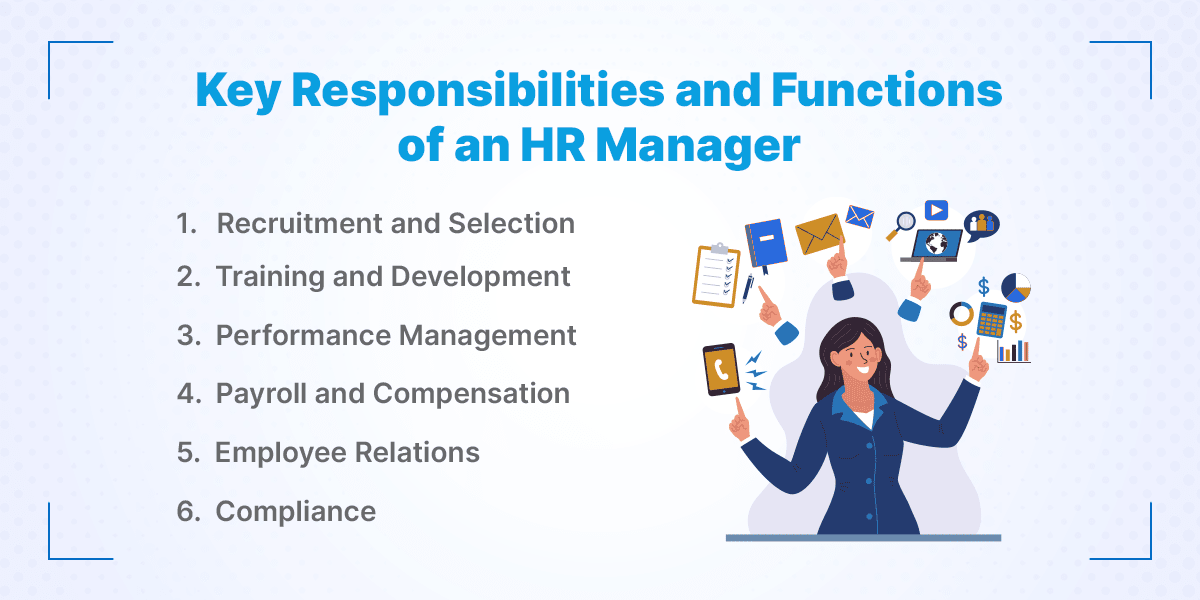
1. Recruitment and Selection
HR managers play a key role in bringing the right people into the company. They don’t just hire anyone; they make sure new employees fit the company and its goals. The recruitment process involves several important steps:
- Post job openings and share them with potential candidates
- Review resumes and shortlist applicants
- Conduct interviews and assessments
- Check references and past work experience
- Help managers make the final hiring decision
- Ensure the new employee fits the company culture
2. Training and Development
HR managers help employees improve their skills and grow within the company. Training is not a one-time event; it’s an ongoing process to help employees reach their best potential. Key tasks in this area include:
- Plan orientation for new hires
- Organize workshops and skill development programs
- Identify areas where employees need improvement
- Encourage employees to attend courses or online training
- Track progress and give feedback regularly
- Help employees reach their potential
3. Performance Management
HR managers track how well employees are doing. They set goals and check if employees meet them. They give feedback and help improve work performance. Sometimes they arrange meetings to discuss progress. They also recognize and reward good work. This helps employees stay motivated and productive.
4. Payroll and Compensation
HR managers make sure employees are paid correctly and on time. They calculate salaries, bonuses, and deductions while verifying attendance and leave records before finalizing payments. They also handle tax deductions and employee benefits. To ensure accuracy and efficiency, many companies use a professional payroll service
to manage salary processing and compliance. Keeping payroll accurate is important to maintain employee satisfaction and trust.
5. Employee Relations
HR managers act as a bridge between employees and the company. They solve conflicts and listen to employee concerns. They promote a friendly work environment. They also organize team-building activities. Their goal is to keep employees satisfied and motivated.
6. Compliance
HR managers ensure the company follows labor laws and regulations. They update policies according to the law. They maintain proper records of employees. They also make sure workplace safety rules are followed. This keeps the company safe and avoids legal problems.
Why Choose a Career as an HR Manager in Nepal?
Choosing a career as an HR manager in Nepal is a smart choice because the demand for skilled HR professionals is growing fast. Companies are looking for people who can manage employees, solve problems, and help the business grow. If you enjoy working with people and organizing things, HR jobs can be very rewarding.
HR managers play a key role in shaping how a company operates. They influence the work environment, company policies, and how teams function. This gives them a chance to make real changes that improve both employee satisfaction and company performance.
Another reason to choose this career is the stability and long-term opportunities it offers. Good HR managers are always needed. Once you gain experience, you can move into higher positions, such as HR director or head of people operations.
Here are some of the main benefits of becoming an HR manager in Nepal:
- High demand for HR professionals in growing sectors
- Opportunity to shape company culture and people strategy
- Stable income and long-term career prospects
HR management is not just about handling problems; it’s about helping people grow and succeed. HR managers make the workplace better for everyone. They also help businesses achieve their goals by managing their most important asset: their employees.
In short, choosing HR as a profession in Nepal means entering a role that is both meaningful and practical. You get to work with people, influence company decisions, and enjoy a career path with growth and security. For anyone who likes teamwork, problem-solving, and leadership, this can be the perfect career choice.
Educational Qualifications Needed to Become an HR Manager
To become an HR manager in Nepal, having the right education is important. Companies usually look for candidates who understand management and human resources. While skills and attitude matter, a formal degree gives you a strong foundation. There are several educational paths you can take depending on your goals and interests.
1. Minimum Degree Requirements
Most companies expect HR managers to have at least a bachelor’s degree. Common degrees include BBA (Bachelor of Business Administration) and BBS (Bachelor of Business Studies). These programs teach basic management, business principles, and how organizations work. Even if you study other fields, like social sciences or commerce, you can enter HR with some extra preparation. A degree gives you knowledge about how companies function and prepares you for HR responsibilities.
2. Specialized HR Programs and MBA
If you want to go further, specialized programs in Human Resource Management are very helpful. Many students choose an MBA in Human Resource Management in Nepal. This teaches advanced topics like HR strategy, employee engagement, and leadership. These programs also give practical knowledge about hiring, training, and managing employees. Employers value candidates with specialized HR knowledge because it reduces the learning curve on the job.
3. Additional Certifications
Certifications can give you an extra edge in the competitive HR field in Nepal. Popular certifications include SHRM (Society for Human Resource Management), HRM Diploma, and HR training in Nepal. These programs focus on practical skills, like HR software, labor law, and performance management. Even short-term courses can make your resume stand out and improve the chance of getting HR jobs in Nepal.
A combination of a degree, specialized programs, and certifications gives you the knowledge and confidence to succeed as an HR manager. Education helps you understand people, business, and processes. It also opens doors to better job opportunities in Nepal and beyond.
How to Start a Career in HR: Step-by-Step Guide
To start a career in HR in Nepal, get a relevant degree, gain practical experience, learn HR tools, and start with an entry-level role. Once you know the path, entering the HR field becomes much easier. It’s about combining education, practice, and the right skills to get noticed by employers. Let’s explore the key steps that can help you build a strong foundation in HR.
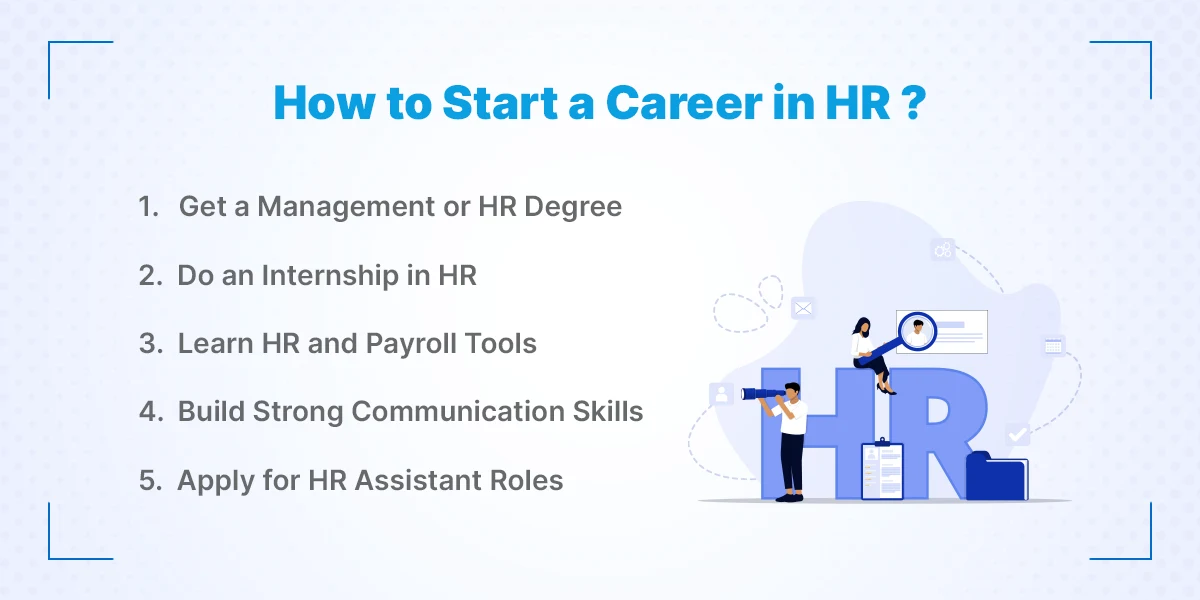
1. Get a Management or HR Degree
A degree is the first step for anyone aiming to become an HR manager. Most people start with a BBA or BBS, which covers business and management basics. These programs teach you how companies operate and introduce you to HR concepts. A degree helps you understand policies, people management, and organizational processes. Even if your interest is mainly in HR, a general management degree can still open doors. Completing this step gives you credibility with employers and prepares you for higher roles later.
2. Do an Internship in HR
Internships in Nepal give hands-on experience that no book can provide. You can work in local companies, apply got NGO/INGO jobs, or startups. During an internship, you learn how HR departments handle hiring, payroll, and employee concerns. It also helps you understand office culture and professional expectations. Internships make your resume stronger and increase your chances of landing an entry-level job. They are also a great way to network with professionals in the field.
3. Learn HR and Payroll Tools
Modern HR work relies heavily on software. Learning HRIS, payroll systems, and performance tools is essential. These tools make tasks like managing employee records, attendance, and performance easier. Being comfortable with these tools shows employers that you can handle daily HR operations efficiently. You can learn through online courses or practical exposure during internships.
4. Build Strong Communication Skills
HR is all about people. Good communication helps in recruitment, resolving conflicts, and training employees. Clear and polite communication also improves teamwork and workplace relationships. HR managers who communicate well are more effective in managing employees. Practice speaking, writing, and listening carefully in professional settings.
5. Apply for HR Assistant Roles
Entry-level jobs like HR Assistant or HR Officer are the first stepping stones. These positions allow you to handle recruiting, onboarding, and basic HR tasks. Working in these roles gives practical exposure and prepares you for higher positions. Being proactive and learning on the job is key to growth in HR.
What Skills are Required to Become an HR Manager?
To become a successful HR manager, you need strong communication, leadership, time management, analytical thinking, and knowledge of labor laws. Being an HR manager is not just about following rules. It’s about understanding people, solving problems, and keeping the workplace running smoothly. Having the right skills makes it easier to handle daily tasks and grow in the HR field. Let’s look at the key skills that every HR manager should have.
1. Communication and Negotiation
Good communication is at the heart of HR work. HR managers must talk to employees, team leaders, and management clearly and politely. Negotiation skills help when resolving conflicts or discussing salaries and benefits. Being able to explain policies and listen to concerns is very important. Strong communication also helps in interviews and training sessions. Writing emails, reports, and notices clearly is part of the job. The better you communicate, the more trusted you become in the workplace.
2. Leadership and Conflict Management
HR managers lead teams and guide employees in their work. Leadership is not just giving orders; it’s about motivating people and helping them grow. Conflicts sometimes happen between employees or with management. HR managers must handle these calmly and fairly. They create solutions that keep everyone satisfied and maintain harmony. Leading by example also earns respect from the team. Good leaders make the workplace more productive and positive.
3. Time Management and Multitasking
HR managers often juggle multiple tasks every day. From hiring to payroll, they need to organize their time well. Prioritizing tasks ensures important things are done on time. Multitasking is necessary because many HR duties happen simultaneously. Being organized reduces stress and mistakes. Efficient time management helps HR managers meet deadlines and stay effective.
4. Analytical Thinking and HR Reporting
HR managers deal with employee data, attendance, and performance records. Analytical thinking helps make sense of this information. They can identify trends, such as staff turnover or performance gaps. HR reporting is used by management to make decisions. Accurate analysis also helps in planning training, promotions, or hiring. Understanding numbers and patterns improves HR effectiveness.
5. Understanding of Nepalese Labor Laws
HR managers must follow the rules set by Nepal’s labor laws. This includes contracts, leave, working hours, and employee rights. Knowing the law helps prevent legal problems for the company. It also protects employees and ensures fair treatment. HR managers stay updated with changes in labor regulations. This knowledge builds trust with both the management and employees.
Common Challenges of HR Managers in Nepal
HR managers in Nepal face several challenges while managing people and processes. Their role is not always easy, and they need to balance multiple responsibilities every day. From keeping employees motivated to following rules, HR managers often have to solve problems quickly and fairly.
1. Managing Employee Retention and Turnover
One of the biggest challenges is keeping employees in the company. Staff may leave for better salaries, benefits, or work conditions. HR managers have to find ways to motivate employees and make them feel valued. They may offer recognition programs, career growth opportunities, or a better work-life balance. Reducing turnover helps the company save time and costs in hiring and training new staff.
2. Balancing Company Goals with Employee Satisfaction
HR managers must ensure that the company achieves its goals while keeping employees happy. Sometimes, what the business wants may not match what employees expect. HR managers need to find a balance that works for both sides. They listen to employees, solve problems, and communicate company policies clearly. This balance helps in creating a positive workplace and improving overall productivity.
3. Keeping Up with Changing HR Trends and Labor Laws
HR practices and labor laws change over time. HR managers must stay updated with new trends and regulations. They need to adapt policies and processes to match these changes. Failing to keep up can cause legal issues or reduce efficiency. Attending workshops, reading updates, and networking with other HR professionals help them stay informed.
4. Limited Use of Modern HR Technology
Not all companies in Nepal use modern HR technology. Some still rely on manual record-keeping, which can be slow and error-prone. HR managers may struggle with inefficient processes and limited data access. Learning new tools and advocating for better technology can help improve efficiency. Using software for payroll, attendance, and performance makes HR work faster and more accurate.
Conclusion
Becoming an HR manager in Nepal is achievable if you follow the right steps and stay focused. It starts with understanding the role and the kind of people you need to be. With dedication, you can learn how to handle employees, solve workplace problems, and manage important company processes. You don’t need to rush; small, steady steps make the journey easier.
Internships, practical exposure, and learning HR tools help you grow faster. Strong communication, leadership, and awareness of labor laws give you an edge. Ultimately, being an HR manager is about helping people and the company succeed at the same time. Anyone willing to learn and stay committed can reach this role.
Ready to take the next step in your HR career? Explore the latest HR and management job opportunities in Nepal today!
Frequently Asked Questions
Submit your comments

Get Our App On



What is the Public Relations Officer Salary in Nepal
VIEW DETAILS
What Is the Salary of a Ticketing Officer in Nepal?
VIEW DETAILS
What Is the Salary of a Travel Consultant in Nepal?
VIEW DETAILS
How to Become an Auditor in Nepal
VIEW DETAILS


Loading Comments...