



Many employees feel stressed when they want a salary raise but do not know how to ask for it. You may worry that your request will sound wrong, or you may fear your manager will not take it seriously. This is a common pain, and many people face the same problem at work. A small mistake in the letter can even delay your approval. That is why you need a clear and clean salary increment letter that explains your value in a simple way.
In this guide, you will learn how to write a strong request, when to send it, and what to avoid. By the end, you will feel more confident and ready to ask for the raise you deserve.
In this blog
Why is a Salary Increment Letter Important?
A salary increment letter is important because it helps you request a raise in a clear and formal way. When you request a salary increase, the way you present your message matters a lot. A well-written letter shows respect, confidence, and maturity. It helps your manager understand your value without confusion or pressure. Many employees in Nepal still prefer written requests because they create a formal record and make the process smooth. A clean letter also reduces misunderstandings and shows that you are serious about your role.
Here is why this letter really matters:
1. Professional Way to Ask for a Raise
A letter makes your message organized and easy to read. You can explain your work, your results, and your reason for asking in a calm and simple style. Managers appreciate this because it saves time and keeps everything clear.
2. Helps HR and Managers Decide Better
When you write your achievements and numbers, HR can compare your value with company standards. It helps them justify your increment during internal discussions. This makes your request stronger and more believable.
3. Builds your Responsible and Confident Image
A good letter shows that you are confident but also respectful. It presents you as someone who thinks before asking. This positive image can help you in future reviews, promotions, and new responsibilities.
Overall, a salary increment letter is not just a message. It is a tool that supports your career growth, strengthens your professional image, and increases your chance of getting the raise you deserve.
When Should You Ask for a Salary Increment?
You should ask for a salary increment when your work clearly shows growth, value, and strong results. Knowing the right time to request a raise makes a big difference. If you ask when your performance is high, your chances become much better. One of the best moments is after you complete a major project. This is when your effort is fresh in your manager’s mind, and they can easily see your impact. Another good time is when you take on extra responsibilities that were not part of your original role. It shows that you are growing and supporting the team more than before.
Appraisal season is also a natural and safe time to request an increment because companies already review performance and salaries. If your current pay is below market standards, that is also a fair reason to ask. It shows that you did your research and understand your value. Also, you can ask for a salary increment if you have just completed your probation period.
However, timing matters. You should not ask for a raise during company losses, busy crisis periods, or right after negative feedback. These moments can reduce your chances. Choosing the right time helps your request sound reasonable, confident, and well planned.
Things to Prepare Before Writing the Letter
Before writing a salary increment letter, preparation is key. A strong letter does not come from just asking for more money. You need to show your value clearly. If you plan well, your chances of approval increase, and the process feels smooth.
1. Collect your Achievements
Start by listing all your achievements at work. Include projects you completed, targets you met, and positive feedback you received. Focus on results that helped your team or company. This shows your contribution is real and measurable. Keep the list simple and clear. Highlight achievements that match your request for a raise. This will make your letter strong and convincing.
2. Quantify your Contributions
Numbers make your work visible. For example, mention if you increased sales by 20% or completed a project ahead of time. Use data that proves your impact. This helps HR and managers see why you deserve more pay. Avoid vague statements like “I worked hard.” Real figures are stronger. Even small improvements count if you show them clearly.
3. Compare your Salary With Market Standards
Check what others in your role earn in similar companies. This gives you a benchmark for a fair increment. It shows you are aware of your value. Be careful not to sound demanding. Present it as information to support your request. This makes your letter professional and reasonable.
4. Set a Realistic Expected Increment
Decide the raise you want before writing the letter. Make sure it is fair and possible. Asking for too much may reduce your chances. A realistic figure shows that you are thoughtful and professional. Mention it politely in your letter.
5. Prepare a Positive, Professional Tone
Your letter should be polite and confident. Avoid complaining or threatening. Focus on your achievements and value. A positive tone makes your request stronger. It shows you are professional and mature.
Structure of a Perfect Salary Increment Letter
A perfect salary increment letter is clear, simple, and professional. It helps your manager understand your value without confusion. A well-structured letter makes your request stronger and shows your confidence. If you follow the right structure, your chances of approval increase.
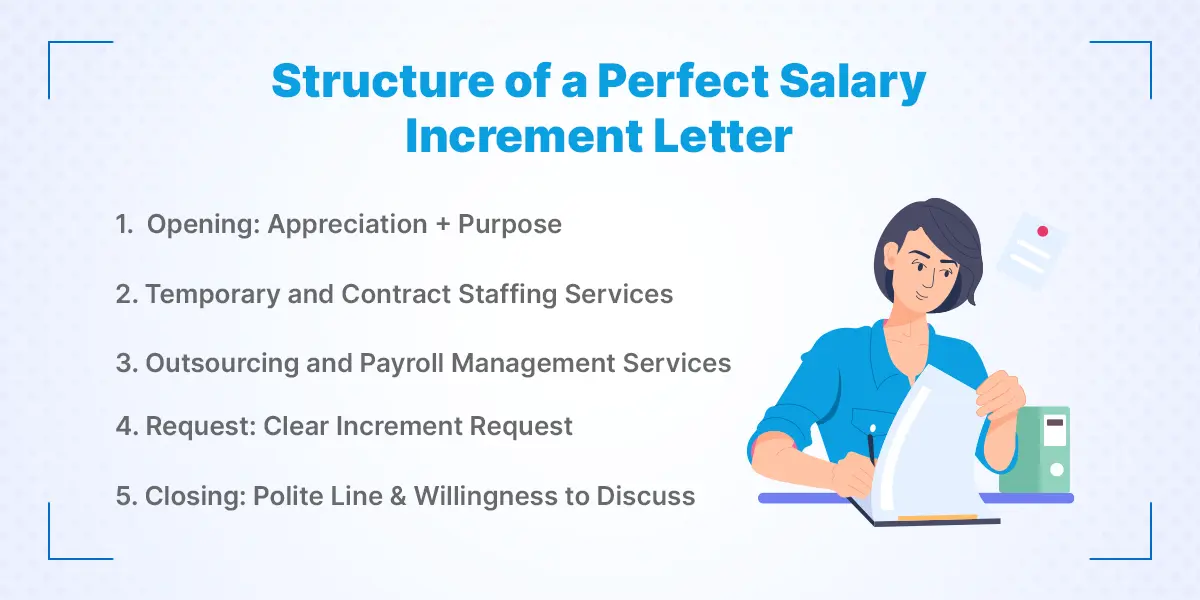
1. Opening: Appreciation + Purpose
Start your letter by appreciating your manager or team. Thank them for their support or guidance. Then clearly state the purpose of the letter. For example, mention that you are writing to request a salary increment. Keep it short and polite. This sets a positive tone for the rest of the letter.
2. Body: Achievements, Results, Contributions
In the body, explain your achievements at work. Mention completed projects, targets met, or extra responsibilities you handled. Focus on work that added value to the team or company. Keep your points simple and easy to read. Avoid long stories or unrelated details. This helps your manager understand your contribution clearly.
3. Evidence: Measurable Data
Include numbers or results that show your impact. For example, percentage increase in sales, projects delivered on time, or cost savings. Measurable data makes your request stronger. Avoid vague statements like “I worked hard.” Numbers and facts are easy to evaluate and show real value.
4. Request: Clear Increment Request
Clearly state the raise you are requesting. Be polite and realistic. Avoid demanding or comparing with colleagues. Mention your expectation as a professional request. This makes your letter precise and easy to act upon.
5. Closing: Polite Line & Willingness to Discuss
End the letter politely. Show that you are open to discussing the request further. Thank your manager for considering your request. A respectful closing leaves a good impression and keeps the conversation positive.
What NOT to Include in the Letter
You should avoid including certain things in your salary increment letter because they can reduce your chances of approval. A letter should focus on your achievements and value, not personal problems or emotions. Writing the wrong things can make you look unprofessional. A clean, clear letter helps your manager take your request seriously. It also keeps the conversation positive.
1. Personal Financial Struggles
Do not talk about your personal money problems, loans, or bills. Managers cannot adjust your salary based on your personal needs. Your letter should focus on the value you bring to the company. Mentioning personal struggles can make you seem unprofessional or desperate. It may also distract from your achievements. Keep the content work-focused. Always show why your work deserves a raise, not why you need it personally.
2. Comparing Yourself with Colleagues
Avoid comparing your salary or performance with coworkers. Statements like “My colleague earns more” can sound negative or petty. Your request should highlight your own achievements and results. Focus on your contribution, not others’ performance. Comparing can create tension and may annoy your manager. It does not help your case. Stay professional and positive throughout the letter.
3. Emotional Pressure or Threats
Never use emotional statements or threats in your letter. For example, avoid saying “I will quit if I don’t get a raise.” This can damage your relationship with your manager. A calm, professional tone works much better. Show confidence but stay polite. Managers respect employees who can communicate requests professionally. Threats or emotional pressure can reduce your chances of approval. Keep the focus on your work and results.
3. Long Unnecessary Stories
Keep the letter short and to the point. Long stories about your daily work or personal challenges are not helpful. Managers prefer letters that clearly show achievements and contributions. Unnecessary details can make the letter boring or confusing. Focus on key results and numbers that prove your impact. A concise letter is easier to read and more effective.
4. Complaining about Workload
Do not complain about your tasks or workload in the letter. Statements like “I am overworked” may sound negative. Instead, focus on how you handled responsibilities successfully. Show that you contributed positively despite challenges. Highlight achievements, teamwork, and results. A positive tone makes your request stronger and more professional.
Step-by-Step Guide to Writing the Letter
Writing a salary increment letter is easier when you follow clear steps. Each step helps you stay organized and professional. If you prepare well, your request becomes stronger and more convincing. Following this guide can increase your chances of getting the raise you deserve.
Step 1: Set Your Goal
Before writing, decide exactly what you want. Think about the salary increase you are expecting. Make sure it is realistic and fair based on your work and market standards. Knowing your goal helps you write clearly and confidently. Avoid asking for too much, as it may reduce your chances. A clear goal gives your letter focus and direction. Be confident but professional while setting it.
Step 2: Draft Your Achievements
List all your key achievements at work. Include completed projects, targets met, or extra responsibilities you handled. Focus on results that helped the company or team. Try to quantify your contributions with numbers or measurable outcomes. Keep your points simple and easy to read. Highlight the achievements most relevant to your raise request. This makes your letter strong and convincing.
Step 3: Write a Clean 2–3 Paragraph Letter
Use 2–3 short paragraphs to keep your letter easy to read. The opening should show appreciation and state the purpose. The body should explain your achievements and contributions. Include measurable results to prove your value. End with a clear request for the increment. A short, structured letter makes it easier for your manager to understand. Avoid long stories or unnecessary details.
Step 4: Make the Tone Positive & Professional
Your tone should be polite and confident. Avoid complaining, threats, or emotional pressure. Focus on your value and contributions instead of personal problems. Show respect for your manager and the company. Positive tone increases the chance of a favorable response. It also builds your professional image. Confidence and politeness go hand in hand.
Step 5: Proofread and Format
Check your letter for spelling or grammar mistakes. Read it aloud to see if it sounds clear and professional. Make sure the formatting is neat and easy to read. Use simple sentences and proper spacing. A clean, error-free letter shows attention to detail. It makes your request more credible and professional. Don’t rush this step; take your time.
Step 6: Send at the Right Time
Choose the best time to send your letter. Avoid busy periods, company crises, or right after negative feedback. Sending it after major achievements or during appraisal season is ideal. Make sure your manager has time to review it calmly. Timing shows that you are thoughtful and professional. A well-timed letter increases the chance of approval. Plan your submission carefully for the best results.
Salary Increment Letter Templates (Multiple Scenarios)
Writing a salary increment letter can feel challenging, but having a template makes it easier. Templates help you communicate your value clearly and professionally. Below are five common scenarios with sample letters you can adapt to your situation.
Template 1: Standard increment based on performance

Template 2: After taking additional responsibilities
Date: [DD/MM/YYYY]
Subject: Request for Salary Increment After Additional Responsibilities
Dear [Manager’s Name],
I hope you are doing well. I am writing to request a salary increment following the additional responsibilities I have taken on over the past [time period]. I am grateful for the trust you have placed in me and the opportunities to contribute more to the team.
During this time, I have handled [New Responsibility/Task] and contributed to [Project/Goal]. These responsibilities have allowed me to support the team effectively and achieve [Result/Outcome]. I believe my contributions have added measurable value to the department and the company.
Considering these added responsibilities and my performance, I would like to request a salary increase of [Amount/Percentage]. I am happy to discuss this further and provide more details if required.
Thank you for your time and consideration.
Sincerely,
[Your Name]
[Your Position]
Template 3: After promotion/role upgrade
Date: [DD/MM/YYYY]
Subject: Request for Salary Adjustment After Promotion
Dear [Manager’s Name],
I hope you are doing well. I am writing to formally request a salary adjustment following my promotion to [New Position]. I sincerely appreciate the confidence you have shown in me and the opportunity to take on this new role.
Since my promotion, I have successfully handled [New Responsibility/Task] and contributed to [Project/Goal]. My work has helped achieve [Result/Outcome], and I have ensured smooth performance in my new role. These achievements reflect the increased responsibilities and expectations of my position.
Considering my new role and contributions, I would like to request a salary adjustment of [Amount/Percentage]. I am happy to discuss this further at your convenience and provide additional information if needed.
Thank you very much for your consideration.
Sincerely,
[Your Name]
[Your Position]
Template 4: Market correction increment
Date: [DD/MM/YYYY]
Subject: Request for Salary Revision Based on Market Standards
Dear [Manager’s Name],
I hope you are doing well. I am writing to request a revision of my salary to better align with current market standards for my role. I am grateful for the opportunities to contribute and grow at [Company Name].
Over the past [time period], I have successfully completed [Project/Task] and achieved [Result/Outcome]. I have also taken on additional responsibilities, including [Responsibility/Task], which have contributed to [Team/Company Goal]. After researching industry salary standards, I noticed that my current compensation is below the market average for similar roles.
Considering my performance and market standards, I would like to request a salary adjustment of [Amount/Percentage]. I am happy to discuss this further and provide supporting information if needed.
Thank you very much for your time and consideration.
Sincerely,
[Your Name]
[Your Position]
Template 5: Follow-up template if no response
Date: [DD/MM/YYYY]
Subject: Follow-Up on Salary Increment Request
Dear [Manager’s Name],
I hope you are doing well. I am following up regarding my previous request for a salary increment sent on [Date]. I wanted to kindly check if we could schedule a time to discuss it further.
As mentioned earlier, I have successfully completed [Project/Task] and contributed to [Team/Company Goal], which I believe demonstrates my value to the company. I remain committed to delivering quality work and supporting the team in achieving its objectives.
I would greatly appreciate it if we could review my request and discuss the possibility of a salary adjustment. Thank you for your time and consideration, and I look forward to your response.
Sincerely,
[Your Name]
[Your Position]
What to Expect After Sending the Letter
After sending a salary increment letter, you should expect a range of responses and be prepared to handle them professionally. Once your manager receives the letter, the response can vary. They may fully approve your requested increment, offer a partial raise, or decline it. A “Yes” is great, but even a partial increase shows recognition of your work. If the answer is “No,” don’t get discouraged. Use it as an opportunity to understand what you need to improve for the next request.
Negotiating politely is important if you receive a partial offer. Thank your manager for considering your request first. Then, explain your contributions again briefly and ask if there’s room to adjust the increment. Avoid arguing or sounding impatient. Professional and calm negotiation often leads to better results than insisting forcefully.
Sometimes, your manager may ask for more proof of your achievements. In this case, provide clear evidence like reports, project results, or feedback from clients or colleagues. Showing data reinforces your value and can help justify your request. Keep everything factual and positive.
If the company cannot give you an immediate raise, you can ask for a future roadmap. This means requesting a plan for when and how your salary could increase. For example, ask what targets or milestones you should achieve for a raise. It shows that you are committed and proactive.
Overall, sending the letter is just the first step. Be ready for any response, stay professional, and use the feedback to improve. This approach builds trust, keeps communication positive, and increases your chances of success in the future.
Conclusion
Asking for a salary increment is a normal and important part of career growth. A well-written letter helps you communicate your value clearly and professionally. It shows your achievements, contributions, and dedication without sounding emotional or demanding. Even if the response is not exactly what you hoped for, the process teaches you about timing, presentation, and areas to improve.
Preparing properly, following the right structure, and keeping a positive tone can greatly increase your chances of success. Remember, a salary increment letter is more than a request; it reflects your professionalism, confidence, and commitment. Writing it carefully is an investment in your career growth and future opportunities.
If you also want to learn how to write a clear and professional resignation letter, you can check our detailed guide to help you draft it confidently.
Frequently Asked Questions
Submit your comments

Get Our App On



What is the Public Relations Officer Salary in Nepal
VIEW DETAILS
What Is the Salary of a Ticketing Officer in Nepal?
VIEW DETAILS
What Is the Salary of a Travel Consultant in Nepal?
VIEW DETAILS
How to Become an Auditor in Nepal
VIEW DETAILS


Loading Comments...