



Are you struggling to find reliable public health job opportunities in Nepal? Many candidates miss deadlines or fail to understand eligibility, which makes applying stressful and confusing. Navigating job portals, government health announcements, and NGO openings can be overwhelming without a clear strategy.
In this blog, Public Health Jobs in Nepal will guide you step by step through the application process, eligibility criteria, required documents, selection procedures, and career growth. We also cover where to find updates, salary expectations, and tips to secure the right role in government hospitals, NGOs, or health organizations. By the end, you’ll have a clear roadmap for 2026, helping you navigate the evolving landscape of health and medical jobs in Nepal.
In this blog
What Are Public Health Jobs?
Public health jobs are roles focused on improving community health, preventing diseases, and promoting wellness at population levels rather than treating individual patients. These positions aim to create policies, conduct research, manage health programs, and educate communities about health risks and prevention.
Unlike clinical jobs, which involve direct patient care in hospitals or clinics, public health roles work on a broader scale. Professionals may analyze health data, plan vaccination campaigns, design awareness programs, or manage healthcare projects. Careers exist in government agencies, NGOs, research institutions, and international health organizations. Public health jobs prioritize prevention, policy, and education to benefit entire populations.
Types of Public Health Jobs in Nepal
Public health jobs in Nepal are available across multiple sectors, offering diverse opportunities for fresh graduates, mid-level professionals, and specialists. Candidates can find roles in government organizations, NGOs, INGOs, private healthcare institutions, and research-based organizations. Each sector has unique responsibilities, skill requirements, and career growth paths. Understanding the types of jobs helps applicants target the right positions and prepare effectively for applications and interviews.
1. Government Public Health Jobs
Government public health jobs focus on population health management, policy implementation, and community health programs. These positions exist in the Ministry of Health, municipal health offices, hospitals, and rural health posts. Roles may include Health Officer, Public Health Inspector, Epidemiologist, or Community Health Supervisor. Government jobs usually offer job security, structured promotion paths, and comprehensive benefits. Candidates often need to pass competitive exams or meet specific eligibility criteria.
2. NGO and INGO Public Health Jobs
NGO and INGO public health jobs involve project management, health promotion, research, and field-level interventions. Organizations like WHO, UNICEF, Save the Children, or local NGOs hire professionals for roles in monitoring health programs, community outreach, and health education campaigns. These jobs often require adaptability, strong communication skills, and experience working with diverse populations. Contract durations vary, and exposure to large-scale projects enhances skills and career growth, making it a highly rewarding path for those seeking Ngo/Ingo jobs in Nepal in the development sector.
3. Private Sector and Research-Based Roles
Private hospitals, clinics, health startups, and research institutions also offer public health roles. Jobs may include Health Data Analyst, Epidemiology Researcher, Public Health Consultant, or Program Coordinator. These positions focus on improving healthcare quality, conducting studies, and supporting evidence-based interventions. Private sector jobs may offer higher salaries, dynamic work environments, and opportunities for specialization. Research-based roles help professionals contribute to knowledge creation and policy recommendations, much like the technical expertise required for biomedical engineer jobs that bridge the gap between healthcare technology and patient care in modern clinical settings.
How to Apply for Public Health Jobs in Nepal? Step-by-Step
To apply for public health jobs in Nepal, candidates must follow a systematic approach to maximize their chances of selection. Start by identifying relevant openings, reviewing eligibility carefully, preparing required documents, and submit applications through official channels. Staying organised and adhering to deadlines ensures your application is considered. Following a step-by-step strategy helps applicants target suitable roles in government, NGOs, INGOs, or private health organisations.
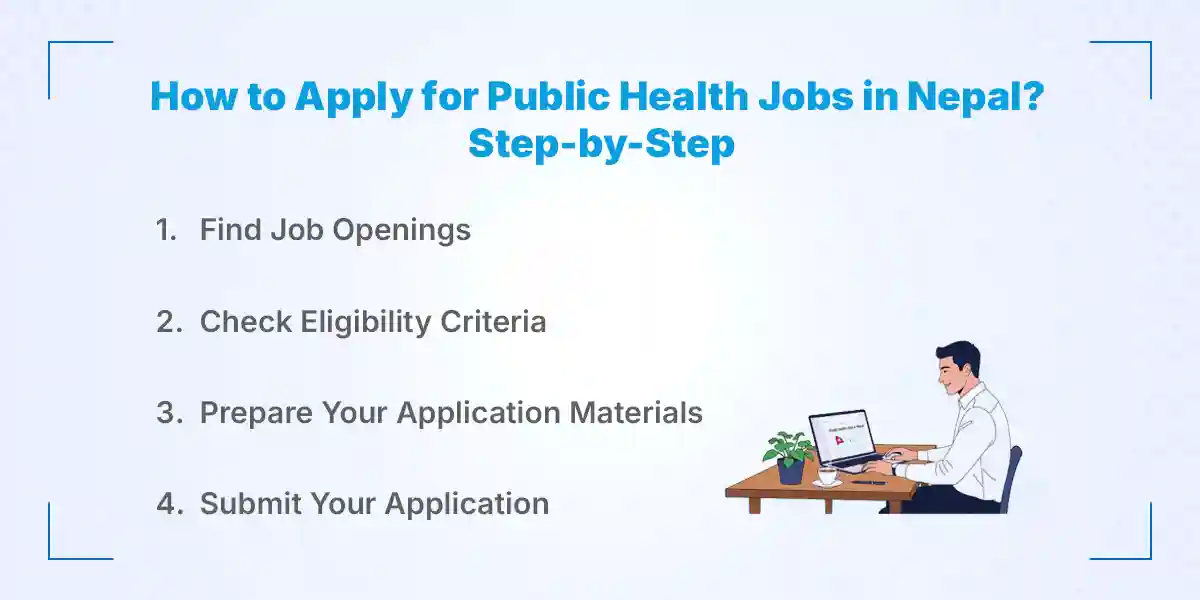
1. Find Job Openings
Candidates should regularly check government health ministry portals, official hospital websites, and trusted job portals like Kumari Job for public health vacancies. Monitoring multiple sources ensures you don’t miss announcements and deadlines. Make a list of suitable positions and note application timelines for planning. Checking updates frequently improves chances of applying early and increases visibility for recruiters. Subscribing to email alerts from portals can help receive instant notifications about new openings.
2. Check Eligibility Criteria
Before applying, carefully review the age limits, educational qualifications, certifications, and work experience required for each position. Specialised roles may require additional training or field experience. Ensuring you meet all criteria prevents rejection during preliminary screening. Double-checking eligibility also helps plan skill development for future applications. Understanding these requirements reduces application errors and saves time during submission.
3. Prepare Your Application Materials
Prepare a CV, cover letter, academic transcripts, and any certifications relevant to the role. Highlight experience in health programs, community work, or research projects. Tailor your application to match job requirements, emphasising skills and achievements that align with public health responsibilities. Organised and complete applications improve your chances of being shortlisted. Review applications carefully to ensure accuracy and professionalism before submission.
4. Submit Your Application
Submit applications through official channels such as the organisation’s career page or Kumari Job portal. Ensure all required documents are uploaded in the correct format. After submission, track the application status regularly for interview calls or updates. Timely submission and follow-up demonstrate professionalism and increase selection likelihood. Keep copies of all submitted documents for reference during interviews or future applications.
Key Public Health Job Roles in Nepal
Public health jobs in Nepal cover a variety of roles that focus on improving community health, managing programs, conducting research, and educating populations. These positions exist across government agencies, NGOs, INGOs, private hospitals, and research institutions. Understanding each role helps candidates align their skills and experience with job requirements. Each position carries distinct responsibilities and career growth opportunities, much like the diverse paths found within nursing jobs in Nepal, where required qualifications vary by specialty.
1. Public Health Officer
Public Health Officers plan, implement, and supervise community health programs at local or national levels. They ensure health policies and programs are followed, monitor health outcomes, and coordinate with hospitals and clinics. Officers often engage in vaccination drives, awareness campaigns, and disease prevention activities. This role requires strong leadership, communication, and organisational skills. Public Health Officers may also provide guidance to junior staff and report findings to higher authorities, often collaborating with clinical teams to fill vital medical officer jobs in rural and urban healthcare facilities.
2. Health Program Coordinator
Health Program Coordinators manage specific public health initiatives, such as maternal health, nutrition, or disease prevention projects. They oversee budgets, plan activities, and ensure programs meet organisational objectives. Coordinators also liaise with stakeholders, conduct training sessions, and monitor progress. Strong project management and problem-solving skills are essential for success. This role bridges the gap between field-level staff and organisational leadership, ensuring programs are effective.
3. Monitoring and Evaluation Officer
Monitoring and Evaluation (M&E) Officers track the performance and outcomes of public health programs. They collect and analyse data, prepare reports, and recommend improvements to enhance effectiveness. This role requires attention to detail, analytical skills, and familiarity with statistical tools. M&E Officers ensure accountability and help organisations make data-driven decisions. They often work closely with program coordinators and research teams to validate findings and report progress to donors.
4. Community Health Worker
Community Health Workers (CHWs) serve as the frontline of public health, providing basic healthcare services, education, and referrals within local communities. They support vaccination programs, health awareness campaigns, and disease prevention activities. CHWs build trust with community members and act as a bridge between populations and healthcare providers. Strong interpersonal skills and community engagement experience are crucial. This role often provides entry-level opportunities for individuals starting careers in public health.
5. Research and Data Analyst
Research and Data Analysts collect, process, and interpret health-related data to inform public health policies and interventions. They conduct surveys, statistical analyses, and program evaluations. Analytical thinking, proficiency in data software, and attention to accuracy are vital for this role. Analysts support decision-making for NGOs, government agencies, or research institutions. Their work contributes to evidence-based strategies that improve health outcomes on a regional or national level.
Eligibility and Qualifications for Public Health Jobs
Eligibility and qualifications for public health jobs depend on job roles, organization type, and responsibility levels. Government roles follow structured eligibility standards, while NGOs and private organizations focus on skills and experience. Candidates must meet educational requirements, demonstrate relevant competencies, and hold certifications when required. Understanding eligibility helps applicants prepare better and apply for suitable positions. Clear qualification alignment increases shortlisting chances.
1. Required Education (BPH, MPH, etc.)
Public health jobs require academic backgrounds such as Bachelor of Public Health (BPH), Master of Public Health (MPH), or related health sciences degrees. Entry-level roles often accept BPH graduates, while senior roles prefer MPH or specialized postgraduate degrees. Some positions also accept nursing, medical, or social science graduates with public health experience. Academic focus areas like epidemiology, health promotion, or biostatistics add value. Recognized institutions and accredited programs improve eligibility.
2. Skills and Experience Needed
Public health roles demand skills in communication, data analysis, community engagement, and program management. Field experience in health projects, surveys, or awareness campaigns strengthens applications. Employers value teamwork, reporting ability, and problem-solving skills. Experience working with NGOs, government programs, or research projects provides a competitive edge. Practical exposure often matters as much as academic qualifications.
3. Licensing or Certifications
Some public health roles require licensing or professional certifications, depending on job nature. Research or M&E roles may prefer training in data analysis tools or evaluation frameworks. Certifications in project management, epidemiology, or health informatics increase credibility. Government positions may require registration with relevant councils or authorities. Holding updated certifications shows commitment to professional growth and compliance with standards.
Salary of Public Health Jobs in Nepal
Salary of public health jobs in Nepal varies based on job roles, sector, experience level, and organization type. Government, NGO, and private sectors follow different pay structures. Entry-level roles offer modest income, while experienced professionals earn higher packages. Project-based roles may include additional allowances and benefits. Understanding salary ranges and the typical salary of doctors in Nepal helps candidates plan career growth effectively.
1. Entry-Level Salary Range
Entry-level public health jobs in Nepal generally offer a monthly salary ranging from NPR 18,000 to NPR 35,000. Positions such as Community Health Worker or Junior Public Health Officer fall under this category. Salary varies by organization type, project scope, and location. NGOs may offer slightly higher pay than government roles at the entry level. Income increases gradually with field experience and skill development, eventually rising to meet or exceed the average salary in Nepal, especially for those working in urban centers like Kathmandu.
2. NGO/INGO vs Government Salary
NGO and INGO public health jobs often provide higher salaries compared to government positions. International organisations offer project-based pay, field allowances, and performance incentives. Government jobs provide fixed pay scales, pensions, and long-term security. Salary growth in NGOs depends on funding and role impact. Professionals choose sectors based on income goals or stability preferences.
3. Factors Affecting Salary
Salary depends on education level, professional experience, and job responsibilities. Specialised skills in research, monitoring, or data analysis increase earning potential. Urban postings usually offer higher compensation than rural roles. Project funding influences NGO salaries significantly. Continuous learning and certifications support faster salary progression.
Where to Find Public Health Jobs in Nepal?
You can find public health jobs in Nepal in government vacancy portals and online job portals like Kumari Job. These platforms regularly publish verified job announcements from government bodies, NGOs, INGOs, and private organisations. Checking multiple reliable sources helps candidates stay updated and apply on time. Combining online portals with professional networks improves access to quality opportunities. Regular monitoring reduces the risk of missing deadlines.
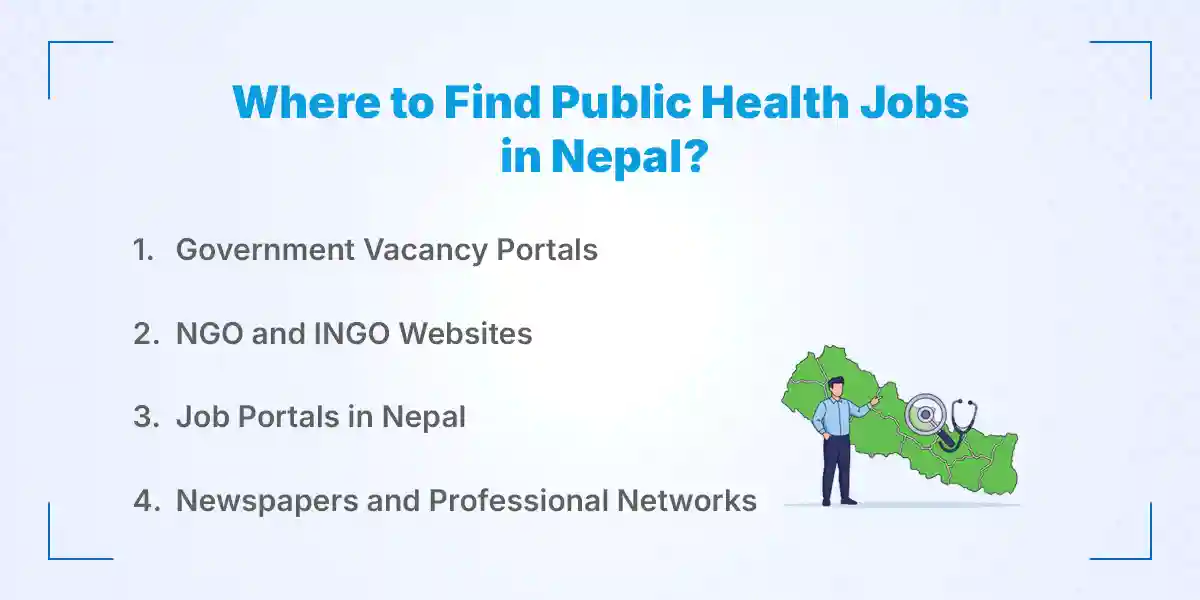
1. Government Vacancy Portals
Government vacancy portals publish official announcements for public health jobs in ministries, departments, and local health offices. These portals provide details about eligibility, exam procedures, and application deadlines. Government roles often require formal application processes and competitive exams. Notifications appear periodically based on staffing needs. Regularly checking these portals ensures access to secure and long-term public health roles. Following official notices helps candidates prepare early for written or interview-based assessments.
2. NGO and INGO Websites
NGO and INGO websites frequently list public health vacancies for project-based and long-term roles. These organisations hire professionals for community programs, monitoring roles, and research projects. Job postings include detailed job descriptions and contract durations. Applicants must follow organisation-specific application instructions. Visiting official websites helps avoid misinformation and outdated listings. Direct applications through official sites improve application authenticity and credibility.
3. Job Portals in Nepal
Online job portals like Kumari Job list updated public health vacancies from multiple organisations. These portals allow candidates to search jobs by category, location, and experience level. Easy application processes save time and effort. Email alerts help candidates receive instant updates. Job portals simplify tracking multiple applications in one place. Well-optimised profiles increase visibility to recruiters and employers.
4. Newspapers and Professional Networks
Newspapers sometimes publish public health job notices for government and large organisations. Professional networks, workshops, and seminars also share job information informally. Networking helps candidates learn about upcoming opportunities before official announcements. Referrals increase chances of shortlisting. Combining networking with online searches strengthens job discovery efforts. Active participation in health forums builds long-term career connections.
Challenges and Opportunities in Public Health Careers
Public health careers involve both demanding challenges and meaningful opportunities. Professionals often work in diverse environments with varying resources and expectations. While field conditions may be tough, career paths offer long-term growth and specialization. Public health roles allow professionals to contribute directly to community well-being. Understanding both sides helps candidates prepare for realistic career journeys.
1. Fieldwork and Resource Challenges
Public health fieldwork often involves working in remote or underserved areas. Limited resources, infrastructure gaps, and unpredictable conditions create daily challenges. Professionals may face workload pressure and logistical difficulties. Strong adaptability and problem-solving skills help manage field realities. Field exposure builds resilience and practical experience. Over time, these challenges strengthen professional competence.
2. Career Growth and Specialization Opportunities
Public health careers offer multiple growth paths through specialization and advanced education. Professionals can focus on epidemiology, health policy, nutrition, or monitoring roles. Experience opens doors to senior positions and leadership roles. International exposure enhances career prospects significantly. Continuous learning supports long-term professional advancement. Specialization increases job stability and earning potential.
3. Impact-Driven Work Environment
Public health professionals work in impact-driven environments focused on community health improvement. Daily tasks contribute to disease prevention and health awareness. Seeing positive outcomes creates strong job satisfaction. Purpose-driven work motivates professionals beyond financial rewards. Collaboration with communities builds meaningful connections. This environment fosters personal fulfillment and professional pride.
Conclusion
Public health jobs in Nepal offer meaningful career paths for professionals who want to improve community well-being and health systems. From government roles to NGO, INGO, and private sector opportunities, public health careers provide stability, growth, and purpose. Understanding job types, eligibility, application steps, and salary expectations helps candidates make informed decisions and apply with confidence.
With increasing focus on disease prevention, health awareness, and data-driven programs, demand for public health professionals continues to rise. Candidates who build strong skills, gain field experience, and stay updated with job portals like Kumari Job improve selection chances. Choosing public health as a career means contributing to society while building long-term professional growth in Nepal.
Frequently Asked Questions
Submit your comments

Get Our App On



What is the Public Relations Officer Salary in Nepal
VIEW DETAILS
What Is the Salary of a Ticketing Officer in Nepal?
VIEW DETAILS
What Is the Salary of a Travel Consultant in Nepal?
VIEW DETAILS
How to Become an Auditor in Nepal
VIEW DETAILS


Loading Comments...