



Terminating someone from employment is never easy. But when you need to do it, it should be done respectfully and clearly. Here is where the termination letter comes in. This letter makes the process official and clear. It informs the employee what is happening, when it will happen, and what comes next. Now that you know when and why to write one, you might be wondering how to write it correctly. What should I include? And is there any template?
In this blog post, we will guide you on how to write a job termination letter simply and correctly. If you are an HR manager or a business owner, this tutorial is for you. Keep reading. Your answers are just a scroll away.
In this blog
What is a Job Termination Letter?
A job termination letter is a formal notice given by the employer indicating that a person’s employment is ending. It clearly states that the employee will no longer work at the company on a specific date. This letter should be brief but clear and respectful. Although it is not a formal requirement, it is an important step in the process. Sometimes it is given right after a meeting, and other times with the final payment or paperwork. The purpose is to make everything official and clear.
The letter is typically written by an employee in the HR department or the manager. It is given when the company fires the employee, not when the employee decides to leave. That’s a resignation letter. The job termination letter explains what is happening, why it’s happening (if necessary), and what the employee should do next. This helps prevent confusion, arguments, or legal issues. It also shows that the company is following the right procedures. For the employee, it serves as proof that the job has ended, which may be needed for future jobs or claims. That’s why it’s important to write this letter carefully.
Key Elements of a Job Termination Letter:
- Employee’s full name and job title
- Date when the termination takes effect
- Clear reason for termination (if required by company policy or law)
- Information about the final paycheck and remaining benefits
- Details about returning company property like ID cards, laptops, etc.
- Steps for collecting documents or completing exit formalities
- Contact person for further questions or help
- Polite, professional, and respectful tone throughout the letter
How to Write a Job Termination Letter?
To write a job termination letter, you need to make it clear that the person’s employment is being terminated, include important details like the date and cause, confirm final pay, and tell them what they should do next, while still being polite and professional. Writing this letter in a step-by-step manner makes it easier and avoids forgetting anything important.
Step 1: Start with Employee Details and Termination Date
First, put the employee's complete name and job title at the very top of the letter. This confirms that the letter was sent to the correct person and their position in the company is accurately highlighted. Second, put the exact date when his or her employment will be ending. This is an important date because it lets the employee know when their employment ends and when they can expect to leave the company. Use a simple sentence like, "Your employment with [Company Name] will end on [Date]." Keeping this section of the letter easy to understand prevents matters from becoming confused. This is a short but important section of the letter as it establishes the tone for the rest of the material.
Step 2: State the Purpose of the Letter Clearly
In the second part, clearly announce the reason why you are writing the letter. For example, "This notice is to inform you that your job will be terminated effective [Date]." Be brief and to the point here so the employee knows right away. The idea is to make it official and inform the individual that the job is finished. While the news itself may be unpleasant, the letter should be written in a polite manner. This helps convey respect to the employee. Ending the paragraph with a polite remark like, "We value your time in the company," can soften the message without hiding the truth.
Step 3: Define the Reason for Terminating (If Required)
Some firms or laws require that you give a reason for termination. If this is the case for you, include a clear and honest reason. For example, "This was due to company restructuring," or "Your performance was below that required after prior warnings." Avoid using negative or emotional words. If you don't have to explain under law or company policy, it's okay to leave this out. The purpose is not to blame, but to explain the situation. It is simple to give a definite reason so that the worker understands why they are getting fired, and the confusion or controversy later on is minimal.
Step 4: Explain Final Compensation and Benefits
Next, define what the employee will get in their last paycheck. This would include any money they have earned but not yet received, like time off or bonuses. Let them know when they will receive this pay and how it will be delivered. You may even state what happens to their benefits, like health insurance or pension schemes. Clear communication goes a long way since money issues are the most stressful part of leaving a job. If the employee is required to sign anything to get their last pay, mention it as well. Keeping this part brief can prevent confusion or future complaints.
Step 5: Provide Next Steps Instructions
Here, tell the employee what they need to do prior to departure. They might be required to return company property such as keys, ID cards, laptops, or uniforms, for example. Let them know if they should come in for an exit interview or sign any documents. Clear directions give the employee an idea of what to expect and what is expected of them. This section also indicates that the company is professional and organized. Provide contact information for someone they can contact with questions regarding the process. This assistance can help the employee feel less lost or anxious at a bad time.
Step 6: Maintain a Professional and Respectful Tone
Use polite and respectful language in the letter. Even though the news is not good, the letter must demonstrate concern as well as professionalism. Do not use harsh or accusatory words, and remain professional and not emotional in the letter. Remember, this letter is a formal document that may be kept on file or shared with others. It should be good to think about the company and work towards a good reputation. Ending the letter in a friendly manner, like "We wish you success in your future," can leave the situation on good terms. A respectful tone can also render an unpleasant message digestible.
Job Termination Letter Format
Writing a job termination letter can be challenging, but it's important for clear and professional communication. It helps ensure legal compliance and avoids confusion between the employer and employee. Below is a sample termination letter you can use as a reference.

Related: What is a Job Experience Certificate? Format, Benefits, and Sample
Why is a Job Termination Letter Important?
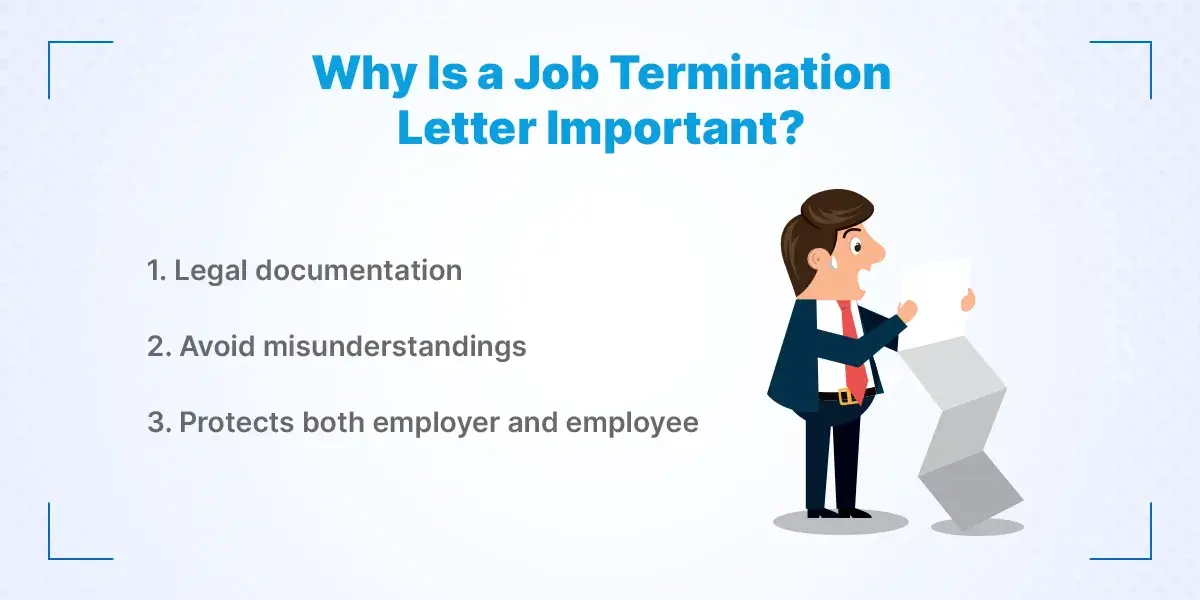
A job termination letter is important because it shows that a person's job has ended. It prevents misunderstandings, protects both the worker and the employer, and serves as legal proof. Without this letter, things can get confusing. This simple letter helps everything go smoothly. It's not just a form; it's a smart and safe choice for everyone.
1. It Serves as Legal Evidence
A main reason for giving a termination letter is to keep a record. It can be used as proof if there is a disagreement or legal problem later. It shows when and why the job ended. If the employee says something different, the company can show the letter. This helps protect the employer from false claims. It also confirms that the right steps were taken, which can be very helpful in court or legal disputes.
2. It Prevents Misunderstandings
When things are not written down, people can forget or remember things differently. A termination letter gathers all the important information in one simple document that everyone can look at. The employee can read it if they don’t understand what was said. This reduces arguing, stress, or confusion later. It also helps managers stay on the same page with HR or legal staff. This way, everyone knows exactly what happened and when.
3. It Safeguards Both Employer and Employee
The letter protects both the employer and the employee. For the employer, it shows they ended the employee's job correctly. For the employee, it gives proof that they are no longer with the company, which can help with future jobs or benefits. If there are any payment or policy problems later, both sides can refer to the letter. It helps keep everything clear and fair, preventing future issues.
When Should You Issue a Job Termination Letter?
A termination letter should be given at the right time, not too early or too late. The best time is after the decision to end the employee's job is made. This means all discussions and warnings should be finished first. Once the company is sure about the decision, the letter should be written and given to the employee. It’s best to do this on the same day as the dismissal to avoid confusion. Waiting too long can cause stress or legal problems.
If the dismissal is not the employee's choice, like for poor performance or company downsizing, the letter should be given during or right after the termination meeting. The letter explains the reasons, what will happen next, and when the termination is official. It also serves as proof that the process was followed correctly. Giving it at the same time keeps everything organized and respectful.
In cases where the employee chooses to leave, a termination letter is not given. Instead, the employee writes a resignation letter. Some companies may give a short letter accepting the resignation, which only states the last working day and other details. So, whether a termination letter is needed depends on who initiated the process: the employee or the employer.
In summary, a job termination letter should be given after the final decision is made and the employee is informed. It is required for involuntary terminations but not necessary for voluntary ones, although it can be helpful. Getting the timing right shows professionalism and makes the exit process easier for everyone.
What are Common Reasons for Job Termination?
Some common reasons for job termination include poor performance, unacceptable behavior, and the company's need to reduce expenses. These reasons help both the employer and the employee understand what went wrong or what could be better. It also shows that losing a job isn't always personal; it can be about the company or behavior. Let’s look at each reason simply.
1. Poor Job Performance
Poor performance is a main reason people get fired. It means the employee is not meeting the company’s standards. They might miss deadlines, make too many errors, or not finish tasks. If they do not improve even after warnings or training, the company may decide to let them go. This usually doesn’t happen right away. Most employers give feedback and chances to get better first.
2. Bad Behavior
Bad behavior is when an employee breaks the rules or acts inappropriately at work. This includes lying, fighting, stealing, or harassing others. Serious cases can lead to immediate firing. Sometimes, the employee has been warned before. If their behavior does not change, the company can fire them. A safe and respectful workplace is important, so bad behavior is taken seriously.
3. Company Downsizing
Sometimes, a company has to let employees go because it is losing business or changing its structure. This is called downsizing. In these situations, even good employees might lose their jobs, not because of their work, but because the company cannot keep as many workers. It’s a business decision, not personal. Companies usually try to give notice and help employees find new jobs when downsizing.
4. Breaking Company Rules or Attendance Problems
If an employee often breaks company rules, like being late or absent without a good reason, they can be fired. Most companies have rules about working hours and attendance. If someone does not follow these rules even after being warned, they risk losing their job. Attendance problems can affect the whole team and the company. That's why they are taken seriously. Being on time and following rules shows responsibility.
Conclusion
Writing a job termination letter might feel hard, but it’s a necessary step. It helps make things clear, fair, and official for both the employer and the employee. A well-written letter avoids confusion and protects everyone involved. It also shows that the company handles things professionally and respectfully. Always include the important details like the employee’s name, job title, end date, final pay, and next steps. Keep the tone polite and kind, even if the situation is tough.
Whether it’s due to performance, behavior, or company changes, the letter should always be clear and respectful. Ultimately, a simple, honest, and well-structured termination letter can make a challenging process much smoother. So take your time, follow the format, and do it the right way.
If you’re searching for new job opportunities in Nepal after termination, Kumari Job offers thousands of verified openings across various industries. Start fresh explore new career options with Kumari Job today.
Frequently Asked Questions
Submit your comments

Get Our App On



What is the Public Relations Officer Salary in Nepal
VIEW DETAILS
What Is the Salary of a Ticketing Officer in Nepal?
VIEW DETAILS
What Is the Salary of a Travel Consultant in Nepal?
VIEW DETAILS
How to Become an Auditor in Nepal
VIEW DETAILS


Loading Comments...