




Agriculture students in Nepal often face a big question early in their studies: how can they gain real experience beyond the classroom? While textbooks and lectures provide theory, practical knowledge is what truly prepares students for the challenges of modern farming, livestock management, and agribusiness. This is why internships are so important. They allow students to work directly on farms, research centers, or development projects under the guidance of industry experts. This gives them hands-on skills and a clearer understanding of the agriculture sector in Nepal.
With the agriculture industry growing and evolving rapidly, students who gain practical experience are more confident, job-ready, and aware of career options. This guide helps you understand internship for agriculture students in Nepal, the benefits, types, and salary. By the end of this article, you will be ready to find the right internship, gain valuable skills, and take the first step toward a successful agriculture career in Nepal or abroad!
In this blog
What Is an Agriculture Internship?
An agriculture internship is a short-term, practical training program where students get hands-on experience in the agriculture sector. These internships allow students to work directly on farms, research centers, agribusinesses, or community projects. Through this exposure, students get to execute the theories they learn in textbooks whilst understanding the real-world challenges and practices in Nepal’s agriculture industry.
Internships can be part of academic requirements or voluntary programs. Academic internships are usually structured and guided by colleges or universities, while voluntary training is often flexible and chosen by students for additional experience. Both types are highly valuable because they help students develop essential technical skills, improve decision-making, and build confidence. In fact, internships are often compulsory or strongly recommended in agriculture studies to ensure that students graduate with practical knowledge and are ready for professional work.
Duration and Timing of Agriculture Internships
Agriculture internships in Nepal usually last between 1 to 6 months, depending on the organization and program. Shorter internships focus on specific tasks or field visits, while longer ones provide in-depth experience in farm management, research, or community projects.
The best time for agriculture internships is often during the planting or harvesting season, as students can observe practical agricultural processes firsthand. Planning your internship around your academic schedule ensures you gain maximum learning without affecting your coursework or exams.
Types of Agriculture Internships Available in Nepal
Agriculture students in Nepal can access a variety of internships, ranging from government offices to private farms, NGOs, and even international programs. These opportunities for students empower them to choose based on their career goals. Below, we will explore each type in detail, so you can understand what they offer and how they can help shape your career.
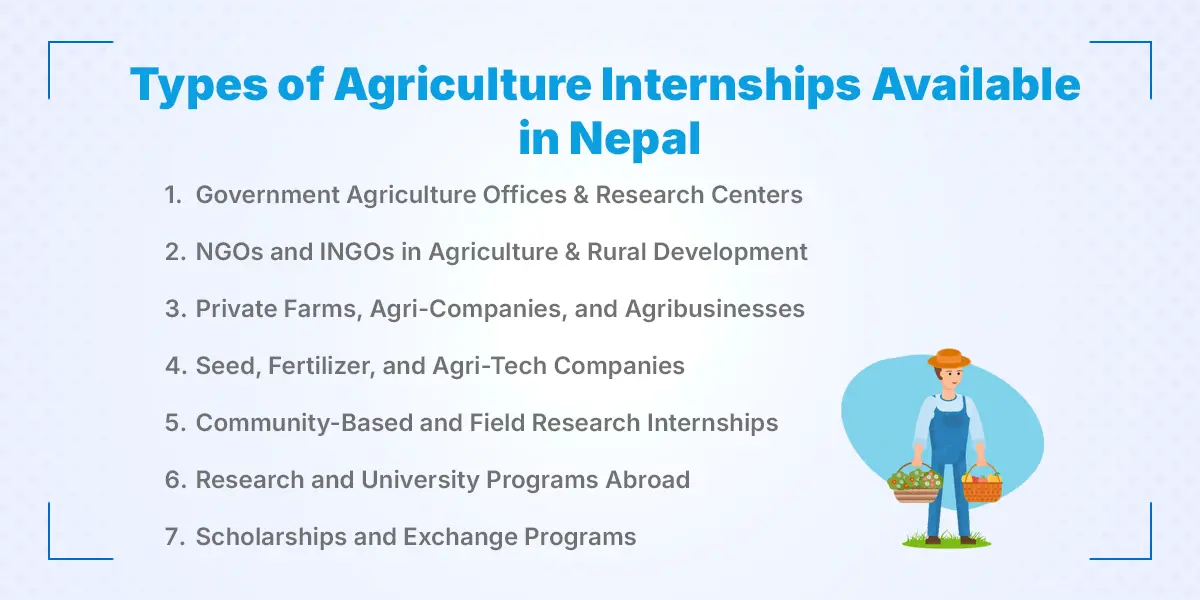
1. Government Agriculture Offices & Research Centers
Internships at government offices and research centers give students direct experience with agricultural planning, policy implementation, and field research. You may work on crop surveys, soil testing, livestock programs, or extension services that support farmers in your district. These internships help students understand the public sector’s role in agriculture and learn how policies affect day-to-day farming. Additionally, students gain exposure to official reporting methods and practical data collection, which is highly valued in both government and private sector jobs.
2. NGOs and INGOs in Agriculture & Rural Development
National and international NGOs often run projects focused on sustainable farming, rural development, and food security. Interns can assist in training farmers, organizing community programs, or conducting field research on local agricultural practices. Working with NGOs or INGOs also helps students develop project management and communication skills while understanding the social and environmental aspects of agriculture. These experiences are valuable for students interested in development work or research careers in Nepal and abroad.
3. Private Farms, Agri-Companies, and Agribusinesses
Private farms and agri-businesses offer hands-on training in crop production, livestock management, and farm operations. Students can learn modern farming techniques, mechanization, and business management practices that are essential for running or managing farms successfully. These internships also expose students to the commercial side of agriculture, including marketing, supply chain, and customer interactions. By participating, students gain practical skills that make them immediately employable in the private sector.
4. Seed, Fertilizer, and Agri-Tech Companies
Internships in seed, fertilizer, and agri-tech companies allow students to understand product development, testing, and distribution processes. You may assist in research on seed quality, fertilizer effectiveness, or digital farming solutions. These experiences provide a bridge between technical knowledge and practical application, especially in innovative farming techniques. Students also gain exposure to corporate operations, client handling, and modern agricultural technology.
5. Community-Based and Field Research Internships
These internships focus on working directly with local farmers and communities, conducting surveys, or implementing small-scale agricultural projects. Students learn to address real challenges like crop diseases, irrigation issues, and market access problems. The hands-on nature of these programs develops problem-solving, data collection, and teamwork skills. Such internships are particularly valuable for students who want to understand grassroots-level agriculture and contribute to local development initiatives.
6. Research and University Programs Abroad
Some universities in Asia, Europe, and other regions offer short-term research internships in agriculture and agribusiness. These programs expose students to advanced farming practices, laboratory research, and modern technologies not commonly available in Nepal. Students also gain international experience, work with diverse teams, and understand global agricultural trends. Such exposure is highly beneficial for building a competitive profile for future studies or careers abroad.
7. Scholarships and Exchange Programs
Scholarships and exchange programs like AIESEC, Erasmus+, or FAO initiatives provide opportunities to gain international experience while working on agricultural projects. These programs combine practical training with cultural exchange, helping students develop cross-cultural communication and adaptability. Interns often work on sustainability, innovation, or community development projects, which add strong value to their learning. By participating, you can expand your professional network and enhance your resume for future opportunities.
Gaining experience through government offices, NGOs, private farms, agri-companies, research programs, and international internships equips students with the skills, knowledge, and exposure needed to succeed in agriculture careers. Understanding these opportunities should shape your vision, guiding you to get an agriculture job in Nepal or abroad.
Skills You Gain During an Agriculture Internship
An agriculture internship provides students with essential skills that are crucial for building a successful career in the sector. These skills range from technical knowledge to communication, problem-solving, and adaptability in real field conditions. By gaining these abilities, students are better prepared to handle professional challenges and take on diverse roles in agriculture after graduation.
1. Technical Agriculture Skills
Internships allow students to apply classroom knowledge to practical tasks such as crop management, livestock care, soil testing, and irrigation practices. Students learn the nuances of plant growth, pest control, and farm machinery, which cannot be fully understood from textbooks alone. They also gain exposure to modern farming techniques and tools that improve efficiency and productivity. Developing these skills ensures that students are technically competent and confident when entering the workforce.
2. Field Reporting and Data Collection
Interns learn to observe, record, and analyze data from farms and agricultural projects. This includes crop yields, soil conditions, pest patterns, and livestock health. Accurate reporting helps in making informed decisions and improves project outcomes. By practicing field reporting, students also develop attention to detail and the ability to communicate findings clearly to supervisors and stakeholders.
3. Communication with Farmers and Teams
Working in real agricultural environments teaches students how to communicate effectively with farmers, colleagues, and project teams. Interns learn to explain technical concepts in simple terms, ask the right questions, and listen actively. These skills are vital for training farmers, coordinating fieldwork, and collaborating with team members. Good communication also builds trust and improves overall productivity in any agricultural project.
4. Problem-Solving and Adaptability in Rural Settings
Interns often face unpredictable challenges such as changing weather, pest outbreaks, or limited resources. They learn to analyze problems, develop solutions, and adapt quickly to new situations. This practical exposure enhances critical thinking and decision-making skills. Over time, students become more resilient, flexible, and capable of managing real-world agricultural challenges effectively.
How to Get an Agriculture Internship in Nepal?
Finding an agriculture internship in Nepal requires planning, research, and preparation to ensure you gain the most from the experience. By following a structured approach, students can select the right internship that matches their skills, interests, and career goals. The steps below guide you through the process so you can secure an internship effectively and start building practical expertise.
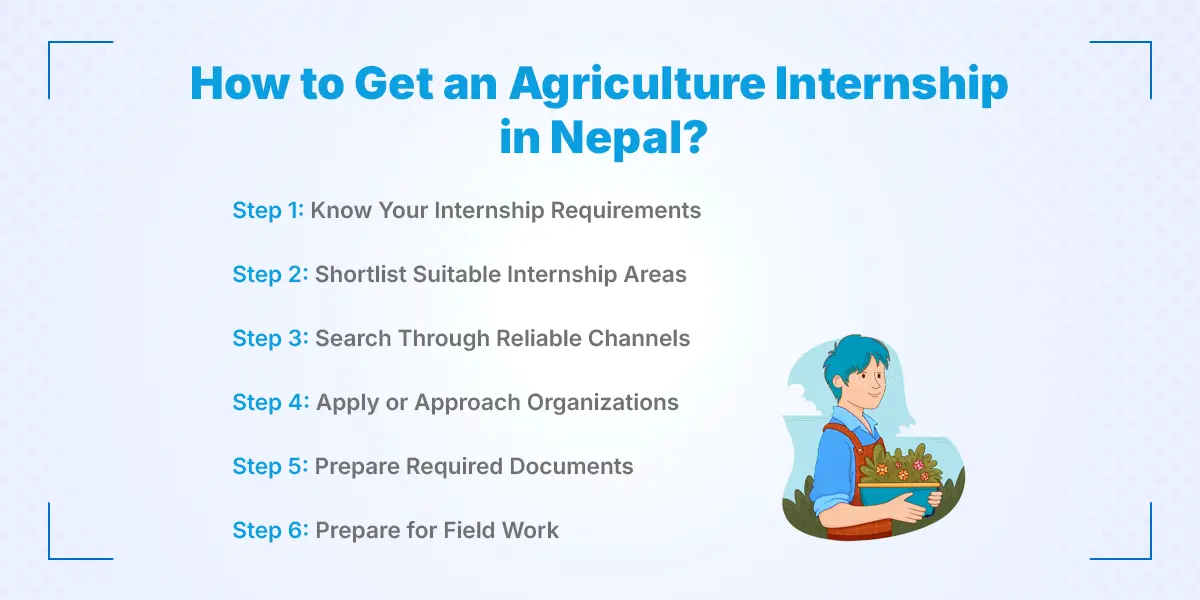
Step 1: Know Your Internship Requirements
Before starting your search, understand your college or university requirements, including the duration, reports, and evaluation criteria. Knowing these details helps you choose internships that fulfill academic obligations while providing meaningful experience. It also prevents unnecessary rejections or mismatched placements. Being clear about requirements sets the foundation for a focused and productive internship journey.
Step 2: Shortlist Suitable Internship Areas
Decide which area of agriculture aligns with your interests and career goals, such as crop science, livestock, agribusiness, or research. Focusing on relevant areas ensures that the skills you gain will directly benefit your future career. Shortlisting also helps you filter opportunities and save time during the application process. It ensures that your internship experience is both practical and purposeful.
Step 3: Search Through Reliable Channels
Look for internships through multiple sources, including college placement offices, government agriculture departments, NGOs, private farms, and verified online job portals like Kumari Job. Checking various channels increases your chances of finding high-quality opportunities. Make a list of potential internships and note application deadlines to stay organized. This research step ensures you have access to the best options available.
Step 4: Apply or Approach Organizations
Submit your CV, cover letter, and academic documents, or reach out directly to farms, agribusinesses, and NGOs. Personal visits or emails often help secure internships that are not widely advertised. Expressing genuine interest and explaining how you can contribute increases your chances of acceptance. Clear and professional communication is key to making a strong first impression.
Step 5: Prepare Required Documents
Keep your CV concise and focused on agriculture-related coursework, projects, and skills. Include recommendation letters and any official academic forms required by your college. Having all documents ready beforehand saves time and shows professionalism. Organized documentation makes it easier for organizations to process your application quickly.
Step 6: Prepare for Field Work
Internships in agriculture often involve hands-on work in farms, labs, or rural communities. Revise basic technical knowledge and familiarize yourself with field procedures, safety protocols, and equipment handling. Being prepared mentally and physically helps you perform better and learn faster. Showing readiness also demonstrates commitment, which supervisors highly value.
Who Can Apply for Agriculture Internships?
Agriculture internships in Nepal are open to students at different academic levels, depending on the program and organization. Understanding eligibility helps students pick internships that match their skills, interests, and future career goals. Below is a clear overview of who can apply and what types of internships suit each group.
1. Diploma Students (Agriculture and Allied Subjects)
Diploma students in agriculture, horticulture, livestock management, or related subjects typically participate in hands-on field internships. These internships focus on practical skills such as crop production, animal care, soil testing, and basic farm management. The goal is to give students real-world exposure that complements their classroom learning. By gaining technical and operational skills, diploma students become better prepared for entry-level roles in farming, cooperatives, or agribusinesses.
2. Bachelor Students (Agriculture, Agribusiness, Horticulture, and Forestry)
Bachelor students usually have access to more advanced internships in research, agribusiness management, policy projects, or rural development programs. They may engage in data analysis, project planning, extension services, or innovative farming techniques. These internships develop both practical and analytical skills, bridging academic knowledge with professional work. Bachelor-level students benefit from exposure to higher-level responsibilities, preparing them for managerial or specialized roles after graduation.
3. Eligibility Requirements for Agriculture Internships in Nepal
Most internship programs require students to be enrolled in a recognized diploma or bachelor-level agriculture program, meet minimum academic standards, and have basic technical knowledge or recommendations if needed. Typical requirements include:
- Education: Enrolled in a recognized diploma or bachelor program in agriculture, horticulture, livestock, or related subjects.
- Academic Performance: Minimum grades or academic standing as required by the organization.
- Age: Usually 18 years or older, depending on the program.
- Skills: Basic knowledge of agriculture practices, computer literacy, or field-related technical skills.
- Recommendations: Faculty or supervisor recommendation letters (if required).
- Field Readiness: Willingness to work in farms, rural communities, or research settings.
Salary of Agriculture Interns in Nepal
Understanding how much agriculture interns earn in Nepal helps students plan their finances and set realistic expectations. Salaries vary depending on the type of organization, location, and internship level. Below is a detailed look at typical intern compensation in different sectors and regions.
1. Average Salary in General Agriculture Fields
Most internships in government offices, private farms, or research centers offer a modest stipend or sometimes only field allowances. On average, students can expect around NPR 5,000–15,000 per month, depending on the workload and duration. This provides basic financial support while gaining practical experience.
2. Salary in NGOs and INGOs
Interns in NGOs and INGOs often receive slightly higher stipends, especially with international funding or development projects. Salaries range from NPR 10,000–25,000 per month, sometimes including food or travel allowances. The exact amount usually depends on project scope, funding, and location.
3. International Agriculture Internship Salary
Students who take internships abroad can expect allowances or stipends that are higher than in Nepal, depending on the country and organization. Some programs provide accommodation, meals, and travel support, while others may offer monthly allowances ranging from USD 200–500. International exposure also brings added learning and networking benefits beyond the financial aspect.
4. Salary Differences: Kathmandu vs Rural Areas
Agriculture interns in Kathmandu or major cities generally receive higher stipends than those placed in rural areas. Urban internships may offer NPR 12,000–20,000 per month, while rural placements often range from NPR 5,000–12,000. However, rural internships provide stronger hands-on field experience and exposure to grassroots agricultural challenges.
5. Paid vs Unpaid Agriculture Internships in Nepal
Internship compensation varies widely in Nepal, and students should have realistic expectations before applying. Some internships offer a stipend, accommodation, travel allowance, or meals, while many programs, especially research or voluntary projects, may not provide payment. Even unpaid internships are valuable if they offer hands-on experience, skill development, and networking opportunities. Students should weigh the benefits of learning, exposure, and career growth when deciding whether to join a paid or unpaid program
Career Opportunities After Agriculture Internship
Completing an agriculture internship opens multiple career paths for students in Nepal, helping them transition from academic learning to professional work. Internships provide practical skills, exposure to real-world challenges, and professional connections that are highly valued by employers. By understanding the opportunities available, students can plan their careers more effectively and make informed decisions.
1. Entry-Level Agriculture Jobs
Many interns start with roles in farms, agribusinesses, or agricultural companies where they manage crops, livestock, or production operations. These positions allow fresh graduates to apply their technical knowledge, gain practical experience, and build confidence in a professional setting. Entry-level jobs often serve as stepping stones to higher responsibility roles in the sector.
2. Research Assistant Roles
Students can work as research assistants in universities, government research centers, or private labs. These research roles involve data collection, field trials, and analysis, helping students develop analytical and technical research skills. It’s an ideal path for those considering a career in agricultural research or higher studies.
3. NGO/INGO Project Work
Interns often continue their work with NGOs or INGOs focused on sustainable agriculture, rural development, and community projects. This experience equips students with project management, communication, and problem-solving skills while contributing to social impact. It is also useful for building a professional network and gaining international exposure in some cases.
4. Starting Your Own Agri-Business or Farm
Internships give practical knowledge of farming operations, business management, and market dynamics. Students interested in entrepreneurship can use these insights to start their own farms, agribusiness ventures, or agro-based startups. Hands-on experience reduces risk and increases the chances of running a successful business.
5. Preparing for Government Service Exams
Many internships prepare students for roles in government agriculture offices by providing field exposure and practical understanding of policies. Interns gain insight into government programs, reporting procedures, and technical processes, which can be valuable for competitive exams and civil service positions. This path is ideal for students aiming for long-term stability and service in the public sector.
Conclusion
Agriculture internships are an essential step for students in Nepal, as they provide practical skills, real-world experience, and a clearer understanding of the sector. By working in government offices, NGOs, private farms, agribusinesses, or international programs, students gain hands-on knowledge that cannot be learned from textbooks alone. Internships also help build confidence, improve employability, and open doors to diverse career opportunities, from research and development to entrepreneurship and government service.
To make the most of these opportunities, it is important to plan early, choose internships that align with your interests, and prepare thoroughly for both fieldwork and professional expectations. Taking these steps ensures a meaningful and rewarding experience. Start exploring verified agriculture internship opportunities in Nepal today, and take the first step toward a successful and fulfilling career in the agriculture sector.
Frequently Asked Questions
Submit your comments

Get Our App On



What is the Public Relations Officer Salary in Nepal
VIEW DETAILS
What Is the Salary of a Ticketing Officer in Nepal?
VIEW DETAILS
What Is the Salary of a Travel Consultant in Nepal?
VIEW DETAILS
How to Become an Auditor in Nepal
VIEW DETAILS


Loading Comments...