



Which skills and strategies will help you land a top video editing job in Nepal in 2026? With digital content booming on YouTube, social media, and corporate platforms, skilled video editors are in high demand. Many beginners struggle to understand where to start, which tools to master, or how to build a portfolio that attracts employers. Choosing the right career path now can significantly impact both income potential and long-term growth in Nepal’s rapidly expanding media and creative industry.
In this blog, video editing jobs in Nepal are explored in detail, covering the different types of roles, required skills, salary expectations, and application process. We will guide you step-by-step on how to prepare your CV, build a strong portfolio, and find reliable job opportunities. Additionally, readers will learn about career growth, challenges, and tips to succeed in the fast-evolving field of video editing.
In this blog
Introduction to Video Editing Jobs in Nepal
Video editing jobs in Nepal are becoming one of the most sought-after creative careers. Editors play a vital role in shaping visual stories for films, advertisements, social media, and corporate content. With the rise of YouTube channels, digital marketing, and online video campaigns, businesses and media houses require skilled professionals who can craft compelling videos that engage audiences. A career in video editing combines creativity, technical expertise, and storytelling, making it a rewarding choice for those passionate about visual content.
The demand for talented video editors is growing rapidly across media, advertising, and digital industries. Professionals who master editing software, such as Adobe Premiere Pro, Final Cut Pro, and After Effects, gain a competitive edge in the job market. Additionally, storytelling skills, attention to detail, and an understanding of pacing, sound, and visual effects are essential for career success. Building a strong portfolio and keeping up with industry trends can open doors to high-paying, long-term video editing jobs in Nepal and beyond.
Types of Video Editing Jobs in Nepal
Video editing careers in Nepal offer diverse opportunities across freelance, in-house, and specialized roles. Each type of job comes with its own set of responsibilities, skill requirements, and growth potential. Freelancers enjoy flexibility and can work on multiple projects, while in-house editors benefit from structured environments and steady salaries. Specialized roles like post-production and motion graphics allow professionals to focus on creative and technical expertise, often commanding higher pay. Choosing the right type depends on your skills, career goals, and preferred work environment.
1. Freelance Video Editor
Freelance video editors work on short-term projects for clients such as YouTubers, small businesses, and advertising campaigns. They often handle the entire editing process, from cutting raw footage to adding transitions, effects, and sound. Freelancers can work remotely and manage multiple clients simultaneously, which provides flexibility and exposure to different types of content. Success requires building a strong portfolio, good communication with clients, and meeting deadlines consistently. Freelancers can also increase earnings by specializing in niches like social media videos or corporate promos.
2. In-House Video Editor
In-house editors work full-time for production houses, media companies, marketing agencies, or corporate video teams. They collaborate closely with directors, marketers, and content creators to produce polished videos for internal or external campaigns. The role offers stable salaries, regular working hours, and access to professional resources. In-house editors often gain hands-on experience across multiple projects and receive mentorship from senior professionals. Developing advanced skills and consistently delivering high-quality videos can lead to promotions and more creative responsibilities.
3. Post-Production Specialist
Post-production specialists focus on refining video projects after initial editing. This includes color grading, audio mixing, visual effects (VFX), and final rendering. These roles require advanced knowledge of editing software and attention to detail, as the final quality depends heavily on the specialist’s skills. Post-production specialists are often employed in film production, advertising agencies, and media studios. Mastery in specific tools like DaVinci Resolve or After Effects can increase marketability and salary potential. Experienced specialists may also supervise junior editors or manage complex projects.
4. Motion Graphics and Animation Editor
Motion graphics and animation editors create animated videos, intros, explainer videos, and special visual effects. This role combines creativity, design sense, and technical skills in software like After Effects, Blender, or Cinema 4D. Motion graphics editors are in demand in advertising, digital marketing, social media, and corporate presentations. Professionals in this field can command higher pay due to specialized skills. Building a portfolio of dynamic animations and keeping up with trends ensures better career growth and opportunities to work with larger clients or international projects.
How to Get Video Editing Jobs in Nepal? Step-by-Step
You can get video editing jobs in Nepal by following a structured approach that combines skill development, strong portfolio creation, and active job searching. Building your expertise in editing software, curating a portfolio that showcases creativity, and networking with industry professionals are key steps to securing good opportunities. Additionally, preparing for interviews and practical editing tests increases your chances of standing out among applicants. A consistent strategy will help both beginners and experienced editors find suitable roles in media houses, production companies, and corporate content teams.
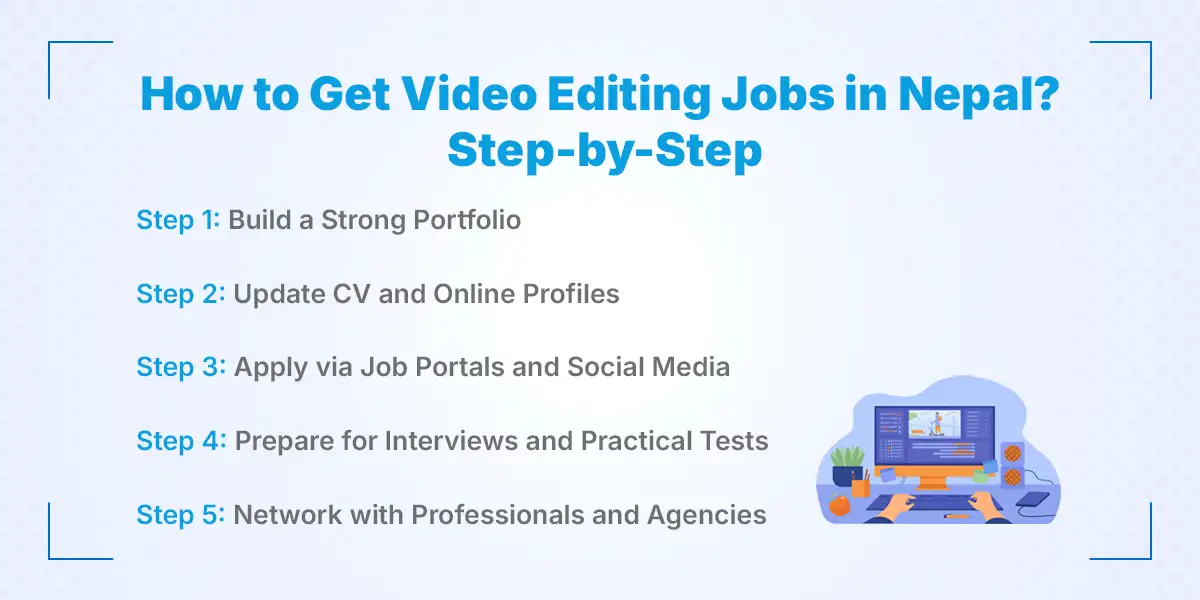
Step 1 – Build a Strong Portfolio
A compelling portfolio is crucial for video editors, as it demonstrates your style, technical skills, and creativity. Include diverse projects such as promotional videos, social media content, short films, and animation work. Highlight your proficiency in software like Adobe Premiere Pro, Final Cut Pro, After Effects, or DaVinci Resolve. Make sure each project shows clear storytelling, smooth transitions, color grading, and audio mixing skills. Sharing your portfolio on platforms like Vimeo or a personal website increases visibility. Updating your portfolio regularly ensures prospective employers see your most current and relevant work.
Step 2 – Update CV and Online Profiles
Your CV should clearly list your skills, software proficiency, past projects, and relevant work experience. Use a professional format and include links to your portfolio. Maintain updated online profiles on platforms like LinkedIn or specialized creative networks to attract recruiters. Highlight any certifications, workshops, or online courses that add credibility. When you prepare a CV, tailoring it for each application ensures alignment with job requirements. Employers often check social media or professional profiles, so make sure they reflect your professional image and creative capabilities.
Step 3 – Apply via Job Portals and Social Media
Start applying for positions through trusted online portals like Kumari Job and the official websites of media or production companies. Use social media platforms like LinkedIn or Facebook groups to find freelance and full-time opportunities. Customize each application with a targeted cover letter emphasizing relevant experience. Keep track of applications, deadlines, and follow-ups to stay organized. Consistent applications increase visibility and improve your chances of securing interviews for both freelance and in-house editing positions.
Step 4 – Prepare for Interviews and Practical Tests
Many video editing roles require practical tests to assess technical and creative skills. Practice common tasks such as cutting raw footage, adding transitions, color correction, and syncing audio. Be ready to discuss your creative choices and workflow during interviews. Highlight your problem-solving skills, ability to work under deadlines, and adaptability to different project types. As you prepare for interview sessions, remember that preparing ahead helps reduce stress and shows professionalism, increasing your likelihood of being hired. Reviewing industry trends and current editing styles can also impress employers.
Step 5 – Network with Professionals and Agencies
Networking is key to uncovering hidden opportunities in the video editing industry. Attend industry events, online workshops, or creative meetups to connect with editors, producers, and content creators. Join professional social media groups or forums to share your work and get feedback. Referrals from established professionals can lead to interviews or freelance projects. Building a strong network enhances credibility, exposes you to varied projects, and opens doors to collaborations or higher-paying positions. Active engagement in the community demonstrates passion and commitment to your craft.
Skills Required for Video Editing Jobs in Nepal
To succeed in video editing jobs in Nepal, you need a combination of technical proficiency, creative storytelling, and professional soft skills. Editors must adapt to different projects, industries, and client expectations while consistently delivering high-quality videos. Mastery of editing software, understanding visual aesthetics, and managing time effectively are essential for both freelance and in-house roles. Developing these skills ensures competitiveness in a rapidly growing market and improves opportunities for career growth and higher pay.
1. Technical Editing Skills
Proficiency in editing software like Adobe Premiere Pro, Final Cut Pro, DaVinci Resolve, and After Effects is crucial. Editors must be skilled in cutting footage, adding transitions, color grading, audio mixing, and visual effects. Understanding different formats, resolutions, and output requirements is also important. Technical skills extend to motion graphics, animation, and working with multi-camera setups. Continuous learning of new tools and plugins keeps editors up-to-date with industry trends. Strong technical ability ensures smooth, professional, and visually appealing videos.
2. Storytelling and Creative Skills
A video editor must convey a clear story that engages audiences and evokes emotion. Creativity involves choosing the right shots, pacing, transitions, and music to craft a compelling narrative. Editors should understand the target audience and project goals to make informed creative decisions. Adding unique visual effects, animations, or innovative editing techniques can elevate video quality. Creative skills differentiate ordinary editors from exceptional professionals. Practicing storytelling across multiple formats like short films, social media content, and promotional videos enhances versatility.
3. Communication and Collaboration
Video editors frequently work with directors, clients, producers, and team members. Clear communication ensures that project requirements are understood and delivered accurately. Collaboration helps integrate feedback effectively and maintain consistency in style and tone. Strong interpersonal skills help build professional relationships and foster trust with clients and colleagues. Being receptive to criticism and adaptable to project changes is crucial. Editors who communicate well contribute to smoother workflows and higher-quality output, enhancing reputation in the industry.
4. Time Management and Deadline Handling
Meeting deadlines is critical in video editing, as projects often involve tight schedules and client expectations. Editors must prioritize tasks, organize assets efficiently, and allocate time for revisions. The ability to work under pressure while maintaining quality demonstrates reliability. Planning workflows, creating timelines, and estimating editing time accurately reduces last-minute stress. Efficient time management enables handling multiple projects simultaneously. Strong discipline and organization are key to maintaining productivity and building a professional reputation in the competitive video editing industry.
Salary and Career Growth in Video Editing
Video editing jobs in Nepal offer competitive pay that grows with experience, skill level, and industry expertise. Salaries vary between entry-level positions, experienced editors, and freelance roles. To understand your earning potential, researching the average salary in Nepal for creative professionals is vital; typically, monthly pay ranges from NPR 30,000 for freshers to over NPR 1,00,000 for senior editors. Career growth also depends on mastering advanced editing techniques, building a strong portfolio, and networking with industry professionals. Progressing from junior roles to senior positions can unlock higher earnings and leadership opportunities.
1. Entry-Level Salary Range
Entry-level video editors with 0-2 years of experience typically earn NPR 30,000-60,000 per month. This range varies depending on the type of company, location, and skill proficiency. Working in cafés, small media houses, or freelancing initially may influence pay. Building experience, improving software skills, and creating a strong portfolio can increase earning potential. Entry-level roles provide a foundation for developing technical expertise and industry understanding.
2. Experienced Video Editor Salary
Mid-level editors (2-5 years) earn approximately NPR 60,000-100,000, while senior editors with 5+ years of experience can make NPR 100,000+. Experience, specialization in motion graphics, animation, or advanced software proficiency significantly impacts salary. Working for reputed media houses, production companies, or high-profile clients also increases earning potential. Career growth comes with recognition, complex projects, and the ability to manage teams.
3. Freelance Income Potential
Freelance video editors can earn income based on project scope, complexity, and client budget. Short-term assignments, corporate videos, social media content, and YouTube projects provide flexible opportunities. Skilled freelancers with a strong portfolio and good client network can earn similar or higher than full-time salaries. Freelancing also allows global clients, remote work, and multiple simultaneous projects, giving editors control over workload and income.
4. Career Advancement Opportunities
Career advancement includes roles like senior video editor, post-production supervisor, or creative director. Editors can also specialize in motion graphics, VFX, or animation for higher-paying positions. Leadership roles, mentoring junior editors, or managing large-scale projects enhance credibility and earnings. Continuous skill improvement, networking, and staying updated with trends create long-term growth opportunities. Editors can eventually move into content strategy or media production management roles.
Where to Find Video Editing Jobs in Nepal?
You can find video editing jobs in Nepal through online job portals like Kumari Job, as well as directly in production houses and media companies. Exploring multiple sources increases your chances of discovering suitable openings for both full-time and freelance work. Networking with professionals and participating in creative communities also helps uncover hidden opportunities and grow your career.
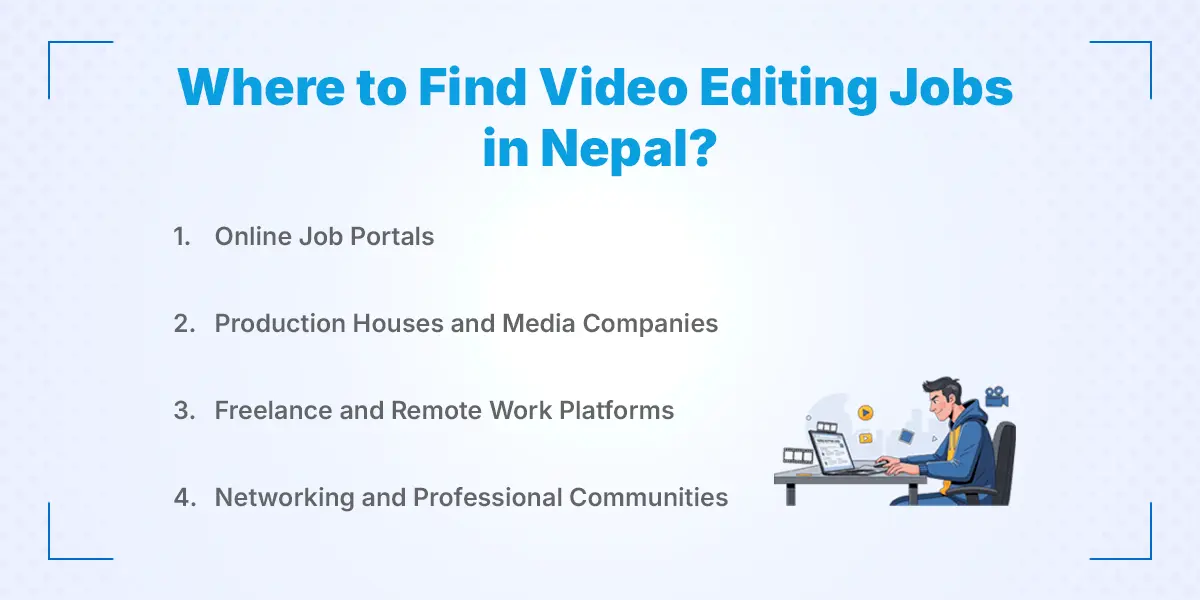
1. Online Job Portals
Online job portals like Kumari Job regularly list video editing vacancies across Nepal. These portals provide updated listings, application instructions, and deadlines in one place. Applicants can filter jobs based on experience, location, or type of company. Submitting applications through portals ensures a formal process and helps track your submissions efficiently. Portals often feature freelance or contract-based projects as well. Regularly checking them keeps you informed about the latest openings.
2. Production Houses and Media Companies
Directly approaching production houses, film studios, and media companies is an effective way to find video editing roles. These companies hire editors for commercials, TV programs, corporate videos, and social media content. Building connections within the industry can also lead to referrals or unadvertised opportunities. Visiting company websites or contacting HR departments may reveal openings not listed elsewhere. Hands-on experience and a strong portfolio significantly improve your chances.
3. Freelance and Remote Work Platforms
Freelance and remote opportunities allow editors to work with clients locally and globally. Platforms like Upwork, Fiverr, or independent contracts let you gain diverse project experience. Freelancing provides flexibility in workload, client selection, and project types. Maintaining an online portfolio and professional profiles increases visibility to potential clients. Consistent delivery and strong communication can lead to repeat clients and higher-paying projects. Freelance work also enhances skill versatility across different industries.
4. Networking and Professional Communities
Joining professional communities, social media groups, and industry forums can uncover hidden job opportunities. Networking helps in gaining referrals and mentorship from experienced editors. Attending workshops, webinars, and film festivals can create direct connections with recruiters or creative directors. Engaging in online communities also allows learning about emerging tools, trends, and industry standards. Building a strong professional presence increases credibility and long-term career growth.
Challenges and Opportunities in Video Editing Careers
Video editing careers in Nepal come with both challenges and opportunities. While the demand for skilled editors is rising, competition is intense. Editors must constantly upgrade software and creative skills to stay relevant. At the same time, growth in digital content, advertising, and online media provides promising career prospects.
1. High Competition and Skill Demands
The video editing industry is highly competitive, with many aspiring editors entering the market. Employers expect proficiency in software like Adobe Premiere, After Effects, or DaVinci Resolve. Creativity, storytelling, and technical skills are essential to stand out. Continuous learning and building a strong portfolio can give candidates an advantage over peers. Meeting client expectations consistently is also critical.
2. Opportunities in Digital Content Growth
Growth in social media, YouTube channels, advertising, and corporate videos creates a high demand for talented editors. Skilled editors can work with brands, influencers, or media houses for long-term projects. The rise of online content consumption allows for diverse project exposure and income opportunities. Specializing in niches like animation, VFX, or motion graphics can increase marketability.
3. Work-Life Balance and Project Deadlines
Editors often face tight deadlines, long hours, and multiple simultaneous projects, which can affect work-life balance. Proper time management, prioritization, and communication with clients help manage workload efficiently. Freelancers may have more flexibility, but still need to meet client expectations. Learning to handle pressure while maintaining creativity is key to sustainable growth.
Tips for Success in Video Editing Jobs in Nepal
Success in video editing requires more than technical skills; it involves continuous learning, building a strong portfolio, and staying updated with industry trends. Networking with professionals, taking smaller projects to gain experience, and creating a recognizable personal brand can significantly improve career prospects. Developing both creative and soft skills ensures editors remain competitive in Nepal’s growing media and digital content industry.
- Continuous learning of new tools and trends: Video editing tools like Premiere, After Effects, and DaVinci Resolve evolve quickly. Learning new software and techniques keeps editors competitive and creative.
- Building a strong personal brand and online presence: Showcase your work on platforms like Behance, YouTube, and LinkedIn. A strong portfolio and online presence attract clients and employers.
- Networking with industry professionals: Connect with editors, creative directors, and teams through workshops and online communities. Networking leads to opportunities, mentorship, and collaborations.
- Taking small projects to build credibility: Start with small or volunteer projects to gain experience and build a portfolio. Completing projects consistently boosts credibility and opens bigger opportunities.
Conclusion
Video editing jobs in Nepal offer exciting opportunities for creative professionals, but success requires a mix of technical skills, creativity, and strategic career planning. Building a strong portfolio, mastering essential software, and staying updated with industry trends can help aspiring editors stand out in a competitive market.
Additionally, networking with professionals, taking on smaller projects, and creating a personal brand can accelerate career growth and open doors to high-paying or freelance opportunities. With persistence, continuous learning, and practical experience, video editors in Nepal can enjoy a fulfilling career with steady growth and diverse creative projects.
Frequently Asked Questions
Submit your comments

Get Our App On



What is the Public Relations Officer Salary in Nepal
VIEW DETAILS
What Is the Salary of a Ticketing Officer in Nepal?
VIEW DETAILS
What Is the Salary of a Travel Consultant in Nepal?
VIEW DETAILS
How to Become an Auditor in Nepal
VIEW DETAILS


Loading Comments...