




Do you find it hard to choose between online campaigns and traditional advertising in Nepal? Many businesses invest heavily in one approach without seeing measurable results because they lack clarity on which method works best for their target audience. This often leads to wasted budgets and missed growth opportunities.
In this blog, we break down Digital Marketing vs Traditional Marketing in Nepal. You’ll learn the key differences, advantages, limitations, and current trends of both strategies. By the end, you’ll understand which approach suits your business needs and how to combine methods to maximize results. This guide also highlights practical tips for businesses of all sizes to improve reach and engagement.
In this blog
Overview of Marketing in Nepal
Marketing in Nepal plays a crucial role in helping businesses reach customers and grow their presence. Companies use various methods to promote products and services, ranging from traditional channels like newspapers, radio, and billboards to modern digital platforms such as social media, websites, and email campaigns. Effective marketing allows brands to communicate value, attract potential buyers, and build customer loyalty.
Over the years, the marketing landscape in Nepal has evolved rapidly. While traditional marketing still holds significance in rural and semi-urban areas, the scope of digital marketing is growing rapidly among urban businesses and younger audiences. Understanding the local market, customer preferences, and communication channels is essential for creating successful marketing strategies.
What is Traditional Marketing?
Traditional marketing refers to offline methods of promoting products and services to a broad audience. It includes key channels such as television, radio, newspapers, magazines, billboards, flyers, and brochures. Businesses use these techniques to reach customers through direct and indirect exposure. This approach has been the backbone of marketing before the rise of digital platforms.
Advantages of Traditional Marketing in Nepal
- Wide reach across urban and rural areas
- Builds strong brand recognition over time
- Effective for local promotions and community engagement
- Easy for audiences unfamiliar with digital tools to access
- Tangible materials like brochures create lasting impressions
Limitations of Traditional Marketing
- High costs for production and placement of ads
- Difficult to measure ROI and campaign effectiveness
- Limited audience targeting compared to digital platforms
- Slower feedback and engagement from customers
- Less flexibility to adjust campaigns once launched
What is Digital Marketing?
Digital marketing refers to promoting products or services using online platforms and electronic devices. Key channels include social media, search engine optimization (SEO), email marketing, pay-per-click (PPC) advertising, content marketing, and websites. This approach allows businesses to reach targeted audiences, track performance, and engage customers in real-time. Digital marketing has become essential for businesses looking to expand their online presence and drive measurable results.
Advantages of Digital Marketing in Nepal
- Cost-effective compared to traditional marketing methods
- Precise audience targeting based on demographics and interests
- Real-time tracking and measurable results for campaigns
- High engagement opportunities through social media and interactive content
- Flexible and easy to adjust campaigns quickly based on performance
Limitations of Digital Marketing
- Requires internet access and digital literacy among target audiences
- High competition can make visibility challenging for small businesses
- Continuous monitoring and optimization are needed for best results
- Cybersecurity and privacy concerns for both businesses and customers
- May not reach audiences in rural areas with limited online access
Want Skills That Actually Get You Hired?
Master SEO, social media, and ads with hands-on digital marketing training from industry experts.
Digital vs Traditional Marketing: Head-to-Head Comparison
Digital and traditional marketing serve different purposes and audiences, each with unique strengths and limitations. Businesses often face challenges deciding where to invest their budget for maximum impact. Comparing cost, reach, engagement, and flexibility helps brands choose the right strategy or a combination of both. Understanding these differences is essential for effective marketing planning in Nepal.
| Comparison Factor | Traditional Marketing | Digital Marketing |
|---|---|---|
| Cost Efficiency | High production and placement costs; budget-intensive | More cost-effective; scalable based on budget |
| Audience Reach and Targeting | Broad, general audience; limited targeting options | Highly targeted based on demographics, interests, and behavior |
| Measurability and Analytics | Difficult to measure ROI; relies on estimates and surveys | Real-time tracking and detailed analytics available |
| Engagement and Interaction | Passive audience; limited direct interaction | High engagement; interactive content and social media communication |
| Flexibility and Adaptability | Campaign changes are slow and costly | Easy to adjust campaigns quickly based on performance |
Current Trends of Marketing in Nepal
Marketing in Nepal is evolving with a strong shift toward digital platforms while traditional methods remain relevant in certain areas. Businesses are increasingly combining online and offline strategies to maximize reach and engagement. Understanding current trends and the different types of digital marketing helps brands stay competitive and connect with their target audience effectively. Companies now focus on measurable results, interactive campaigns, and cost-efficient marketing solutions.
1. Popular Digital Marketing Platforms
Social media platforms like Facebook, Instagram, TikTok, and LinkedIn are widely used by Nepalese businesses to reach urban audiences. Search engine optimization (SEO) and Google Ads help improve online visibility and drive traffic. Email marketing and content marketing remain effective for lead generation and customer engagement. Digital campaigns are favored for their ability to provide measurable results and real-time feedback.
2. Traditional Marketing Trends Still in Use
Billboards, newspapers, radio, and television continue to play a significant role, especially in rural and semi-urban areas. Local promotions, events, and community-based campaigns help businesses maintain brand presence. Print materials like flyers, brochures, and posters are still used for direct marketing. Many companies combine these with digital efforts to maintain a balanced outreach strategy.
3. Hybrid Marketing Approaches
Many businesses adopt hybrid approaches that mix digital and traditional marketing techniques. For example, a TV campaign may be supported with social media ads and online promotions. This strategy increases overall reach and allows targeting multiple audience segments. Hybrid marketing also helps track results from digital platforms while maintaining offline visibility.
Join Job-Oriented Digital Marketing Classes Today!
How Digital Marketing is Taking Over Traditional Marketing?
Digital marketing is overtaking traditional marketing due to its cost efficiency, precise targeting, and measurable results. Businesses can reach specific audiences online, track engagement, and adjust campaigns in real-time. Social media marketing in Nepal offers higher interaction and feedback compared to static ads, making it a powerful tool for engagement. Urban consumers increasingly prefer online platforms, reducing the impact of print and broadcast media. The flexibility and scalability of digital campaigns make them more effective for both small and large businesses. Over time, measurable ROI and data-driven strategies have made digital marketing the preferred choice in Nepal.
Career in Digital Marketing
Digital marketing offers diverse career opportunities in Nepal, catering to various skill sets and interests. The field is growing rapidly as businesses increasingly shift online, creating demand for skilled professionals. Careers range from creative content roles to analytical and technical positions. Understanding the roles, growth potential, and required skills helps aspirants plan a successful digital marketing internship and gain practical experience in this sector.
1. Roles and Job Profiles (SEO, Social Media, Content, PPC, etc.)
Digital marketing roles in Nepal include SEO specialists who optimize websites for search engines, social media managers handling campaigns on platforms like Facebook and Instagram, and content strategists creating engaging material for blogs and websites. PPC and advertising specialists manage paid campaigns on Google and social media, while email marketing executives design campaigns for lead generation and customer retention. Each role requires specific skills and contributes to a business’s overall online presence.
2. Salary and Growth Potential in Nepal
Salaries in digital marketing vary by role, experience, and company size. Entry-level positions typically start at NPR 20,000-35,000 per month, while experienced specialists or managers can earn between NPR 70,000 and 150,000. Technical roles, such as SEO or PPC experts, often command higher pay. Career growth is strong, with opportunities to advance into managerial positions or specialized consultancy roles over time.
3. Emerging Trends and Skills in Demand
Skills in data analysis, SEO, social media marketing, and content strategy are in high demand. Proficiency in paid advertising, email marketing, and video content creation is increasingly valuable. Knowledge of analytics tools, automation software, and AI-driven marketing solutions provides a competitive edge. Continuous learning and adaptability are essential to remain relevant in the rapidly evolving digital landscape.
Where to Find Digital Marketing Jobs in Nepal?
You can find digital marketing jobs in Nepal on job portals like Kumari Job, as well as on LinkedIn, company career pages, and relevant Facebook groups. These platforms provide regular updates on openings, detailed job descriptions, and application deadlines. Monitoring multiple sources increases the chances of finding suitable roles. Staying active on these platforms also helps in networking with professionals and discovering hidden opportunities.
1. Job Portals
Job portals like Kumari Job provide centralized listings for digital marketing vacancies. They include detailed job descriptions, eligibility criteria, and application instructions. Features like email alerts and category filters help candidates quickly find roles that match their skills and preferences.
2. LinkedIn
LinkedIn is widely used for professional networking and job hunting. Companies post digital marketing openings directly on LinkedIn, and candidates can apply using their profiles. The platform also allows networking with industry professionals, following companies, and receiving job alerts tailored to your experience and location.
3. Company Career Pages
Many businesses maintain dedicated career pages on their websites. Checking these pages regularly ensures access to the latest job openings before they appear on other platforms. Career pages provide detailed role descriptions, company insights, and direct application links.
4. Facebook Groups
Facebook groups focused on jobs in Nepal often share digital marketing opportunities. Members post job openings, internships, and freelance gigs. Engaging in these groups allows networking, discussions, and quick updates on new vacancies shared by fellow members.
Where Can You Learn Digital Marketing in Nepal?
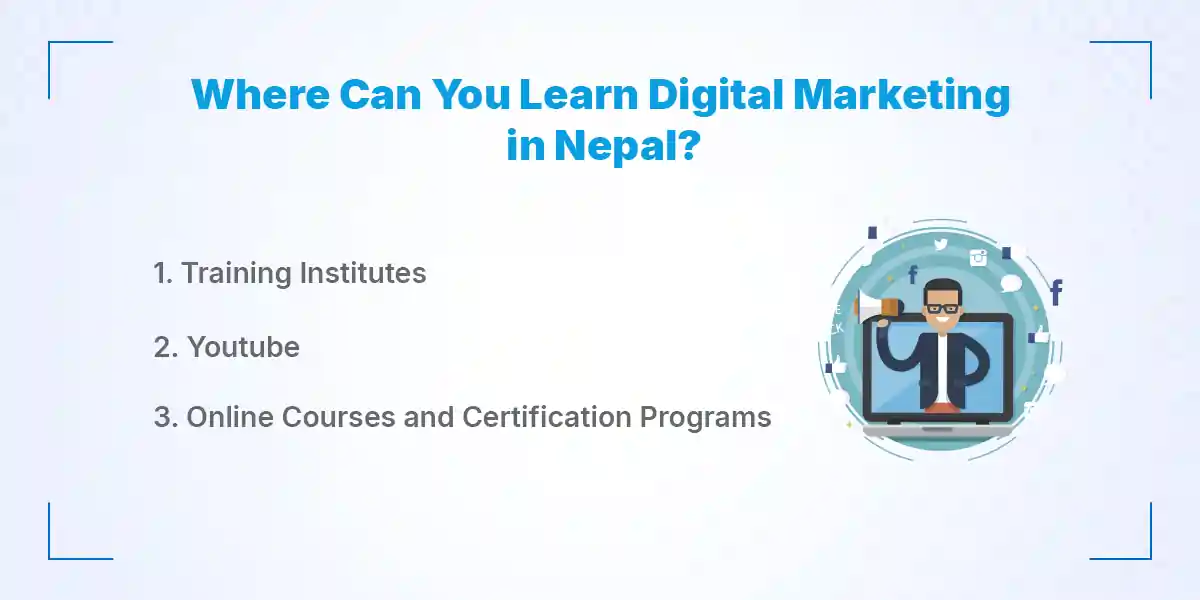
You can learn digital marketing in Nepal at training institutes like Kumari Job, which offer basic digital marketing training with structured courses and practical guidance. These programs cover key areas such as SEO, social media marketing, content creation, and paid advertising. Learning from a recognized institute helps build strong foundational knowledge and practical skills. Many institutes also provide mentorship and career support for aspiring digital marketers.
1. Training Institutes
Training institutes like Kumari Job provide advanced digital marketing training for professionals looking to enhance their existing skills. The curriculum typically covers SEO, social media marketing, content creation, email marketing, PPC campaigns, and analytics. Students get hands-on experience through practical projects, live case studies, and assignments that simulate real-world campaigns. Institutes also offer guidance on career opportunities, resume building, and interview preparation to help learners transition successfully into higher-level digital marketing roles.
Explore Kumari Job's Advanced Digital Marketing Classes
2. YouTube
YouTube serves as a free and accessible platform for learning digital marketing concepts. Creators and industry experts provide tutorials on SEO techniques, social media strategies, content marketing tips, and advertising campaigns. Learners can follow step-by-step demonstrations, watch case studies, and gain insights into current trends. While it is self-paced learning, YouTube is particularly useful for supplementing formal training and practicing new skills independently.
3. Online Courses and Certification Programs
Online courses and certification programs offer structured learning with recognized credentials in digital marketing. These programs cover a wide range of topics, including SEO, social media management, PPC, content strategy, email marketing, and analytics. Many courses provide quizzes, projects, and exams to assess understanding, helping learners build a strong portfolio. Completing certification programs enhances credibility with employers and increases job prospects in the competitive digital marketing industry.
Conclusion
Choosing the right marketing strategy in Nepal requires understanding the differences between digital and traditional methods. Traditional marketing remains effective for broad audience reach and local engagement, while digital marketing offers precise targeting, measurable results, and higher interaction with customers. Businesses can benefit from evaluating their goals, audience, and budget before deciding on the most suitable approach.
A career in digital marketing presents significant opportunities in Nepal, with diverse roles, growing demand, and competitive salaries. Learning through training institutes like Kumari Job, YouTube, or online certification programs equips aspirants with practical skills and industry knowledge. By staying updated on trends and combining effective strategies, businesses and professionals can achieve better engagement, growth, and long-term success.
Frequently Asked Questions
Submit your comments

Get Our App On



What is the Public Relations Officer Salary in Nepal
VIEW DETAILS
What Is the Salary of a Ticketing Officer in Nepal?
VIEW DETAILS
What Is the Salary of a Travel Consultant in Nepal?
VIEW DETAILS
How to Become an Auditor in Nepal
VIEW DETAILS


Loading Comments...