




The British Council in Nepal is one of the most respected organizations for education, arts, and cultural relations. Every year, it opens job vacancies that attract a large number of talented professionals in Nepal. Whether you’re a fresh graduate seeking a career start or an experienced professional looking for growth, securing a position at British Council Nepal job vacancy can provide international exposure, career stability, and excellent learning opportunities.
In this guide, you’ll learn everything about British Council Nepal job vacancy openings, from the types of roles and eligibility criteria to salary expectations and step-by-step application tips. By the end, you’ll be ready to navigate the application process confidently and increase your chances of landing your dream role.
In this blog
About the British Council in Nepal
The British Council is a global organization that promotes education, arts, and cultural exchange. In Nepal, it plays a vital role in improving learning opportunities, supporting teachers, and helping students connect with international education standards. It also organizes arts and cultural programs, bringing global creativity closer to Nepali communities.
With a strong presence across the country, including offices in Kathmandu and regional test centers, the British Council has become a trusted institution in Nepal. Its programs reach thousands of learners, teachers, and professionals every year, creating a meaningful impact on education and cultural development.
Apart from its public reputation, the British Council is also considered a respected employer. Many professionals are drawn to work here because of its transparent recruitment process, international work environment, and commitment to employee growth. Employees often highlight the organization’s supportive culture, learning opportunities, and career stability as reasons why it stands out among other employers in Nepal.
Types of Vacancies Opened at British Council Nepal
The British Council in Nepal offers a variety of job vacancies across multiple fields to suit different skills and career goals. These roles range from teaching and education support to technical and administrative positions, allowing candidates with diverse backgrounds to apply. Below, we break down the main categories to help you understand which roles might suit your experience and interests.
1. Education and Teaching Support Roles
This category focuses on supporting education programs and helping learners achieve their goals. Roles include teachers, teaching assistants, English language instructors, and learning coordinators. These jobs often involve planning lessons, assisting in classrooms, and sometimes conducting training sessions for students or educators. If you enjoy teaching, mentoring, and helping others learn, this is a key area to explore.
2. Examination and Assessment Services
Jobs in this category deal with administering exams, scoring assessments, and ensuring smooth operations of tests like IELTS. Positions include exam coordinators, test administrators, and assessment support staff. Employees ensure exams follow international standards and help candidates have a seamless testing experience. This area suits those who are detail-oriented and enjoy structured processes.
4. Administration and Operations
Administration and operations roles handle the day-to-day functioning of the organization. Roles may include office managers, administrative assistants, and operations coordinators. Employees in this category manage schedules, organize events, maintain records, and support smooth office operations. Strong organizational and communication skills are essential here.
5. Project and Program Management
These positions involve planning, implementing, and monitoring various educational or cultural projects. Job titles include project managers, program officers, and project coordinators. Employees oversee budgets, track project progress, and ensure programs achieve their objectives. This field is ideal for those who enjoy planning, problem-solving, and working on strategic initiatives.
6. Finance and Accounting
Finance and accounting roles focus on managing the organization’s financial health. Positions include accountants, finance officers, payroll coordinators, and budget analysts. Responsibilities include handling accounts, preparing financial reports, monitoring budgets, and ensuring compliance with policies. These roles suit candidates with numerical skills and attention to detail.
7. IT and Technical Support
IT and technical support jobs ensure smooth functioning of digital systems and technical infrastructure. Roles include IT support officers, systems administrators, and technical specialists. Employees manage networks, troubleshoot issues, and implement digital tools to support operations. If you enjoy technology and problem-solving, this is a promising area.
8. Customer Service and Support Roles
These roles focus on assisting learners, teachers, and clients with their queries and needs. Job titles include customer service officers, client support specialists, and front desk staff. Employees communicate with stakeholders, resolve issues, and ensure a positive experience for everyone interacting with the British Council. Strong communication skills and a helpful attitude are key for success in this category.
How to Apply for British Council Nepal Job Vacancies?
To apply for a British Council Nepal job vacancy, find the right job, submit your application and attend interviews. The entire application process involves a clear step-by-step process that ensures your application is seen by the right people. Each stage is designed to match candidates with the most suitable roles. Below, we explain the full process to help you apply confidently and avoid common mistakes.

1. Find the Right British Council Job
The first step is to identify the role that matches your skills, experience, and career goals. Visit the British Council Nepal careers page or the global careers portal to see all current openings. Read the job descriptions carefully to understand responsibilities, qualifications, and location requirements. Narrow down the roles that fit you best before starting your application to save time and focus your efforts.
2. Upload Your CV on the Careers Portal
Once you have shortlisted the roles, you need to create an account on the British Council careers portal. Upload your updated CV, ensuring it highlights relevant experience, skills, and education for the role. Tailor your CV slightly if needed to match the requirements of the position. A well-prepared CV improves your chances of being noticed by the talent team.
3. Apply for a Specific Role or Join the Talent Network
You can either apply directly for an advertised role or join the British Council’s talent network to receive notifications about future vacancies. Applying for a role ensures your application is considered immediately, while joining the network keeps you informed of upcoming opportunities. Either way, ensure your profile is complete and your details are accurate. This step increases your visibility and opportunities within the organization.
4. Fill Out the Short Application Form
After selecting a role, you will be asked to complete a short online application form. Provide clear and concise answers, focusing on your skills, experience, and motivation for applying. Double-check all information before submission to avoid errors or omissions. This form complements your CV and gives the talent team additional insight into your suitability for the role.
5. Prepare for the Talent Team Call
If your application is shortlisted, you may receive a call from the talent team. This is usually an initial screening to discuss your background, skills, and interest in the role. Prepare by reviewing your CV, understanding the job requirements, and being ready to answer questions about your experience and achievements. Treat this call professionally, as it sets the tone for the next stages of the selection process.
6. Attend Interviews and Complete Assessments
Shortlisted candidates are invited for interviews and, in some cases, competency-based assessments. Interviews may be virtual or in-person and can include technical, behavioral, and situational questions. Prepare for your interview by researching the British Council’s mission, values, and programs in Nepal, and practice clear, confident responses. Completing any assessments thoroughly and on time demonstrates your capability and commitment.
7. Receive the Offer and Complete Onboarding
Successful candidates will receive an official job offer via email or the careers portal. Review the offer carefully, including salary, benefits, and role details, before accepting. Once accepted, you will go through the onboarding process, which introduces you to the organization, its systems, and your responsibilities. This step ensures you start your new role smoothly and understand expectations clearly.
8. Track Updates and Check Your Email Regularly
Throughout the application process, it is important to monitor your email and the careers portal for updates. The British Council may send notifications about interview schedules, assessment links, or additional information requests. Respond promptly to all communications to demonstrate professionalism and reliability. Staying alert ensures you don’t miss any critical steps that could impact your application.
Where to Find British Council Nepal Job Opportunities?
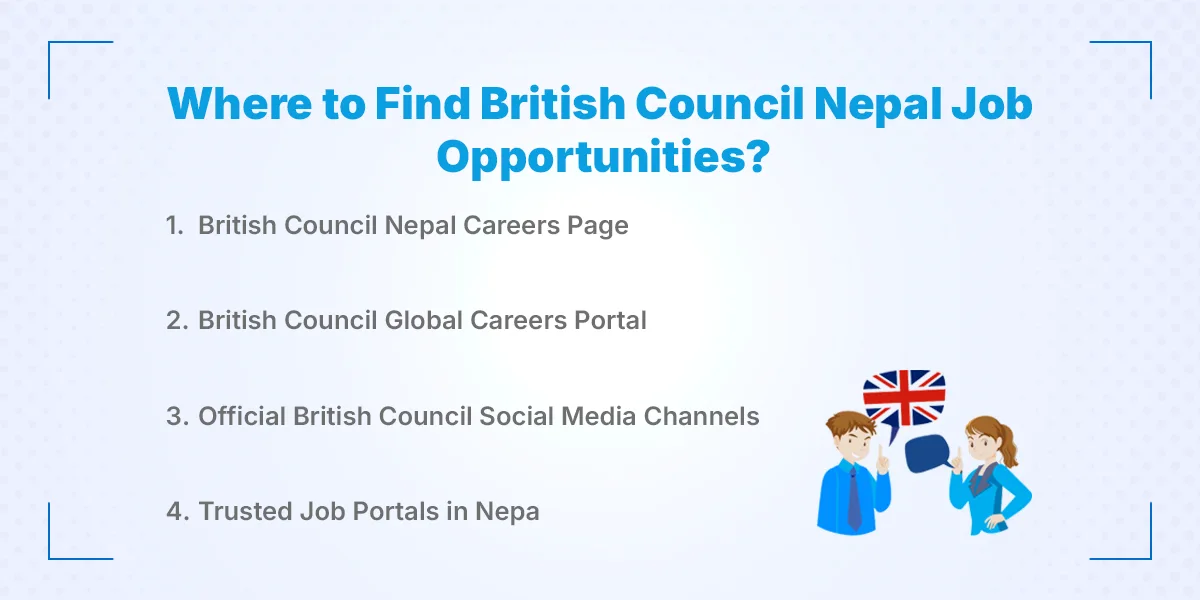
You can find British Council Nepal job vacancy opportunities on the British Council Nepal careers page, the global careers portal, official social media channels, and trusted local job portals like Kumari Job. Using these sources ensures you get accurate and timely information about new openings. Below, we explain each source in detail and how to use them effectively to stay updated on the latest roles.
1. British Council Nepal Careers Page
The British Council Nepal careers page is the primary source for all local job openings. Here, you can view detailed job descriptions, eligibility criteria, and application deadlines. The portal is regularly updated, making it the first place to check for new vacancies. Bookmark this page and visit it frequently to stay ahead of other applicants.
2. British Council Global Careers Portal
The global careers portal lists opportunities not only in Nepal but also in other countries. This is useful for candidates who want to explore international roles or stay informed about broader career options within the British Council. The portal allows you to filter jobs by location, category, or contract type, helping you quickly find roles relevant to your skills.
3. Official British Council Social Media Channels
The British Council also shares job announcements on official social media channels such as Facebook, LinkedIn, and Twitter. Following these channels helps you receive instant updates on new vacancies, events, and recruitment drives. Additionally, social media posts often include tips and links to the application process, which can make applying easier and faster.
4. Trusted Job Portals in Nepal
Apart from official sources, trusted local job portals provide an additional way to discover British Council Nepal job vacancies. Platforms like Kumari Job occasionally post these roles, making it easier and more convenient for candidates to stay updated without constantly checking official sites. Using these portals saves time, offers alerts on new openings, and increases your exposure to relevant opportunities. However, always verify each posting with the official careers page to ensure it is authentic.
Employment Types Available in British Council Nepal
The British Council in Nepal offers jobs by various employment types to suit different career needs and schedules. From permanent full-time roles to short-term consultancies, candidates can find positions that align with their skills and availability. Below, we explain the main employment types and what each entails.
1. Full-time & Part-time Positions
Full-time positions are permanent roles where employees work standard hours and receive full benefits such as health insurance, paid leave, and career development opportunities. Part-time positions offer more flexibility, with fewer hours and often proportional benefits. Both types allow you to contribute meaningfully to the British Council’s programs, but full-time roles provide more stability and long-term growth.
2. Contract-based and Project-based Jobs
Contract-based and project-based jobs are usually tied to specific projects or programs with a fixed duration. Employees in these roles focus on delivering defined outcomes within the contract period. These positions are ideal for professionals who want to gain experience in specialized projects or prefer short-term commitments while still working with a reputable organization.
3. Short-term Consultancy Opportunities
Short-term consultancy roles are designed for experts who can provide guidance or support on particular initiatives. Consultants may work on research, program evaluation, training, or policy advice for a limited period. This type of work allows you to share your expertise, gain international exposure, and expand your professional network while contributing to high-impact projects.
Locations of British Council Job Vacancies in Nepal
The locations of British Council Nepal job vacancies vary depending on the role and department. While many positions are based in the main office in Kathmandu, there are also opportunities in regional cities and test centers. Understanding the location requirements helps you plan your application and commuting arrangements.
1. Kathmandu-based Roles
Most roles, especially administrative, managerial, and core program positions, are located in Kathmandu, the British Council’s main hub. These positions often involve working in the office, attending meetings, and coordinating with teams across Nepal. Candidates applying for Kathmandu-based roles should be prepared for office-based schedules and in-person collaboration.
2. Opportunities in Major Cities and Test Centers
The British Council also offers roles in major cities in Nepal and test centers outside Kathmandu, such as Pokhara or Biratnagar. These jobs may focus on exams administration, teaching support, or regional program delivery. Working in these locations gives candidates a chance to contribute to local education and cultural initiatives directly.
3. Office-based vs Field-based Positions
Some roles are primarily office-based, involving administrative, planning, or managerial work. Others are field-based, requiring travel to schools, community centers, or regional programs. Understanding this distinction is important to match your work style and preferences with the role requirements.
4. Remote or Hybrid Work Possibilities
Where applicable, the British Council may offer remote or hybrid work options, particularly for IT, research, or project-based roles. These arrangements allow employees to balance office visits with working from home. Checking the job description carefully helps you know if remote work is an option before applying.
Eligibility Criteria for British Council Jobs in Nepal
The eligibility criteria for British Council Nepal job vacancy positions vary depending on the role but generally focus on education, experience, skills, and communication abilities. Meeting these requirements increases your chances of being shortlisted and helps you perform well in the selection process. Below, we explain the key eligibility aspects you should consider before applying.
1. Educational Qualifications Required
Most roles at the British Council require at least a bachelor’s degree in a relevant field. For teaching, education, or specialized roles, a master’s degree or professional certifications may be preferred. Candidates should ensure their academic background aligns with the job description. Highlighting relevant courses or training in your application can make you stand out.
2. Work Experience Expectations
The organization values relevant work experience, which varies by role. Entry-level positions may accept minimal experience, while managerial or specialist roles often require several years in similar positions. Providing clear examples of your past achievements and responsibilities can demonstrate your readiness for the role.
3. Skills and Competencies Valued by the British Council
The British Council looks for a combination of technical, professional, and soft skills. These may include project management, teamwork, problem-solving, adaptability, and digital literacy. Demonstrating these skills through your CV, cover letter, and interview can significantly improve your chances of selection.
4. Language and Communication Requirements
Strong English communication skills are essential for most roles, as the British Council operates in an international context. Some roles may also require proficiency in Nepali or other local languages for community engagement. Clear, professional communication, both written and spoken, is critical throughout the application and selection process.
Salary Range and Benefits at British Council Nepal
The salary range and benefits for British Council Nepal job vacancy roles are designed to attract skilled professionals and remain competitive in the local job market. Compensation varies depending on the role, experience, and responsibilities, but employees generally receive attractive pay along with additional perks. Understanding the salary structure and benefits can help you assess the value of applying for a position and plan your career growth.
1. Average Salary Range by Role and Experience Level
Salaries at the British Council depend on the position and level of experience. Entry-level roles like teaching assistants or customer service staff may start around NPR 30,000–45,000 per month. Mid-level roles such as program officers or administrative coordinators typically earn between NPR 50,000–80,000 per month. Senior roles like project managers or specialized technical positions can exceed NPR 100,000 per month. These ranges are competitive compared to many local employers in Nepal.
2. Additional Benefits
In addition to salary, the British Council provides benefits that support employee well-being and growth. Common perks include health insurance, paid leave, retirement contributions, and flexible working arrangements where applicable. Employees also have access to learning and development opportunities, such as training programs and workshops, which help build skills and advance careers. These benefits make working at the British Council more than just a job, it is an investment in professional growth.
Why Work at the British Council in Nepal?
Working at the British Council in Nepal offers more than just a job; it provides a platform for meaningful work and professional growth. Many candidates are drawn to its values, career development opportunities, and the credibility that comes with being part of an internationally respected organization. Below, we explain why the British Council is considered a preferred employer in Nepal.
1. Work Culture and Values
The British Council emphasizes a collaborative and inclusive work culture, where employees are encouraged to share ideas and work together. Its values focus on integrity, respect, and a commitment to education and cultural development. Employees often highlight the supportive environment and ethical practices as reasons they enjoy working here.
2. Career Growth and Learning Opportunities
The organization provides ample opportunities for learning and professional development. From on-the-job training to workshops and certification programs, employees can continuously upgrade their skills. This focus on growth ensures that career paths are clear and achievable for those committed to advancing within the organization.
2. International Exposure and Professional Credibility
Working with the British Council gives you international exposure through projects, collaborations, and training programs. Being associated with a globally recognized institution adds credibility to your professional profile, opening doors for future opportunities both in Nepal and abroad.
3. Long-term Career Stability
The British Council offers long-term career stability, especially in full-time or contract roles with benefits. Its structured recruitment process, clear policies, and reputation as a reliable employer make it a secure choice for professionals seeking a stable career. This stability is often combined with flexibility and growth, making it highly attractive for career-minded individuals.
Challenges in British Council Job Applications and How to Improve Your Chances
Applying for a British Council Nepal job vacancy can be competitive, and many candidates face common challenges during the process. Being aware of these challenges and taking proactive steps can significantly improve your chances of success. Below, we break down the main obstacles and provide actionable guidance to overcome them.
1. High Competition for Roles
British Council roles attract many qualified candidates, making competition very high. Popular positions like teaching, program management, or administrative roles often receive hundreds of applications. To stand out, ensure your application is complete, accurate, and tailored to the role. Early application submissions also increase your chances of being noticed.
2. Skill and Experience Gaps
Sometimes candidates may not meet all the required skills or experience for a role. Identifying gaps in advance allows you to build relevant expertise through online courses, volunteering, or part-time projects. Highlight transferable skills in your CV to demonstrate your potential, even if you lack direct experience.
3. Tailoring Your CV and Cover Letter
A generic CV and cover letter reduce your chances of being shortlisted. Tailor your documents to match the specific requirements of the role, emphasizing achievements and skills that align with the job description. Clear formatting, concise language, and strong examples of impact help your application stand out.
4. Building Relevant Experience and Upskilling
Acquiring experience related to the British Council’s work areas, like education, project management, or cultural programs, can give you a competitive edge. Short-term courses in Nepal, workshops, or volunteering in relevant projects help strengthen your profile. Continuous learning also shows your commitment to personal and professional growth.
5. Networking and Staying Updated on Vacancies
Building a professional network and staying informed about upcoming job vacancies is crucial. Follow the British Council’s social media channels, subscribe to job alerts, and connect with current or former employees. Networking can provide insights into the application process and help you learn about roles before they are widely advertised.
6. Preparing for Competency-Based Interviews
Many British Council roles require competency-based interviews, where you must provide examples of past experiences demonstrating skills and behaviors. Prepare by reviewing common competency questions and practicing structured answers using the STAR method (Situation, Task, Action, Result). Being confident, clear, and specific in your responses increases your chances of success.
Conclusion
Securing a British Council Nepal job vacancy is about building a meaningful career with growth, learning opportunities, and international exposure. The process can be competitive, but staying prepared, informed, and proactive makes a big difference. To get your desired job in British Council Nepal, understand the types of vacancies they open, eligibility criteria, and the application steps. Work on your CV, polish your skills, and prepare common interview questions to position yourself as a strong candidate.
Every effort you put in now brings you closer to joining one of Nepal’s most respected organizations. Stay alert, stay prepared, and take the first step today toward a career that challenges you, helps you grow, and rewards your dedication.
Interested in NGO and INGO jobs in Nepal? Explore the latest openings, application tips, and career opportunities to find roles that match your skills and goals!
Frequently Asked Questions
Submit your comments

Get Our App On



What is the Public Relations Officer Salary in Nepal
VIEW DETAILS
What Is the Salary of a Ticketing Officer in Nepal?
VIEW DETAILS
What Is the Salary of a Travel Consultant in Nepal?
VIEW DETAILS
How to Become an Auditor in Nepal
VIEW DETAILS


Loading Comments...