




Are you seeing a growing interest in Australian Embassy job vacancies in Nepal and wondering how to apply correctly? Many job seekers are attracted to embassy jobs because they offer job security, a professional work culture, and international exposure. However, the application process can feel confusing if you don’t know where to start or what employers expect.
In this blog, we will explain how to apply for an Australian embassy job vacancy in Nepal, why embassy jobs are considered stable and prestigious, and what job seekers need to understand before applying. This guide will help you learn where vacancies are announced, eligibility requirements, application steps, and how to improve your chances to get embassy job in Nepal with a professional and competitive profile.
In this blog
What Is an Australian Embassy Job Vacancy?
Australian Embassy job vacancy refers to employment opportunities offered by the Australian Embassy for local and international operations. These jobs support diplomatic, administrative, and development-related activities. Embassy roles are designed to ensure the smooth functioning of official services. They follow strict hiring standards and professional work practices.
The Australian Embassy offers a wide range of jobs, including administrative support, program officers, security roles, IT support, finance, and public relations positions. These roles help manage embassy operations and bilateral programs. Job responsibilities vary based on department and seniority. Each vacancy clearly defines required skills and experience.
Most Australian Embassy job vacancies in Nepal are open to Nepali citizens who meet eligibility criteria. Applicants must have relevant education, experience, and language skills. Employment types usually include locally engaged staff and fixed-term contract roles. These positions offer structured work environments with clear job terms and benefits.
Types of Jobs Available at the Australian Embassy in Nepal
The Australian Embassy in Nepal offers a variety of job roles to support its diplomatic and development work. These positions range from administrative and support roles to specialised and managerial posts. Job availability depends on embassy needs and project requirements. Most roles are offered on fixed-term contracts for locally engaged staff. Each position follows Australian government employment standards.
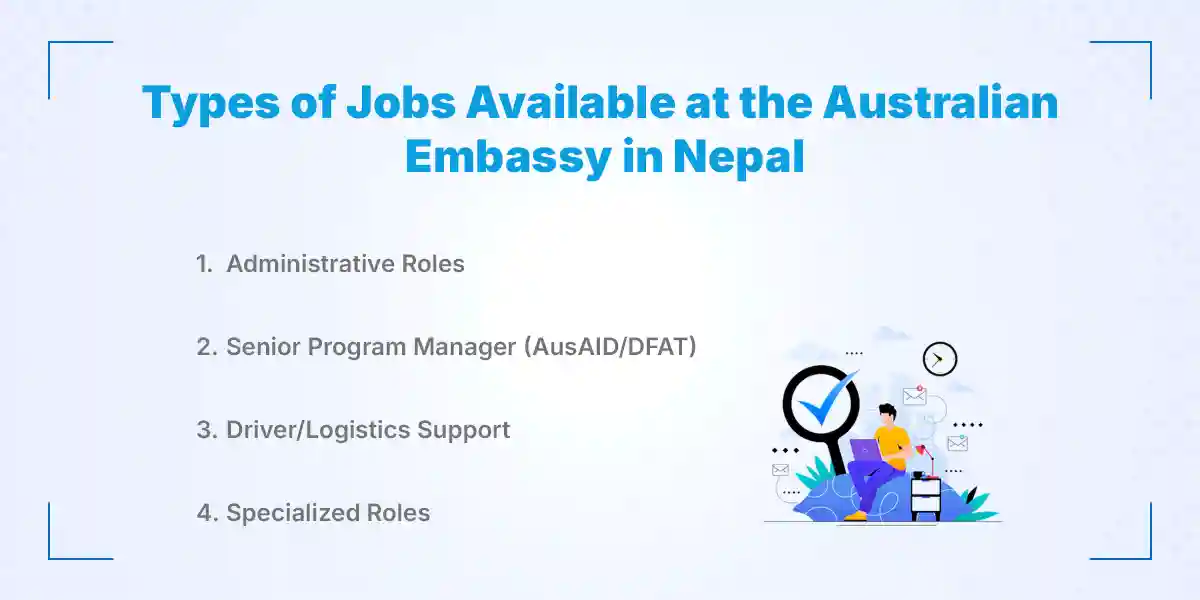
1. Administrative Roles
Administrative roles support the daily operations of the Australian Embassy. These jobs include office administration, finance support, human resources, and reception duties. Employees handle documentation, scheduling, coordination, and internal communication. Strong organisational and computer skills are usually required. These roles are suitable for candidates with office experience and attention to detail. They form the backbone of efficient embassy operations and are highly sought after by those looking for stable administration jobs in Nepal.
2. Senior Program Manager (AusAID/DFAT)
Senior Program Manager roles are high-responsibility positions linked to AusAID or DFAT programs. These roles involve managing development projects, partnerships, and policy implementation. Candidates must have strong leadership, reporting, and stakeholder coordination skills. Relevant experience in development or international programs is essential. These positions offer professional growth and international exposure. Strategic planning and policy understanding are key success factors.
3. Driver / Logistics Support
Driver and logistics support roles focus on transportation, delivery, and operational assistance. Employees ensure the safe transport of staff, documents, and materials. They may also assist with inventory and basic logistics coordination. A valid driving license and local route knowledge are required. These roles are vital for smooth embassy operations. Punctuality and safety awareness are highly important.
4. Specialised Roles
Specialised roles include IT officers, security staff, communication officers, and technical experts. These positions require specific qualifications and professional experience. Employees support critical embassy functions and systems. Technical accuracy and confidentiality are important in these roles. Specialised jobs often offer competitive salaries and skill development opportunities. Continuous learning is encouraged in these positions.\
Eligibility Criteria for Australian Embassy Job Vacancy
The eligibility criteria for an Australian Embassy job vacancy are clearly defined to ensure transparency and fair hiring. Candidates must meet specific education, skill, and experience standards based on the role. Most positions are open to Nepali nationals as locally engaged staff, while some contract roles may have additional conditions. Background checks and compliance with embassy policies are mandatory. Meeting the minimum criteria does not guarantee selection, but it is essential to proceed in the hiring process.
1. Educational Qualifications
Educational qualifications depend on the position level and responsibilities. Administrative and support roles usually require a minimum of higher secondary or bachelor’s degrees. Professional and managerial roles often demand a relevant bachelor’s or master’s degree. Degrees must be from recognised institutions. Some technical roles may require specific certifications. Higher qualifications can improve shortlisting chances.
2. Language and Skill Requirements
Strong English communication skills are essential for most Australian Embassy jobs. Candidates should be able to read, write, and speak English professionally. Computer literacy, including MS Office and email communication, is commonly required. Certain roles may need report writing or coordination skills. Additional language skills can be an advantage. Skills are assessed during tests or interviews.
3. Experience and Background Checks
Relevant work experience is preferred, especially for senior or specialised roles. Embassy jobs often value experience in administration, development projects, logistics, or international organisations. Shortlisted candidates must pass security and background checks. This includes employment history verification. Integrity and professionalism are critical. Any false information can lead to disqualification.
Where to Get Australian Embassy Job Vacancies?
You can get Australian Embassy job vacancies mainly through the official Australian Embassy Nepal website and reliable job portals like Kumari Job, which shares timely vacancy updates. The embassy follows transparent hiring practices and publishes openings through trusted and official channels only. Checking multiple verified sources helps job seekers avoid fake listings. Regular monitoring is important because embassy vacancies are limited and competitive. Applying through the correct source ensures your application is accepted and reviewed properly.
1. Official Australian Embassy Nepal Website
The Australian Embassy Nepal website is the most authentic source for job vacancies. All official announcements, eligibility details, and application procedures are published here first. Vacancies are usually listed under the “Careers” or “Vacancies” section. Job seekers can find role descriptions, contract details, and deadlines clearly mentioned. The site also provides downloadable application forms when required. This source should always be checked before applying anywhere else.
2. Australian Government Careers Portal
Some Australian Embassy roles are also listed on the Australian Government’s official careers portal. This platform mainly features DFAT and overseas mission-related positions. It provides detailed job descriptions and standardised application processes. Candidates may need to create an online profile to apply. The portal is secure and updated regularly. It is especially useful for professional and contract-based roles.
3. Embassy Notice Boards and Official Announcements
The Australian Embassy may display vacancy notices on physical notice boards at the embassy premises. These are useful for local applicants living nearby. Official announcements may also be shared during public notices or events. Such postings usually mirror online listings. They include brief job details and application deadlines. This method supports transparency for local recruitment.
4. Reliable Job Portals in Nepal
Trusted job portals in Nepal, such as Kumari Job, provide updates and alerts about Australian Embassy vacancies. While Kumari Job does not directly list embassy jobs, it helps job seekers stay informed about new announcements. These platforms are useful for tracking government and international organisation vacancies in one place. They save time by summarising key details. Always cross-check updates with the official embassy website before applying.
How to Apply for an Australian Embassy Job Vacancy: (Step-by-Step)
To apply for an Australian Embassy job vacancy, you must follow the official recruitment process strictly. Applications are accepted only through authorised channels mentioned in the vacancy notice. Candidates should confirm eligibility before applying. Submitting accurate documents and meeting deadlines is essential. A step-by-step approach helps avoid rejection and improves selection chances.
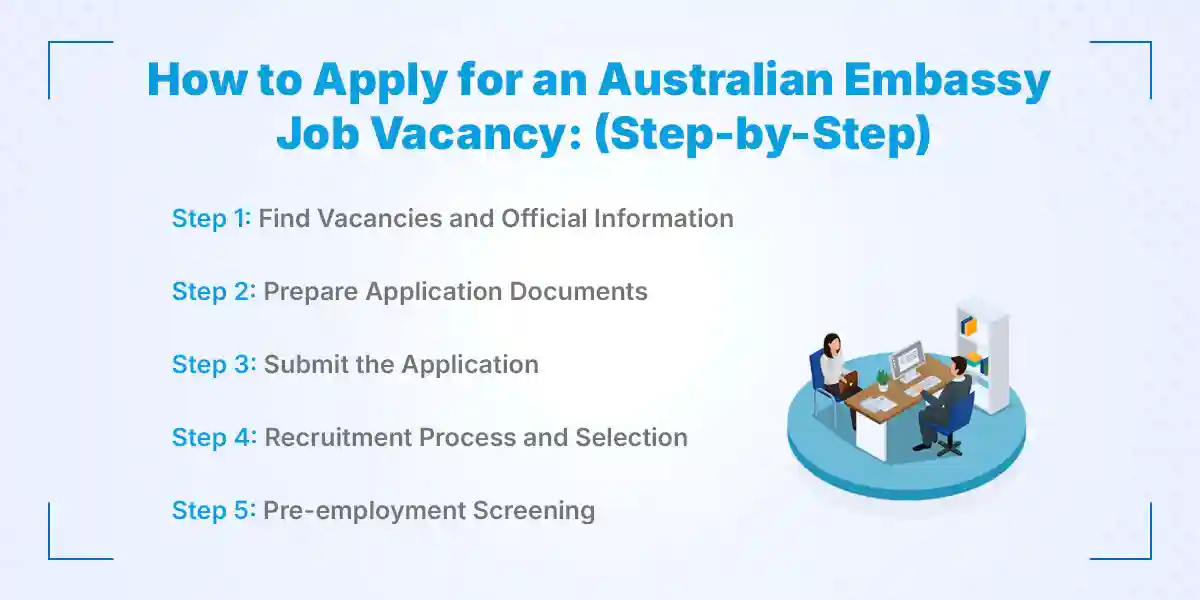
Step 1: Find Vacancies and Official Information
Start by regularly checking the official Australian Embassy Nepal website for job announcements. Each vacancy notice clearly mentions duties, eligibility, and deadlines. Read all instructions carefully before proceeding. Confirm whether the position is for locally engaged staff or contract roles. Avoid third-party or unofficial instructions. Keeping alerts or reminders helps you stay on time.
Step 2: Prepare Application Documents
Prepare all required documents as listed in the vacancy notice. These usually include a CV, cover letter, academic certificates, and experience letters. Ensure documents are updated and professionally formatted. Follow file format and size instructions carefully. Tailor your CV to match the job role. Proper documentation reflects seriousness and readiness.
Step 3: Submit the Application
Submit your application through the method specified, such as email or an online portal. Double-check personal details and attachments before submission. Use the correct subject line if applying by email. Submit well before the deadline to avoid technical issues. Late or incomplete applications are rejected automatically. Keep a copy of the submission for records.
Step 4: Recruitment Process and Selection
Shortlisted candidates are contacted for written tests, interviews, or assessments. The selection process evaluates skills, experience, and job suitability. Interviews may include behavioural and competency-based questions. Some roles involve multiple interview rounds. Performance consistency matters throughout the process. Clear communication and confidence are key during evaluation.
Step 5: Pre-employment Screening
Candidates selected after interviews must undergo pre-employment screening. This includes background checks, reference verification, and sometimes medical tests. Security clearance is mandatory for embassy roles. All information provided must be accurate and verifiable. Any mismatch can lead to cancellation of the offer. The final appointment is confirmed only after clearance approval.
Required Documents for Australian Embassy Jobs
Required documents for Australian Embassy jobs must be prepared carefully and submitted exactly as stated in the vacancy notice. These documents help the embassy verify qualifications and suitability. Any missing or incorrect document can lead to rejection. Applicants should organise files in advance to avoid delays. Always follow official formatting and submission guidelines.
1. CV and Cover Letter Format
Your CV should be updated, professional, and tailored to the specific job role. Highlight relevant skills, experience, and achievements clearly. The cover letter must explain why you are suitable for the position. Use a formal tone and simple language. Avoid generic templates and unnecessary details. Proper formatting improves readability and impact, so take the time to prepare CV documents that align with 2026 international standards and the specific "Statement of Claims" required by diplomatic missions.
2. Academic and Experience Certificates
Academic certificates must be from recognised institutions and clearly scanned. Experience certificates should mention designation, employment duration, and responsibilities. Ensure documents are readable and complete. Some positions may require certified copies. Keep digital and printed copies ready. Accurate certificates support your professional credibility.
3. Identification and Reference Documents
Applicants must submit valid identification, such as citizenship or passport copies. Recent passport-size photos may also be required. Reference documents or referee contact details are important for verification. Choose professional referees who know your work well. Background checks rely on these references. Incorrect details can affect the final selection.
Selection Process and Interview Procedure
The selection process for Australian Embassy jobs is structured, competitive, and transparent. It is designed to select candidates with the right skills, experience, and professional attitude. Only shortlisted applicants move forward to the assessment stages. The process may differ slightly depending on the role and department. Knowing each stage helps candidates prepare with confidence.
1. Shortlisting and Screening Process
Applications are first screened based on eligibility criteria and job requirements. Only candidates who closely match the role are shortlisted. Screening involves reviewing education, work experience, and skills. Some positions may include written or technical tests. Shortlisted candidates are informed through official communication. Accuracy in documents strongly impacts this stage. Early preparation improves screening success.
2. Interview Stages and Assessment Methods
Interviews may be conducted in one or multiple rounds, depending on the position. Panels assess communication ability, technical knowledge, and workplace behaviour. Questions are usually competency-based and scenario-driven. Certain roles may include practical or task-based assessments. Candidates must demonstrate professionalism and clarity. Consistent performance across all stages is essential. Taking the time to prepare for interview rounds by researching the embassy’s current diplomatic goals and practising the STAR method builds confidence and impact.
3. Final Selection and Appointment
Final selection is made after evaluating overall performance. Selected candidates receive an official appointment or offer letter. The letter includes salary, contract terms, and start date. Candidates must respond within the specified timeline. Final employment is subject to successful verification. Compliance with embassy policies is mandatory for appointment. Clear communication ensures a smooth onboarding.
Salary, Benefits, and Work Environment
Salary, benefits, and work environment are key reasons why many job seekers prefer Australian Embassy jobs. These roles offer competitive pay aligned with international standards. Employees also receive structured benefits and a professional workplace. Compensation varies based on role, experience, and contract type. Overall, embassy jobs provide stability and long-term value compared to the average salary in Nepal.
1. Salary Structure for Local Staff
Salary for local staff is based on position level and responsibilities. Administrative and support roles receive fixed monthly salaries. Professional and managerial roles are paid higher according to experience. Salaries are reviewed periodically based on embassy policies. Payments are made regularly and transparently. The pay structure reflects fairness and role complexity.
2. Benefits and Allowances
Australian Embassy employees receive various benefits and allowances. These may include leave entitlements, health coverage, and festival or hardship allowances. Some roles offer transportation or communication support. Contract-based benefits are clearly mentioned in offer letters. Benefits enhance work-life balance. All allowances follow official embassy guidelines.
3. Working Culture at the Embassy
The working culture at the Australian Embassy is professional and inclusive. Employees follow clear policies and ethical standards. Teamwork, respect, and accountability are strongly valued. The environment encourages learning and skill development. Staff work with international teams and systems. A healthy work-life balance is promoted across roles.
Tips to Increase Your Chances of Selection
Securing a job at the Australian Embassy is competitive, so careful preparation matters. Small mistakes can reduce your chances, even if you meet the eligibility criteria. Following official guidelines and presenting yourself professionally is essential. Strategic preparation helps you stand out among applicants. Practical steps can significantly improve your selection probability.
1. Following Application Instructions Carefully
Always read the vacancy notice thoroughly before applying. Follow the exact instructions for document format, subject line, and submission method. Missing details or ignoring guidelines can lead to rejection. Submit applications before the deadline. Double-check all information for accuracy. Attention to detail reflects professionalism.
2. Tailoring CVs to Embassy Standards
Customise your CV according to the embassy job role. Highlight relevant experience, skills, and achievements clearly. Use professional language and simple formatting. Avoid unnecessary personal details. Focus on results and responsibilities. A tailored CV improves shortlisting chances.
3. Avoiding Unofficial or Fake Job Sources
Apply only through official embassy channels or trusted update platforms. Avoid agents or websites asking for fees. Fake listings often misuse embassy names. Always verify vacancy details on the official website. Protect personal information carefully. Trust verified sources only.
Is an Australian Embassy Job a Good Career in Nepal?
Yes, an Australian Embassy job is a good career in Nepal because it offers strong job security, professional work standards, and international exposure. Embassy jobs follow structured employment policies, timely salary payments, and ethical workplace practices. Employees work in a stable environment with clear roles and responsibilities. This level of professionalism is highly valued in Nepal’s job market.
Australian Embassy jobs also provide long-term career growth opportunities through skill development, training, and exposure to international systems. Compared to many private-sector jobs in Nepal, embassy roles offer better work-life balance, transparent HR policies, and stable benefits. While private jobs may offer faster promotions, embassy jobs provide consistency, respect, and long-term career value.
Conclusion
Applying for an Australian Embassy job vacancy in Nepal can be a smart and rewarding career choice for job seekers looking for stability and professionalism. These jobs offer structured work environments, fair salary systems, and exposure to international standards. Understanding eligibility criteria, application steps, required documents, and the selection process helps candidates apply with confidence and avoid common mistakes.
If you are serious about building a long-term and respected career, embassy jobs are worth considering. Stay updated through official sources, prepare your application carefully, and follow all instructions strictly. With proper preparation and patience, an Australian Embassy job can provide career growth, job security, and a strong professional future for those seeking high-level jobs in Nepal.
Frequently Asked Questions
Submit your comments

Get Our App On



What is the Public Relations Officer Salary in Nepal
VIEW DETAILS
What Is the Salary of a Ticketing Officer in Nepal?
VIEW DETAILS
What Is the Salary of a Travel Consultant in Nepal?
VIEW DETAILS
How to Become an Auditor in Nepal
VIEW DETAILS


Loading Comments...