




Banking jobs in Nepal are becoming more popular than ever. Many people dream of working in a bank because these jobs are stable, respected, and offer good pay. If you are looking for a career that gives both security and growth, banking could be the right choice for you.
The banking sector in Nepal has many opportunities. From commercial banks to development banks and even the central bank, there are roles for fresh graduates, experienced professionals, and specialists. But getting a banking job is not just about luck. You need the right skills, qualifications, and preparation.
In this guide, we will show you exactly how to get banking jobs in Nepal. You will learn the steps, exams, tips, and tricks to increase your chances of success.
In this blog
Why Choose a Banking Career in Nepal?
You should choose a banking career in Nepal as it is a secure and well-paying job with many growth opportunities. It offers stability, benefits, and exposure to finance and professional networks. If you want a job that is respected and gives long-term prospects, banking is the right choice. Many young people now aim for banking jobs in Nepal because they combine safety, learning, and growth.
1. Job Security and Benefits
One of the main reasons to choose banking is job security. Banks in Nepal rarely close, and employees usually have long-term positions. You also get many benefits like health insurance, retirement plans, and paid leave. Even entry-level employees enjoy some stability, which is rare in other jobs. Banks also offer bonuses and allowances that improve your total salary. For many, this stability makes banking a stress-free career option.
2. Opportunities for Promotion and Career Growth
Banking jobs in Nepal have clear promotion paths. If you work hard and learn new skills, you can move from junior officer to manager and higher. Banks also give training programs to help employees grow. Experienced bankers can become branch managers or even senior executives. This career growth keeps your work interesting and motivating. You also get to try different departments like loans, accounts, or customer service.
3. Exposure to Finance, Economy, and Professional Networks
Working in a bank teaches you a lot about money, finance, and the economy. You get practical knowledge that is useful in real life, too. You also meet many professionals, from colleagues to clients. Networking can open new opportunities in finance and business. Banks encourage employees to attend seminars and workshops to improve knowledge. This exposure helps you stay updated and confident in your career.
Types of Banking Jobs in Nepal
There are many types of banking jobs in Nepal. Each type offers different roles, responsibilities, and growth opportunities. You can start as a beginner or move into specialized positions as you gain experience. Choosing the right type of bank and role can shape your career in the long term. Many people now aim for banking jobs in Nepal because the variety makes it easy to find a fit for their skills.
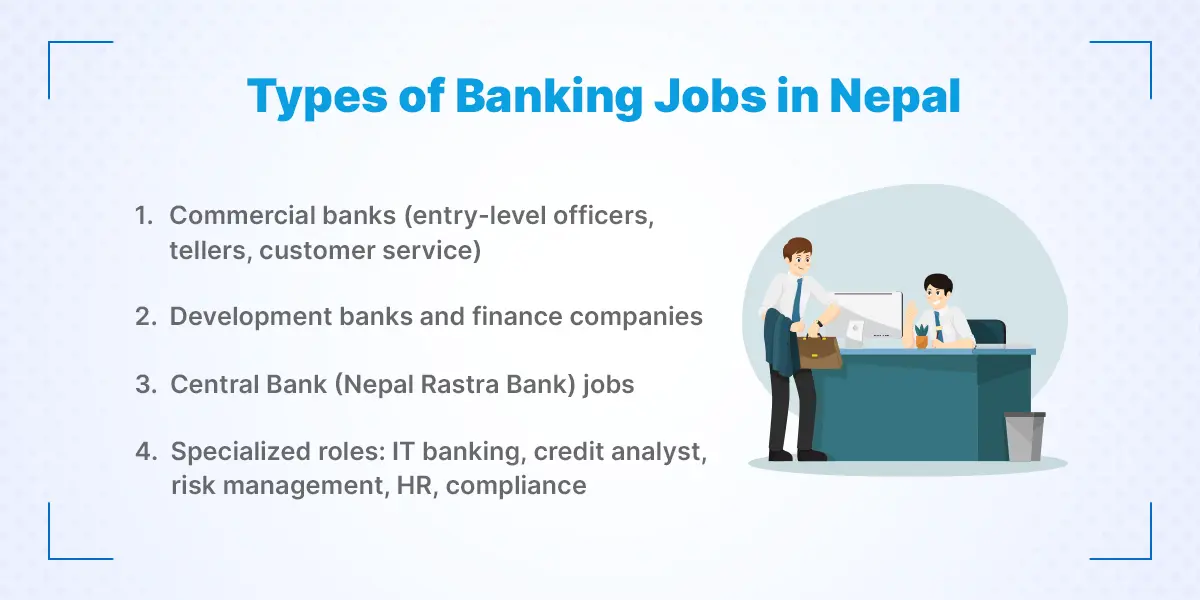
1. Commercial Banks
Commercial banks are the most common places to start a banking career. They hire entry-level officers, tellers, and customer service staff. Entry-level officers handle daily banking operations, accounts, and customer queries. Tellers manage cash transactions and payments. Customer service staff assist clients and solve problems. These roles are great for learning banking basics. Commercial banks also give chances for promotion to managers and branch heads.
2. Development Banks and Finance Companies
Development banks and finance companies focus on loans, investments, and small business financing. Jobs here include loan officers, credit analysts, and relationship managers. You work closely with clients and businesses to provide financial solutions. These roles often involve more fieldwork than commercial banks. Development banks are smaller, so you may get faster promotions. It is a good place to gain experience in finance and banking operations. Skills learned here can also help in commercial banking later.
3. Central Bank (Nepal Rastra Bank) Jobs
Nepal Rastra Bank is the central bank of Nepal. Jobs here include economists, auditors, regulators, and administrative officers. Employees help control monetary policy, monitor financial institutions, and ensure banking rules are followed. Working in the central bank gives a deep understanding of the country’s economy. It is a highly respected career choice in Nepal. Promotions are structured and often come with extra benefits. This type of job suits those interested in finance, policy, and regulation.
4. Specialized Roles
Banks also hire for specialized roles like IT banking, credit analysis, risk management, HR, and compliance. IT banking focuses on software, online banking, and digital solutions. Credit analysts evaluate loan applications and financial risks. Risk management staff protect the bank from financial losses. HR manages recruitment, training, and employee welfare. Compliance ensures the bank follows all rules and regulations. Specialized roles usually require extra knowledge but often pay more.
Eligibility Criteria for Banking Jobs in Nepal
To get banking jobs in Nepal, you need to meet certain requirements. These include education, age, citizenship, and specific skills. Meeting these criteria increases your chances of getting hired. Banks want employees who are qualified, skilled, and ready to work in a professional environment. Understanding these rules helps you prepare better for exams and interviews.
1. Educational Qualifications
Most banks in Nepal require a Bachelor’s or Master’s degree in Finance, Economics, Accounting, or related fields. Some positions may accept other fields if you have relevant experience. Degrees from recognized universities are preferred. Higher education can give an advantage in competitive exams. Specialized roles, like IT banking or risk management, may require extra certifications. Entry-level jobs are usually open to fresh graduates. Education forms the basic foundation for a career in banking.
2. Age Limit and Citizenship Requirements
Banks in Nepal usually have an age limit for applicants. The limit can vary by bank and position, but it is often between 18 and 35 years. Some positions offer age relaxation for experienced candidates or government employees. Citizenship of Nepal is mandatory for most banking jobs. Proof of citizenship must be submitted during the application. Meeting these criteria is essential to be eligible for exams or interviews.
3. Skills Required
Banks look for certain skills in all employees. Good communication skills help in dealing with clients and colleagues. Numerical and analytical skills are important for calculations and problem-solving. Basic computer literacy is necessary for daily banking tasks. Some positions may require knowledge of software or online banking platforms. Developing these skills can increase your chances of success. Continuous learning also helps you grow in your banking career.
How to Apply for Banking Jobs in Nepal
To apply for banking jobs in Nepal, you need to follow official application procedures and submit the required documents. Banks accept applications through online portals, job websites, and official notifications. You also need to check newspapers for the latest vacancies. Knowing the proper steps helps you avoid mistakes and increases your chances of getting selected. Preparing all documents in advance makes the process smoother and faster.
1. Official Application Portals
Most banks in Nepal have their own official websites for job applications. You can create an account, fill in your details, and upload the necessary documents online. Banks post updates, eligibility criteria, and deadlines on these portals. Always check the official portal to avoid scams or fake jobs. Some banks also provide application forms to download and submit physically. Following instructions carefully is very important. Official portals are the safest and fastest way to apply.
2. Job Portals and Recruitment Websites
There are many online job portals in Nepal that list banking vacancies. Websites like Kumari job post regular updates. You can filter jobs by bank, position, or location. These portals also provide tips for applying and links to official applications. Make sure to apply through the official link provided. Registering on these portals helps you get notifications for new openings. Using job portals saves time and keeps you informed.
3. Newspapers and Bank Notifications
Banks often publish vacancies in major newspapers. Newspapers list positions, application dates, and eligibility requirements. You should check daily or weekly to stay updated. Some banks also put notices on their branches or social media. These notifications are official and reliable. Collecting information from newspapers helps you plan your application process. It is an easy way to track new opportunities.
4. Steps to Submit Applications and Required Documents
First, read the job notice carefully. Prepare documents like your degree certificate, citizenship proof, and experience letters. Fill out the application form accurately. Upload or attach all required documents. Submit the application before the deadline. Keep a copy of the submitted form for your records. Following these steps carefully increases your chances of success.
Selection Process in Banking Jobs
The selection process for banking jobs in Nepal is designed to find the most capable candidates. It usually includes written exams, interviews, and sometimes group discussions. Banks follow a clear process to ensure fair hiring. Understanding each step helps you prepare better and increases your chances of success. Knowing what to expect also reduces stress during the selection process.
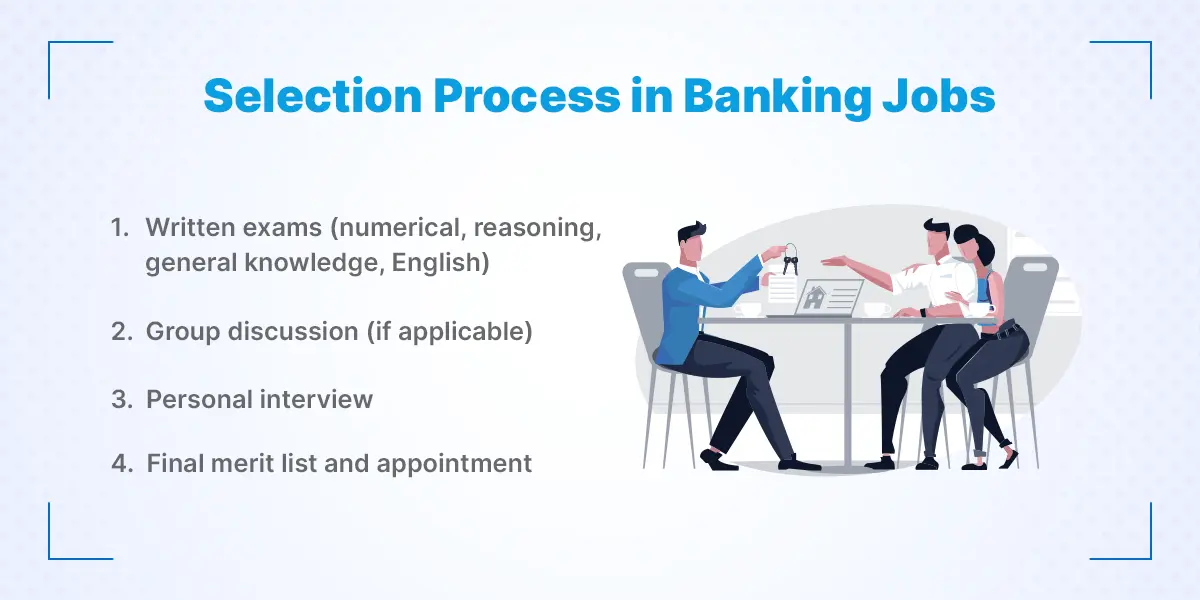
1. Written Exams
Most banking jobs start with a written exam. The test usually covers numerical ability, reasoning, general knowledge, and English. Some banks may include questions about finance or current affairs. Time management is very important to complete all questions. Practicing past papers can help you understand the exam pattern. A clear understanding and regular practice improve your scores. Written exams are the first and most important step in the selection process.
2. Group Discussion
Some banks include a group discussion round. This is usually for higher-level or officer positions. Candidates discuss a topic in a small group while examiners watch. It tests communication, teamwork, and problem-solving skills. You should listen carefully and speak confidently. Avoid interrupting others and stay polite. Group discussions give banks an idea of how you work in a team.
3. Personal Interview
The personal interview is the next step after exams or group discussions. Interviewers ask about your education, skills, and experience. They may also ask questions about banking, finance, or current events. Being confident and clear in your answers is important. Dressing properly and being punctual create a good impression. The interview helps banks see your personality and suitability for the role.
4. Final Merit List and Appointment
After all rounds are complete, banks prepare a final merit list. This list ranks candidates based on exam and interview performance. Selected candidates receive appointment letters. You may have to submit additional documents before joining. Banks notify successful candidates through email or their official website. The final step officially starts your banking career in Nepal.
How to Prepare for Banking Job Exams in Nepal
To prepare for banking job exams in Nepal, you need a clear plan, good study materials, and regular practice. Focusing on the right topics and practicing questions improves your chances of success. Time management and understanding exam patterns are very important. Many candidates succeed by combining self-study with guidance from coaching or online resources. Preparing step by step reduces stress and builds confidence before the exam.
1. Recommended Study Materials and Books
Choosing the right study materials is the first step. Books on numerical ability, reasoning, general knowledge, and English are very helpful. Some books focus specifically on banking exams in Nepal. Using clear and simple guides makes learning easier. You can also read newspapers to stay updated with current events. Combining books and online articles gives better knowledge. Regular reading improves both speed and accuracy in exams.
2. Online and Offline Coaching Options
Coaching can help you understand difficult topics faster. Many coaching centers in Nepal offer offline classes. Online classes are also available and are flexible for your schedule. Experienced teachers give tips, shortcuts, and strategies for exams. You can ask questions and clear doubts during classes. Coaching also motivates students to study regularly. Combining coaching with self-study often gives the best results.
3. Importance of Practicing Past Papers
Practicing past papers is very important for exam preparation. It helps you understand the question patterns and difficulty level. You can identify which areas need more practice. Solving papers also improves your speed and confidence. Many successful candidates spend time daily on past questions. Reviewing mistakes helps you avoid repeating them. Regular practice makes you exam-ready and reduces anxiety.
4. Time Management and Exam Strategies
Time management is key during exams. Divide your time wisely for each section. Start with questions you are confident about. Avoid spending too much time on difficult questions. Use shortcuts and tricks for calculations if needed. Stay calm and focused throughout the exam. Practicing with a timer before the exam helps a lot. Good strategies can improve both accuracy and speed.
Tips to Increase Your Chances of Getting a Banking Job
To get a banking job in Nepal, you need more than just qualifications. Practical experience, skills, and knowledge can give you an edge over other candidates. Small efforts, like networking and staying updated, can make a big difference. Following simple strategies consistently can improve your chances of success. These tips help you become a strong candidate for any banking role.
1. Gain Relevant Internships or Experience
Internships give you practical knowledge of how banks work. Even short-term experience helps you understand operations and customer service. Banks value candidates who have some exposure to real banking tasks. Internships also teach teamwork and problem-solving. You can apply for internships in commercial banks, development banks, or finance companies. This experience looks good on your resume. It also helps during interviews when you can share real examples.
2. Improve Communication and Computer Skills
Good communication is important in every banking job. You need to talk clearly with clients and colleagues. Writing emails and reports professionally is also necessary. Basic computer skills are needed for transactions, record-keeping, and online banking. Learning Excel, Word, and banking software is helpful. Practicing these skills regularly builds confidence. Strong communication and computer skills make you more effective at work.
3. Network with Industry Professionals
Networking can open many doors in the banking sector. Attend workshops, seminars, and online events to meet professionals. Talk to bankers and ask for guidance or advice. LinkedIn and other social media platforms are also useful. Networking helps you learn about job openings before they are announced. Professionals can share tips to succeed in exams and interviews. Building a strong network improves your visibility and opportunities.
4. Keep Updated with Banking Trends and News
Banks value employees who know current trends in finance and banking. Read newspapers, financial magazines, and online articles regularly. Follow updates about new policies, digital banking, and economic changes. Being informed helps during interviews and group discussions. It also improves your understanding of the banking sector. Staying updated shows your interest and dedication to the field. Regular learning keeps you ahead of other candidates.
Salary and Benefits in Banking Jobs in Nepal
Banking jobs in Nepal offer good salaries and benefits, which is one reason many people choose this career. The pay increases as you move from entry-level to senior positions. Besides salary, banks provide bonuses, allowances, and retirement benefits. Understanding these can help you plan your career and financial future. Banking jobs combine stability, growth, and attractive perks.
1. Entry-Level Salaries
Commercial Banks: Entry-level positions such as Junior Assistants or Tellers typically earn between NPR 25,000 and NPR 40,000 per month.
Development Banks: Salaries for similar roles range from NPR 22,000 to NPR 35,000 monthly.
Central Bank (Nepal Rastra Bank): Entry-level positions often start at NPR 30,000 to NPR 50,000 per month.
2. Mid-Level Salaries
Branch Managers: With 3–5 years of experience, branch managers can earn between NPR 70,000 and NPR 130,000 monthly.
Specialized Roles: Positions like Credit Analysts or Relationship Managers typically offer salaries ranging from NPR 50,000 to NPR 100,000 per month.
3. Senior-Level Salaries
Top Management: Senior roles such as Chief Officers or Directors in commercial banks can command salaries upwards of NPR 200,000 per month.
Chief Executive Officers (CEOs): CEOs in major commercial banks may receive total compensation packages exceeding NPR 2,800,000 annually, including bonuses and allowances.
Conclusion
Banking jobs in Nepal offer a stable, respected, and rewarding career path. From entry-level positions to senior roles, there are opportunities for growth, learning, and financial security. By understanding the types of banks, eligibility criteria, application process, and selection steps, you can plan your journey effectively. Preparing well for exams, gaining practical experience, improving skills, and staying updated with banking trends will increase your chances of success. The sector not only provides good salaries and benefits but also exposure to finance, the economy, and professional networks. With consistent effort, dedication, and smart preparation, you can secure a role that matches your career goals.
Want to boost your career in finance? Kumari Job offers professional accounting training in Nepal designed to help students, graduates, and job seekers gain practical skills in bookkeeping, taxation, auditing, and financial reporting. With industry experts as trainers and career-focused modules, our training ensures you are fully prepared for accounting jobs in Nepal and abroad. Enroll today and take the first step toward a secure and rewarding career in accounting.
Frequently Asked Questions
Submit your comments

Get Our App On



What is the Public Relations Officer Salary in Nepal
VIEW DETAILS
What Is the Salary of a Ticketing Officer in Nepal?
VIEW DETAILS
What Is the Salary of a Travel Consultant in Nepal?
VIEW DETAILS
How to Become an Auditor in Nepal
VIEW DETAILS


Loading Comments...