




Breaking into bank IT jobs in Nepal is not as easy as it sounds. Many IT graduates and professionals feel stuck. You study hard, learn skills, apply again and again, but still do not get calls from banks. You see vacancies, but you are not sure what banks really want or how the hiring process works. This confusion often leads to frustration and self-doubt.
If you are facing the same problem, you are not alone. The good news is that banks in Nepal do hire IT professionals regularly, but only those who follow the right path can achieve it.
In this guide, you will learn exactly how to get bank IT jobs in Nepal, what skills matter, where to apply, and how to prepare with confidence.
In this blog
What are Bank IT Jobs?
Bank IT jobs are technology-based roles inside banks that help run daily banking systems smoothly and safely. Every bank today depends on IT to manage customer data, online banking, mobile apps, ATMs, and internal systems. Without IT professionals, modern banking cannot function.
In simple words, bank IT jobs are for people who handle the technical side of banking. These jobs are not about cash counters or customer service desks. They focus on systems, software, networks, and data that keep the bank working 24/7.
Bank IT professionals work behind the scenes to make sure services like internet banking, mobile payments, and card transactions work without problems. They also protect banks from cyber attacks and data loss.
The main purpose of bank IT jobs includes:
- Managing the core banking software used by the bank
- Keeping servers, networks, and systems running smoothly
- Protecting customer data and financial information
- Supporting digital banking services like apps and websites
- Fixing technical issues faced by staff and customers
These jobs are available in commercial banks, development banks, finance companies, and digital banks in Nepal. Some are entry-level roles, while others require experience and great technical skills.
If you enjoy technology, problem-solving, and stable career growth, bank IT jobs can be a great choice. They offer a mix of IT work and banking exposure, making them different from regular IT company jobs and more secure in the long run.
Common IT Positions in Nepalese Banks
Nepalese banks hire many types of IT professionals to manage their digital systems. These roles support daily banking work, online services, and data security. Some jobs focus on software, while others handle networks, systems, or user experience. Each role plays an important part in keeping bank services smooth and safe.
1. IT Officer / Manager
An IT Officer or Manager looks after the overall IT system of the bank. They make sure all software, hardware, and networks work properly. This role also handles planning, upgrades, and IT policies. They guide the IT team and assign daily tasks. Problem-solving is a big part of this job. Banks prefer people with experience for this role. Good communication skills are also very important.
2. Software / App Developer
Software and app developers build and maintain banking systems and mobile apps. They work on core banking software, websites, and internal tools. Their job is to make systems fast, safe, and easy to use. They also fix bugs and improve features. Developers work closely with other IT teams. Knowledge of programming languages is required. This role suits people who enjoy coding.
3. System / Network Administrator
System and network administrators manage servers and internet connections. They make sure systems are always up and running. If a server or network fails, they fix it quickly. They also handle system updates and backups. Security and access control are part of their work. Banks depend on them for smooth operations. This job needs strong technical skills.
4. Cybersecurity Analyst / Specialist
Cybersecurity specialists protect banks from online threats. They monitor systems for suspicious activity. Their job is to prevent hacking and data leaks. They also set security rules and train staff. Regular security checks are part of the role. Banks value this role highly due to rising cyber risks. Attention to detail is very important here.
5. Database Administrator (DBA)
A database administrator manages bank data. This includes customer details, transactions, and records. They make sure data is stored safely and correctly. DBAs also handle data backups and recovery. They improve database speed and performance. Accuracy is very important in this job. Banks trust DBAs with sensitive information.
6. Technical Support / Help Desk
Technical support staff help solve IT problems faced by bank employees. They fix system errors, login issues, and hardware problems. This role requires quick response and patience. They often handle daily IT requests. Good communication skills are needed. It is a good entry-level role. Many IT careers in banks start from here.
7. Data Analyst
Data analysts study bank data to find useful patterns. They help banks make better decisions. This role works with numbers, reports, and charts. Analysts support marketing, risk, and business teams. They turn raw data into simple insights. Basic tools and logical thinking are needed. This role is growing fast in banks.
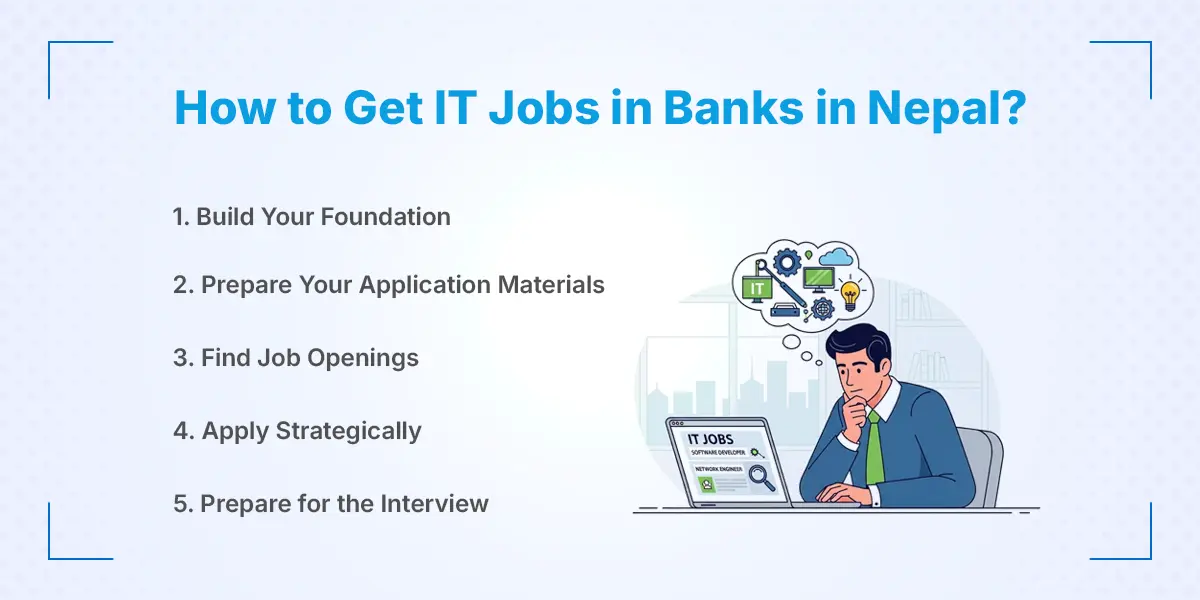
How to Get IT Jobs in Banks in Nepal? Step-by-Step
To get IT jobs in banks in Nepal, you need the right skills, proper documents, a smart job search, and focused interview preparation. This process is not complicated, but it needs planning and patience. When you follow each step in the right order, your chances of getting selected increase a lot.
1. Build Your Foundation
Start by learning the IT skills required by banks. Focus on areas like networking, databases, software basics, and system security. A degree in IT, computer science, or a related field is very helpful. Short courses and certifications can add extra value to your profile. Understanding how banks work is also important. Learn about core banking systems and digital banking services. Practical knowledge matters more than theory. Keep improving your skills regularly.
2. Prepare Your Application Materials
Create a simple CV focused on banking IT roles. Highlight your skills, projects, and certifications clearly. Avoid adding unnecessary details. Write a short cover letter for bank jobs if required. Make sure your documents are error-free. Keep scanned copies of certificates ready. A strong CV creates the first impression. Update your resume for each bank role.
3. Find Job Openings
Check official bank career pages regularly. Many banks post IT vacancies on their websites. Use trusted job portals like Kumari Job in Nepal. LinkedIn is also useful for job updates. Follow banks and HR professionals online. Join banking and IT job groups on Facebook. Staying active helps you find openings early. Early applications have better chances.
4. Apply Strategically
Do not apply to every job blindly. Apply only to roles that match your skills. Read the job notice carefully before applying. Follow the instructions given by the bank. Keep track of deadlines and submission methods. Online and email applications must be accurate. Quality applications work better than quantity. One good application is better than ten weak ones.
5. Prepare for the Interview
Learn about the bank before attending the interview. Revise technical topics related to the job role. Be ready to explain your past projects simply. Practice common interview questions. Improve your communication skills. Dress professionally and be confident. Banks look for calm and responsible candidates. Preparation makes a big difference.
Eligibility Criteria for Bank IT Jobs in Nepal
To get IT jobs in Nepalese banks, you generally need a relevant degree, meet age limits, have certain experience, and hold Nepalese citizenship. These rules help banks hire candidates who are ready for technical roles. Understanding them clearly can save you time and improve your chances. Let’s break them down under simple subheadings.
1. Educational Qualification
Most bank IT jobs require a bachelor’s degree in IT, computer science, computer engineering, or related fields. Some positions accept diplomas for junior roles, but a degree is preferred. Banks look for candidates with knowledge of programming, databases, networks, and basic IT tools. Extra certifications like CCNA, Microsoft, or cybersecurity courses add value. Fresh graduates can apply for entry-level roles if they have strong skills. Advanced roles may require a master’s degree or specialized training.
2. Work Experience
Entry-level IT jobs usually do not need prior experience. Officer, manager, or specialist roles often require 2–5 years of experience in IT or banking systems. Experience with banking software, cybersecurity, or network administration is preferred. Internships or project work can also help demonstrate practical skills. Experienced candidates are often prioritized for higher positions. Banks sometimes look for people who have solved real IT problems in previous jobs.
3. Age Limit
Most banks set an age limit for IT job applicants. Junior roles usually have limits between 18–35 years. Senior roles may allow up to 40 years. Some banks give relaxation for women, differently-abled candidates, or experienced professionals. Always check the age requirement in the official notice before applying.
4. Citizenship
Nepalese citizenship is required for most bank IT positions. You must provide a valid citizenship certificate during the application. Some banks ask for scanned copies along with educational and experience documents. Non-Nepalese applicants are generally not eligible.
5. Document Requirements
Banks require clear and verified documents for education, experience, and identity. Certificates, transcripts, and CVs should be ready before applying. Missing or wrong documents can lead to rejection. Always follow the application instructions carefully.
Where to Find Bank IT Job Vacancies in Nepal?
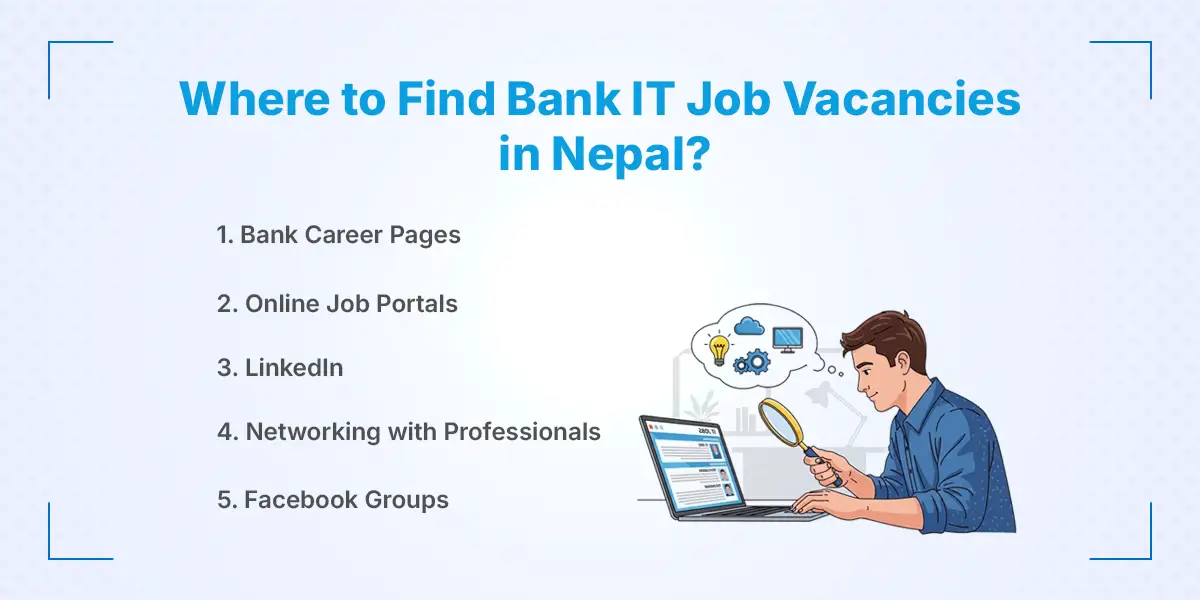
You can find bank IT job vacancies in Nepal on bank websites, job portals like Kumari Job, LinkedIn, and by networking with professionals. If you know where to look, finding bank IT jobs becomes much easier. Using multiple sources together gives you better chances and faster updates.
1. Bank Career Pages
Most banks in Nepal publish IT vacancies on their official websites. These pages share accurate and trusted job information. You can find details about eligibility and deadlines there. Checking career pages regularly is very important. Some banks only accept applications through their website. You can also find exam and interview notices there. Bookmark these pages for quick access. This is the safest job source.
2. Online Job Portals
Job portals collect vacancies from many banks in one place. They save time and effort during a job search. Popular portals like Kumari Job update bank IT jobs frequently. You can apply directly through these platforms. Filters help you find IT roles easily. Create a complete profile for better visibility. Upload a clear and updated CV. Regular visits increase your chances.
3. LinkedIn
LinkedIn is useful for professional job searching. Many banks post IT vacancies on their LinkedIn pages. You can also find posts shared by HR managers. Keeping your profile updated is very important. Add skills related to banking IT. Connect with people working in banks. Job alerts help you stay informed. Consistent activity improves visibility.
4. Networking with Professionals
Networking helps you learn about hidden job openings. Talking to people working in banks gives useful insights. They can inform you before jobs are publicly posted. Attend IT and career events if possible. Online groups and communities also help. Be polite and professional while networking. Do not ask for jobs directly. Build trust first.
5. Facebook Groups
Many bank IT vacancies are shared in Facebook groups. These groups focus on banking and IT jobs in Nepal. Members often post updates quickly. Some banks also share notices there. Always verify job posts before applying. Avoid fake or paid job offers. Follow trusted groups only. This source works well for quick updates.
Bank IT Jobs Selection Process Explained
The selection process for bank IT jobs in Nepal usually starts with a written test, then moves to interviews, and ends with final merit selection. Banks use this multi‑step method to find candidates who are technically ready and fit for work. Understanding these steps helps you prepare well and avoid surprises during hiring.
1. Application Submission and Screening
First, you submit your application online or by bank instructions. Make sure your CV, certificates, citizenship, and other documents are correct. The bank or exam body checks these details first. If you miss important files, you might not move forward. Banks often only shortlist candidates who meet all eligibility rules. This step is simple but important because it filters out incomplete applications. Shortlisted candidates are then informed about the next steps.
2. Written Examination
Most banks ask candidates to take a written exam first. This test checks your general skills like math, reasoning, English, and basic banking or IT knowledge. Government banks conduct this exam through the Public Service Commission, while private ones conduct it on their own system. Only candidates who do well in this exam go to the next round. Timing, accuracy, and understanding basics matter a lot here. The written test is usually the biggest part of the selection process. Passing it is key to moving ahead.
3. Technical or Practical Test (If Required)
For technical IT roles, some banks include a practical test after the written exam. This test checks your job skills like coding, database use, system setup, or other specific tasks. It helps banks see if you can do the real job. Not all roles have this test, but it is common for developer, system, or technical support roles. Score in this round also matters for your final ranking. Preparation with real tools and practice makes a difference here.
4. Personal Interview
If you pass exams or practical rounds, you are called for an interview. Banks ask questions about your skills, work experience, problem-solving, and sometimes banking knowledge. They may also ask why you want to work there and how you handle technical issues. Be confident, polite, and honest. Interview performance is very important for the final selection. Good communication helps you stand out.
5. Final Selection and Offer
After all stages, banks compile scores from exams and interviews. They make a final merit list based on performance. Candidates at the top of the list get job offers. You may also submit final documents and complete joining formalities. Banks then assign your first posting or department. Once you accept the offer, you prepare to start your banking IT career.
Skills That Can Increase Your Chances of Getting Bank IT Jobs
To get bank IT jobs in Nepal, having the right skills can make a huge difference. Banks look for candidates who not only know IT but also understand banking. Learning the right skills improves your chances of selection and helps you perform well once hired. Here are the most important skills you should focus on.
1. Banking Domain Knowledge
Understanding how banks work is very useful for IT roles. You should know about core banking systems, account management, and banking operations. Knowing processes like deposits, loans, and payments helps you design or manage IT systems better. Banks prefer IT staff who understand both technology and banking. Even basic knowledge of banking terms is helpful. You can learn this through online courses or by reading banking guides. This knowledge also helps during interviews.
2. Cybersecurity and Data Protection Skills
Banks deal with sensitive customer data, so cybersecurity is very important. You should know how to protect systems from hackers and malware. Understanding data encryption, firewalls, and secure networks is useful. Even basic cybersecurity skills make you valuable to a bank. Certifications like CCNA Security or ethical hacking can help. Banks also expect IT staff to handle security incidents calmly. Learning cybersecurity shows that you care about data safety.
3. Digital Banking, Mobile Banking, and FinTech Exposure
Banks today focus on digital services like mobile apps and online banking. Knowing how these systems work is a big advantage. Experience with app development, digital payments, or FinTech tools helps you stand out. You can learn through projects or short online courses. Even using these services yourself gives some practical understanding. Banks look for IT staff who can support digital banking smoothly. Exposure to FinTech trends shows that you are updated with technology.
4. Communication and Documentation Skills
IT staff must explain technical issues to non-technical people in banks. Good writing skills help in creating reports, manuals, and documentation. Clear communication also helps during teamwork and project discussions. Even if you are a technical expert, poor communication can slow work. Banks value IT staff who can document processes clearly. Practice writing simple reports and explaining technical points. This skill is often tested during interviews, too.
Salary and Career Growth in Bank IT Jobs
Bank IT jobs in Nepal come with good salary potential and steady career growth, especially compared to many other entry-level tech roles. IT professionals in banks earn more than the average salary in Nepal, and their income rises as they gain experience and skills. With time and continuous learning, bank IT workers can reach technical leader or management level roles. Here’s a clear picture of what you can expect.
Typical Salary Ranges for IT Roles in Banks (Approximate):
- IT Assistant / Junior Support: NPR 40,000 to 60,000 per month, depending on bank and benefits.
- IT Officer / Mid‑Level Tech Roles: NPR 80,000 to 140,000 per month.
- Senior / Specialist Roles (Cybersecurity, DevOps): NPR 150,000 to NPR 250,000+ per month.
Growth in bank IT jobs is usually experience‑based. Fresh IT graduates may start at lower monthly pay but can quickly move up within 2–5 years if they gain strong practical skills and relevant certifications. Mid‑level professionals often manage project tasks, fix complex technical issues, and help with system upgrades, which boosts their value. Senior roles like IT Manager or Cybersecurity Lead are among the highest-paying IT jobs and come with more responsibility, including planning and supervising teams.
Career progression in banks is structured, which means you can move from IT Assistant → IT Officer → Senior Specialist → IT Manager → Head of IT over time. Performance, certifications (such as cybersecurity, networking, cloud), and soft skills like communication can accelerate promotions. Additionally, banks often provide benefits like insurance, leave, bonuses, and training support, making these roles stable and rewarding for long‑term careers. Employers also sometimes support further studies or certifications, improving your future opportunities within and outside the banking sector.
Overall, bank IT careers in Nepal offer stable income, clear growth paths, and increasing demand for tech skills as banks adopt more digital solutions.
Conclusion
Getting an IT job in a bank in Nepal is very possible if you follow the right approach. Banks look for candidates who have both strong technical skills and an understanding of banking systems. By building your foundation, preparing a clean CV, finding the right job openings, and practicing for interviews, you can stand out from other applicants.
Learning key skills like cybersecurity, digital banking, and communication further increases your chances. Bank IT roles offer good salaries, career growth, and job stability, making them an excellent long‑term choice. With dedication, continuous learning, and strategic effort, you can successfully start and grow a rewarding career in the Nepalese banking IT sector.
Frequently Asked Questions
Submit your comments

Get Our App On



What is the Public Relations Officer Salary in Nepal
VIEW DETAILS
What Is the Salary of a Ticketing Officer in Nepal?
VIEW DETAILS
What Is the Salary of a Travel Consultant in Nepal?
VIEW DETAILS
How to Become an Auditor in Nepal
VIEW DETAILS


Loading Comments...