




Securing a position in Nepal’s top law enforcement agencies is a dream for many qualified candidates, yet the path often feels confusing, competitive, and uncertain. Thousands of aspirants miss opportunities every year simply because they lack clear information on where to apply, how the selection works, or what qualifications truly matter. When it comes to CIB Nepal vacancies, this challenge becomes even more intense due to limited announcements and high competition.
The Central Investigation Bureau plays a vital role in safeguarding national security through investigations into serious crime, financial fraud, and cybercrime. Naturally, careers within CIB attract highly motivated and capable individuals.
In this guide, you will get a complete, step-by-step explanation of how to apply for CIB Nepal vacancies, eligibility criteria, selection process, and practical tips to improve your chances of success.
In this blog
What is CIB Nepal and Its Role?
The Central Investigation Bureau (CIB) Nepal is a specialized wing of Nepal Police responsible for handling complex and high-profile criminal cases that require advanced investigative skills. Established to strengthen law enforcement capabilities, CIB operates at the national level and works closely with other security agencies, government bodies, and international organizations. Its primary objective is to investigate serious crimes that have a significant impact on national security, public safety, and economic stability.
CIB Nepal focuses on cases that go beyond routine policing and demand in-depth analysis, intelligence gathering, and technical expertise. The bureau plays a crucial role in maintaining law and order by ensuring that organized and sophisticated criminal activities are identified, investigated, and prosecuted effectively.
Key responsibilities of CIB Nepal
- Investigation of serious and organized crimes
- Financial and economic crime investigations, such as fraud, money laundering, and corruption
- Cybercrime investigation,s including digital fraud, hacking, and online scams
- Human trafficking, illegal migration, and cross-border crime cases
- Intelligence coordination with national and international agencies
CIB Nepal is structured into specialized departments to handle different types of crimes efficiently. These departments are staffed by trained professionals with specific skill sets.
Departments and job categories under CIB Nepal include:
- Crime Investigation and Intelligence Units
- Financial Crime and Anti-Corruption Units
- Cybercrime and Digital Forensics Units
- Organized Crime and Special Operations Units
- Administrative, legal, technical, and support roles
Job categories within CIB range from police officers and investigation assistants to technical experts, analysts, IT specialists, and administrative jobs. This diverse structure enables CIB Nepal to respond effectively to evolving crime patterns while offering a range of career opportunities for qualified candidates.
Types of Vacancies in CIB Nepal
CIB Nepal announces different types of vacancies based on investigation needs and government approval. These vacancies are not released regularly, which makes them highly competitive. Each role has a clear purpose and responsibility within the bureau. Understanding the types of vacancies helps candidates choose the right path early.
1. Officer Level Positions
Officer-level positions are meant for candidates who want leadership and decision-making roles. These officers handle case supervision and guide investigation teams. Most officer roles require higher education and strong written exam performance. Candidates usually need to pass the Lok Sewa exams first. Officers also take part in interviews and background checks. Training is provided after selection. These roles carry more responsibility and authority.
2. Assistant Level Positions
Assistant-level jobs support officers during investigations. These roles involve fieldwork, data collection, and report preparation. Education requirements are lower compared to officer roles. Physical fitness is also tested for these positions. Many candidates apply because this is an entry point into CIB. With experience, assistants can get promoted over time.
3. Technical Positions
Technical positions are for people with special skills. This includes jobs in IT, cybercrime, digital forensics, and data analysis. These roles focus more on knowledge than physical work. An educational background in technology or science is usually required. Technical staff work closely with investigation teams. These jobs are ideal for skill-based professionals.
4. Administrative Positions
Administrative positions handle office work and coordination. Tasks include documentation, record keeping, and official communication. These roles support the daily operations of CIB. They usually require basic education and computer skills. Physical tests are limited or not required. These jobs offer stable government careers.
Where to Find CIB Vacancy in Nepal
You can find CIB Nepal vacancies in the official government sources like Nepal Police, Lok Sewa Aayog, and trusted job platforms like Kumari Job. These sources provide accurate and verified information about job openings. Following the right channels helps you avoid fake notices and missed deadlines.
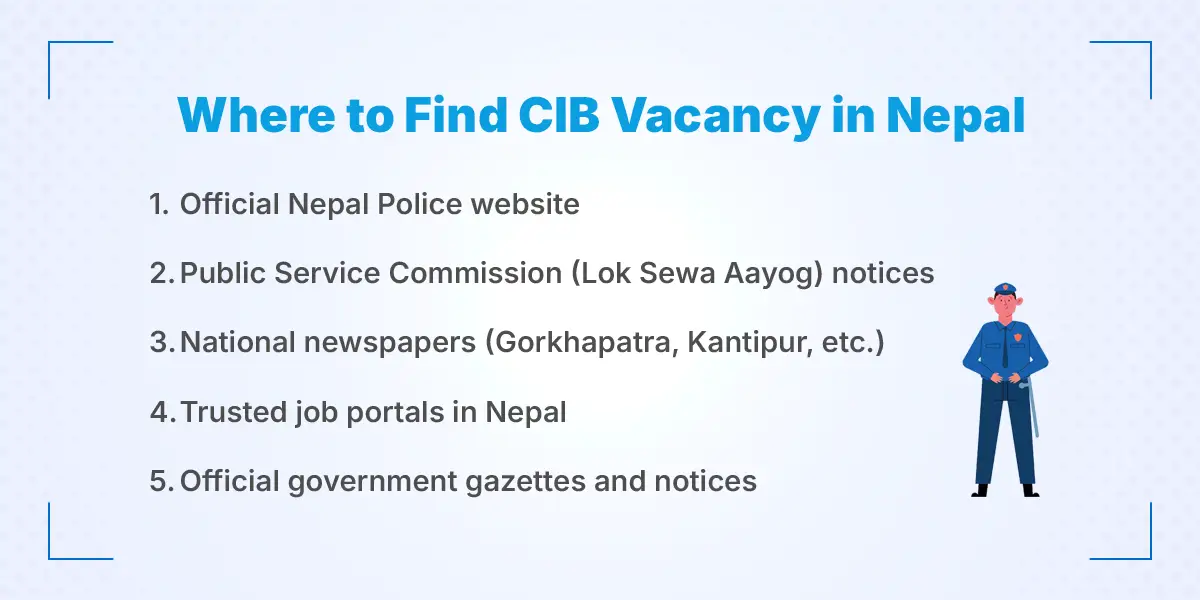
1. Official Nepal Police Website
The official Nepal Police website is the most reliable source for CIB vacancies. All confirmed vacancy notices are published here first. The site provides full details about posts, eligibility, and deadlines. You can also find application instructions and official updates. Always check the website regularly. This reduces the risk of false information.
2. Public Service Commission (Lok Sewa Aayog) Notices
Lok Sewa Aayog handles many government recruitments, including police related jobs. CIB vacancies are often announced through Lok Sewa notices. These notices include exam dates and selection steps. They are published both online and offline. Candidates preparing for government jobs should follow Lok Sewa updates. Missing these notices can cost you an opportunity.
3. National Newspapers
Major newspapers like Gorkhapatra and Kantipur publish government vacancy ads. CIB Nepal vacancies are often printed in these papers. Many candidates still rely on newspapers for official announcements. Checking newspapers daily is a good habit. Printed notices are considered official. They also help reach candidates in remote areas.
4. Trusted Job Portals in Nepal
Trusted job portals collect and share verified government vacancies. They help candidates find notices in one place. These portals often summarize key details clearly. However, always cross-check with official sources. Job portals are useful for alerts and reminders. Avoid unknown or unverified websites.
5. Official Government Gazettes and Notices
Government gazettes publish legal and official announcements. Some CIB-related vacancies appear in these notices. They confirm that the vacancy is government-approved. Gazettes are highly reliable sources. You can access them online or through offices. Serious candidates should follow these updates closely.
Eligibility Criteria for CIB Nepal Jobs in 2083
To apply for CIB Nepal jobs, you must meet the rules on education, age, and citizenship, be physically fit, and have a clean background. These rules help ensure only qualified and suitable candidates are considered for important investigation roles. In this section, we explain each requirement in simple steps, so you clearly understand what is expected before applying.
1. Educational Qualifications Required
For most CIB-related posts, you must have finished a certain level of education. Higher roles often require a bachelor’s degree or higher from a recognized institution. Some support or technical roles may accept +2 or equivalent, depending on the vacancy. Always check the official notice for exact details for each post. Your certificates must be genuine and verifiable. Fake or unclear documents can lead to rejection. Having proper education helps you compete better in selection tests and exams.
2. Age Limit and Nationality Requirements
You must fall within the age ranges set for the specific job. For higher posts like inspector level, age limits may start around 20 and go up to mid 20s or higher for certain categories. For assistant-level roles, age requirements start from around 18 years and have upper limits depending on the vacancy. You must be a Nepali citizen with a valid citizenship certificate. Always confirm the exact age rules in the official vacancy notice, as they can differ by role and category.
3. Physical Fitness and Health Standards
Many CIB Nepal roles involve fieldwork and physical tasks. For police and investigation-related posts, basic physical standards like height, weight, and fitness are checked. You may need to pass a physical test, including running or endurance tasks. A health certificate from an authorized doctor could be required. Being physically prepared improves your chances in the selection process.
4. Background Verification and Character Requirements
You must have a clean background with no criminal record. Background verification checks your history and character before final selection. Being associated with political parties or criminal activities usually disqualifies you. Good behavior, honesty, and integrity are very important for CIB roles. Character checks help ensure the bureau recruits trustworthy candidates.
How to Apply for CIB Nepal Vacancy (Step-by-Step)
You apply for a CIB Nepal vacancy by checking the official notice, confirming eligibility, submitting the application correctly, and completing all required steps on time.
Although the process may look difficult at first, it becomes simple when followed step by step. This section explains each stage clearly so you do not miss any important detail.
Step 1: Check the Official Vacancy Notice
The first step is to find the official CIB Nepal vacancy notice. These notices are usually published through the Nepal Police or the Lok Sewa Aayog. Always read the notice carefully from start to end. It contains important details like post name, number of seats, and deadlines. Never rely on social media posts alone. Make sure the notice is recent and valid. Missing this step can lead to wrong applications.
Step 2: Verify Eligibility and Required Documents
After reading the notice, check if you meet all eligibility rules. This includes education level, age limit, and nationality. Also, check the physical and health requirements if mentioned. Then list all required documents, like certificates and citizenship. Make sure your documents are clear and updated. If you are not eligible, do not apply. Applying without eligibility leads to rejection.
Step 3: Fill Out the Application Form
Next, fill out the application form carefully. The form may be online or offline, depending on the notice. Enter all details correctly as per your documents. Do not guess or provide false information. Double-check spelling, dates, and personal details. Even small mistakes can cause rejection. Take your time while filling out the form.
Step 4: Submit Application and Pay Required Fee
Once the form is complete, submit it before the deadline. Pay the required application fee through the mentioned method. Keep the payment receipt safe. Do not wait for the last day to apply. Late submissions are not accepted. Always follow the payment instructions given in the notice. Successful payment confirms your application.
Step 5: Keep the Admit Card and Application Confirmation
After submission, download or collect your admit card. This card is needed for exams and physical tests. Also, keep a copy of the application confirmation. Store both safely until the process ends. Without an admit card, you cannot attend exams. Check exam dates and centers regularly. Staying organized helps avoid last-minute stress.
Selection Process for CIB Nepal Recruitment
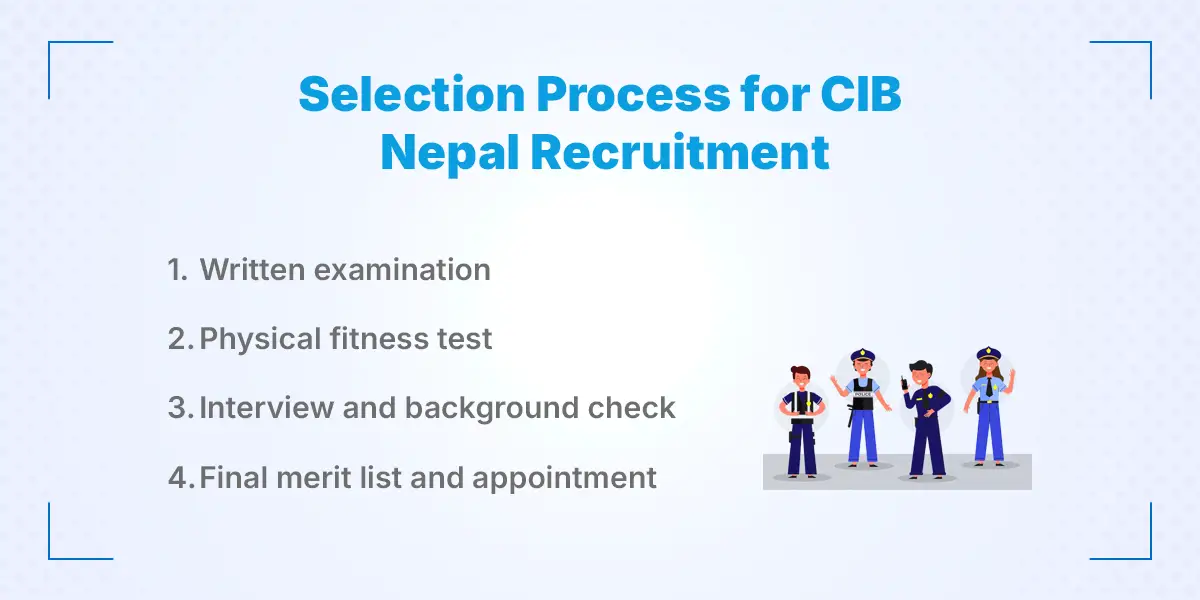
Getting a job in CIB Nepal involves passing a written exam, a physical test, an interview, and a background check before final selection. The process is designed to make sure only capable, fit, and trustworthy candidates are hired. Each step tests different skills, from knowledge to fitness and character. Understanding the process helps you prepare better and increases your chances of success.
1. Written Examination
The first step in the selection is the written exam. It usually tests general knowledge, law, and subjects related to the job. Questions may also cover reasoning, current affairs, and basic computer skills for technical roles. The exam is usually multiple-choice or short-answer format. Preparing well increases your chance of moving to the next step. Always check the syllabus from the official notice before studying.
2. Physical Fitness Test
After passing the written exam, candidates must pass a physical fitness test. This test checks running speed, endurance, and sometimes strength exercises. For officer and entry-level posts, minimum physical standards are required. Candidates who fail the test cannot move forward in the selection. Regular exercise and practice help you clear this stage. Physical fitness ensures you can handle fieldwork during service.
3. Interview and Background Check
Next is the interview and background verification. The interview assesses your personality, communication skills, and problem-solving ability. A background check ensures you have a clean record and good character. Candidates must provide correct documents and references. Honest answers and professional behavior are important in this stage.
4. Final Merit List and Appointment
Finally, candidates are selected based on combined scores from all stages. A merit list is published showing selected candidates. Those on the list are officially appointed to CIB Nepal. Appointment letters include joining instructions and training schedules. Only candidates who meet all requirements are given the job. Preparing for all steps carefully improves your chance of being selected.
Salary, Benefits, and Career Growth in CIB Nepal
CIB Nepal is part of Nepal Police, and like other police posts, jobs here come with a regular government salary plus extra benefits. Your exact salary depends on the rank and pay scale assigned by the government. Along with pay, officers receive various allowances and long‑term benefits. Career growth is also structured so that performance and experience lead to higher ranks and better pay.
Salary and Pay Structure
Salaries for Nepal Police roles start based on rank, and higher positions earn more pay. For example, inspectors can earn around NPR 45,000 to NPR 60,000 per month, including allowances, depending on experience and posting location. Sub‑inspectors and assistant-level posts earn salaries according to government pay scales with grade increments. Higher ranks, such as DSP, SP, and DIG, receive progressively higher salaries as per government pay bands and grades.
Allowances and Benefits
Officers receive allowances such as dearness allowance, ration allowance, and special duty or risk allowance.
Uniform and transport support help cover job-related expenses.
Medical insurance, pension, and provident fund contributions are provided for long‑term financial security.
Paid leave, training programs, and housing support (where available) add to overall job benefits.
Career Growth Opportunities
As you gain experience, you can be promoted to higher ranks with better pay and responsibility. Opportunities exist to specialise in areas like cybercrime or financial investigations as you rise. Promotions also bring extra allowances and greater leadership roles within the bureau. Government service jobs like CIB offer stable careers with clear advancement paths based on performance and tenure.
Tips to Increase Your Chances of Selection
To get selected in CIB Nepal, you need to prepare well for exams, stay physically fit, keep your documents ready, and follow official notices regularly. Many candidates fail not because they lack skills, but because they miss small but important steps. Following these tips improves your chances and keeps you confident throughout the process.
1. Preparing for Lok Sewa and Written Exams
Start early and follow the syllabus mentioned in the official notice. Focus on general knowledge, law, reasoning, and subjects related to the post. Practice past question papers to understand the exam pattern. Time management is important while attempting the test. Revision before the exam helps improve accuracy. Joining a coaching or study group can give extra support if needed.
2. Physical Fitness Preparation
Regular exercise is essential for the physical test. Focus on running, push-ups, sit-ups, and endurance activities. Maintain a healthy diet to stay fit and active. Practice the exact test routine if possible. Rest and recover properly to avoid injuries. Staying consistent improves both strength and confidence on the test day.
3. Document Accuracy and Application Timing
Double-check all your documents before submission. Make sure certificates, transcripts, and ID copies are correct and valid. Fill the application form carefully without errors. Submit before the deadline to avoid last-minute issues. Keep copies of receipts, confirmations, and payment proofs. Accuracy and timing can prevent unnecessary rejection.
4. Staying Updated with Official Notices
Follow the Nepal Police and Lok Sewa websites regularly. Check newspapers and trusted job portals for announcements. Subscribe to official alerts if available. Avoid relying on unverified sources. Staying informed ensures you never miss deadlines or important updates. This keeps you ahead of other candidates.
Conclusion
CIB Nepal offers a unique opportunity for motivated candidates to serve the nation in law enforcement and investigative roles. Securing a position here requires preparation, eligibility, and awareness of official procedures. By understanding the application process, eligibility rules, selection stages, and career benefits, aspirants can approach their goal with confidence. Following trusted sources, preparing for written and physical exams, and keeping documents ready significantly improve chances of selection.
Beyond a job, a career in CIB Nepal provides growth, training, and long-term stability within the government framework. For anyone serious about contributing to national security, applying carefully and preparing early can turn the dream of joining CIB Nepal into a successful and rewarding career.
Frequently Asked Questions
Submit your comments

Get Our App On



What is the Public Relations Officer Salary in Nepal
VIEW DETAILS
What Is the Salary of a Ticketing Officer in Nepal?
VIEW DETAILS
What Is the Salary of a Travel Consultant in Nepal?
VIEW DETAILS
How to Become an Auditor in Nepal
VIEW DETAILS


Loading Comments...