



Are you planning to become a UI UX designer in Nepal? Or you just want to know how much they actually earn in 2026. Well, you have come to the right place. UI UX design is now one of Nepal’s most popular and in-demand professions in the tech sector. From websites to mobile apps, almost all companies need skilled designers to create smooth and clean experiences. That's why the demand is growing very fast.
And the good news is that the salary is also getting better. Whether you are a fresher in the industry or are already working, it is a plus point to know how much salary you can expect. In this blog, we will break down the UI UX designer salary in Nepal based on experience, qualifications, and job types. Let's simplify it and make it short for you.
In this blog
What is the average UI UX Designer Salary in Nepal in 2026?
The average UI UX designer salary in Nepal in 2026 is between NPR 20,000 and NPR 120,000+ per month, depending on skills, experience, and job type. While freshers may start a bit low, there is a good opportunity to increase the salary over time. Let's look at individual salaries one by one:
1. Average Salary of UI/UX Designers in Nepal
In 2026, the majority of UI/UX designers in Nepal make between NPR 50,000 and NPR 70,000 a month. It is an average. Some are paid less, some are paid more. Everything depends on your skills, experience, and your employer. If you are working in a large tech company, you will mostly be paid more than in a small startup. Designers working in locations like Kathmandu get paid more than designers who work in smaller towns. And if you know commonplace tools like Sketch, Figma, or Adobe XD, then that will also earn you more. UI/UX designers are increasingly being hired by companies these days, so it's a great time to be in the field.
2. Entry-Level vs Mid-Level vs Senior-Level Pay
Your salary as a UI/UX designer will largely depend on the number of years of experience you possess. If you are a fresher or have just started and do not have any experience, you can look forward to receiving NPR 25,000 to NPR 40,000 every month. This is general for fresher or entry-level jobs. Once you gain 2 to 4 years of experience, your salary can rise to NPR 50,000 to NPR 80,000 every month. This is the middle-level category. With over 5 years of working experience, designers receive NPR 90,000 to NPR 150,000+. The senior designers are usually more experienced and work on major projects as team leaders. The more you increase your experience and knowledge, the better your income.
3. Freelance vs Full-Time UI UX Designer Salary in Nepal
Most of the designers in Nepal work full-time, while the rest are freelancers. Full-time designers work for one company and have a fixed salary on a monthly basis. Freelancers work with many clients and get paid according to each project. A UI/UX designer working full-time can earn between NPR 30,000 and NPR 120,000, depending on their level. Freelancers earn NPR 30,000 to NPR 100,000 or even more, but the income is not monthly. It varies based on the projects you get. Some months are great, while others are slow. But if you're a good networker and work for overseas clients, freelancing can be highly rewarding. Most Nepali designers prefer freelancing these days because they can work from home and earn in foreign currency.
4. UI/UX Salary Trends Compared to 2024
If we compare the UI/UX designer salary in Nepal in 2026 with that of 2026, we can observe an increase. Last year, the beginners used to earn less, around NPR 20,000 to NPR 35,000. But now in 2026, entry-level salaries have grown a little bit. More companies understand how important design is, and therefore, they are offering more. Mid-level and senior-level designers are also being offered higher pay than before. And the availability of remote work and freelance work is more. That means Nepali designers can be hired by foreign clients and earn higher pay. So in total, the salary trend is on the rise, and everything will keep getting better from here in the coming years.
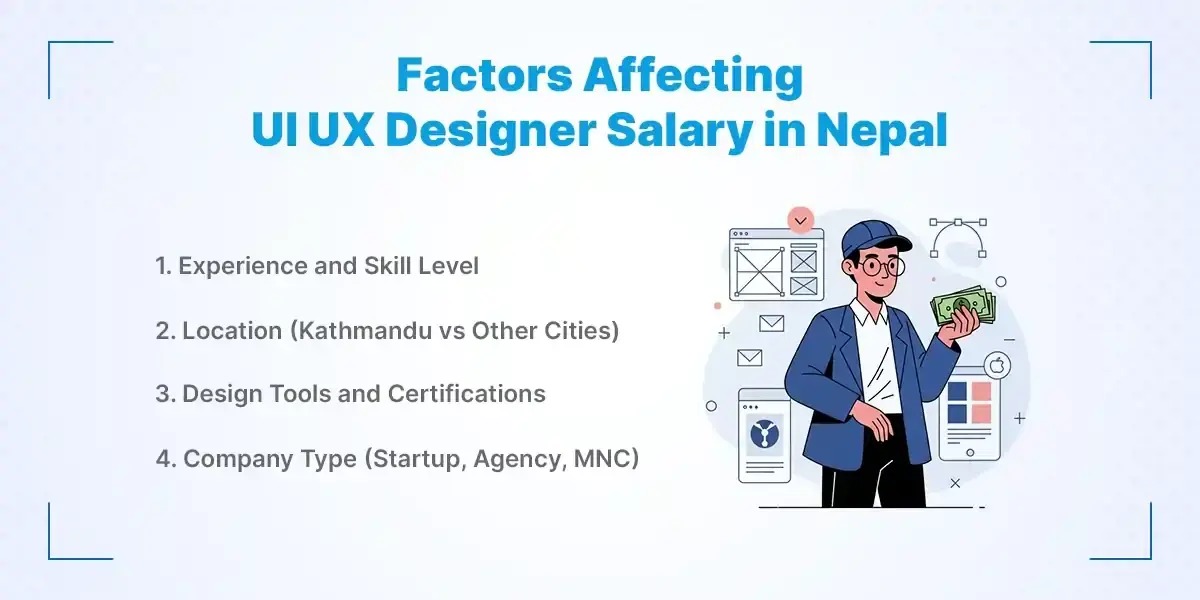
Factors Affecting UI UX Designer Salary in Nepal
UI/UX designer salary in Nepal depends on a few important things. It’s not the same for everyone. Your experience, where you work, and the type of company all make a big difference. Let’s look at each factor in a very simple way.
1. Experience and Skill Level
The more experience you have, the more you earn. If you're a fresher in the market, you will likely earn less. But once you obtain real work experience, your income starts to rise. For example, a fresher can get NPR 25,000, while an individual with 3–4 years of experience can get NPR 60,000 or more. Experienced designers with more than 5 years of experience can receive more than NPR 100,000. But years alone are not enough. Skills also have a significant role to play. If you have a talent for wireframing, prototyping, user research, and know the design tools, you can expect more pay. Everywhere, everyone needs problem-solving designers and designers who make users happy. So, if you keep learning, your pay keeps rising.
2. Location (Kathmandu vs Other Cities)
Even the place where you work in Nepal affects your pay. UI/UX designers working in Kathmandu are paid more than in other cities. That is because most tech companies, agencies, and startups are found in the Kathmandu valley. There are more job opportunities and a competitive system. Naturally, therefore, salaries are better. In small towns such as Pokhara, Butwal, or Biratnagar, UI/UX jobs do exist, but perhaps not with the same pay. The lifestyle is lower in those areas, which also affects salary levels. Nevertheless, remote work is having an impact. Some people live in small towns but work for Kathmandu-based organizations or even abroad. That way, they get paid more without stepping out of the house.
3. Design Tools and Certifications
The right design tools can help you earn more. If you have the freedom to use Figma, Adobe XD, or Sketch, there is a possibility that you'll get hired and paid well. These tools help you work smarter and quickly. Companies hire people who know how to make the best use of them. Certifications play a significant role as well. A simple course from Coursera, Google, or LinkedIn Learning shows that you are dedicated to your skill. Even without a degree, these certificates make you stand out. Firms also offer more pay if you have completed a certified UI/UX course. And learning tools and obtaining certificates are always a good idea.
4. Company Type (Startup, Agency, MNC)
Your company type can affect your salary, too. If you're working in a startup, your salary could be lower initially. But there is more freedom to learn, and you can grow quickly. Agencies offer decent salaries and allow you to work on diverse projects. This builds your portfolio. Foreign firms or MNCs pay the highest. They also provide other facilities like bonuses, medical insurance, and paid holidays. But they expect more experience and polished skills. So don't get worried if you are presently employed with a startup. You can switch to a big firm later and earn more with experience.
Skills Required to Become a UI UX Designer
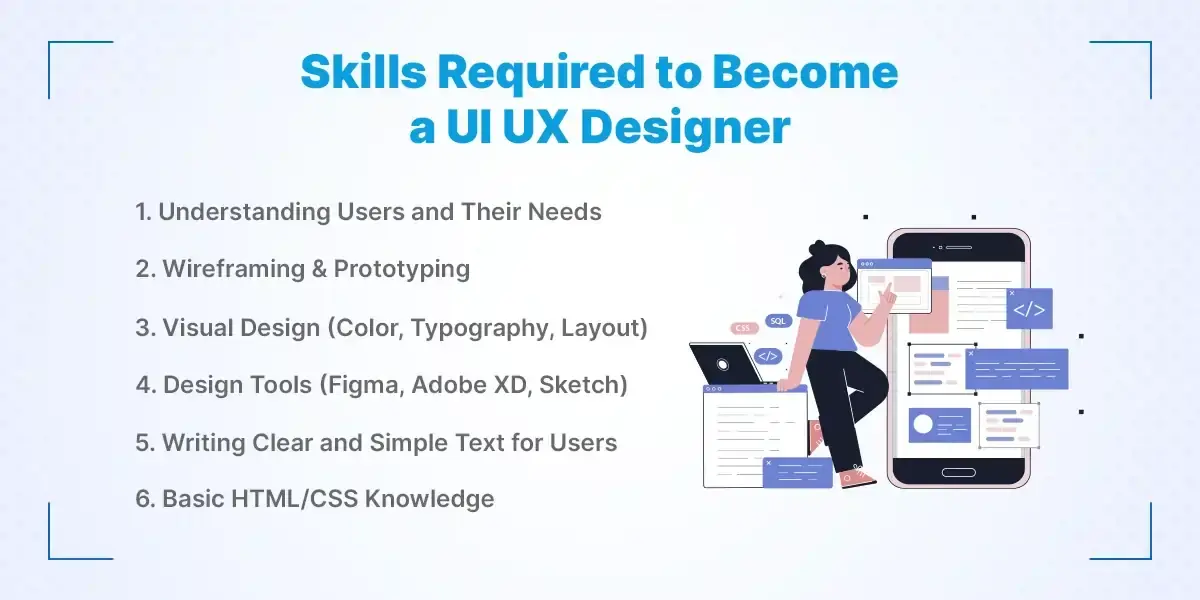
If you want to be a UI/UX designer, you need to learn some important skills. These skills enable you to produce useful and pretty designs. You don't need to be an expert at everything in the beginning. But knowing the basics of each will help you develop faster. Let's talk about them one by one, in the most basic way possible.
1. Understanding Users and Their Needs
The first and most crucial ability is the user's understanding. You need to understand what individuals want, what their issues are, and how they make use of websites or applications. That is "user-centered design." Your design may be awesome, but if users get confused, that's bad design. You can learn this by questioning, conducting tiny surveys, or observing how users act. Try to think like them. What would be beneficial for them? What might be confusing for them? The more you understand people, the better you will design. That's the idea behind UX.
2. Wireframing & Prototyping
Wireframing is the process of creating a rough sketch of a website or an app before designing it fully. It's like drawing the layout with boxes and basic shapes. Prototyping comes next, which is a clickable prototype of your design that shows how things will work. These processes allow you to think ahead and try out ideas before you actually build the product. You don't need to be an excellent artist. A rough layout works equally well. These tools allow you to save time and avoid mistakes down the line. It also makes it easier to share your ideas with others. You can do paper, whiteboard, or digital. Easy but very convenient.
3. Visual Design (Color, Typography, Layout)
Here, your design starts to look pretty. Visual design is choosing appropriate colors, font styles, and where they all get put on the screen. Colors need to match the brand and look nice. Text needs to be readable, neither too tiny nor too big. Your design should be simple and well-organized. There should be enough spacing. Don't overfill the screen. A simple, smooth design is preferred by humans. Your goal is to get the user relaxed and focused.
4. Design Tools (Figma, Adobe XD, Sketch)
To design professionally, you need to learn tools like Figma, Adobe XD, or Sketch. Tools allow you to create wireframes, prototypes, and final designs. Figma is most commonly used these days in Nepal. It's browser-based and free to use. These are simple to learn. Practice a few times, and you're set. You can move things around, drag, drop, and play around with your ideas easily. They also help you collaborate with teams. Mastering these tools makes it easier to get a job or freelance gig.
5. Writing Clear and Simple Text for Users
This is called UX writing, and it's most often ignored. But it matters. Users read the buttons, messages, labels, and instructions on your design. Users won't have a clue what to do if the words are ambiguous. Your job is to make it brief, understandable, and chatty. Write "Next" instead of "Continue to the next step in the process." Use plain language at all times. Imagine explaining it to your friend. That's what your writing should be like. You don't have to be a writer. You simply have to be clear.
6. Basic HTML/CSS Knowledge
You don't have to code. But having a basic knowledge of HTML and CSS can actually work in your favor. It helps you understand how your design will be converted into an actual website or app. You'll know what's easy or hard to make. This enables you to converse better with developers. Mastering the basics like headings, buttons, space, and colors is enough for the initial phase. There are free courses on the web that walk you through this in a fun way. Once you know the basics, you'll be more confident with your designs.
How to Start a Career as a UI/UX Designer in Nepal?
To start a career as a UI/UX designer in Nepal, you need to learn the basics, build a portfolio, and apply for internships or entry-level jobs. It doesn’t happen overnight, but if you stay consistent, you can grow quickly. You don’t need a design degree to get started. You just need to learn, practice, and keep improving step by step.
1. Recommended Courses and Institutes
There are numerous online and offline good courses to get you started. There are many training centers in Nepal, like Kumari Job, that provide complete UI/UX training. The courses generally include design tools, wireframing, Visual Basic, and so on. If you're comfortable with online learning, consider Coursera, Google UX Design Certificate, or LinkedIn Learning. These websites are easy to follow and are great for beginners. Select one that meets your learning style and budget. You may also watch free YouTube tutorials if you want to start slowly. The most important thing is to learn the basics before moving on to more advanced content.
2. Portfolio Tips for Beginners
Your portfolio is your first impression. It shows what you can do even if you have no work experience. Start by doing small sample projects like designing an app idea, a landing page, or a website. Have 3 to 4 good case studies. Have a short explanation of your design process. Publish your work through tools like Behance, Notion, or even just a simple Google Drive folder. Make it clean, minimal, and easy to read. The goal is to show that you understand design thinking.
3. Internships and Entry-Level Job Hunting
Once you gain some skills and a mini portfolio, start applying for internships. Numerous companies in Kathmandu and other cities provide UI/UX internships. One can also search for online or remote internships. Search in platforms like Kumari Job and LinkedIn. Do not expect much salary at first; it is all about learning. Internships provide real-world experience and often result in full-time jobs. Keep on applying, despite the rejections. Each step makes you stronger, and you will finally land your first real design job.
Where to Find UI UX Designer Jobs in Nepal?
You can find UI UX designer jobs in Nepal in online job portals like Kumari Job, LinkedIn, Facebook job groups, and company career pages. You can also get the job from referrals and by joining a network. Let's explore each way in more detail:
1. Online Job Portals
Job portals are one of the easiest ways to find design jobs in Nepal. Sites like Kumari Job post new openings every day. You can search for "UI UX designer" and filter jobs by location or experience level. Some jobs are full-time, while others may be freelance or remote. Create a simple profile and upload your CV and portfolio. Apply to as many jobs as you can. Don’t worry if you don’t hear back right away. Keep applying. New jobs are posted almost daily, so check regularly.
2. Facebook Groups
Facebook isn’t just for chatting. Many UI/UX jobs in Nepal are shared in Facebook groups. Groups like UI/UX Design Nepal, Jobs Nepal, and IT Job Vacancies are great places to start. Employers often post quick job updates there. Sometimes, you’ll find an internship or freelance work too. Join a few active groups and turn on notifications. You can also post your own work and let people know you’re looking. It’s a casual but useful way to connect with job opportunities.
3. LinkedIn
LinkedIn is very useful for finding design jobs and internships. Many Nepali companies now post their openings directly on LinkedIn. You can follow design agencies, startups, or tech companies and apply directly when they post jobs. Keep your profile updated and professional. Add your skills, portfolio, and a clear bio. Sometimes, recruiters message you directly if your profile matches what they need. It’s also a great place to grow your network and learn from others in the design field.
4. Company Career Pages
Some companies don’t post jobs on portals. They also list them only on their official websites. Most of the companies have a "Careers" page. You can visit those pages and see what roles are open. Even if there’s no job posted today, check again next week. It’s also good to send a polite email with your CV and portfolio. Some companies hire when they see a good candidate, even if there’s no active vacancy. So take the first step. It shows you’re interested.
5. Referrals & Networking Events
Sometimes, the best jobs come from people you know. If you have friends or seniors in the field, ask them to refer you. Many companies in Nepal hire through referrals. It saves them time and helps them trust new hires faster. You can also attend design meetups, workshops, or job fairs. These events are great for learning and meeting people. You never know who might help you land your first job. Be friendly, ask questions, and let others know you're looking.
Career Growth & Future Scope of UI UX Designers in Nepal
UI UX is a growing career field in Nepal. As more businesses are going online, they require skilled designers to make websites and apps easy to use. That means more job opportunities, better paychecks, and bigger roles in the future. Let's understand how you can move forward as a UI/UX designer in Nepal.
1. Job Roles and Specializations
As you grow in this profession, you have plenty of roles that you can experiment with. You may start out as a Junior UI/UX Designer, doing small tasks and learning from doing them. After gaining some experience, you may be a Mid-Level or Senior Designer. And then there are some special roles, too. You may also be a UX Researcher, studying how people use things. Or a UI Specialist, who does design look and feel alone. Some also become product designers doing both strategy and design. The more knowledgeable you are, the more options you will have. You don't necessarily have to remain in one job all your life.
2. Promotions and Long-Term Earning Potential
Your salary in this field can rise significantly over time. Initially, you may earn less. However, once you work for 2–3 years, your salary can double or triple. If you stay up to date and increase your skills, you can progress to become a team leader or even a design manager. They get higher pay and more power. Other designers freelance as consultants or start their own design studios. The secret is learning continually. The longer you stick around and grow in the industry, the better your future will be.
3. Freelancing and Remote Work Opportunities
Freelancing has become a huge industry in UI/UX design today. Some Nepali designers work remotely from home for international clients. You can get hired on websites like Upwork, Fiverr, or Toptal. Working remotely also helps you earn in dollars, which is amazing. You don't need to move to another country. A laptop and the internet can provide you with a decent income. However, freelancing needs discipline and effective communication skills. If you build a great portfolio, working remotely can bring you freedom and decent compensation.
Conclusion
UI/UX design is growing fast in Nepal. More companies now understand how important good design is. That’s why the demand for skilled designers is going up every year. If you’re thinking of becoming a UI/UX designer, this is a great time to start. You don’t need a fancy degree. Just learn the right tools, practice your skills, and build a small portfolio. The salary may be low at first, but it gets better with time and experience. You can grow from beginner to expert and even work with foreign clients later. So keep learning, stay curious, and don’t give up.
Looking for graphic design jobs in Nepal? Start your design journey today! Explore fresh job openings, apply easily, and turn your creativity into a full-time career.
Frequently Asked Questions
Submit your comments

Get Our App On



What is the Public Relations Officer Salary in Nepal
VIEW DETAILS
What Is the Salary of a Ticketing Officer in Nepal?
VIEW DETAILS
What Is the Salary of a Travel Consultant in Nepal?
VIEW DETAILS
How to Become an Auditor in Nepal
VIEW DETAILS


Loading Comments...