




Are you feeling stuck in your job and wondering if learning Python is worth it in Nepal? Many people start programming without knowing the salary options, which can lead to confusion and frustration.
The truth is, Python is a very popular skill right now, and companies in Nepal are looking for developers. However, not all Python jobs pay the same, and your experience, skills, and the company you work for make a big difference.
In this guide, we will explain everything about Python developer salaries in Nepal. You will find out how much you can earn at different levels, which skills can increase your pay, and what steps you can take to get the best salary.
In this blog
What is the Average Salary of Python Developers in Nepal?
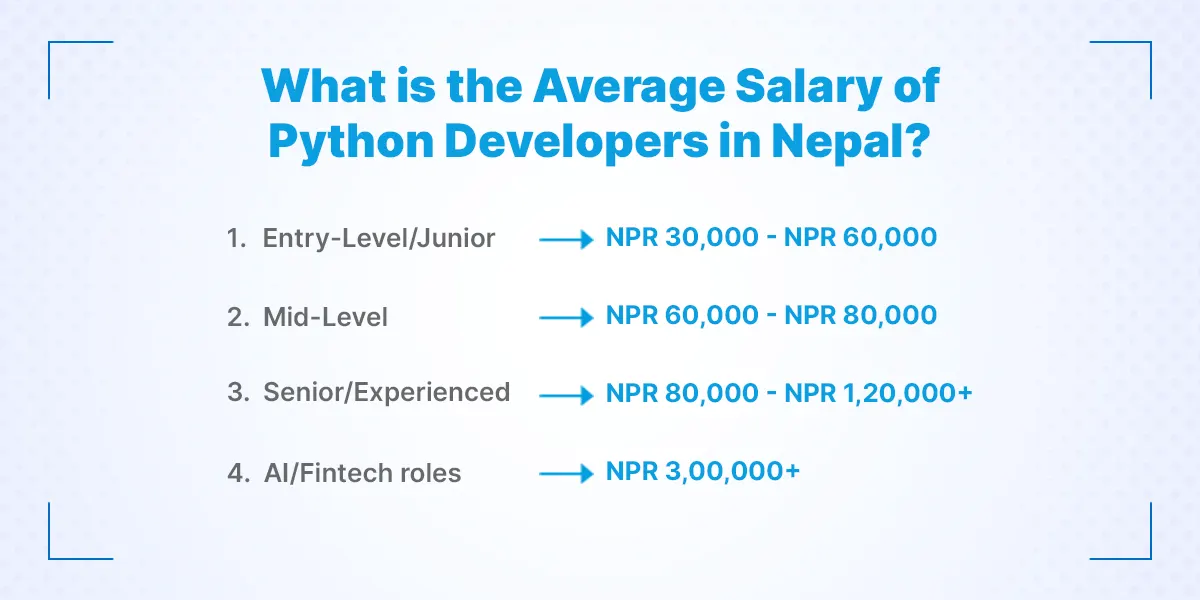
The average salary of Python developers in Nepal ranges from NPR 30,000 to NPR 1,20,000+, while developers with specialized skills in AI or Fintech can earn up to NPR 3,00,000+. The exact salary depends on your experience, skills, and the type of company you work for. Entry-level developers earn less, while senior professionals and niche roles in AI or Fintech can earn significantly higher. Let’s break it down by experience level so you know what to expect.
1. Entry-Level / Junior Python Developer
Fresh graduates or those with less than 2 years of experience usually earn between NPR 30,000 and NPR 60,000. You’ll often work on smaller projects, assist senior developers, and gradually learn frameworks like Django or Flask. The focus is on building a strong foundation in Python, understanding basic databases, and collaborating on team tasks. Although the pay isn’t very high at first, it gives you a stepping stone for rapid growth.
2. Mid-Level Python Developer
With 2–5 years of experience, developers can earn around NPR 60,000 to NPR 80,000. At this stage, you handle bigger projects and contribute to decision-making. Employers expect you to know web frameworks, APIs, and basic DevOps practices. Mid-level roles often include mentoring juniors and managing parts of a project independently. Your salary grows because your experience allows you to deliver faster and with fewer errors.
3. Senior / Experienced Python Developer
Senior developers with 5+ years of experience can earn from NPR 80,000 to NPR 1,20,000+. You’ll lead teams, design systems, and make technical decisions for complex projects. Mastery of frameworks, databases, and APIs is expected, along with strong problem-solving skills. Senior roles often include bonuses, project incentives, or higher negotiation power for salary.
4. AI / Fintech Python Roles
Specialized roles in AI, Machine Learning, or Fintech can pay up to NPR 3,00,000+. These positions demand advanced skills in data analysis, ML libraries, or financial algorithms. Companies in Nepal are increasingly willing to pay a premium for talent that can deliver complex solutions. If you have these niche skills, your earning potential can be much higher compared to standard Python roles.
Factors Affecting Python Developer Salary in Nepal
The salary of a Python developer in Nepal is not the same for everyone. It changes depending on several important factors. Things like your education, skills, experience, and the type of company you work for all matter. Understanding these factors can help you plan your career and earn more.
1. Education and Qualifications
Your education plays a big role in your salary. Developers with a bachelor’s or master’s degree in Computer Science or related fields often earn more. Certifications in Python, Django, or data science can also boost your pay. Employers feel more confident hiring someone with verified skills. Even online courses or bootcamps can make a difference if they show practical knowledge. The more you invest in learning, the higher your chances of getting a better salary.
2. Years of Experience
Experience is one of the biggest factors. Freshers usually earn less, but as you gain 2–5 years of experience, your salary increases. Experienced developers can take on bigger projects and work more independently. Companies pay more for people who can solve problems quickly and make fewer mistakes. Long-term experience also makes you eligible for senior roles. Basically, the more you work and learn, the more money you can make.
3. Technical Skills and Specializations
The specific skills you have affect your pay a lot. Knowing frameworks like Django, Flask, or FastAPI is valuable. Skills in AI, machine learning, or data analytics can make you stand out. The ability to work with APIs, databases, or cloud services also adds value. Companies often pay a premium for developers who can handle advanced tasks. The more specialized and updated your skills are, the better your earning potential.
4. Company Type and Size
The kind of company you work for changes your salary. Startups may pay less but can offer experience and growth opportunities. Multinational companies or big IT firms usually pay higher salaries. Some companies also offer bonuses, health benefits, or flexible work options. Your role and responsibilities in the company also affect how much you earn. Choosing the right company can make a big difference in your income.
5. Location and Industry
Where you work also matters. Python developers in Kathmandu or other big cities usually earn more than in smaller towns. The industry you work in makes a difference too. Banking, Fintech, AI, and software companies often pay higher than other sectors. Living costs and demand in a city also affect salaries. So, choosing the right location and industry can help you maximize your earnings.
Skills Required to Become a Python Developer in Nepal
Becoming a Python developer is not just about knowing the language. You need a mix of technical skills to build real projects. Some skills are basic, while others make you stand out in the job market. Learning them step by step can help you grow faster and earn more.

1. Python Fundamentals
This is the foundation of your Python journey. You need to understand variables, loops, and how to write clean code. Object-Oriented Programming (OOP) is also important because many projects use it. Practicing small programs regularly helps you get confident. The more you practice, the easier it becomes to learn advanced topics. These fundamentals are what every employer expects from you. Starting strong here makes the rest easier.
2. Web Frameworks
Frameworks help you build web applications faster. Django, Flask, and FastAPI are popular choices in Nepal. Learning at least one framework allows you to create real websites and backend systems. It also makes you more attractive to companies. You will understand routing, templates, and database connections. Knowing frameworks can increase your chances of getting better-paying jobs.
3. Frontend Basics
Even if you are a backend developer, knowing frontend helps a lot. HTML, CSS, and JavaScript are the basics you should know. This helps you understand how websites look and work. You can collaborate better with frontend developers. It also makes debugging and testing easier. Simple knowledge here is enough to make you more versatile.
4. Databases
Almost all applications need a database to store information. Learning MySQL, PostgreSQL, or MongoDB is very helpful. You will understand how to save, read, and update data. Knowing queries and relationships is important. It also helps in building web apps and APIs. Companies prefer developers who can handle both code and data.
5. APIs
APIs allow different programs to talk to each other. You need to know how to create and use REST and GraphQL APIs. Understanding JSON format is also important. It helps your application share data with other apps or services. APIs are everywhere, from mobile apps to web apps. Being confident with APIs makes you more job-ready.
6. Version Control
Version control tools help you manage your code changes. Git, GitHub, and GitLab are the most common ones. They allow you to track changes, work with teams, and fix mistakes easily. Employers expect you to know how to use them in real projects. It also makes collaboration smooth and professional. Learning version control is a must for every developer.
7. Testing & DevOps
Testing ensures your code works correctly before it goes live. PyTest is a popular tool for testing Python code. DevOps basics like CI/CD and Docker help in deploying applications faster. Knowing these makes you a complete developer. You can deliver projects more efficiently and reduce errors. These skills also make you stand out for better roles.
Where to Find Python Developer Jobs in Nepal?
You can find Python developer jobs in Nepal through online job portals like Kumari Job, LinkedIn, company career pages, networking, and online tech communities. Finding a job is not that confusing. You just need to explore the best ways to look for opportunities and use multiple sources. Let’s look at each option so you can start applying confidently.
1. Online Job Portals
Job portals are one of the easiest ways to find Python developer jobs. Sites like Kumari regularly list job openings. You can filter jobs by location, experience, and salary. Most portals allow you to upload your resume and apply directly. They often provide notifications for new job postings, too. Checking them daily keeps you updated with the latest opportunities. Applying through portals is simple and quick.
2. LinkedIn
LinkedIn is a powerful job platform. Many companies post Python developer roles here. You can connect with recruiters and industry professionals. Updating your profile with skills and projects increases visibility. You can also follow companies and get alerts for job openings. Networking on LinkedIn can sometimes lead to opportunities not posted elsewhere. Engaging with posts and communities shows your expertise.
3. Company Career Pages
Many IT companies post jobs directly on their career pages. This is often the fastest way to find openings. Some companies prefer direct applications over portals. Checking regularly ensures you don’t miss new roles. You also get accurate information about the position and requirements. Applying directly can make you stand out to hiring managers.
4. Networking
Networking is one of the most effective ways to find jobs. Talking to friends, colleagues, or mentors in the industry helps. Sometimes jobs aren’t advertised publicly and are filled through referrals. Attending tech meetups or events also increases connections. Networking builds trust and can speed up your hiring process. People are more likely to recommend someone they know or have worked with. A strong network can open many doors.
5. Online Tech Communities
Tech communities are great for learning and job hunting. Communities like Stack Overflow, Reddit, and local Python groups often share job openings. You can also ask for advice or mentorship. Participating actively shows your skills to potential employers. Many startups and companies notice active contributors and reach out directly. Being part of these communities keeps you updated with trends and opportunities. It also helps you grow as a developer while looking for jobs.
How to Increase Your Salary as a Python Developer in Nepal?
You can increase your salary as a Python developer by upskilling, building a strong portfolio, networking, contributing to open-source projects, and negotiating well during interviews. Earning more isn’t just about working harder; it’s about working smarter. Small steps in learning, showcasing your work, and connecting with the right people can make a big difference. Let’s look at each strategy so you can boost your salary effectively.
1. Upskilling and Certifications
Learning new skills is one of the easiest ways to earn more. Taking courses in Django, Flask, AI, or data science can make you more valuable. Certifications from recognized platforms show employers that your skills are verified. Companies often pay more to developers with up-to-date knowledge. Even short-term courses or workshops can help. The more you learn, the more roles you can qualify for. Investing in yourself always pays off.
2. Building a Strong Portfolio
A portfolio is like proof of what you can do. Include real projects, apps, or websites you’ve built. Showing your code, screenshots, or live apps makes your profile stronger. Employers can see your skills without guessing. A strong portfolio helps during interviews and job applications. It also shows that you can deliver results, not just have knowledge. Regularly updating it keeps you relevant.
3. Networking and Contributing to Open-Source Projects
Networking helps you find opportunities others might miss. Talk to developers, attend meetups, or join online communities. Contributing to open-source projects shows your skills publicly. It also connects you with companies looking for talent. Many employers notice active contributors and offer better salaries. Networking and contribution together can boost both your skills and your career.
4. Negotiating Salary During Interviews
Negotiation is key to earning what you deserve. Don’t accept the first offer without discussing it. Highlight your skills, experience, and past projects when negotiating. Research typical salaries to know what’s fair. Even small increases matter in the long run. Being confident yet polite can help you get better pay. Preparation is the secret to successful negotiation.
Is a Python Developer a Good Career in Nepal?
Python development is increasingly becoming one of the most promising careers in Nepal. With the rise of IT companies, startups, and tech-driven businesses, Python developers are in high demand. The language’s simplicity and versatility make it ideal for web development, data analysis, machine learning, and automation. This means that even in Nepal, skilled Python developers can find plenty of opportunities.
Another reason it’s a good career is the earning potential. Python development is one of the highest-paying jobs in the world, especially in AI, data science, and fintech. While Nepal’s salaries are lower compared to countries like the US or Europe, the trends show steady growth. Companies are willing to pay more for developers who have specialized skills and practical experience.
Python development also offers flexibility. You can work for local companies, remote international clients, or even as a freelancer. This flexibility opens doors to higher pay and diverse projects. Additionally, the skill set is transferable, so you can easily move into related fields like data science, AI, or backend development.
Why Python is a Promising Career in Nepal
- High demand across IT, startups, and tech firms
- Opportunities in remote and freelance work
- Growth in specialized fields like AI, ML, and data analytics
- Transferable skills that open global opportunities
- Potential for higher earnings as experience grows
In short, Python development offers stability, growth, and the chance to work on exciting projects. For anyone willing to learn and continuously improve, it is definitely a career worth considering in Nepal.
Conclusion
Becoming a Python developer in Nepal is not just a job; it’s a smart career choice. With steady demand across IT companies, startups, and tech-driven industries, skilled Python developers can earn competitive salaries and grow quickly. Your experience, technical skills, and willingness to upskill directly affect your earning potential. Specialized fields like AI, machine learning, and fintech offer even higher rewards, making Python one of the highest-paying jobs.
Beyond salary, Python development provides flexibility, career growth, and opportunities to work on exciting projects locally or remotely. For anyone serious about tech, learning Python and building relevant skills can lead to a rewarding and stable career in Nepal.
Frequently Asked Questions
Submit your comments

Get Our App On



What is the Public Relations Officer Salary in Nepal
VIEW DETAILS
What Is the Salary of a Ticketing Officer in Nepal?
VIEW DETAILS
What Is the Salary of a Travel Consultant in Nepal?
VIEW DETAILS
How to Become an Auditor in Nepal
VIEW DETAILS


Loading Comments...