




Looking to become a physiotherapist in Nepal, but worried about how much you can really earn? You’re not alone. Many students and fresh professionals struggle to find clear, reliable salary information. It’s frustrating when you don’t know what to expect, especially when planning your career or choosing a specialization.
Understanding physiotherapist salaries isn’t just about money. It helps you make smarter career choices, decide where to work, and invest in the right skills.
In this guide, we’ll break down physiotherapist salaries in Nepal in the simplest way. You’ll get clear monthly ranges, differences between government and private jobs, workplace-specific pay, and tips to grow your earnings.
In this blog
Why Knowing Your Salary Is Important
Knowing your salary as a physiotherapist in Nepal helps you plan your career and financial future better. It’s not just about money. It’s about making smart choices for your professional growth.
Many students and fresh professionals underestimate how crucial salary information is. If you don’t know what to expect, you might choose the wrong workplace, settle for less, or miss opportunities to grow your skills and income. Understanding the average salary also helps you negotiate confidently when applying for jobs.
Here’s why salary knowledge matters:
- Career Planning: Knowing potential earnings helps you decide which specialization or workplace to pursue.
- Skill Investment: You can focus on skills and certifications that increase your earning potential.
- Location Decisions: Salaries vary between cities and hospitals. Awareness helps you choose the best location for your goals.
- Financial Stability: Understanding pay ranges helps you budget and plan for loans, rent, or other expenses.
- Negotiation Power: Clear salary knowledge gives you confidence to negotiate better pay with employers.
In Nepal, physiotherapist salaries can vary widely depending on experience, workplace type, and specialization. Fresh graduates may earn less initially, but with experience and additional skills, income can grow significantly. By knowing the numbers upfront, you can make informed choices, avoid surprises, and actively work toward higher-paying opportunities.
Ultimately, salary awareness is a key tool for building a successful, sustainable career in physiotherapy.
What is the Average Salary of a Physiotherapist in Nepal?
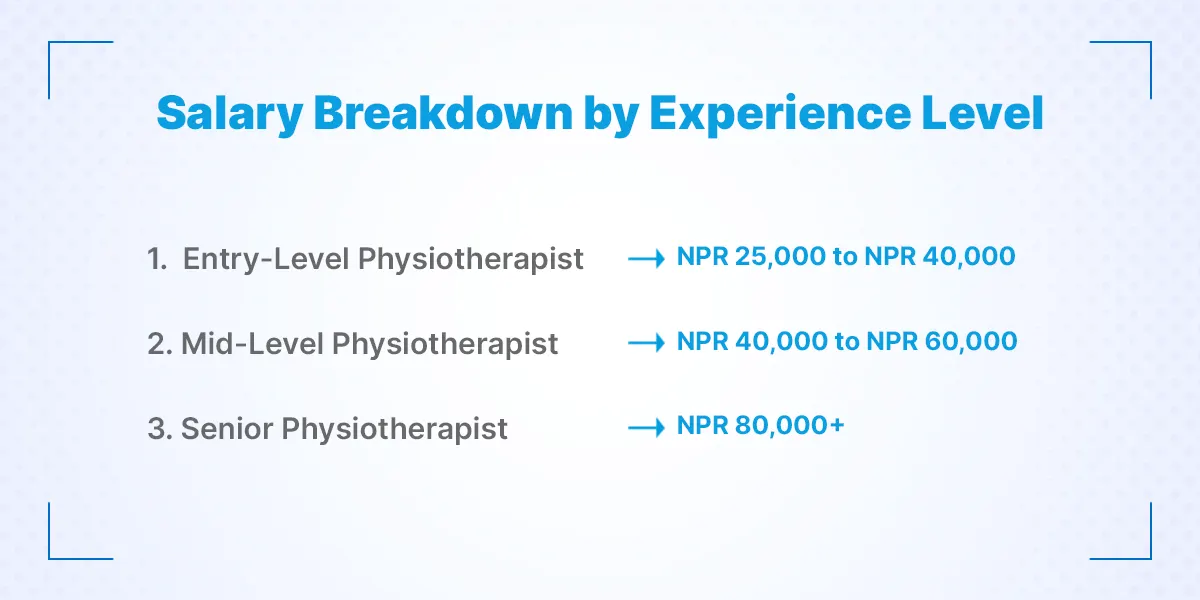
The average salary of a physiotherapist in Nepal is around NPR 25,000 to NPR 80,000+ per month, depending on your skills, specialization, and experience. Fresh graduates earn less, while seasoned professionals enjoy higher pay. Understanding these ranges helps you plan your career and know when to aim for promotions or additional skills. Let’s break down the salary levels based on experience.
1. Entry-Level Physiotherapist
Fresh physiotherapists just starting their career usually earn between NPR 25,000 and NPR 40,000 per month. Most entry-level jobs are in hospitals, clinics, or gyms, where you gain hands-on experience. Your pay depends on the city, hospital type, and workload. While the salary may seem modest, it’s a crucial time to learn, build skills, and specialize. Entry-level physiotherapists can increase their pay by gaining certifications or working in private hospitals. Networking and showing good patient management skills also open higher-paying opportunities.
2. Mid-Level Physiotherapist
After 3-5 years of experience, a physiotherapist moves into the mid-level range. At this stage, you may handle more complex cases and have greater responsibility. Mid-level professionals often work in bigger hospitals or well-established clinics. Specializations in sports, orthopedics, or neurology can push earnings toward the higher side. Good communication and patient management skills are highly valued. Many mid-level physiotherapists also start earning extra from home visits or workshops.
3. Senior Physiotherapist
Senior physiotherapists with 7-10 years or more experience earn 80,000+ per month. They often hold managerial roles, lead teams, or run their own clinics. Senior professionals are experts in their specialization and may work on international projects or large rehabilitation centers. Earnings can further increase with certifications, advanced training, or private practice. At this stage, reputation and experience play a big role in income. Senior physiotherapists can also earn from online consultations or training programs.
Salary Based on Workplace Type
Where you work as a physiotherapist in Nepal greatly affects how much you earn. Different workplaces have different pay scales, perks, and opportunities to grow. Knowing the salary trends for each type of workplace helps you make smarter career decisions. Let’s explore how physiotherapist salaries vary across workplaces.
1. Government Hospitals
Physiotherapists in government hospitals earn a stable monthly salary and often have benefits like pensions and leave. Entry-level pay may start around NPR 25,000–35,000, increasing with experience. Promotions follow a structured path, so experienced professionals can earn more over time. The workload in government jobs can be high due to patient volume, but job security is strong. Specialized roles may be limited, but gaining experience here builds credibility. Government hospitals are ideal for those seeking steady income and long-term employment.
2. Private Hospitals & Clinics
Private hospitals and clinics usually pay more than government hospitals, especially for experienced physiotherapists. Salaries vary widely depending on hospital reputation, location, and specialization. Mid to senior-level physiotherapists can earn NPR 50,000–80,000 or more. Private settings often offer performance-based incentives or bonuses. You may handle fewer patients than in government hospitals, but get more resources and better facilities. Networking and building a good reputation can increase your income.
3. Rehabilitation Centers
Rehabilitation centers focus on long-term patient care, so physiotherapists may earn moderately higher salaries. Pay ranges depend on the center’s size and funding, usually around NPR 35,000–60,000. Experience in specialized therapy, like neuro or orthopedic rehab, is highly valued. You may get the chance to work with advanced equipment and improve your skills. Some centers also provide bonuses for additional certifications or workshops.
4. Fitness Centers & Gyms
Physiotherapists in gyms or fitness centers earn less than in hospitals but can supplement their income with personal training sessions. Salaries usually start around NPR 25,000–40,000. Experienced physiotherapists with sports specialization can earn more. Work hours may be flexible, but patient load is smaller. Building a strong client base can create additional income through private sessions.
5. NGOs, INGOs & International Projects
NGOs and international projects often pay higher than local hospitals, sometimes including allowances and benefits. Salaries depend on the organization and funding, typically NPR 50,000–100,000+. Experience, specialization, and English proficiency increase your chances. These roles may involve community programs, research, or training local staff. NGO/INGO jobs can also improve your resume and open international opportunities.
6. Freelance/Home Visit Physiotherapists
Freelancing or doing home visits gives the highest flexibility and earning potential. Rates vary widely, from NPR 500–2,000 per session, depending on expertise and location. You control your schedule and can work with multiple clients daily. Income can surpass salaried jobs if you build a strong reputation. Marketing and networking are key to success in this model. Some professionals combine freelancing with part-time clinic work to maximize earnings.
Skills That Increase a Physiotherapist's Salary in Nepal
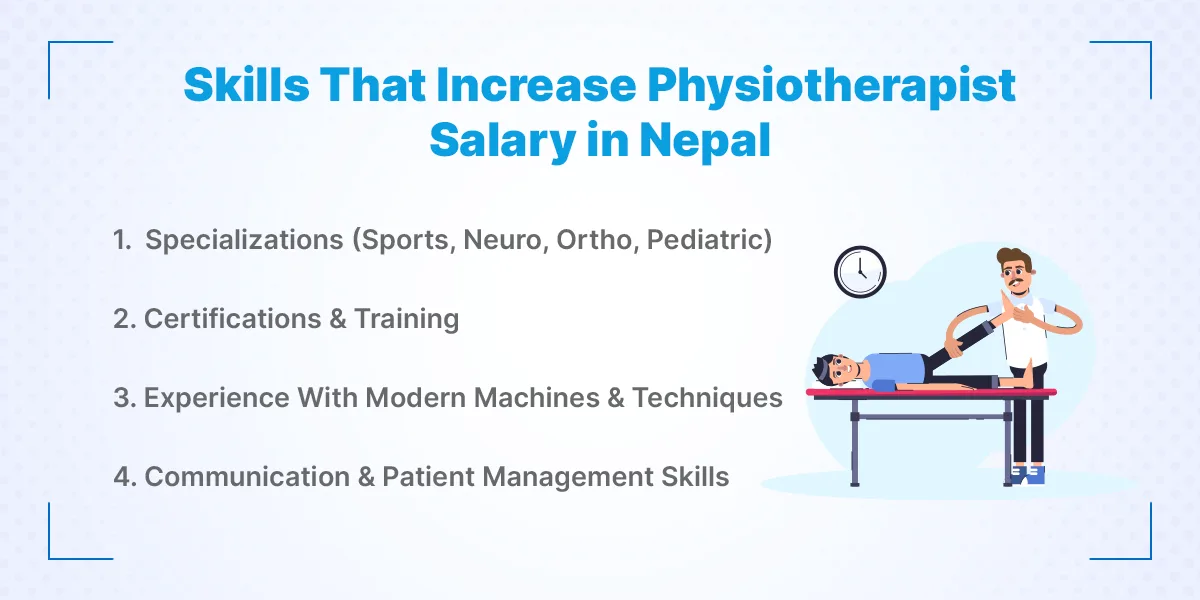
If you want to earn more as a physiotherapist in Nepal, focusing on the right skills is key. Certain abilities can help you land higher-paying roles, grow your career, and even work in the highest-paying jobs in the healthcare sector. Let’s look at the most important skills that boost your income.
1. Specializations (Sports, Neuro, Ortho, Pediatric)
Specializing in areas like sports, neurological, orthopedic, or pediatric physiotherapy increases your value. Employers pay more for experts who can handle complex cases. Specialized skills also allow you to work in private hospitals, rehab centers, or even abroad. Choosing the right specialization early can significantly improve your long-term earnings.
2. Certifications & Training
Certifications show that you are serious about your profession and up to date with modern practices. Completing advanced courses or workshops can help you negotiate better pay. Employers often offer higher salaries to physiotherapists with recognized certifications. Continuous learning also opens opportunities in clinics and international projects.
3. Experience With Modern Machines & Techniques
Knowing how to operate modern physiotherapy equipment and techniques gives you a competitive edge. Clinics and hospitals prefer professionals who can use advanced tools effectively. Experience with cutting-edge technology often results in higher pay and faster promotions.
4. Communication & Patient Management Skills
Being good with patients is just as important as technical skills. Strong communication improves patient satisfaction and referrals. Employers value physiotherapists who can manage patients well, making you eligible for promotions and better-paying positions.
Additional Income Sources for Physiotherapists
Apart from a regular salary, physiotherapists in Nepal have several ways to boost their income. Exploring these options not only increases earnings but also builds experience and reputation. Many professionals combine multiple streams to maximize their growth in the healthcare jobs sector. Let’s look at the main additional income sources.
1. Home Visits
Offering home-visit physiotherapy is a popular way to earn extra income. Patients often prefer personalized care at home and are willing to pay more for it. Home visits allow you to manage your own schedule alongside a regular job. It also helps you build strong relationships and trust with your clients. Over time, a loyal client base can provide consistent income. You may also get referrals from satisfied patients, which further increases your earnings. This option is especially useful for physiotherapists living in urban areas with high demand.
2. Private Practice & Clinics
Opening your own clinic or working part-time in private practices can significantly boost your income. You have the freedom to set your rates and choose your patients. Running a clinic allows you to manage your schedule and expand services gradually. Experienced physiotherapists often attract more clients, increasing earnings steadily. Clinics in busy areas can generate higher revenue compared to smaller towns. Over time, a well-managed clinic can become a long-term source of stable income. Specializations or certifications help make your clinic stand out from competitors.
3. Online Consultations
With growing technology, online consultations are becoming more popular. Physiotherapists can reach patients in other cities or even rural areas. Virtual sessions are convenient for both patients and professionals. This allows you to earn extra income without leaving your home or clinic. You can also schedule consultations around your regular working hours. Online consultations help build a wider network of clients and referrals. Consistently offering quality service can make this a reliable secondary income source.
4. Workshops & Training Programs
Conducting workshops or training programs is another way to earn more and enhance your reputation. You can train students, junior physiotherapists, or even fitness trainers. Workshops help you showcase your expertise and attract attention in the professional community. They also provide networking opportunities for future collaborations. Organizing programs occasionally adds a significant boost to your income. With the right promotion, workshops can attract participants from across the city or even online. This option is ideal for physiotherapists who enjoy teaching and sharing knowledge.
5. Working Abroad
Experienced physiotherapists can explore opportunities with NGOs, INGOs, or international hospitals. These roles often pay higher than typical local jobs and may include allowances. Working internationally also improves your resume and opens doors for long-term career growth. You may need specialized certifications or experience in certain therapies to qualify. Many physiotherapists take a mix of local and international projects to maximize earnings.
Physiotherapy Career Growth in Nepal
Physiotherapy is a growing field in Nepal, offering many opportunities to advance your career. As you gain experience and specialize, your earning potential and professional status increase. Understanding career growth paths helps you plan the next steps in your journey. Let’s explore the main ways physiotherapists can grow in Nepal.
1. Promotions & Senior Roles
As physiotherapists gain experience, they can move into senior or managerial positions. Hospitals and clinics often promote staff based on skill, experience, and patient feedback. Senior roles come with higher salaries and more responsibilities. You may supervise junior physiotherapists or lead therapy departments. Good communication and leadership skills make promotions easier. Specialized expertise in areas like sports or neuro physiotherapy is highly valued. With consistent performance, career growth can be steady and rewarding.
2. Opportunity to Open Your Own Clinic
Many physiotherapists in Nepal choose to open their own clinics after gaining experience. Running a clinic gives you control over patients, schedules, and income. It can also become a stable, long-term business if managed well. Specializations and certifications help attract more patients. Clinics in urban areas like Kathmandu often earn more than those in smaller cities. Starting small and gradually expanding is a common strategy. Owning a clinic also increases professional credibility in the healthcare field.
3. Demand Trends in Nepal (2026 & beyond)
The demand for physiotherapists in Nepal is steadily increasing. With rising awareness about health, fitness, and rehabilitation, more people seek professional physiotherapy. Hospitals, gyms, and NGOs are hiring more physiotherapists each year. Urban areas see higher demand, but rural regions are gradually catching up. Specializations and modern techniques make you more competitive. Future trends suggest a growing need for online consultations and remote physiotherapy services. This means career opportunities and income potential will continue to expand.
Challenges Physiotherapists Face in Nepal
Working as a physiotherapist in Nepal can be rewarding, but it also comes with challenges. Understanding these hurdles helps you plan better and make informed career choices. Many challenges are related to salary, resources, and competition. Let’s explore the main difficulties physiotherapists face across the country.
1. Salary Limitations in Small Cities
Physiotherapists working in smaller cities or towns often earn less than those in urban areas. Hospitals and clinics may have limited budgets, which restrict salary growth. Entry-level professionals can find it challenging to meet living expenses on lower pay. Even experienced physiotherapists may face slower income growth compared to big cities. However, smaller cities may offer less competition, allowing you to build a loyal patient base. Some physiotherapists combine local work with home visits or online consultations to boost earnings. Moving to urban areas is a common option for those seeking higher salaries.
2. Lack of Equipment or Facilities
Many hospitals and clinics in Nepal, especially in rural areas, lack modern physiotherapy equipment. This limits the type of therapies you can offer and affects patient outcomes. Working with outdated or insufficient resources can be frustrating for professionals. It may also slow skill development if you don’t get hands-on experience with modern machines. Clinics in cities usually provide better facilities, but space and costs can be challenges. Physiotherapists often need to improvise or supplement with exercises that require minimal equipment. Gaining experience in well-equipped centers helps build credibility and expertise.
3. Competition in Urban Areas
Urban areas like Kathmandu have higher demand but also higher competition. Many new graduates and experienced professionals vie for the same positions. Clinics and hospitals may prefer candidates with specialization or extra certifications. Standing out requires strong skills, reputation, and patient management abilities. Networking, online presence, and referrals become crucial in competitive cities. While competition is tough, it also drives professionals to improve their skills. With consistent effort, urban physiotherapists can secure better pay and career growth opportunities.
Conclusion
Physiotherapy is a growing and respected profession in Nepal. How much you earn depends on your skills, experience, workplace, and location. Fresh graduates may start with a modest salary, but with time, specialization, and hard work, income can grow significantly. Opportunities in government hospitals, private clinics, rehabilitation centers, and even freelance work allow flexibility and extra earnings.
Challenges exist, like competition or limited facilities, but they can be overcome with persistence and learning. By improving skills, gaining certifications, and exploring multiple income sources, physiotherapists can build a successful career. If you are a student or professional, focus on growth and experience, because the effort you put in today will shape a rewarding future.
Frequently Asked Questions
Submit your comments

Get Our App On



What is the Public Relations Officer Salary in Nepal
VIEW DETAILS
What Is the Salary of a Ticketing Officer in Nepal?
VIEW DETAILS
What Is the Salary of a Travel Consultant in Nepal?
VIEW DETAILS
How to Become an Auditor in Nepal
VIEW DETAILS


Loading Comments...