




Choosing microbiology as a career in Nepal often comes with one big question: “How much will I actually earn?” Despite the growing demand for microbiologists in hospitals, diagnostic labs, pharmaceutical companies, and research institutions, reliable salary information is still hard to find. Many students and working professionals feel confused by mixed salary figures, unclear career paths, and uncertainty about whether the effort and education will truly pay off.
This guide is created to remove that confusion. It will help you understand the current microbiologist salary in Nepal, how pay changes with experience and sector, where microbiologist jobs are available, and how to build a career with better growth and earning potential. Whether you are a student planning your future or a professional looking to level up, this article gives you clear, practical insights to make informed career decisions.
In this blog
What Does a Microbiologist Do in Nepal?
A microbiologist in Nepal studies and tests microorganisms to help diagnose diseases, support medical treatment, and maintain health and safety standards. Their main work involves analyzing blood, urine, tissue, and other samples to identify infections and provide accurate laboratory reports.
They usually work in hospitals, diagnostic labs, pharmaceutical companies, research institutes, or government health laboratories, with roles differing slightly between public and private sectors based on workload, job security, and growth opportunities.
Microbiologist Salary in Nepal (Latest Pay Range)
In Nepal, a microbiologist’s salary usually starts modestly and grows steadily with experience, sector, and specialization. Most entry-level microbiologists working in diagnostic labs or hospitals earn around NPR 15,000–30,000 per month, while professionals with a few years of experience typically earn NPR 40,000–60,000 per month. Senior microbiologists, lab heads, or specialists in pharmaceutical or research institutions can earn NPR 70,000 or more per month, depending on responsibility and organization.
On a yearly basis, this means salaries generally range from NPR 180,000 to over NPR 840,000 annually. Actual pay is influenced by factors such as the type of employer (hospital, pharma company, research institute), years of hands-on lab experience, academic qualifications, and whether the job is in the public or private sector.
Microbiologist Salary in Nepal by Experience Level
In Nepal, microbiologist salaries follow a clear experience-based progression, with income increasing as professionals gain practical skills, responsibility, and specialization. Entry-level roles offer basic pay, while senior positions provide significantly higher earning potential.
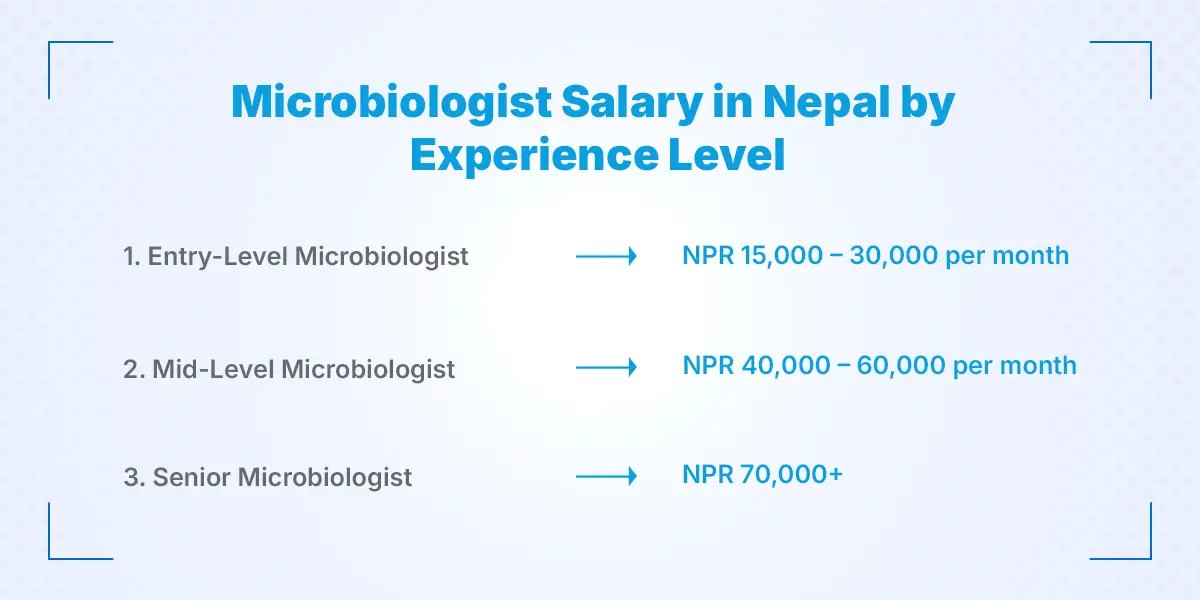
1. Entry-level Microbiologist (NPR 15,000 – 30,000)
Entry-level microbiologists in Nepal generally earn between NPR 15,000 and NPR 30,000 per month, depending on the laboratory, hospital, or institution. These roles are usually held by fresh graduates who focus on routine testing, sample handling, and supporting senior lab staff. Since most positions at this level are skill-development oriented, salaries remain limited but improve as practical experience grows. This stage is essential for building technical competence and understanding laboratory standards.
2. Mid-level Microbiologist (NPR 40,000 – 60,000)
Mid-level microbiologists typically earn around NPR 40,000 to NPR 60,000 per month, reflecting their increased experience and ability to handle independent lab responsibilities. Professionals at this stage often manage specific lab sections, supervise junior staff, and perform advanced diagnostic or analytical work. Salaries vary based on employer type, with private hospitals and pharmaceutical companies generally offering better pay. Consistent performance and specialization can further push earnings toward the higher end of this range.
3. Senior Microbiologist (NPR 70,000+)
Senior microbiologists in Nepal usually earn NPR 70,000 per month or more, especially when holding leadership or specialized roles. They are responsible for lab management, quality assurance, research oversight, and strategic decision-making. Higher salaries are common in pharmaceutical firms, research institutions, and large private hospitals. Additional qualifications, certifications, or academic involvement can significantly increase income beyond this base range.
Microbiologist Salary in Nepal by Sector
In Nepal, a microbiologist’s salary varies depending on the sector they work in, with different industries offering distinct pay ranges and growth opportunities. The nature of work, organizational budget, and demand for microbiology services influence how much professionals earn in each setting.
1. Hospital and Diagnostic Labs
Microbiologists working in hospitals and diagnostic laboratories typically earn salaries that align with clinical testing responsibilities, often starting around NPR 20,000–40,000 per month for entry-level roles and rising with experience. These professionals focus on diagnosing infections, running cultures, and supporting doctors with test results. Larger private hospitals and well-equipped diagnostic centers often provide better pay and faster growth compared to smaller facilities. In this sector, hands-on lab work and timely reporting are critical for both patient care and professional credibility.
2. Pharmaceutical Companies
In pharmaceutical and biotech companies, microbiologists usually command higher salaries, commonly in the range of NPR 40,000–80,000+ per month, depending on experience and role. Work here involves quality control, formulation testing, microbial safety assessments, and compliance with regulatory standards. These companies often have structured career paths and higher budgets for specialized scientific roles, making them attractive for professionals seeking growth and advanced responsibilities. The need for strict quality assurance and technical expertise often translates into better compensation.
3. Research Institutions and Universities
Microbiologists employed in research institutions or universities focus on scientific studies, grant projects, teaching, and advanced lab research. Salaries in this sector vary widely based on funding sources and project grants, with many positions offering around NPR 30,000–70,000 per month or more for senior research roles. Research roles may also include academic responsibilities like mentoring students and publishing findings, which can supplement income through stipends or project bonuses. This sector is ideal for those passionate about discovery and long-term scientific contribution.
4. Government vs Private Sector Salary Comparison
In the government sector, microbiologists often receive more stable jobs with benefits such as pensions, health coverage, and job security, with salaries typically ranging from NPR 25,000–60,000 per month depending on rank and experience. However, government pay scales are generally more rigid and slower to increase compared to the private sector. In contrast, the private sector, including hospitals, labs, and pharmaceutical firms, tends to offer higher starting salaries and faster growth, though benefits and job security may vary. Private roles can be more performance-driven, with opportunities for bonuses, promotions, and skill-based pay raises.
What Factors Affect a Microbiologist's Salary in Nepal?
A microbiologist’s salary in Nepal is mainly affected by education level, practical experience, workplace location, and the type of employer. Professionals with higher qualifications, such as a Master’s degree, specialized training, or research exposure, generally earn more than those with only basic academic credentials.
Experience and specialization also play a major role, as microbiologists with advanced lab skills, quality control expertise, or pharmaceutical and research backgrounds are paid more than general lab technicians. Salaries tend to be better in urban areas like Kathmandu and major cities due to higher demand and better-equipped labs. Additionally, private hospitals, pharmaceutical companies, and research organizations usually offer higher pay compared to smaller labs or standard government facilities, mainly because of better infrastructure, workload, and performance-based roles.
Where to Find Microbiologist Jobs in Nepal?
Microbiologist jobs in Nepal are commonly found across healthcare, pharmaceutical, research, and government sectors, with opportunities advertised both offline and online. Most openings are concentrated in diagnostic services, industrial labs, academic institutions, and regulated health organizations.
1. Hospitals and Diagnostic Laboratories
Hospitals and diagnostic labs are among the largest employers of microbiologists in Nepal. These roles usually involve routine testing, sample analysis, quality control, and reporting for patient diagnosis. Private hospitals and advanced diagnostic centers often offer better exposure to modern lab equipment and structured work environments. Entry-level positions are more common here, making this sector suitable for fresh graduates.
2. Pharmaceutical and Biotech Companies
Pharmaceutical and biotech companies hire microbiologists mainly for quality control, production monitoring, research, and compliance roles. These positions usually require strong technical skills, documentation accuracy, and knowledge of GMP standards. Salaries in this sector are generally higher than in basic diagnostic labs due to regulatory responsibilities. With experience, microbiologists can move into senior QA, R&D, or supervisory roles.
3. Research Centers and Universities
Research institutions and universities employ microbiologists for laboratory research, academic projects, and teaching roles. These jobs often require higher qualifications, such as a Master’s degree or research experience. While starting salaries may be moderate, they offer strong long-term career growth through publications, grants, and academic promotions. This path is ideal for those interested in specialization or higher studies.
4. Government Health Institutions
Government health institutions recruit microbiologists through public service commissions and contract-based programs. These roles focus on public health testing, disease monitoring, and national health projects. Salaries are usually fixed according to government pay scales, but job security and benefits are strong. Competition for these roles is high due to limited vacancies.
5. Online Job Portals
Online job portals have become one of the most practical ways to find microbiologist jobs in Nepal. Platforms like Kumari Job regularly publish vacancies from hospitals, labs, pharmaceutical companies, and research organizations. These portals allow candidates to filter jobs by qualification, experience level, and location. Applying through trusted job portals also helps microbiologists stay updated on new openings and career opportunities without relying only on offline networks.
How to Get a Microbiologist Job in Nepal
To get a microbiologist job in Nepal, you need the right academic qualification, practical lab skills, and a strategic approach to training and job applications. Employers look for candidates who can handle real laboratory work, follow protocols accurately, and adapt to clinical, industrial, or research environments.
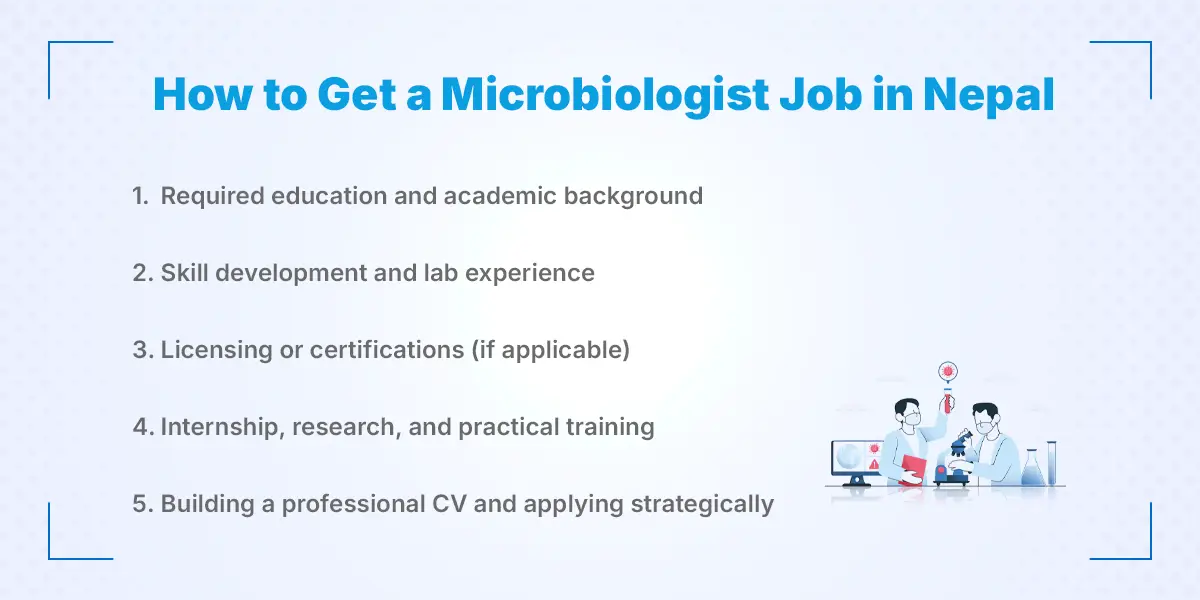
A Bachelor’s degree in Microbiology is the minimum requirement, while a Master’s degree significantly improves job prospects and salary potential. Strong lab skills such as sample handling, microbial culture, testing procedures, and documentation are essential, especially for hospital and pharmaceutical roles. Some positions may require additional certifications, internal lab training, or compliance knowledge related to quality control and safety standards. Completing internships, research projects, or hands-on training in recognized labs greatly increases employability. Finally, building a clear, professional CV and applying through trusted channels like hospitals, pharma companies, research institutions, and reliable job portals helps candidates secure opportunities faster and more effectively.
Career Growth and Future Scope for Microbiologists
Microbiologists in Nepal have steady career growth opportunities as they gain experience, specialization, and advanced qualifications. With time and proven expertise, professionals can move beyond routine lab work into higher-responsibility and leadership roles.
Career progression often starts with promotion to senior microbiologist, lab supervisor, or quality control lead in hospitals, diagnostic centers, or pharmaceutical companies. Those interested in research can specialize in areas such as clinical microbiology, molecular biology, biotechnology, or infectious diseases, which opens doors to funded projects and higher-paying roles. Teaching and academic careers are also a strong option, especially for microbiologists with a Master’s degree or PhD, allowing them to work as lecturers or researchers in colleges and universities. Additionally, higher studies and international certifications create opportunities for work or further education abroad, where demand and salary potential are significantly higher.
Is Microbiology a Good Career in Nepal?
Microbiology is a stable and in-demand career in Nepal due to its importance in healthcare, diagnostics, pharmaceuticals, and public health services. While starting salaries are moderate, income and role responsibility increase steadily with experience, specialization, and higher education.
Compared to some life-science careers, microbiology offers better job security and clearer growth paths, especially in hospitals and pharmaceutical sectors. In the long term, opportunities in research, teaching, specialization, and international work make microbiology a practical and sustainable career choice for committed professionals.
Conclusion
Microbiologist salaries in Nepal start at a modest level but increase steadily with experience, sector, and responsibility, offering reliable job opportunities across healthcare, pharmaceuticals, research, and academia. Developing strong laboratory skills and choosing the right specialization play a key role in achieving better pay and long-term career growth.
If you are considering microbiology as a career or planning your next move, focusing on practical experience and continuous learning can make a real difference. If you are looking for microbiologist job opportunities in Nepal, explore trusted job platforms like Kumari Job to find relevant openings and take the next step in your career with confidence.
Frequently Asked Questions
Submit your comments

Get Our App On



What is the Public Relations Officer Salary in Nepal
VIEW DETAILS
What Is the Salary of a Ticketing Officer in Nepal?
VIEW DETAILS
What Is the Salary of a Travel Consultant in Nepal?
VIEW DETAILS
How to Become an Auditor in Nepal
VIEW DETAILS


Loading Comments...