




Many people in Nepal visit hospitals and labs every day. Behind every test result, a lab technician is working quietly. They play a big role in our healthcare system, but we often don’t talk about how much they earn.
So, what is the lab technician's salary in Nepal in 2026? The answer depends on many things. Education, skills, work experience, and the type of hospital all make a difference. Salaries also change between the government and private sectors, and even between cities and villages.
In this blog, we’ll break everything down. You’ll see the starting salary, average income, benefits, and how pay grows with experience. We’ll also compare sectors and future career prospects.
In this blog
What is the Average Lab Technician Salary in Nepal in 2026?
The average lab technician salary in Nepal in 2026 is around NPR 20,000 to NPR 60,000 per month. Entry-level jobs start at the lower side, while senior technicians can earn close to NPR 50,000 or more, depending on their role and workplace.
Now, let’s break it down in detail.
1. Monthly and Yearly Salary Ranges
Lab technician pay is not the same for everyone. It changes with experience, education, and location. On average:
- Entry-level (fresh graduates or diploma holders): NPR 15,000 – NPR 25,000 per month
- Mid-level (3–5 years of experience): NPR 25,000 – NPR 35,000 per month
- Senior level (over 7 years or supervisory roles): NPR 40,000 – NPR 60,000+ per month
Some senior-level jobs in large hospitals or diagnostic centers may offer even higher salaries, especially if they also take on management duties.
2. Trends Compared to Past Years
Lab technician salaries in Nepal have slowly gone up in the past five years. Before 2020, many freshers earned less than NPR 12,000 per month. Today, most entry-level jobs start above NPR 15,000. This rise may look small, but it shows progress.
Salaries also grow faster now because the demand for medical testing is higher than before. Private diagnostic centers are opening in many cities, which means more jobs and better pay competition.
3. Key Reasons for Salary Increases
Several factors explain why salaries are improving:
- Higher demand: More people rely on lab tests for regular checkups and treatment.
- Inflation: Rising living costs push salaries upward.
- Better equipment: Modern diagnostic tools need skilled workers, so employers pay more.
- Awareness: Families and patients now see lab work as important, which gives technicians more value in the system.
In short, the salary of lab technicians in Nepal in 2026 is better than it was a few years ago, though still modest compared to nurses or doctors.
What Factors Affect the Lab Technician Salary in Nepal?
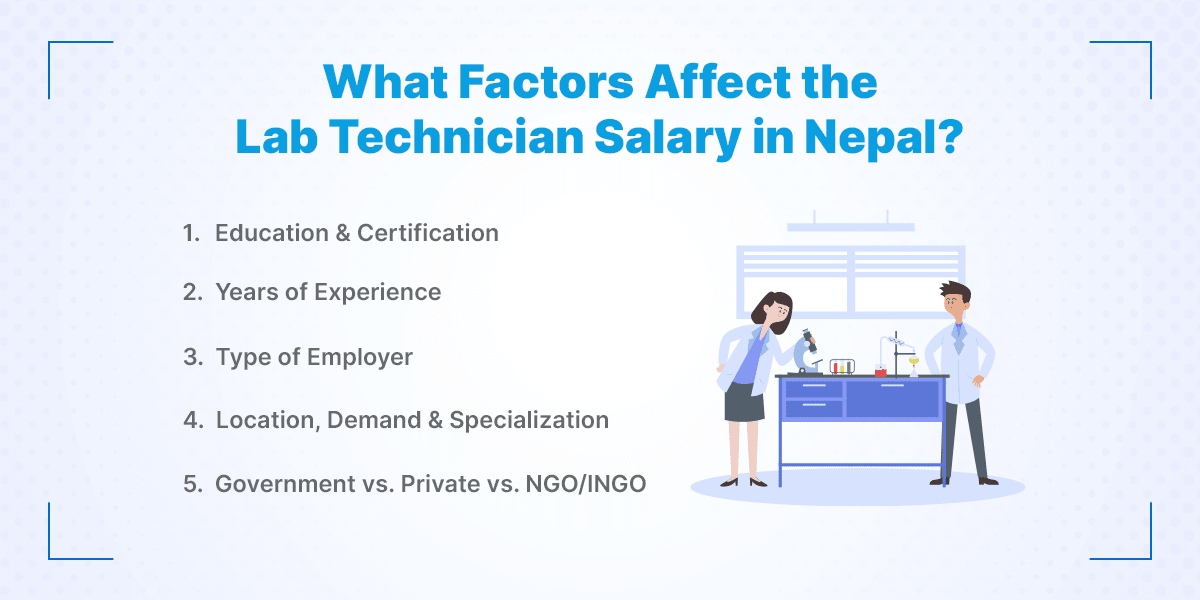
Lab technician salary in Nepal depends on several key factors like your education, experience, employer, and location. Understanding these factors helps you plan your career and salary growth in medical jobs. Let's explore each of them in detail:
1. Education & Certification
Education is the first thing employers look at. A diploma holder earns less than someone with a bachelor’s degree. Special certificates or training can increase your salary. Employers value technicians who can handle advanced machines. Higher education also opens doors for supervisory roles. It shows you have the knowledge needed for complex lab tests. Those with master’s degrees or international training usually earn the most.
2. Years of Experience
Experience plays a big role in salary growth. Fresh graduates earn less at the start. After 3–5 years, pay usually increases by 20–30%. Senior technicians with more than 7 years of experience get higher salaries. Experience also makes you eligible for promotions. Skilled technicians can handle difficult tests and train juniors. Employers pay more for reliable and experienced staff.
3. Government vs. Private vs. NGO/INGO
Government jobs have fixed salaries and benefits like pensions and allowances. Private hospitals often pay more, especially for experienced technicians. NGOs or INGOs may offer the highest pay but require special skills or advanced degrees. Each sector has pros and cons. Government jobs give stability, private jobs give faster growth, and NGOs give specialized experience. Many technicians choose based on their career goals and salary needs.
4. Location, Demand & Specialization
Salary changes depending on where you work. Jobs in Kathmandu or Pokhara pay more than in rural areas. High-demand labs with many patients may offer extra incentives. Specialization in fields like microbiology or hematology also increases salary. Remote or hard-to-reach areas sometimes give allowances to attract staff. The more in-demand your skills are, the higher your pay.
Salary by Education & Qualification
Education makes a big difference in how much a lab technician earns in Nepal. Someone with just a diploma usually starts lower, while those with a bachelor’s or higher degree get better pay. Specialization or advanced training can push salaries even higher. Let’s see how salary changes with each level of qualification.
1. Diploma / Certificate Level Lab Technicians
Diploma or certificate holders are the most common group of lab technicians in Nepal. They usually get their first job in small clinics, local hospitals, or diagnostic labs. Their starting salary is around NPR 15,000 to NPR 20,000 per month. With a few years of experience, this can go up to about NPR 25,000.
Employers see diploma holders as skilled but entry-level workers. They handle routine tests, sample collection, and basic lab tasks. They may not be trusted with advanced testing machines or supervision work. Still, they form the backbone of many labs, especially in rural areas where higher-qualified staff are rare.
2. Bachelor’s Degree (BMLS / BMLT) Level
Lab technicians with a bachelor’s degree, like BMLS or BMLT, earn more because they are trained in advanced subjects. Their starting salary is usually NPR 25,000 to NPR 30,000 per month. After 3–5 years of experience, they can earn around NPR 35,000 to NPR 40,000.
These technicians often work in bigger hospitals, private diagnostic centers, or teaching hospitals. They are trusted with more complex lab tests and equipment. Some may also guide diploma holders or train new staff. A bachelor’s degree also opens the door for better career growth, like senior lab technician or lab supervisor roles.
3. Advanced Qualifications, Specialization, and Master’s Level
Lab technicians with a master’s degree or special training earn the most in this field. Their salary can start at NPR 40,000 per month and go well above NPR 50,000 depending on the institution. Those working in top hospitals, research centers, or NGOs may even earn more.
Specialization in areas like microbiology, hematology, or clinical biochemistry increases their value. Employers are ready to pay extra because these roles require deeper knowledge and more responsibility. Such technicians may lead entire departments, train juniors, or even manage a lab. This level of qualification also makes it easier to find high-paying jobs abroad.
Additional Benefits & Allowances of a Lab Technician
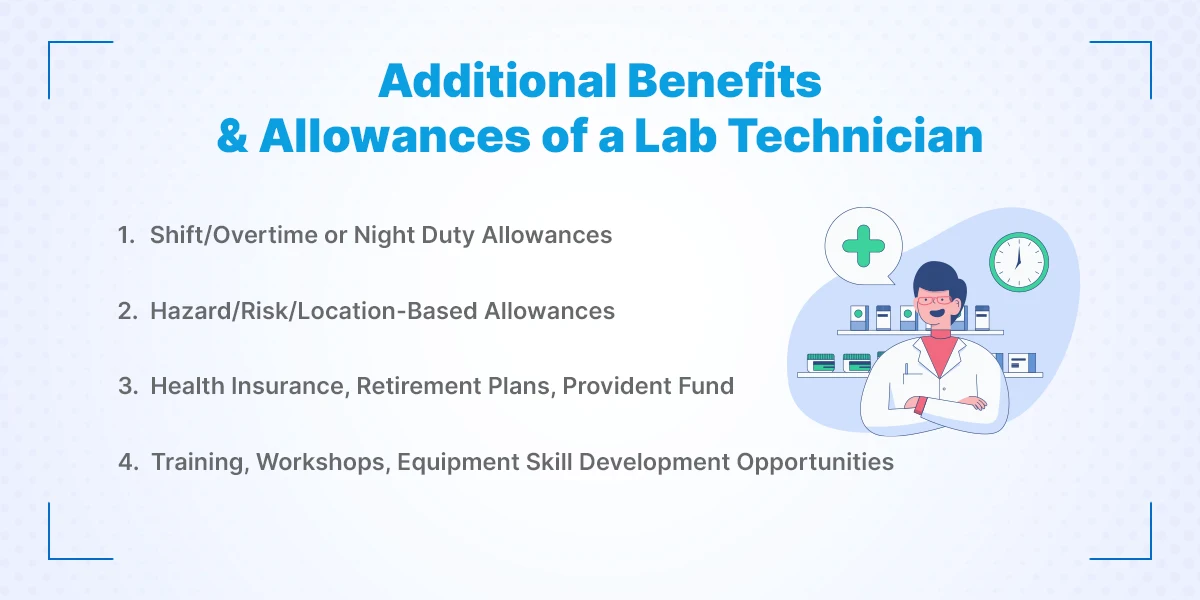
Lab technician's salary in Nepal is not just the basic pay. Many workplaces give extra benefits and allowances. These extras can make a big difference in total income. They also help lab technicians manage risks and improve their skills. Let’s look at the common benefits offered.
1. Shift, Overtime, or Night Duty Allowances
Lab technicians often work in shifts. Hospitals and labs run 24 hours, so night duty is common. Many employers pay extra for night shifts or overtime. This allowance can add a good amount to the monthly income. Some labs also pay for weekend or holiday shifts. It rewards technicians for working beyond normal hours. Even a few extra shifts can increase overall earnings significantly.
2. Hazard, Risk, or Location-Based Allowances
Some lab work is risky. Technicians may handle infectious samples or chemicals. Employers sometimes give hazard pay for these jobs. Working in remote or high-risk areas can also bring extra allowances. This motivates staff to work in difficult conditions. These allowances are usually fixed or a percentage of the salary. They help cover the extra challenges of the job.
3. Health Insurance, Retirement Plans, Provident Fund
Many hospitals and labs provide health insurance for technicians. It can cover medical treatment for them and sometimes their family. Government and large private hospitals often offer retirement benefits too. Provident fund contributions are common in permanent jobs. These benefits give long-term security. They also make lab technician jobs more stable. Knowing about these benefits is important when choosing a workplace.
4. Training, Workshops, Equipment Skill Development Opportunities
Employers often provide training and workshops for lab staff. Learning to use new equipment can increase efficiency and pay. Advanced skill training may lead to promotions or a higher salary. Some hospitals also send technicians to short-term courses. This improves knowledge in special areas like microbiology or hematology. Better skills make a technician more valuable. It also opens opportunities for supervisory roles or jobs abroad.
Is a Lab Technician a Good Career in Nepal in 2026?
Yes, lab technician job is a good career in Nepal in 2026. It offers steady work, a clear career path, and opportunities to grow. Many hospitals, clinics, and diagnostic labs need skilled technicians. The health sector is expanding, and lab services are in higher demand than before.
Here’s why it can be a good choice:
- Steady Demand: Hospitals and diagnostic centers are everywhere. Patients need lab tests daily. This creates constant demand for lab technicians.
- Reasonable Salary: While starting pay is modest, salaries grow with experience and education. Senior or specialized technicians can earn much more.
- Career Growth: You can move from entry-level to senior lab technician, supervisor, or lab manager. Some technicians also go into teaching or research.
- Skills Development: Working in a lab teaches valuable skills in medical testing, equipment handling, and quality control. These skills are needed in Nepal and abroad.
Working as a lab technician has challenges, too. Sometimes, shifts can be long. Night duty and weekends are common in hospitals. Some labs are small and may not offer high pay initially. But with experience, skills, and certifications, these challenges are manageable.
Government jobs provide stability with fixed salaries and benefits. Private hospitals may pay more but have a higher workload. NGOs or research labs sometimes offer better pay for specialized roles. Choosing the right workplace is important for career satisfaction.
Specialization also matters. Technicians trained in microbiology, hematology, or clinical biochemistry are in higher demand. They often earn better pay and handle advanced tasks. This makes the job more interesting and rewarding.
In short, lab technician jobs combine steady income, skill development, and growth potential. You can start with a diploma or a bachelor’s degree. With experience, training, and specialization, you can earn well and move into senior positions.
Conclusion
Lab technician is a career that can give steady work and fair pay in Nepal. In 2026, salaries range from modest for freshers to good for senior or specialized technicians. Your education, skills, experience, and the type of employer matter a lot. Government jobs give stability and benefits, while private hospitals or NGOs may pay more for skilled staff. Specialization in areas like microbiology, hematology, or clinical chemistry can increase income and open better opportunities.
The health sector in Nepal is growing, so trained lab technicians will always be needed. If you like working with samples, machines, and helping doctors and patients, this career is worth choosing. With dedication and learning, a lab technician can earn well and build a stable future in Nepal.
Looking for a rewarding career in healthcare? Discover thousands of jobs in Nepal and start your path as a lab technician today.
Frequently Asked Questions
Submit your comments

Get Our App On



What is the Public Relations Officer Salary in Nepal
VIEW DETAILS
What Is the Salary of a Ticketing Officer in Nepal?
VIEW DETAILS
What Is the Salary of a Travel Consultant in Nepal?
VIEW DETAILS
How to Become an Auditor in Nepal
VIEW DETAILS


Loading Comments...