




DevOps engineers are among the highest-paid IT professionals in Nepal today, but many still don’t know what salary to expect at different experience levels. As companies rapidly adopt cloud computing, automation, and modern software practices, the demand for skilled DevOps professionals continues to grow.
In this guide, you will learn the latest DevOps engineer salary ranges in Nepal for 2026, how pay increases with experience, which skills boost compensation, and where to find high-paying DevOps jobs. This will help you understand your earning potential and plan your career growth strategically.
In this blog
Who Is a DevOps Engineer?
A DevOps engineer is an IT professional who combines development and operations to automate, manage, and improve the software delivery process.
In simple terms, a DevOps engineer ensures that software is built, tested, and deployed faster and more reliably. They work between developers and IT operations teams to remove delays, reduce errors, and improve system performance. DevOps engineers are responsible for managing CI/CD pipelines, automating infrastructure, maintaining cloud environments, and monitoring system performance. They use tools for containerization, automation, and cloud deployment to make software releases smooth and efficient.
In modern software companies, DevOps plays a critical role because businesses need faster updates, secure systems, and scalable infrastructure. Without DevOps practices, IT jobs in development teams may face delays, system failures, and poor collaboration. By automating repetitive tasks and improving communication between teams, DevOps engineers increase efficiency and productivity.
What Is the Salary of a DevOps Engineer in Nepal?
The salary of a DevOps engineer in Nepal typically ranges from NPR 30,000 to NPR 350,000+ per month, depending on experience, technical expertise, and company type. On average, most mid-level professionals earn between NPR 80,000 and NPR 200,000 per month, which equals approximately NPR 3,60,000 to NPR 42,00,000 per year. Senior engineers working in enterprise companies or remote international roles can earn even higher.
Salaries vary based on company size, outsourcing vs product-based firms, and market demand. Large product companies and international outsourcing firms usually offer better pay compared to small startups. Due to high demand for cloud, automation, and CI/CD skills, DevOps remains one of the fastest-growing and highest-paying careers in Nepal.
DevOps Engineer Salary Based on Experience
DevOps engineer salaries in Nepal increase significantly with experience and technical expertise. As professionals gain hands-on skills in cloud platforms, automation, and infrastructure management, their earning potential grows rapidly. Here is a breakdown of salary levels based on experience.

1. Entry-Level
Entry-level DevOps engineers with 0–1 years of experience typically earn between NPR 30,000 and NPR 60,000 per month. These roles usually include junior DevOps engineers, trainees, or interns starting their careers in IT infrastructure and automation.
At this stage, professionals assist senior engineers with basic CI/CD setup, server management, and cloud monitoring tasks. Internship positions may offer slightly lower pay but provide valuable hands-on exposure. With consistent learning and certification, entry-level engineers can quickly move to mid-level roles within 1–2 years.
2. Mid-Level
Mid-level DevOps engineers with 2–4 years of experience earn between NPR 80,000 and NPR 150,000 per month. At this level, professionals handle more complex responsibilities such as managing production servers, automating deployments, and optimizing cloud infrastructure.
They are expected to work independently on CI/CD pipelines, containerization, and monitoring systems. Salary progression at this stage depends heavily on expertise in tools like AWS, Docker, Kubernetes, and Terraform. Skill-based increments and performance bonuses are common as demand for experienced DevOps talent continues to grow.
3. Senior DevOps Engineer
Senior DevOps engineers with 5+ years of experience earn between NPR 150,000 and NPR 350,000+ per month in Nepal. These professionals lead infrastructure design, cloud architecture, and automation strategy within organizations.
They often manage teams, make architectural decisions, and ensure system scalability and security. Enterprise-level companies and large tech firms offer higher salary packages for senior talent. Additionally, remote roles with international companies can significantly increase earning potential beyond the local market range.
DevOps Engineer Salary by Location in Nepal
DevOps engineer salaries in Nepal vary depending on the city and type of company. Kathmandu, being the IT hub, generally offers higher salaries compared to other regions due to the concentration of software companies, startups, and outsourcing firms.
Salaries also differ between office-based and remote roles, with remote positions for international clients often paying significantly more. Other IT hubs like Pokhara and Lalitpur offer competitive pay, but the range is usually slightly lower than Kathmandu. Overall, location, company size, and client type strongly influence compensation for DevOps professionals.
Skills That Increase DevOps Salary
DevOps engineers with in-demand technical skills can command higher salaries in Nepal. Companies are willing to pay a premium for professionals who can manage cloud infrastructure, automate deployments, and maintain scalable systems efficiently. Here are the key skills that significantly boost compensation.
1. Cloud Platforms (AWS, Azure, GCP)
Expertise in cloud platforms like AWS, Azure, and GCP is essential for modern DevOps roles. Engineers who can design, deploy, and manage cloud-based infrastructure are highly sought after. Cloud skills enable professionals to handle scalability, redundancy, and cost optimization for applications. Companies pay more for engineers who can ensure reliable cloud operations and minimize downtime. Hands-on experience with cloud services also opens opportunities for international remote roles.
2. Docker & Kubernetes
Containerization and orchestration tools like Docker and Kubernetes are critical in DevOps. Knowledge of these tools allows engineers to package applications consistently and manage complex deployments. Skilled professionals can automate scaling, load balancing, and service management efficiently. Mastery of Docker and Kubernetes increases reliability and reduces deployment errors. Employers often offer higher pay for engineers who can implement container strategies in production environments.
3. CI/CD Tools
Proficiency in Continuous Integration and Continuous Deployment (CI/CD) tools like Jenkins, GitLab, and CircleCI is highly valued. These tools enable faster, error-free software releases and improve team productivity. Engineers who can build and maintain CI/CD pipelines ensure smooth collaboration between development and operations teams. Strong CI/CD skills reduce downtime and accelerate project delivery. Companies reward these skills with better salary packages and career growth opportunities.
4. Linux & Scripting
Linux administration and scripting skills are foundational for DevOps engineers. Knowledge of shell scripting, Python, or Bash helps automate repetitive tasks, monitor servers, and troubleshoot issues. Linux expertise ensures efficient management of server environments and system configurations. Engineers with strong scripting skills can optimize processes and reduce operational overhead. These abilities directly impact salary potential, especially for infrastructure-heavy roles.
5. Infrastructure as Code (Terraform, Ansible)
Infrastructure as Code (IaC) tools like Terraform and Ansible allow engineers to provision and manage infrastructure programmatically. This skill ensures consistent environments, faster deployments, and easier scaling. DevOps professionals who implement IaC can significantly reduce manual errors and improve team efficiency. Mastery of these tools is highly valued in both local and international companies. Engineers with IaC expertise are often offered premium salaries due to their impact on operational excellence.
Where to Find DevOps Engineer Jobs in Nepal?
You can find DevOps engineer job opportunities in Nepal through top IT companies, outsourcing firms, job portals, and platforms like Kumari Job, which regularly updates listings for IT and DevOps positions.
Using trusted platforms and networking channels helps candidates discover both local and remote positions, compare salaries, and apply to roles that match their skill level and experience. Staying updated with official portals and recruitment agencies ensures you don’t miss high-demand opportunities.
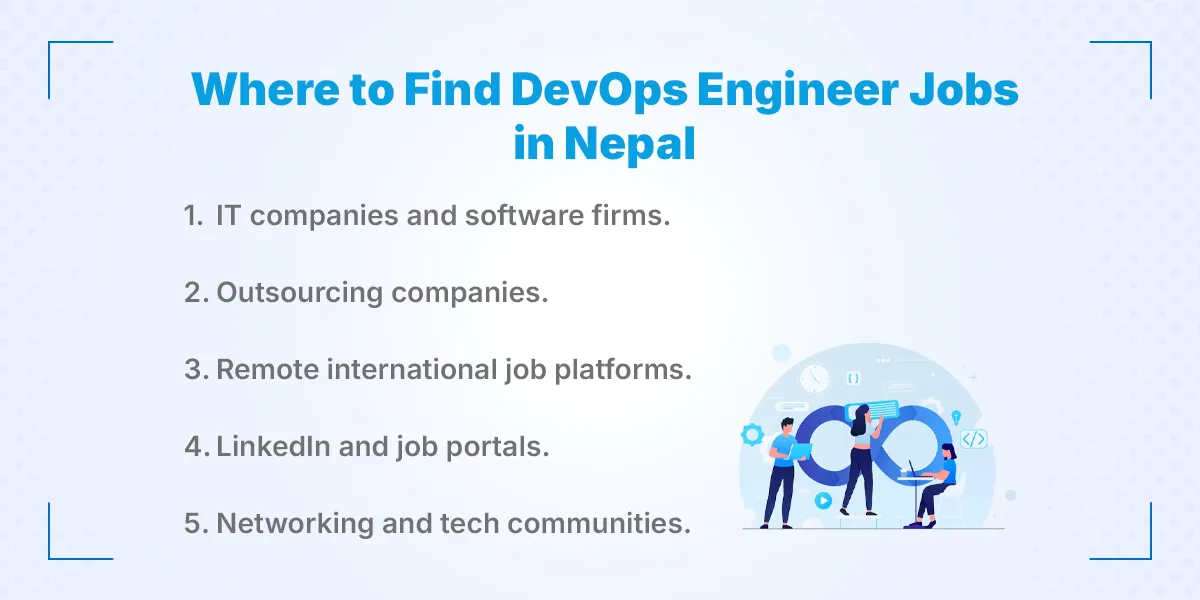
1. IT Companies and Software Firms
Many software development companies and tech startups in Nepal hire DevOps engineers for infrastructure management, CI/CD pipelines, and cloud operations. Kathmandu hosts the largest number of IT firms, offering competitive salaries and growth opportunities. Engineers can work on diverse projects, from enterprise software to SaaS platforms. Working in established companies also provides mentorship and training for advanced DevOps skills. Local offices often prefer candidates with hands-on experience in cloud and automation tools.
2. Outsourcing Companies
Outsourcing firms in Nepal work with international clients and often seek skilled DevOps engineers. These roles usually involve managing remote infrastructure, automation, and deployments for global projects. Engineers can gain experience with international standards and tools, improving their marketability. Outsourcing companies sometimes offer higher salaries for specialized skills. Working in outsourcing also exposes professionals to multi-client environments, enhancing problem-solving abilities.
3. Remote International Job Platforms
Platforms like Upwork, Toptal, and RemoteOK allow Nepali DevOps engineers to work for international clients. Remote jobs often pay higher than local roles and provide exposure to global best practices. Candidates can filter positions based on skill requirements, experience level, and project type. Building a strong profile and portfolio increases chances of landing long-term remote contracts. Remote work also allows flexible schedules and learning opportunities across different industries.
4. LinkedIn and Job Portals
LinkedIn and Kumari Job are popular platforms for discovering DevOps opportunities in Nepal. These portals provide job alerts, company reviews, and application tracking features. Candidates can connect with recruiters, follow companies, and apply directly online. Active participation on LinkedIn improves visibility and networking opportunities. Many companies post exclusive openings on these platforms before advertising elsewhere.
5. Networking and Tech Communities
Attending meetups, tech conferences, and online communities can lead to unadvertised DevOps roles. Local communities in Kathmandu, Pokhara, and other IT hubs frequently share job openings. Networking allows professionals to get referrals, mentorship, and advice from experienced engineers. Joining forums and discussion groups keeps you updated with industry trends. Active networking increases the chance of landing better roles faster than relying solely on job portals.
How to Become a DevOps Engineer in Nepal
To become a DevOps engineer in Nepal, you need a strong IT or computer science educational background, practical experience with development and operations tools, and relevant certifications to validate your skills.
Building hands-on projects, completing online courses, and gaining internship or junior-level experience are crucial steps to develop practical expertise. Certifications like AWS, Docker, Kubernetes, or CI/CD-focused programs enhance credibility, while participating in real-world projects helps you understand automation, cloud infrastructure, and deployment pipelines. Continuous learning and networking with IT communities also improve your chances of landing a DevOps role in competitive companies.
Is DevOps a Good Career in Nepal?
Yes, DevOps is a highly rewarding career in Nepal due to strong industry demand, competitive salaries, and abundant growth opportunities.
With the IT sector expanding rapidly, skilled DevOps engineers are sought after in both local and international markets. The role offers high salary growth potential, opportunities to work remotely for global companies, and long-term career stability. Continuous skill development in cloud, automation, and CI/CD tools ensures professionals remain competitive and well-compensated in this field.
Conclusion
DevOps engineering is a high-demand and well-paying career in Nepal, offering strong growth and long-term stability. Salaries increase significantly with experience, advanced skills, and hands-on expertise in cloud and automation tools. Continuous learning and practical exposure are key to maximizing your earning potential.
Looking for more job opportunities in Nepal? Explore thousands of IT and DevOps openings on Kumari Job to take your career to the next level.
Frequently Asked Questions
Submit your comments

Get Our App On



What is the Public Relations Officer Salary in Nepal
VIEW DETAILS
What Is the Salary of a Ticketing Officer in Nepal?
VIEW DETAILS
What Is the Salary of a Travel Consultant in Nepal?
VIEW DETAILS
How to Become an Auditor in Nepal
VIEW DETAILS


Loading Comments...