



Becoming a dentist is a dream for many students in Nepal. It’s a respected job that helps people smile with confidence and live healthier lives. But before starting this career, one common question comes to mind: How much do dentists actually earn in Nepal?
Well, the answer isn’t the same for everyone. The salary depends on things like experience, skills, and where you work. Some dentists earn a small amount in the beginning, while others make a great income once they gain experience.
In this blog, we’ll talk about everything you need to know about the dentist salary in Nepal, from starting pay to growth, challenges, and future scope. By the end, you’ll have a clear idea of how much dentists really earn and how to increase your income over time.
In this blog
Overview of the Dental Profession in Nepal
The dental profession in Nepal has grown a lot in recent years. People have become more aware of how important oral health is, not just for a beautiful smile but also for overall health. Earlier, many ignored tooth problems or relied on home remedies. But now, most people prefer visiting a dentist for proper care and treatment.
The demand for dentists in Nepal is rising every year. Jobs in Kathmandu, Pokhara, and other big cities have increased more as there are many private dental clinics, and even smaller towns are opening new ones. Schools, hospitals, and NGOs are also hiring dentists to spread dental health awareness. This growth has created more job opportunities for dental graduates.
Dentists in Nepal work in different roles. Some are general dentists who handle basic treatments like cleaning, fillings, and checkups. Others specialize as orthodontists who fix crooked teeth, oral surgeons who perform operations, and prosthodontists who make artificial teeth. Each role is important and helps patients in different ways.
Dentistry is becoming a popular career choice among students because it offers both respect and stability. You get to help people, earn a decent income, and build your own clinic someday. Plus, it’s a career where your skills grow with experience. As more people care about their appearance and health, the need for skilled dentists in Nepal will only continue to rise. So, for anyone interested in healthcare, dentistry is truly a rewarding and growing profession in the country.
What is the Average Dentist Salary in Nepal in 2026?
The average dentist's salary in Nepal in 2026 is around NPR 80,000 to NPR 100,000 per month. However, this number doesn’t apply to everyone. A new dentist may earn much less, while experienced or specialist dentists can earn double this amount. The salary depends on many factors, like experience, location, and the type of dental work you do. Let’s look at how this salary changes at different stages of a dentist’s career.
Average Monthly and Yearly Income of Dentists in Nepal
Dentistry is one of the few professions in Nepal where income grows steadily with time. A dentist who has just finished BDS and started working will earn a small amount at first. But as they gain experience and build trust with patients, their income increases quickly.
On average, a full-time dentist earns around NPR 80,000 per month, while some senior dentists with their own clinics can make over NPR 100,000 each month. Those who work part-time or as consultants earn a bit less, but the flexibility is higher.
Dentists working in big cities like Kathmandu, Pokhara, and Lalitpur earn more because there are more patients and better-paying clinics. In smaller towns, the income is usually lower, but the cost of living is also lower.
Salary Range by Experience Level
Let’s break it down into three simple levels — entry-level, mid-level, and senior.
| Experience Level | Approx. Monthly Salary | Approx. Yearly Salary | Details |
|---|---|---|---|
| Entry-Level (Fresh Graduates) | NPR 30,000 – 60,000 | NPR 360,000 – 720,000 | Usually, interns or junior dentists work under senior doctors. |
| Mid-Level (5–10 Years Experience) | NPR 80,000 – 100,000+ | NPR 960,000 – 1,200,000+ | Dentists who have some experience and a regular flow of patients. |
| Senior or Specialist Dentists | NPR 120,000+ | NPR 1,440,000+ | Includes orthodontists, oral surgeons, and dentists running their own clinics. |
As you can see, the entry-level dentist salary in Nepal may seem modest, but it rises steadily with experience. A dentist with 5–10 years of practice can easily double their income if they specialize or manage their own clinic.
Factors That Affect Dentist Salary in Nepal
The dentist's salary in Nepal mainly depends on experience, education, workplace, location, and reputation. Some dentists earn just enough to start, while others make a very high income as they grow in their careers. These factors together shape how much you can earn as a dentist in Nepal. Let’s look at each one in simple words so you can clearly understand what really affects your pay.
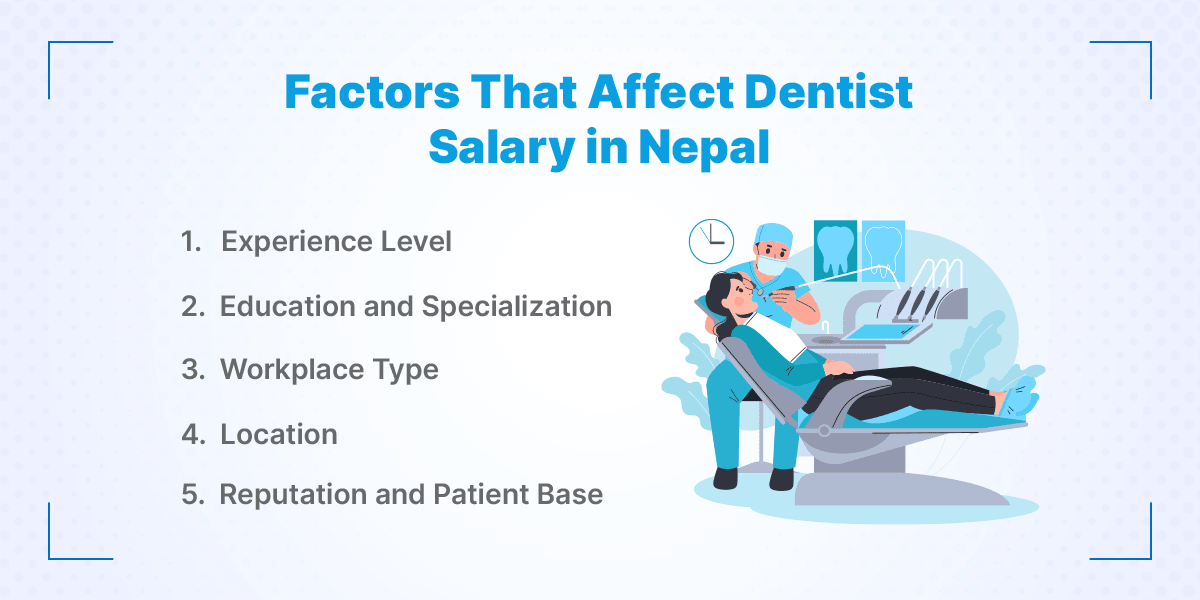
1. Experience Level
Experience is the biggest factor that decides a dentist’s salary in Nepal. A new BDS graduate often starts with around NPR 30,000 to 50,000 per month. As they gain skills, confidence, and patience, their income rises steadily. After about 5–10 years of practice, many dentists earn over NPR 100,000 each month. Those with 15+ years of experience or who own a clinic can make NPR 150,000 or more. Patients also tend to trust experienced dentists, which increases their patient flow and earnings. Simply put, the more years you work and the more confident you become, the higher your income grows.
2. Education and Specialization
Education and specialization make a big difference in what a dentist earns. A general dentist makes a decent income, but specialists earn much more. Dentists who complete an MDS degree or focus on areas like orthodontics, endodontics, or oral surgery usually charge higher fees. Their work requires special knowledge and skills, which makes their services more valuable. Many patients prefer specialists for complex treatments, so they get more high-paying cases. The more advanced your education, the more you can earn over time.
3. Workplace Type
The type of workplace also affects a dentist’s salary. Some work in hospitals, clinics, or NGOs, while others start their own practice. Dentists who open their own clinics usually earn more, especially if they attract regular patients. However, starting a clinic requires investment and patience at first. Those who work in hospitals or colleges get a stable salary, but it may not grow as fast. Choosing the right workplace depends on your goals. If you want stability, go for a hospital job; if you want higher earnings, owning a clinic can be more rewarding in the long run.
4. Location
Location plays a huge role in how much dentists earn in Nepal. In big cities like Kathmandu, Pokhara, and Lalitpur, dentists can charge higher fees because people are more aware of dental care. Clinics in smaller towns or rural areas usually earn less because of lower patient flow and cheaper treatment rates. However, living costs are also lower in these areas, which balances things a bit. If you build a strong name, even a small-town clinic can do very well. So, while city dentists earn more on average, success really depends on reputation and patient trust.
5. Reputation and Patient Base
Reputation and patient base are key to earning more as a dentist. When patients trust you and recommend you to others, your income automatically increases. Good communication, honest service, and gentle care help build this trust. Many well-known dentists in Nepal earn a lot because people wait to be treated by them. A loyal patient base means steady income every month. In short, your reputation can be your biggest strength as it brings both respect and a higher salary as your career grows.
Private vs Government Dentist Salary in Nepal
In Nepal, dentist salaries can be very different depending on whether you work in a government hospital or a private clinic. Both options have their own benefits and challenges, and choosing the right one depends on your career goals.
1. Salary Structure in Government Hospitals
Government dentists get a fixed salary, which is paid every month. The base salary is usually lower than in private clinics, especially for fresh graduates. However, the government also provides allowances, like housing, medical, and transportation, which add to the total income. The salary grows gradually with experience and promotions. Government jobs are stable and secure. You don’t have to worry about patient numbers or clinic costs. This makes it a safe option for many dentists who want a steady income and long-term security.
2. Income Opportunities in Private Practice
Private clinics usually pay more if the dentist attracts a lot of patients. Dentists can also start their own clinic, which allows them to earn as much as their clinic grows. In private practice, income depends on the number of patients, the types of treatments, and the reputation. Specialists in areas like orthodontics or cosmetic dentistry can earn significantly higher fees in private clinics. The potential for income is higher, but it also comes with responsibilities like clinic management, equipment costs, and marketing.
3. Pros and Cons of Both Sectors
Government jobs are stable and safe. You get regular pay and benefits. But the salary is lower at first, and growth is slower. Private practice can pay much more and gives freedom to grow your career quickly. But it is risky, and you must manage patients, expenses, and your clinic.
4. Which Option Offers Better Long-Term Growth?
For long-term career growth, private clinics or owning your own practice usually offer the highest earning potential. Experienced dentists with a strong patient base can earn much more than in government hospitals. However, if you value stability and less stress, government jobs are still a very good option. Many dentists start in government hospitals and later move to private practice to combine security with a higher income.
Salary Comparison – Nepal vs Abroad
Dentist salaries vary significantly across countries, influenced by factors like healthcare systems, demand, and cost of living. Here's a simplified comparison to help understand these differences:
Salary Comparison Table
| Country | Average Annual Salary (Local Currency) | Approx. in NPR (1 USD ≈ 142 NPR) |
|---|---|---|
| Nepal | NPR 960,000 | NPR 960,000 |
| Australia | AUD 90,000 – 180,000 | NPR 8,000,000 – 16,000,000 |
| USA | USD 235,202 | NPR 33,300,000 |
| UK | GBP 60,357 | NPR 11,000,000 |
| India | INR 3,45,000 | NPR 460,000 |
| China | CNY 610,361 | NPR 12,000,000 |
Why Do Dentists Migrate for Higher Pay?
Many dentists from Nepal consider moving abroad for better financial opportunities. Countries like the USA, Australia, and the UK offer significantly higher salaries, which can lead to improved living standards and financial security. For example, a dentist in the USA earns approximately NPR 31,300,000 annually, which is a great number compared to Nepal.
Long-Term Career and Financial Benefits of Working Abroad
Working abroad can provide dentists with:
- Higher Earnings: Substantial increase in income compared to Nepal.
- Advanced Training: Access to state-of-the-art facilities and continuous professional development.
- Global Recognition: Enhanced reputation and career prospects internationally.
- Improved Quality of Life: Better work-life balance and living conditions.
These factors contribute to long-term career growth and financial stability.
Career Growth and Future Scope for Dentists in Nepal
Dentistry in Nepal is becoming a very promising career. More people are realizing the importance of oral health, not just for a beautiful smile but for overall health. This rising awareness is creating a higher demand for dentists across the country.
Scope for Specialization and Academic Roles
Dentists in Nepal can also choose to specialize in areas like:
- Orthodontics (fixing crooked teeth)
- Endodontics (root canal treatment)
- Oral surgery
- Prosthodontics (artificial teeth and implants)
Specialization not only increases earning potential but also improves reputation. Many dentists also take academic roles, such as teaching in dental colleges. Teaching gives a steady income, respect, and a chance to guide new dentists.
Demand for Cosmetic Dentistry and Digital Dentistry
Cosmetic dentistry is growing fast in Nepal. Treatments like teeth whitening, veneers, and smile makeovers are becoming popular. Digital dentistry is also on the rise. Dentists now use digital tools for imaging, diagnosis, and treatment planning. These modern skills make dentists more valuable and allow them to charge higher fees.
Future Earning Potential and Growth Opportunities
The future looks bright for dentists in Nepal. With more patients, rising awareness, and new technologies, dentists can steadily increase their income. Owning a clinic or becoming a specialist can significantly boost earnings.
Some key growth opportunities include:
- Expanding private clinics in urban areas
- Offering specialized treatments like implants and braces
- Working with dental tourism companies
- Teaching and mentoring new dentists
In short, dentistry in Nepal is not just a stable career, but also one with high growth potential. Students who are skilled, professional, and keep learning can earn well and build a respected career. The combination of experience, specialization, and reputation can lead to both financial success and personal satisfaction in this field.
Dentistry is becoming more modern, high-paying, and in demand every year, making it a smart career choice for students who want long-term growth.
Challenges Dentists Face in Nepal
Becoming a dentist in Nepal is exciting, but it also comes with its own set of challenges. While the career has good earning potential and respect, students and new dentists need to be aware of the difficulties they may face.
1. Limited Job Openings in the Government Sector
One big challenge is that government jobs for dentists are very limited. Most dentists want to work in government hospitals because of stable pay and benefits. However, there are only a few positions available each year. This means many fresh graduates have to look for private clinics or start their own practice. Competition for government jobs can be tough, and sometimes you may have to wait a long time before getting a secure position.
2. High Competition in Urban Areas
Another challenge is high competition, especially in cities like Kathmandu, Pokhara, and Lalitpur. Many dentists prefer working in big cities because there are more patients and higher pay. But this also means there are many dentists competing for the same patients. New dentists need to work hard to build their reputation and attract patients. Without good marketing, patient care, and skills, it can be difficult to grow a clinic in urban areas.
3. Cost and Time Required for Specialization
Specializing in dentistry, such as becoming an orthodontist or oral surgeon, takes a lot of time and money. Advanced courses and degrees are expensive and require several years of study. Not all students can afford this investment. Even after completing specialization, dentists need to gain experience before they can charge higher fees. This can be a long journey, and it requires patience and dedication.
4. Balancing Expenses with Income in Early Years
In the first few years of practice, dentists often struggle to balance expenses and income. Setting up a private clinic costs a lot of money for equipment, rent, and staff. At the same time, income may be low because patient flow is still small. Many new dentists rely on part-time work or assistant roles to manage finances until their practice grows. Careful planning and budgeting are essential during this period.
Conclusion
Dentistry in Nepal is a respected and rewarding career, offering both financial stability and personal satisfaction. The dentist's salary in Nepal starts low but grows steadily with experience, specialization, and reputation. While government jobs provide security, private clinics and specialization offer higher earning potential. The field is evolving fast, with rising oral health awareness, dental tourism, and demand for cosmetic and digital dentistry creating more opportunities.
At the same time, challenges like limited government jobs, high competition, and the cost of specialization require planning and patience. Students who focus on building skills, gaining experience, and maintaining a good patient base can overcome these challenges.
Want to explore more jobs in the healthcare sector? Check out the latest openings in Nepal and start your career today.
Frequently Asked Questions
Submit your comments

Get Our App On



What is the Public Relations Officer Salary in Nepal
VIEW DETAILS
What Is the Salary of a Ticketing Officer in Nepal?
VIEW DETAILS
What Is the Salary of a Travel Consultant in Nepal?
VIEW DETAILS
How to Become an Auditor in Nepal
VIEW DETAILS


Loading Comments...