




Are you curious about how much a cybersecurity professional actually earns in Nepal? Many freshers and even experienced IT folks feel lost when it comes to understanding the real salary numbers. You might have seen random figures online, but they often don’t tell the full story.
The good news is, 2026 is shaping up to be a great year for cybersecurity jobs in Nepal. Salaries are changing fast, and the demand for skilled professionals is higher than ever. With the right skills and certifications, you can earn a good salary in Nepal.
In this article, we’ll break down cybersecurity salaries by role, experience, and skills. By the end, you’ll know what to expect and how to plan your career to earn more confidently.
In this blog
What is the Average Cyber Security Salary in Nepal in 2026?
The salary of cybersecurity professionals in Nepal ranges from NPR 25,000 to NPR 50,000 for entry-level jobs; NPR 60,000–120,000 for mid-level roles, and NPR 200,000 or more for senior professionals. Cybersecurity in Nepal is becoming one of the most in-demand careers. Salaries are growing fast because companies need skilled professionals to protect their data. In 2026, the pay varies a lot depending on your experience, skills, and the type of company you work for.
1. Entry-level Salary Range
For beginners, the salary usually starts from NPR 25,000 to 50,000 per month. For beginners, this is close to the minimum salary in Nepal, but the growth is fast. Junior roles include positions like junior security analyst or trainee ethical hacker. Even with a small salary, the learning opportunities are huge. Skills and certifications can quickly boost pay. Many entry-level professionals see a raise within the first year. It’s a good starting point to enter the cybersecurity field.
2. Mid-level Salary Range
Mid-level professionals typically earn NPR 60,000 to 120,000 per month. This includes roles like cyber security analyst, SOC analyst, or network security engineer. By this stage, experience of 2–5 years matters a lot. Employers expect you to handle projects with less supervision. Certifications like CEH or Security+ can increase pay. Many mid-level jobs also come with bonuses or perks. The work becomes more challenging but rewarding. It’s the stage where your salary really starts reflecting your skills.
3. Senior-level and Specialist Salary Range
Senior-level experts can earn NPR 150,000 to 200,000 or more per month. This includes positions like cybersecurity manager, penetration tester, or information security specialist. At this level, 5–10 years of experience is common. You may lead a team or manage critical projects. Advanced certifications like CISSP or ISO 27001 often increase salary. These roles also offer incentives and profit-sharing in some companies. Senior specialists are in high demand, and with freelance or remote international jobs, it can become one of the highest-paying jobs in Nepal. Your knowledge and reputation now directly affect your earning potential.
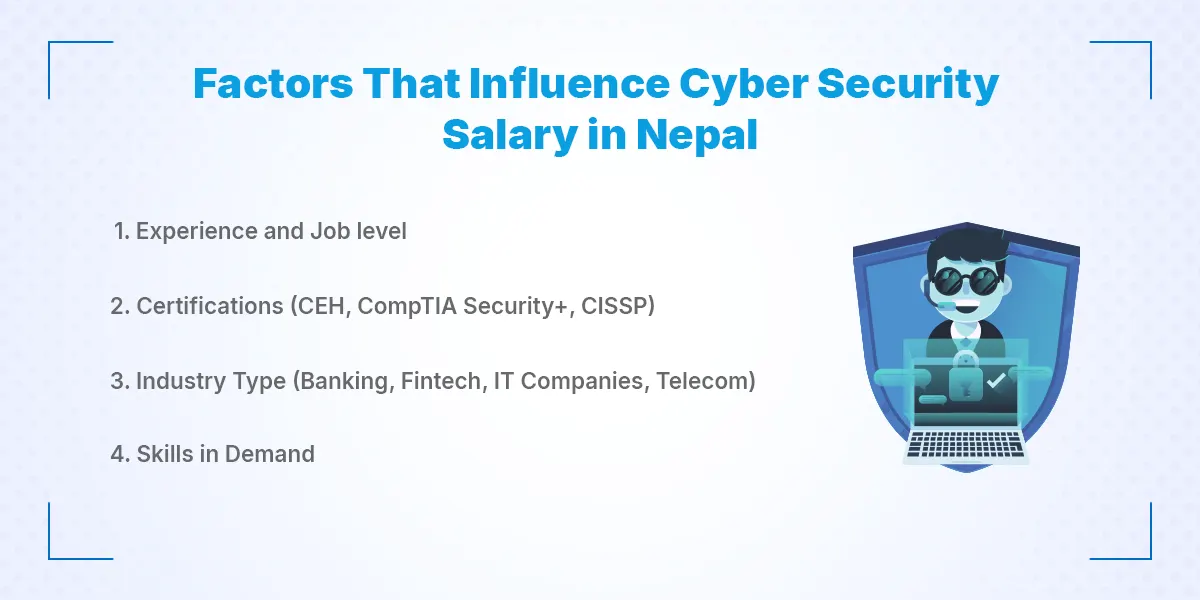
Factors That Influence Cyber Security Salary in Nepal
Several things affect how much you can earn as a cybersecurity professional in Nepal. Salary is not just about the job title. Your experience, skills, certifications, and even the industry you work in make a big difference. Understanding these factors can help you plan your career and earn more.
1. Experience and Job Level
Your experience is one of the biggest factors in your salary. Freshers usually earn less, while people with a few years of experience can expect much higher pay. Mid-level professionals get paid more because they can handle projects independently. Senior-level roles earn the most because they manage teams and make important decisions. Even small increases in experience can lead to noticeable salary bumps. Employers value proven work over just education. The more you know and can deliver, the better your salary will be.
2. Certifications (CEH, CompTIA Security+, CISSP)
Certifications can increase your earning potential a lot. CEH, Security+, and CISSP are widely recognized in Nepal and internationally. They show that you have the skills employers are looking for. A certified professional often gets paid more than someone without certification. Some companies even require certifications for certain roles. Certifications also help you get promotions faster. Investing time in learning and getting certified pays off in the long run.
3. Industry Type (Banking, Fintech, IT Companies, Telecom)
The type of company you work for affects your salary, too. Banks and fintech companies usually pay more because they deal with sensitive data. IT companies and telecoms also offer good salaries, but they can vary. Some startups may pay less at first but offer other benefits. Large companies tend to have structured salary plans. Working in a high-demand industry increases your chances of better pay. Choosing the right sector can make a big difference in your career growth.
4. Skills in Demand
The skills you have also decide how much you earn. Skills like ethical hacking, network security, cloud security, and incident response are highly valued. Employers pay more for people who can solve complex security problems. Soft skills like communication and problem-solving also matter. Learning new tools and staying updated on cyber threats can increase your salary. The more specialized and in-demand your skills, the higher the pay. Focus on skills that companies are actively looking for in 2026. Focus on skills that companies are actively looking for in 2026 to secure a good salary in Nepal.
Salary Comparison: Nepal vs International Cyber Security Salaries
Cybersecurity salaries in Nepal are growing, but how do they compare with international pay? Many professionals wonder if working locally is worth it or if remote jobs are better. Let’s break down the differences and see where Nepal stands.
Global Average Salary Overview
- International cybersecurity professionals earn much higher than in Nepal.
- On average, salaries range from $60,000 to $150,000 per year, depending on experience and role.
- Senior specialists and managers can earn even more, making cybersecurity one of the highest-paying jobs in the world.
- Nepal’s salaries are smaller in comparison, but the gap is slowly decreasing.
Remote Job Earning Potential
- Many Nepali cybersecurity professionals now work for international companies remotely.
- Remote jobs can pay in dollars or euros, significantly boosting income.
- Even mid-level remote roles often pay more than senior-level local salaries.
- Learning in-demand skills opens doors to high-paying opportunities.
What Skills Increase Cyber Security Salary in Nepal in 2026?
Skills like technical expertise, soft skills, and knowledge of AI tools can significantly boost your cybersecurity salary in Nepal. If you want to earn more in the cybersecurity field, the right skills matter. Employers pay extra for people who can solve real problems and handle complex situations. Not all skills are equal. Some are in higher demand than others. In 2026, the combination of technical know-how, communication, and AI knowledge will make you stand out.
1. Technical Skills (SIEM, Cloud Security, Malware Analysis)
Technical skills are the foundation of cybersecurity jobs. Tools like SIEM (Security Information and Event Management) help monitor threats. Cloud security knowledge is essential as many companies move online. Malware analysis helps prevent attacks before they cause damage. Professionals with these skills are highly valued. They can handle real security incidents effectively. Learning these tools increases your chances of a higher salary. Constant practice and hands-on experience make you even more valuable.
2. Soft Skills (Problem Solving, Incident Response Communication)
Soft skills matter as much as technical skills. Employers want people who can explain security issues clearly. Problem-solving helps in identifying and fixing issues quickly. Communication is crucial during incident responses. A team depends on you to act fast and coordinate efficiently. Strong soft skills make you a better leader and teammate. These abilities can even lead to promotions and salary hikes. Companies often reward professionals who combine technical and soft skills effectively.
3. AI and Automation Tools in Security
AI and automation are changing cybersecurity fast. Automated threat detection tools save time and prevent human error. Knowing AI-based tools makes you stand out in the job market. Automation helps in repetitive tasks like monitoring logs or scanning for vulnerabilities. Employers are willing to pay more for people who can use these tools effectively. Even entry-level professionals can benefit from learning basic AI security tools. Keeping up with technology trends ensures your skills remain in demand. It also opens doors to higher-paying roles in the future.
Certifications That Boost Cyber Security Salary in Nepal
Certifications can make a big difference in your cybersecurity career. They show employers that you have the right skills and knowledge. In 2026, certified professionals often earn more than those without certifications. Choosing the right certification can help you get promotions and higher pay.

1. Certified Ethical Hacker (CEH)
CEH is one of the most popular certifications in cybersecurity. It teaches you how to think like a hacker and protect systems from attacks. Employers value CEH because it proves practical skills. With CEH, you can apply for roles like ethical hacker or penetration tester. It is especially useful for mid-level professionals. The certification can increase your salary noticeably. Many companies in Nepal prefer candidates who have CEH. It also gives you confidence in handling security threats.
2. Certified Information Security Manager (CISM)
CISM focuses on managing and overseeing security programs. It is perfect for people who want to move into managerial roles. CISM shows that you can design and manage security policies effectively. Salaries for CISM holders are usually higher than regular technical roles. Companies see CISM as a sign of reliability and leadership. It helps you lead teams and make strategic security decisions. With this certification, you can target senior-level jobs. It also opens doors to bigger organizations with structured salary plans.
3. CompTIA Security+
Security+ is a beginner-friendly certification that covers core security concepts. It is good for freshers or those starting their cybersecurity career. The certification proves basic knowledge in network security, threats, and vulnerabilities. Many employers in Nepal consider it a minimum requirement. Security+ can help you get entry-level jobs faster. It also sets the stage for advanced certifications later. Professionals with Security+ often get better starting salaries. It is a strong foundation for a long-term cybersecurity career.
4. Certified Information Systems Security Professional (CISSP)
CISSP is one of the highest-level certifications in cybersecurity. It covers a wide range of security domains and best practices. Employers see CISSP as a mark of expertise and trust. Professionals with CISSP usually work in senior or specialist roles. The certification can significantly boost salary, even above NPR 200,000 for top positions. It requires experience and knowledge, so it’s suited for mid to senior-level professionals. CISSP holders are in high demand both in Nepal and internationally. This makes it a strong investment for career growth.
How to Start a Cyber Security Career in Nepal?
To start your career in cybersecurity, you need the right education, hands-on training, and a clear roadmap to gain skills and certifications that increase your salary. Starting a cybersecurity career may feel confusing, but breaking it into steps makes it simple. With the right approach, even beginners can enter this high-demand field. Here’s how you can begin and grow your career in Nepal.
1. Required Education
Most cyber security jobs require a bachelor’s degree in computer science, IT, or related fields. If you don’t have a degree, short-term diplomas or certificate courses can help you enter the field. Education teaches the basics of networks, operating systems, and programming, which are essential for cybersecurity. It builds the foundation you need before diving into practical skills.
2. Free and Paid Training Options
Free resources like YouTube tutorials, blogs, and beginner courses on platforms such as Coursera or edX help you get started without spending money. Paid courses from local institutes or international platforms provide structured learning, practical labs, and recognized certifications. Certifications like CEH, Security+, or CISSP increase your chances of landing better-paying jobs. Training also gives hands-on experience, which employers highly value.
3. Recommended Roadmap to Earn More by 2026
Start with entry-level roles or internships to gain practical experience. Focus on in-demand skills like ethical hacking, cloud security, and incident response. After 1–2 years, pursue certifications to move into mid-level jobs. Keep updating your knowledge with AI tools and automation. Joining cybersecurity communities helps you network and stay informed about new threats. Following this roadmap step by step will help you grow steadily and earn a competitive salary in Nepal.
4. Where to Find Courses and Jobs
Local training institutes offer courses and certifications. Online platforms like Coursera, Udemy, and Cybrary provide global learning options. For internships and jobs, check local job portals like Kumari Job, company websites, and LinkedIn. Networking through cybersecurity groups and online communities can also lead to hidden opportunities and mentorship.
Conclusion
Cybersecurity is becoming one of the most promising careers in Nepal. Salaries are growing, and demand for skilled professionals is higher than ever. Whether you are just starting or already have some experience, the right education, training, and certifications can make a big difference. Skills like ethical hacking, cloud security, and AI tools are highly valued by employers.
Entry-level roles give you learning opportunities, while mid and senior-level positions offer much higher pay. Following a clear roadmap, gaining hands-on experience, and staying updated with the latest trends will help you earn more confidently. With dedication and the right strategy, a cybersecurity career in Nepal can be both rewarding and secure.
Frequently Asked Questions
Submit your comments

Get Our App On



What is the Public Relations Officer Salary in Nepal
VIEW DETAILS
What Is the Salary of a Ticketing Officer in Nepal?
VIEW DETAILS
What Is the Salary of a Travel Consultant in Nepal?
VIEW DETAILS
How to Become an Auditor in Nepal
VIEW DETAILS


Loading Comments...